
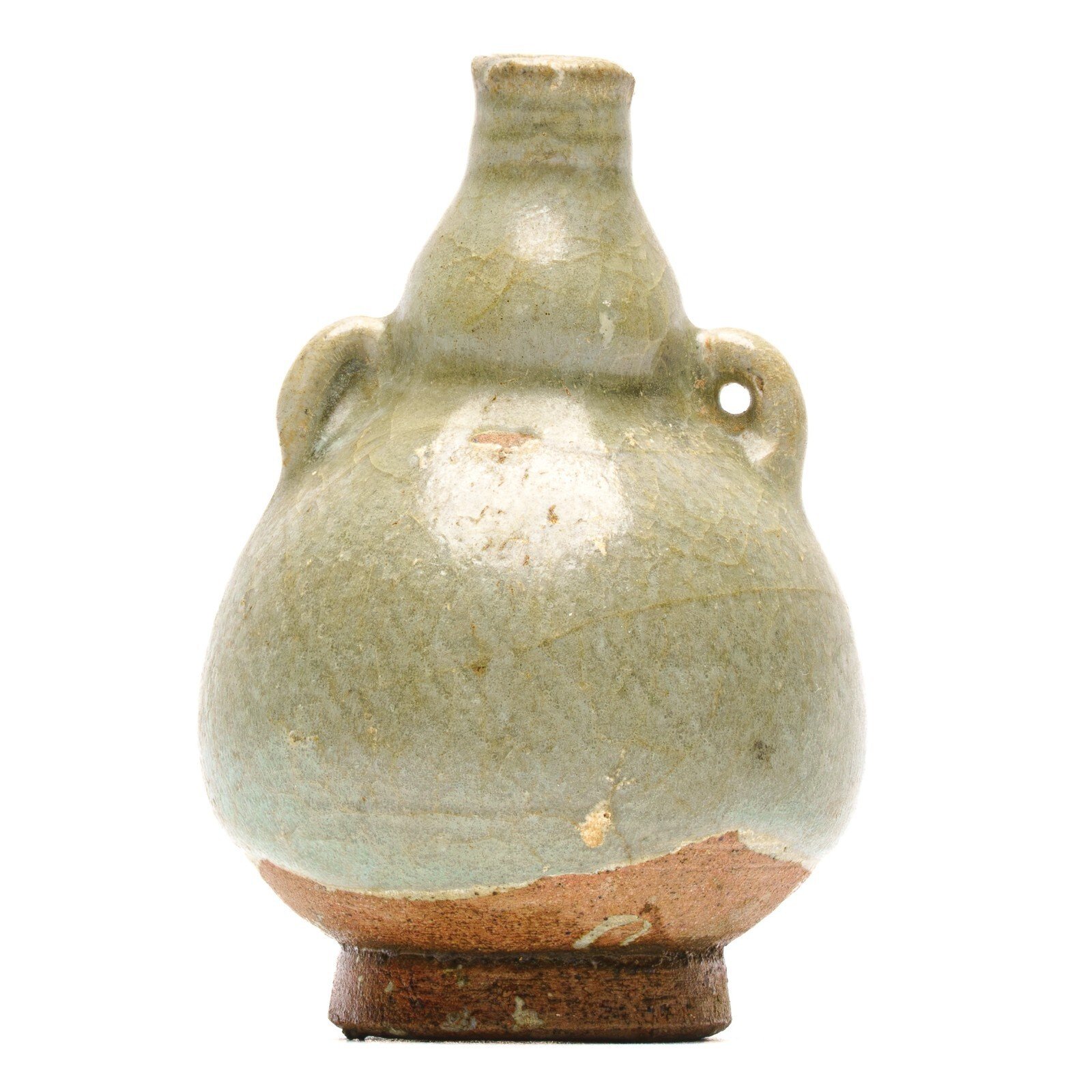
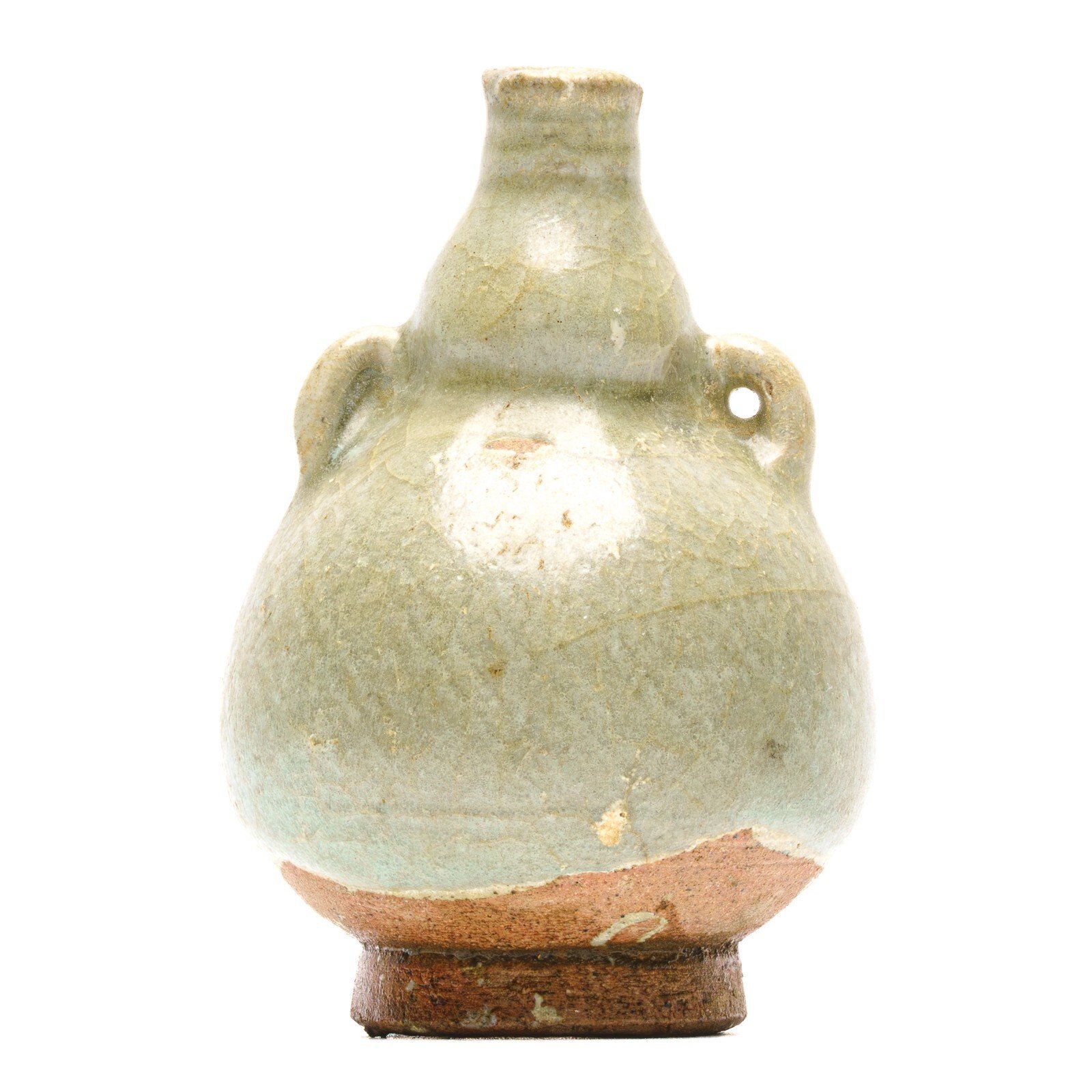
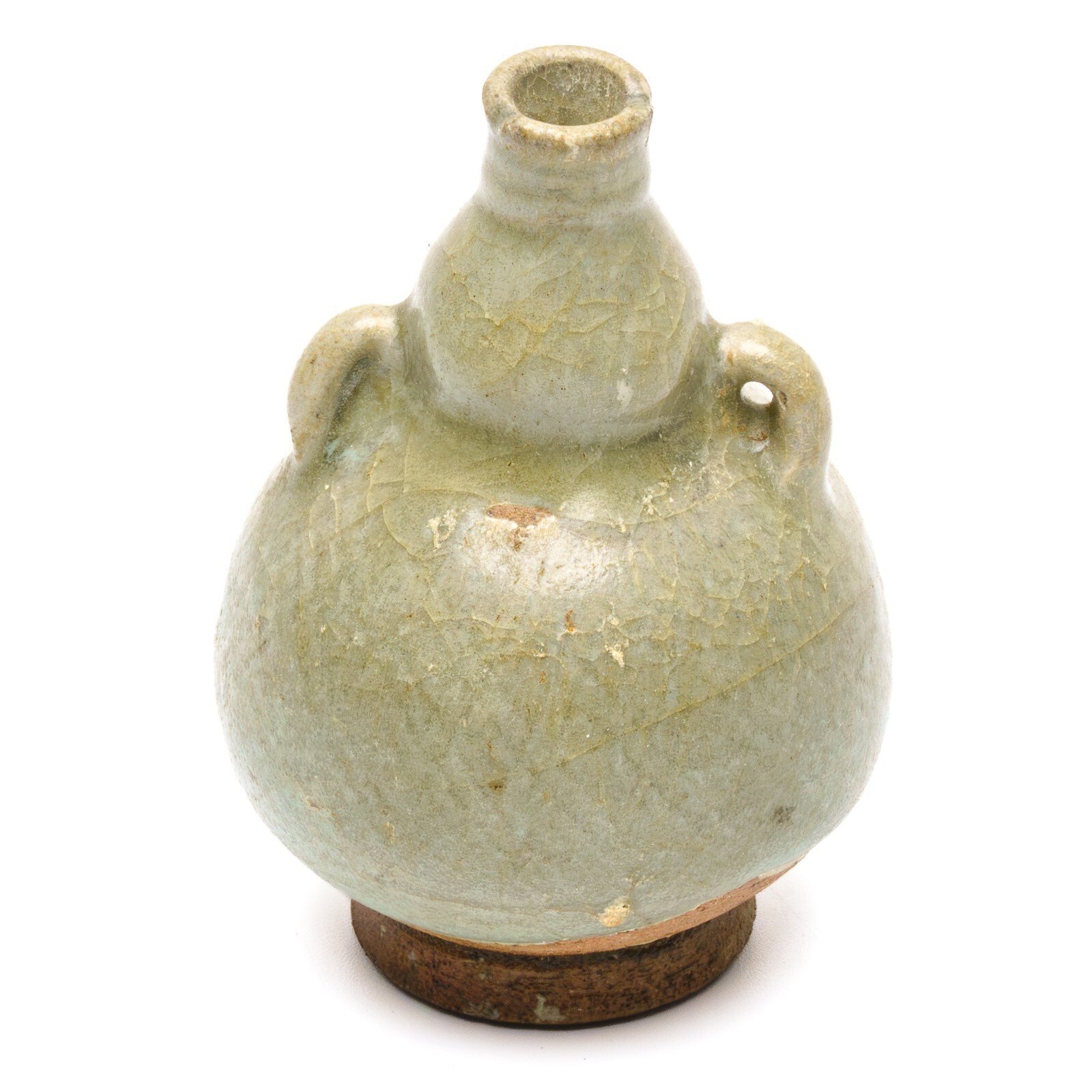
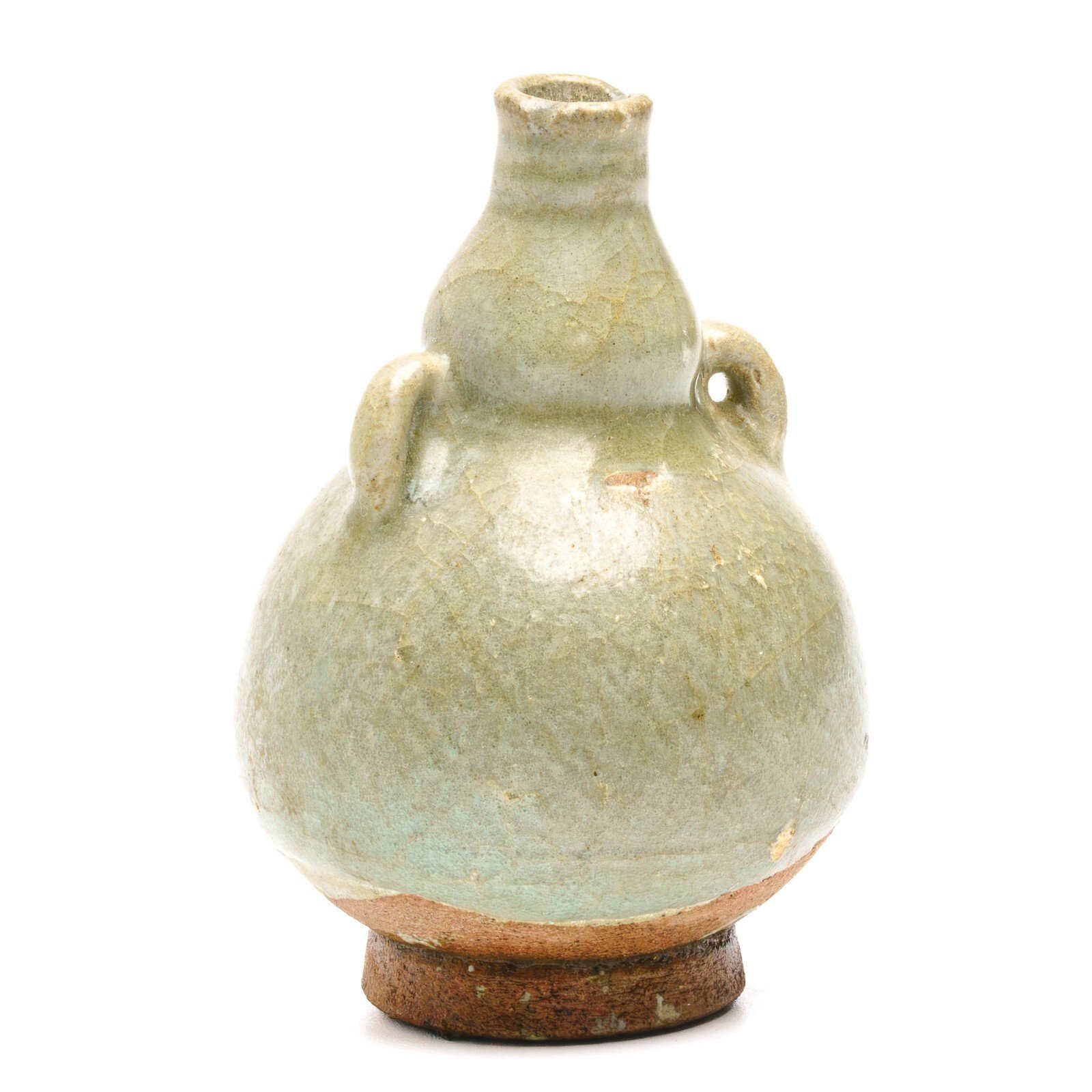
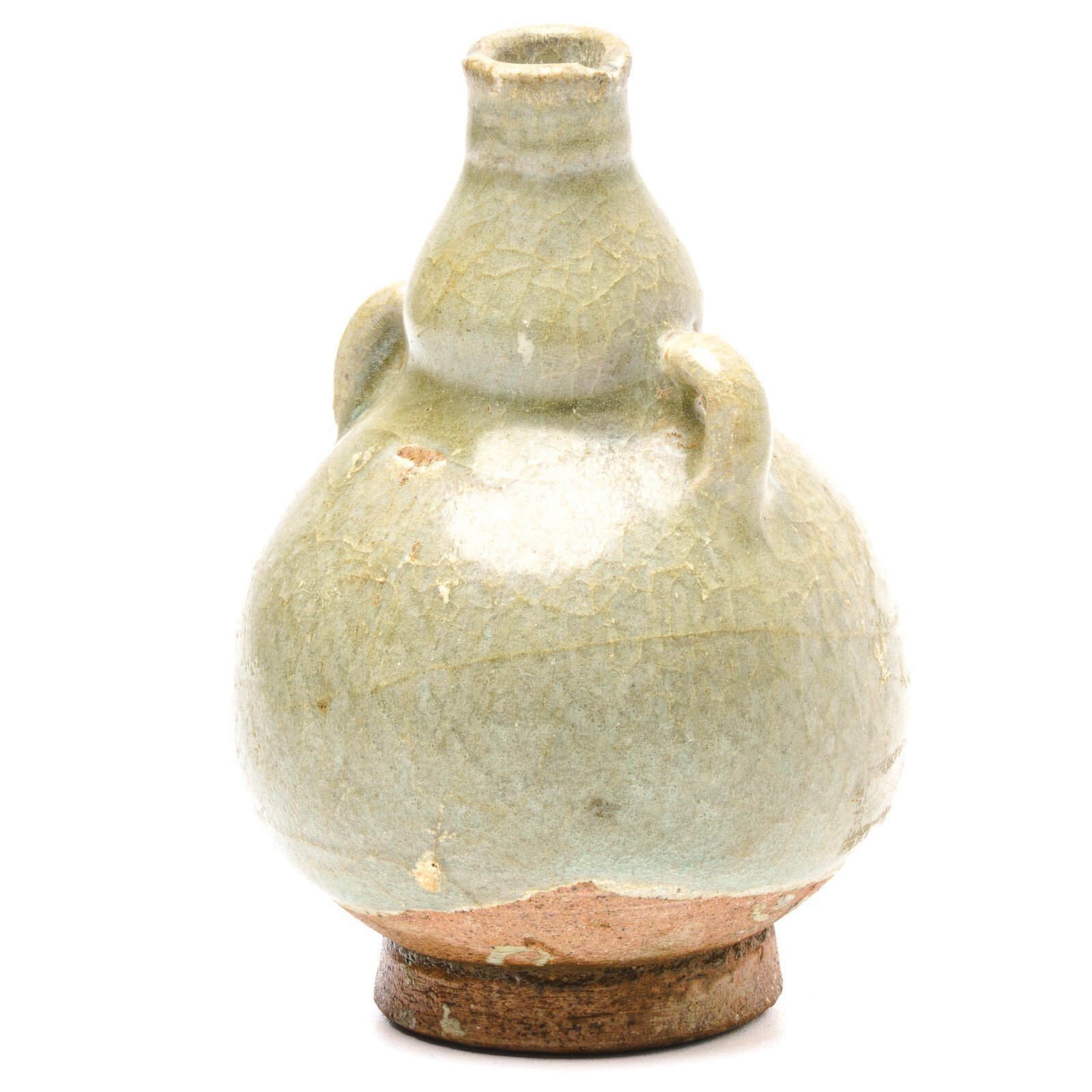
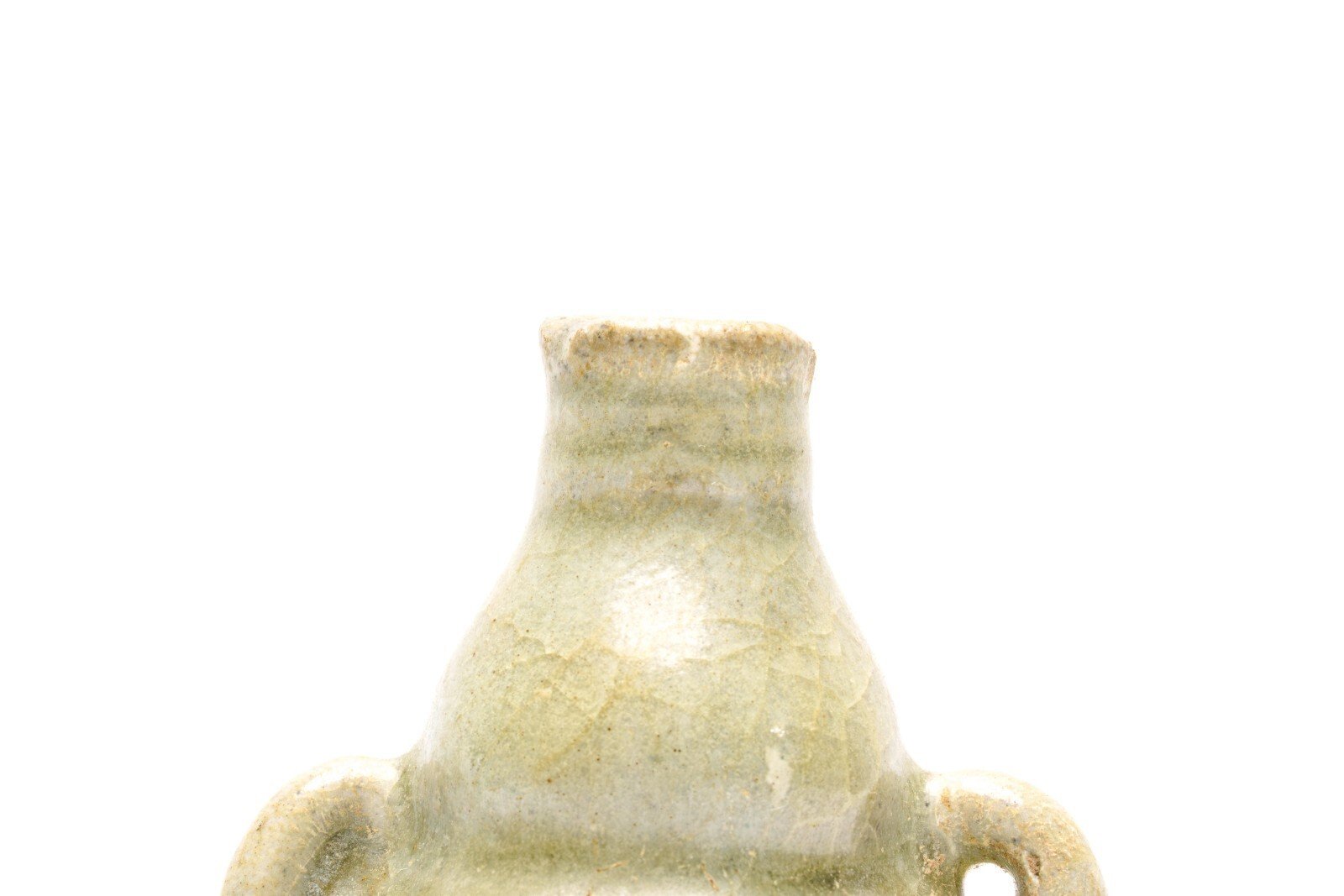


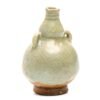
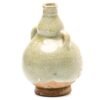


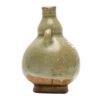


Thai Celadon Sawankhalok Double Gourd Vase Looped Handles Southeast Asian 15th C
£300.00
Inventory Code: INV4854
Object: Double Gourd Vase
Material: Celadon Glazed Stoneware
Origin: Thailand
Period: Ayutthaya kingdom (1351–1767)
Date: 15th Century
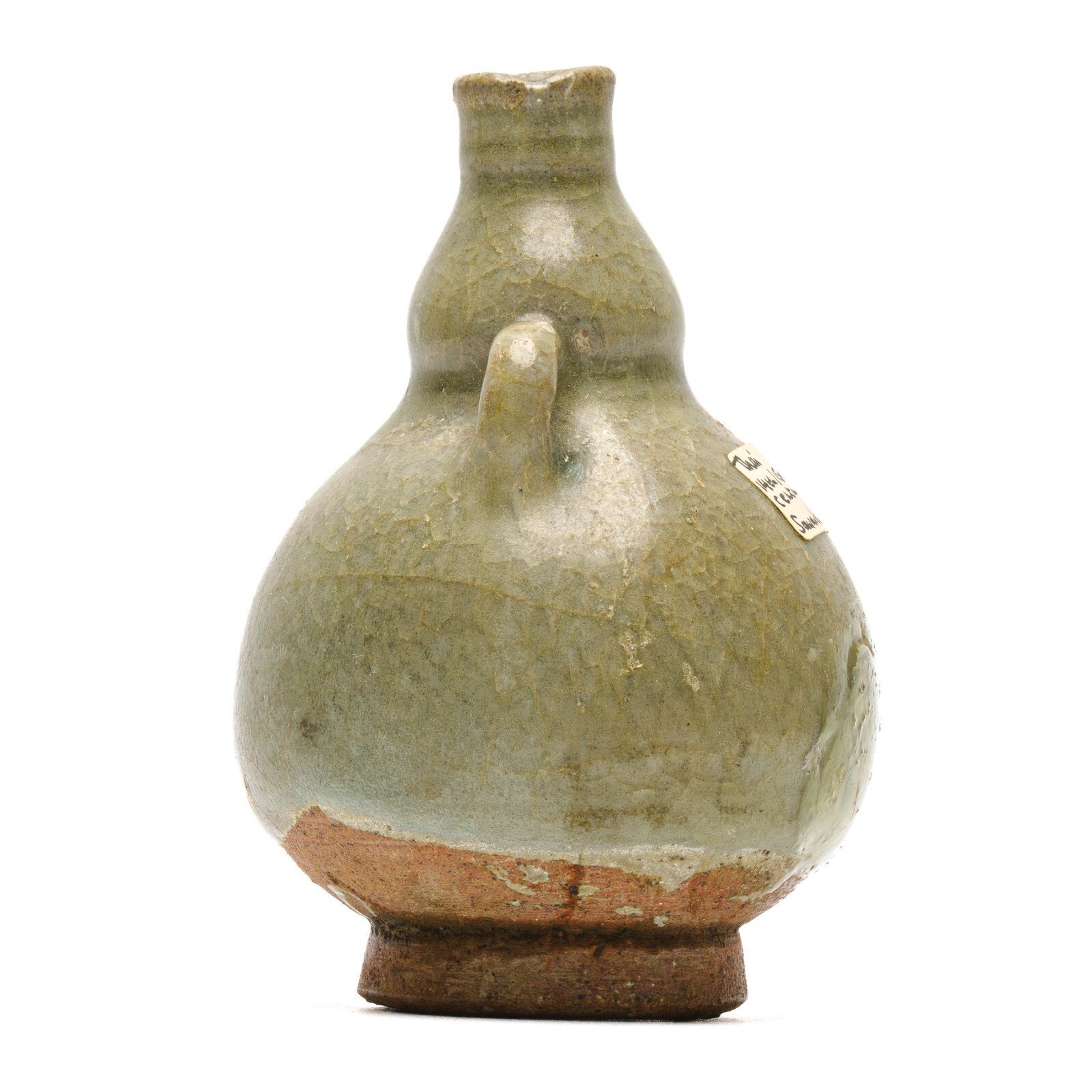
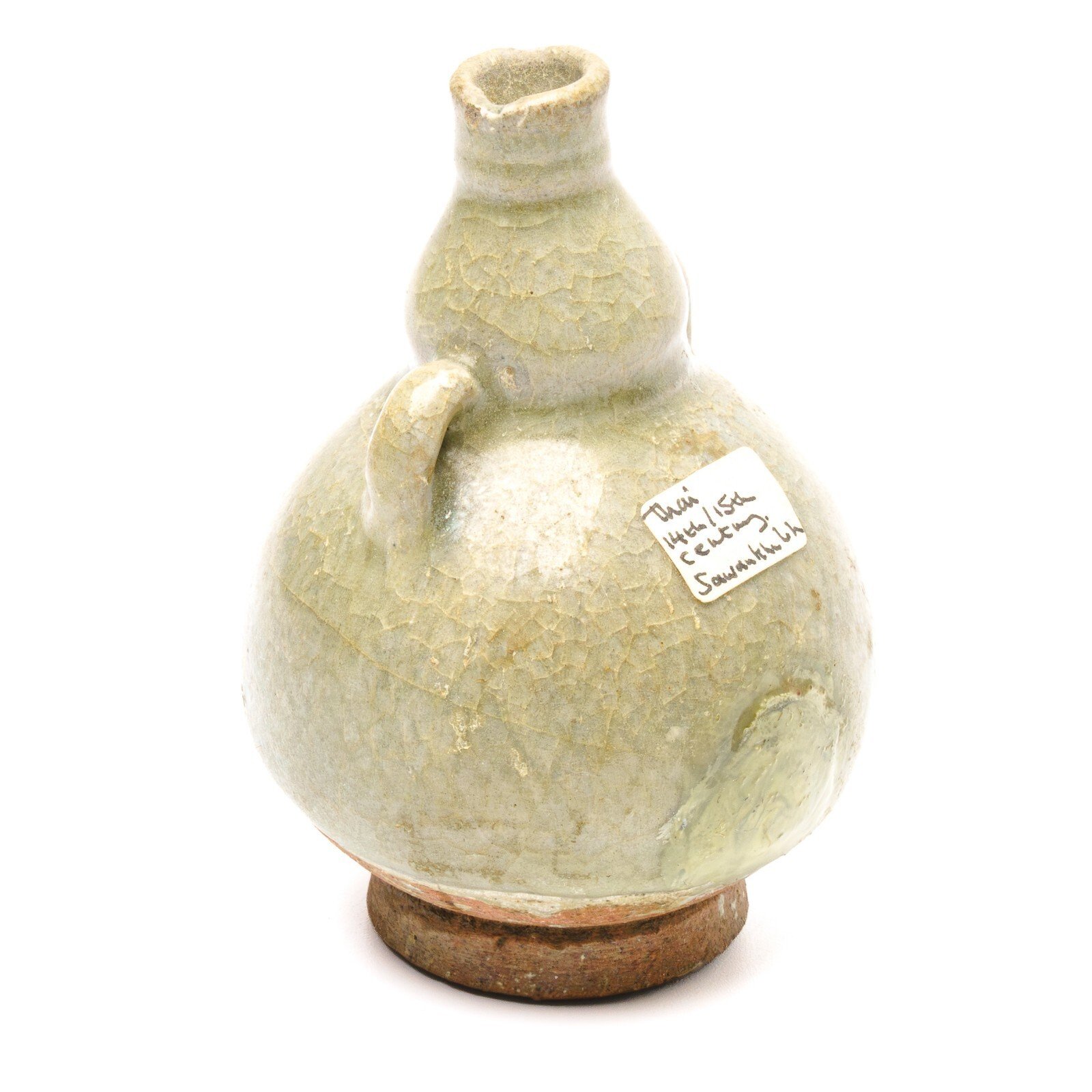
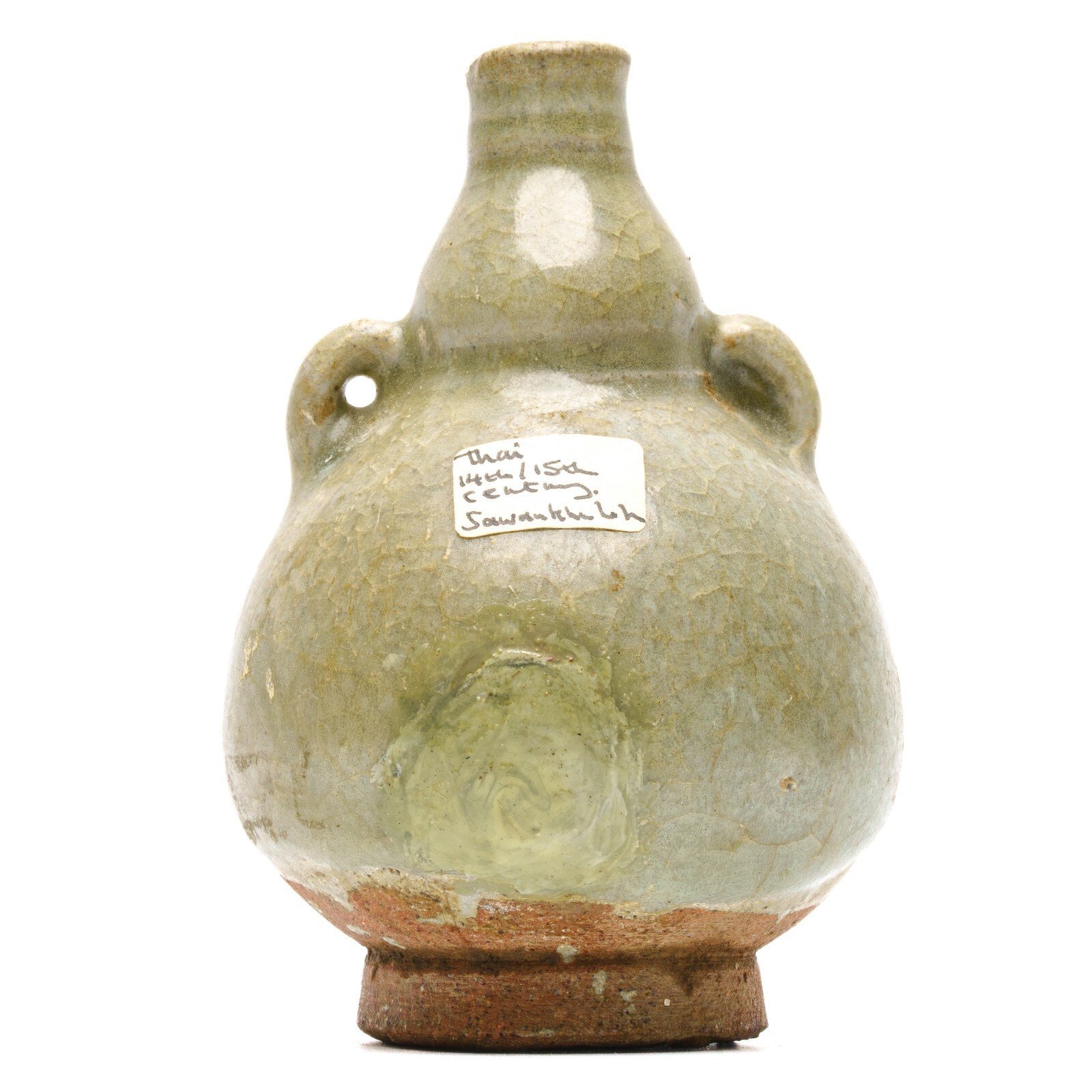
Decoration: Pale green celadon glaze with crackled surface, double gourd form, and opposing looped handles
Marked: Unmarked
Measurements:
Height: Approx. 4.7 in / 9.5 cm
Width: Approx. 2.5 in / 6.5 cm
Condition:
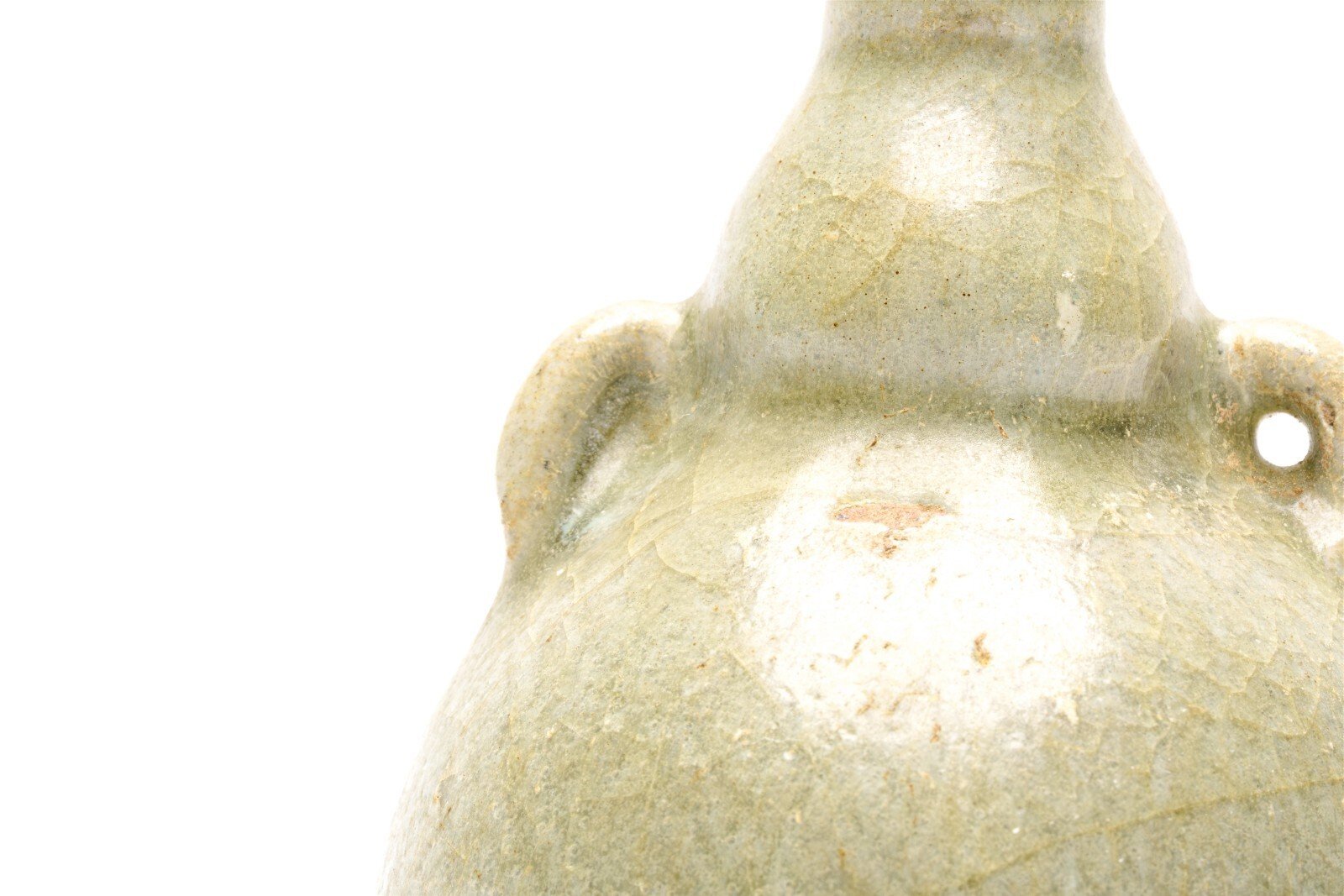
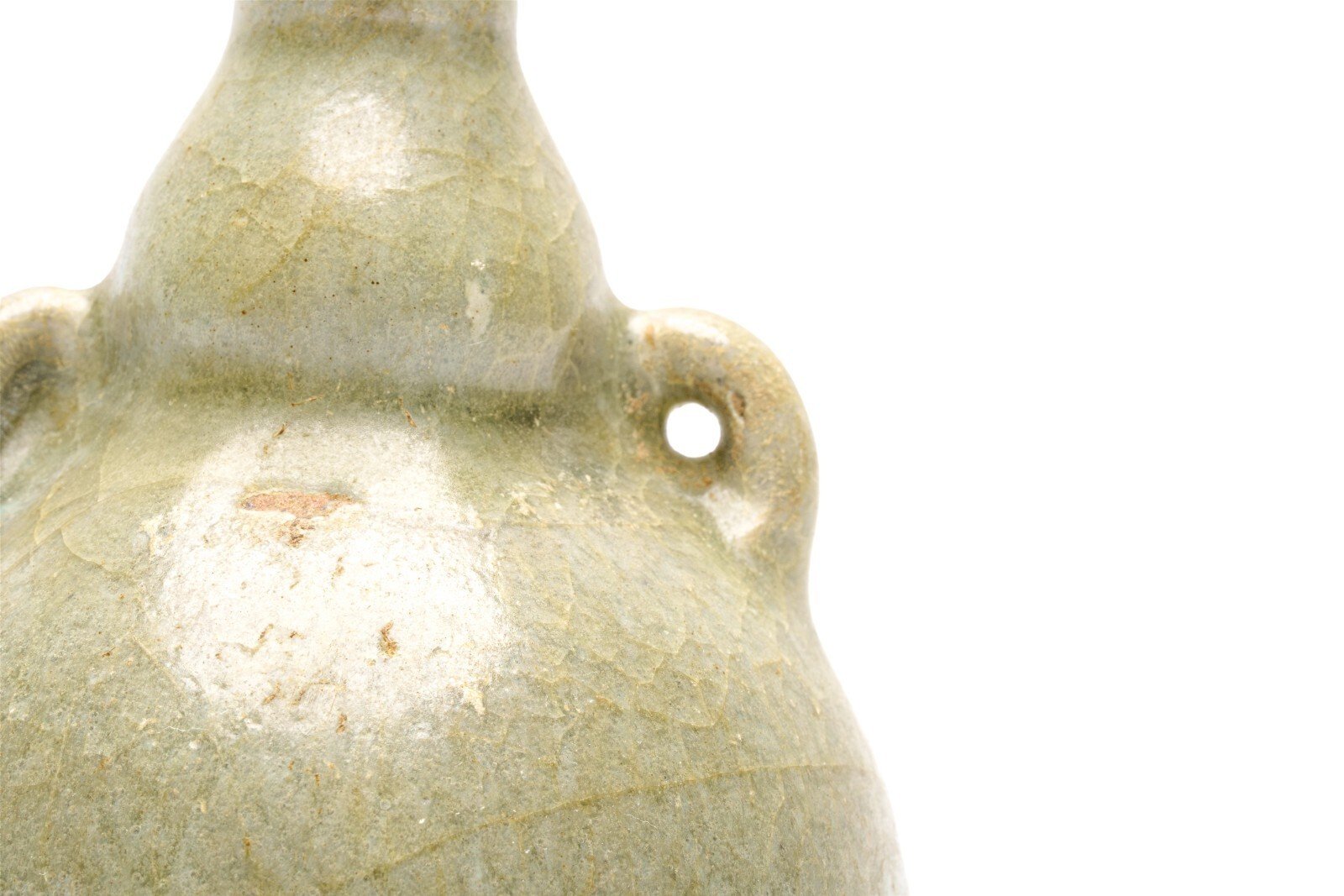
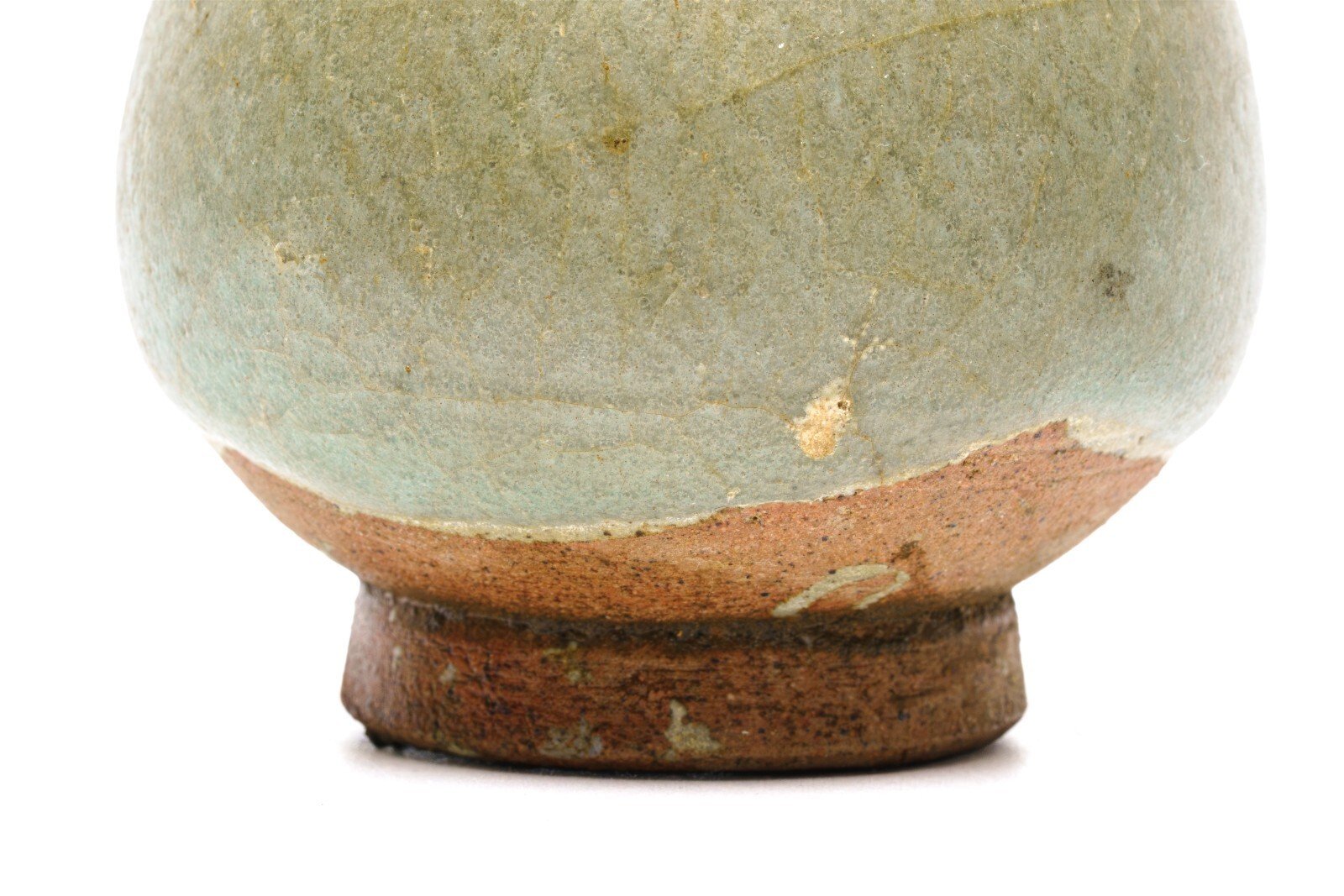
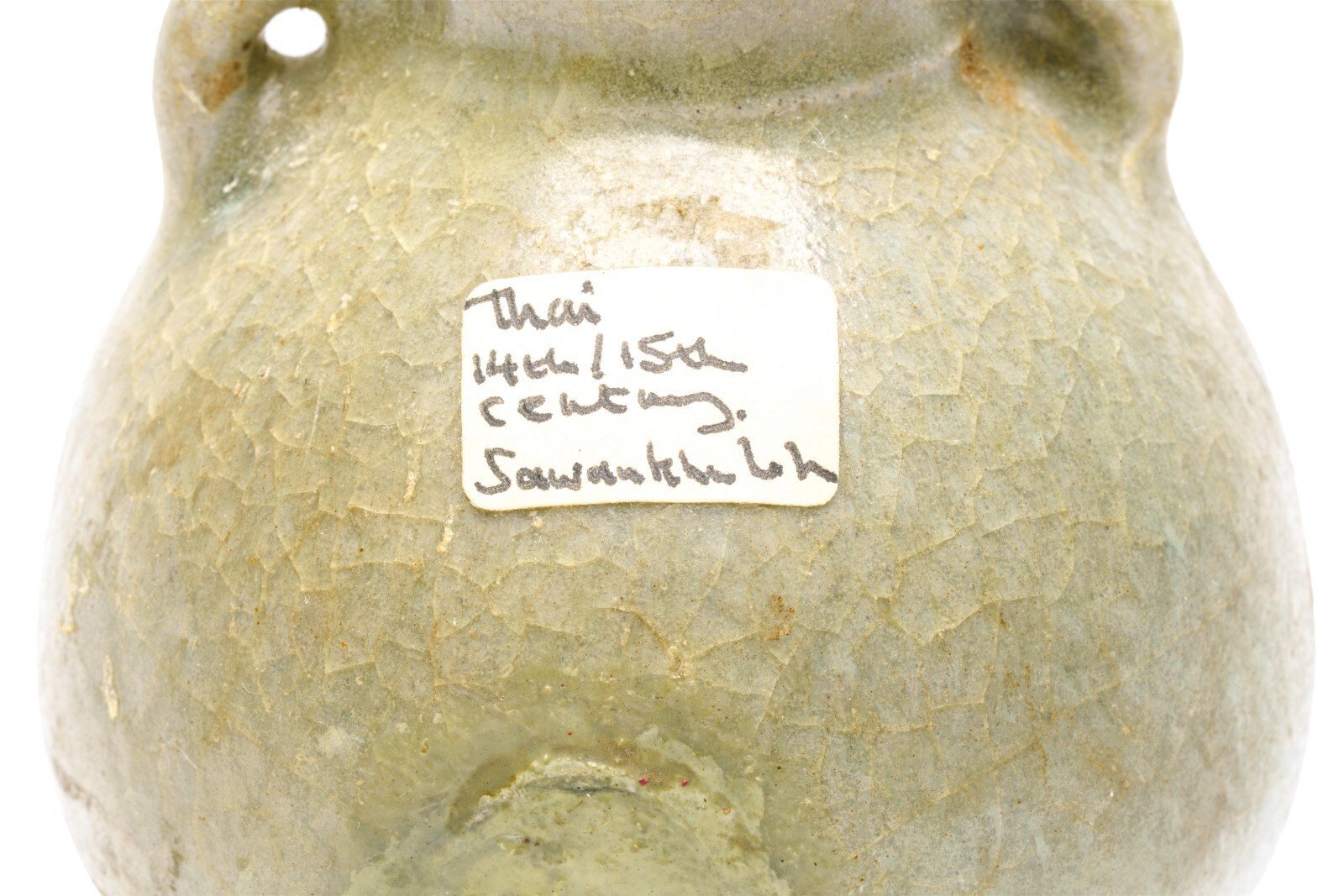
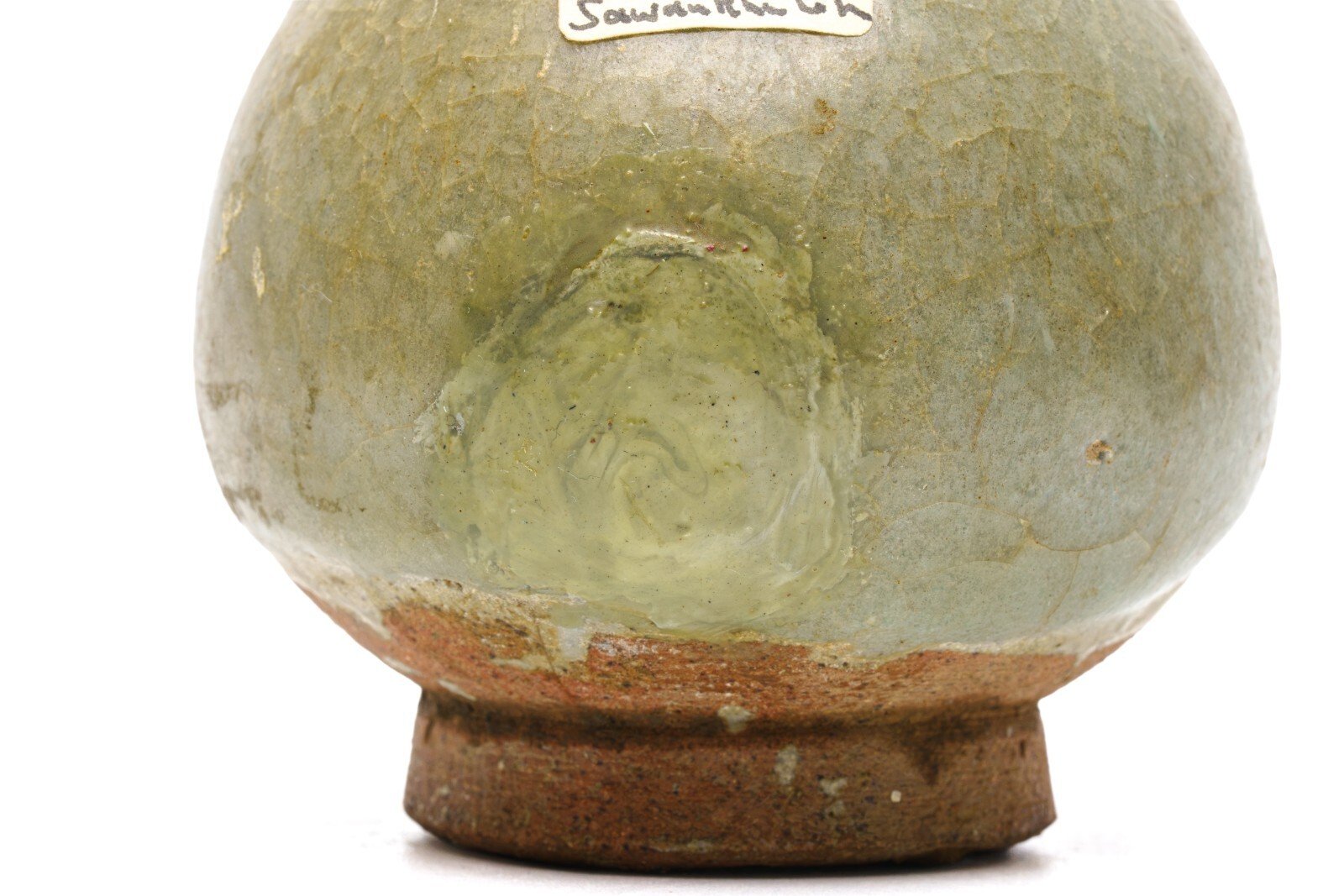
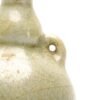
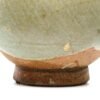
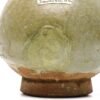
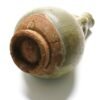
FAIR/RESTORED (2/5) - Professionally restored area to the lower body with a circular section filled, overglazed, and color matched. General age-related glaze wear, crazing, kiln imperfections, and minor losses to the glaze. Please review the photos carefully for more details.
International Shipping
We ship worldwide using tracked and insured services. Prices are calculated at checkout. All items are securely packaged with care and experience.
Pricing
Prices reflect past sales and our assessment of each item’s rarity and condition. Contact us if you would like to discuss.
Research
All item details are based on our own research and evaluation. We welcome questions or feedback.
Authenticity
Every item is guaranteed to be as described, with provenance provided where available.
Refunds
We accept returns within 14 days of delivery. Please contact us first to arrange a return and refund.
DESCRIPTION
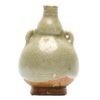
A finely potted Thai Sawankhalok celadon vase of compressed double gourd form with a short neck and a pair of pierced loop handles. The vessel is covered in a soft pale green celadon glaze with attractive natural crackling.
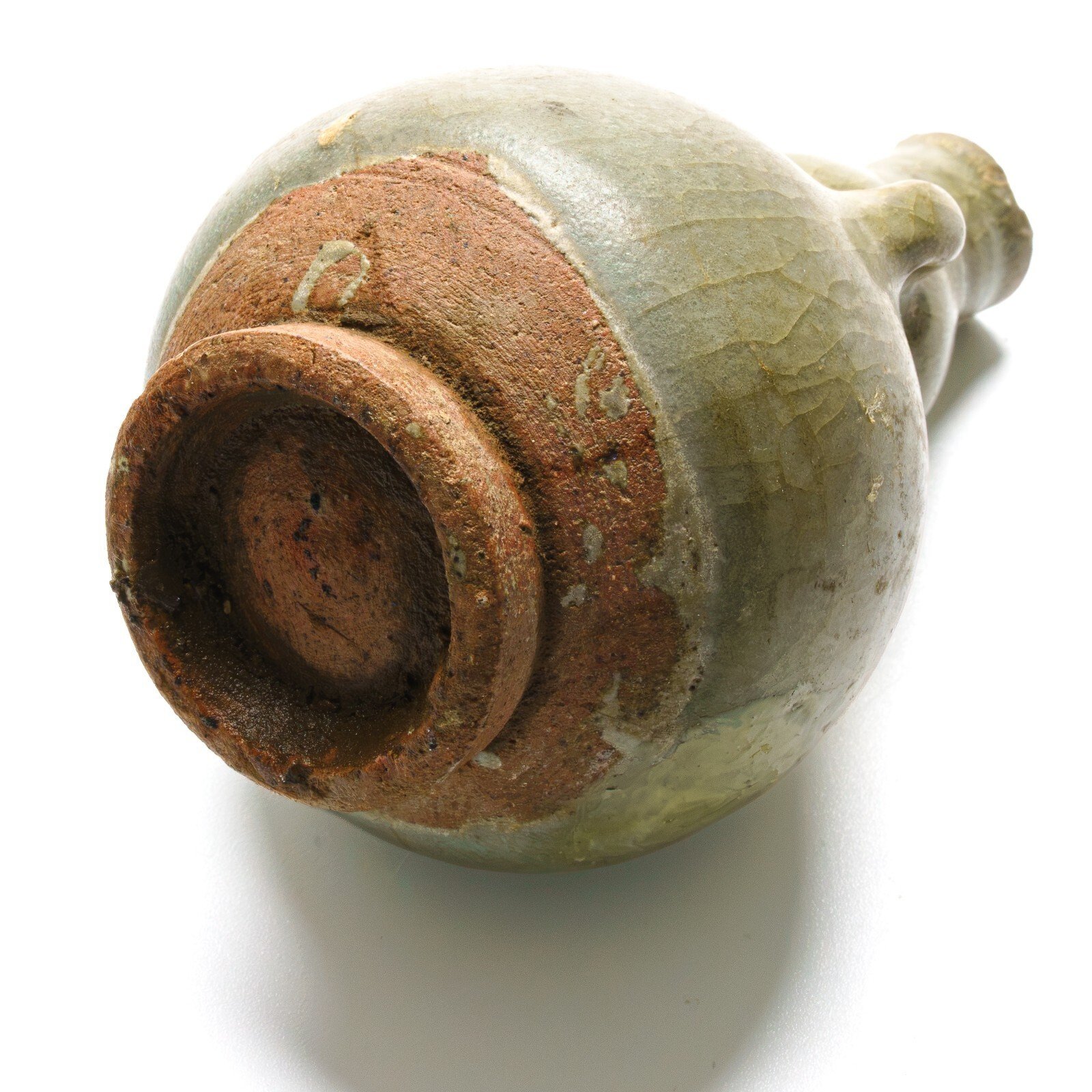
The lower body retains an unglazed foot typical of Sawankhalok production. An old collection label identifies the piece as Sawankhalok, 14th-15th century. The elegant proportions and restrained decoration make this a classic example of Southeast Asian celadon.
COLLECTOR’S NOTE
Sawankhalok kilns produced some of the finest Thai celadon wares during the 15th century, exporting them widely throughout Southeast Asia. Their distinctive pale green glazes and simple, balanced forms remain highly regarded by collectors of early Asian ceramics.
NOTES
Please review all photos carefully as they form part of the description.
Related products
-

Japanese Cloisonne Ginbari Enamel Vase Blue Ground Flower Iris Meiji Period 19C
£140.00 -

Chinese Bronze Globular Vase Beast Head Masks Handles Dragon Ming Late 17th C
£900.00 -

Thai Siam Celadon Sawankhalok Vase Thuriang Kilns Southeast Asian Period 15th C
£450.00 -

Japanese Cloisonne Ginbari Enamel Vase Miniature Bamboo Meiji Period 19th C
£130.00