


Japanese Cloisonne Ginbari Enamel Vase Blue Ground Flower Iris Meiji Period 19C
£140.00
Inventory Code: INV4833
Object: Vase
Material: Cloisonne enamel on metal
Origin: Japan
Period: Meiji Era 1868-1912
Date: Late 19th Century
Decoration: Ginbari translucent blue enamel ground with iris flowers and wildflowers in silver wire cloisonne
Marked: Unmarked
Measurements:
Height: 12.2 in / 31.0 cm
Width: 6.0 in / 15.2 cm
Condition:
FAIR (3/5) - Extensive age-related cracking and crazing to the enamel surface, particularly around the lower body, with associated wear to the metal rims. No obvious major losses to the cloisonne decoration visible. Please review the photos carefully for more details.
International Shipping
We ship worldwide using tracked and insured services. Prices are calculated at checkout. All items are securely packaged with care and experience.
Pricing
Prices reflect past sales and our assessment of each item’s rarity and condition. Contact us if you would like to discuss.
Research
All item details are based on our own research and evaluation. We welcome questions or feedback.
Authenticity
Every item is guaranteed to be as described, with provenance provided where available.
Refunds
We accept returns within 14 days of delivery. Please contact us first to arrange a return and refund.
DESCRIPTION
A Japanese Ginbari cloisonne enamel vase from the Meiji period, decorated with elegant iris blooms and flowering plants against a vivid translucent cobalt blue ground. The shimmering enamel displays the characteristic textured silver foil effect beneath the transparent enamel. The graceful baluster form is finished with brass mounts to the rim and foot. Despite the extensive surface cracking, it remains an attractive display piece with striking color and detailed craftsmanship.
COLLECTOR’S NOTE
Ginbari cloisonne was one of the most admired techniques of the Meiji period, using translucent enamel over textured silver foil to create remarkable depth and brilliance. Floral subjects such as irises were especially popular and are closely associated with the finest Japanese enamel workshops of the late 19th century.
NOTES
Please review all photos carefully as they form part of the description.
Related products
-
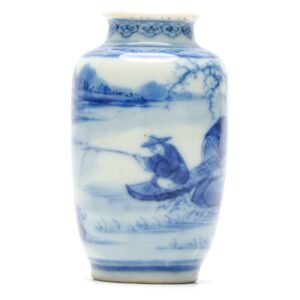
Chinese Vase Blue White Miniature Fisherman Land Scene Daoguang Peach Marked 19C
£725.00 -
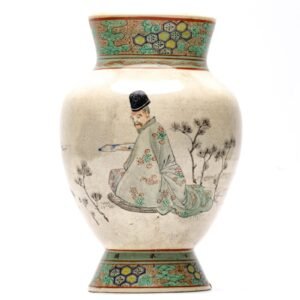
Japanese Porcelain Satsuma Vase Gilt Samurai Painted Marked Kutani Meiji 18C
£115.00 -
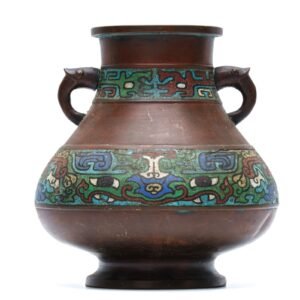
Japanese Champleve Bronze Vase Beast Taoist Head Masks Handles Enamel Late 20C
£120.00 -
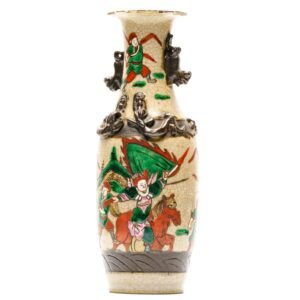
Chinese Vase Crackled Glazed Porcelain Famille Verte Warrior Foo Lion Qing 19C
£25.00