
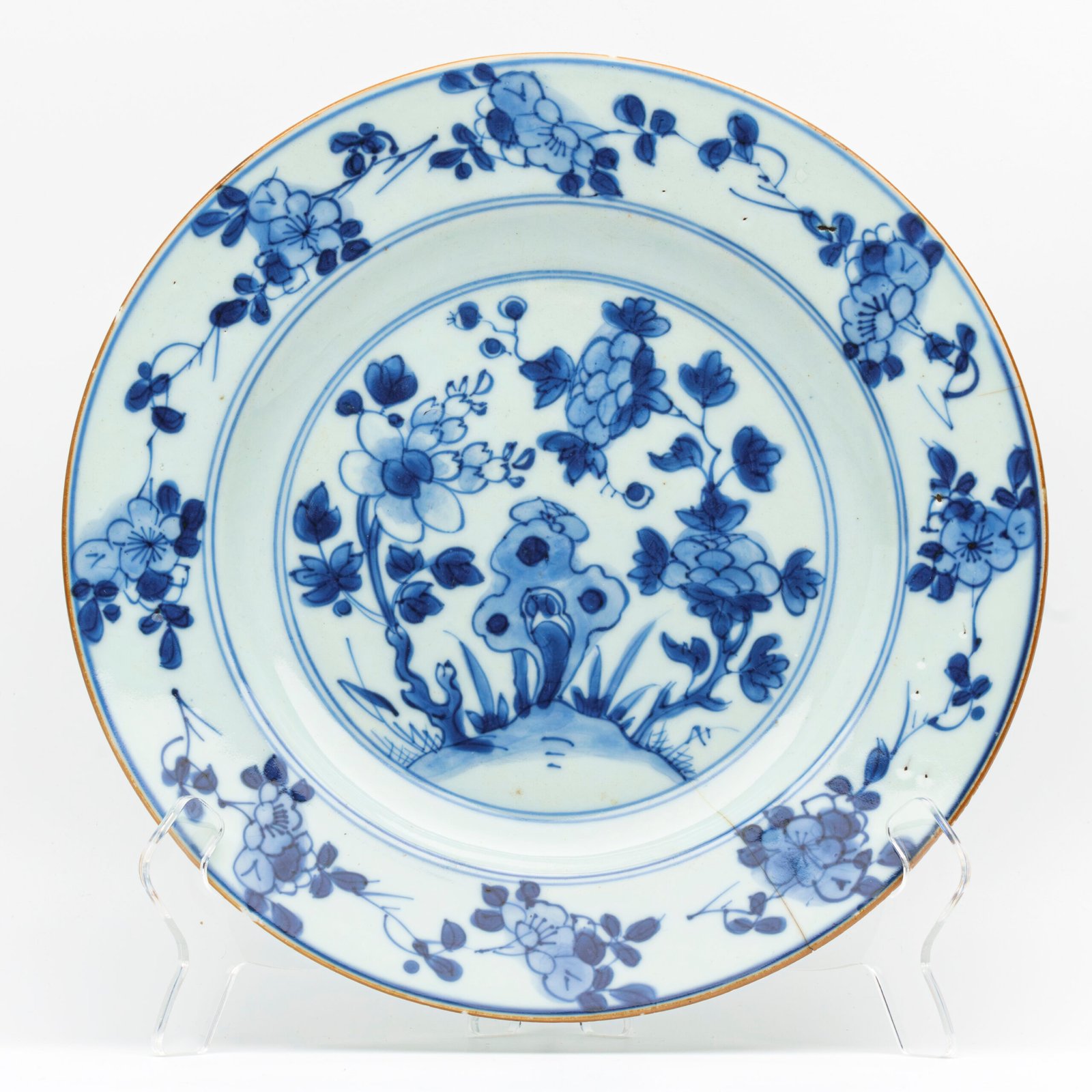


Chinese Kangxi Porcelain Plate Blue White Peony Blossom Rock Brown Rim Qing 18C
£30.00 Sold
Inventory Code: INV4034
Object: Plate
Material: Porcelain
Origin: China
Period: Qing Dynasty
Date: Kangxi – 18th Century
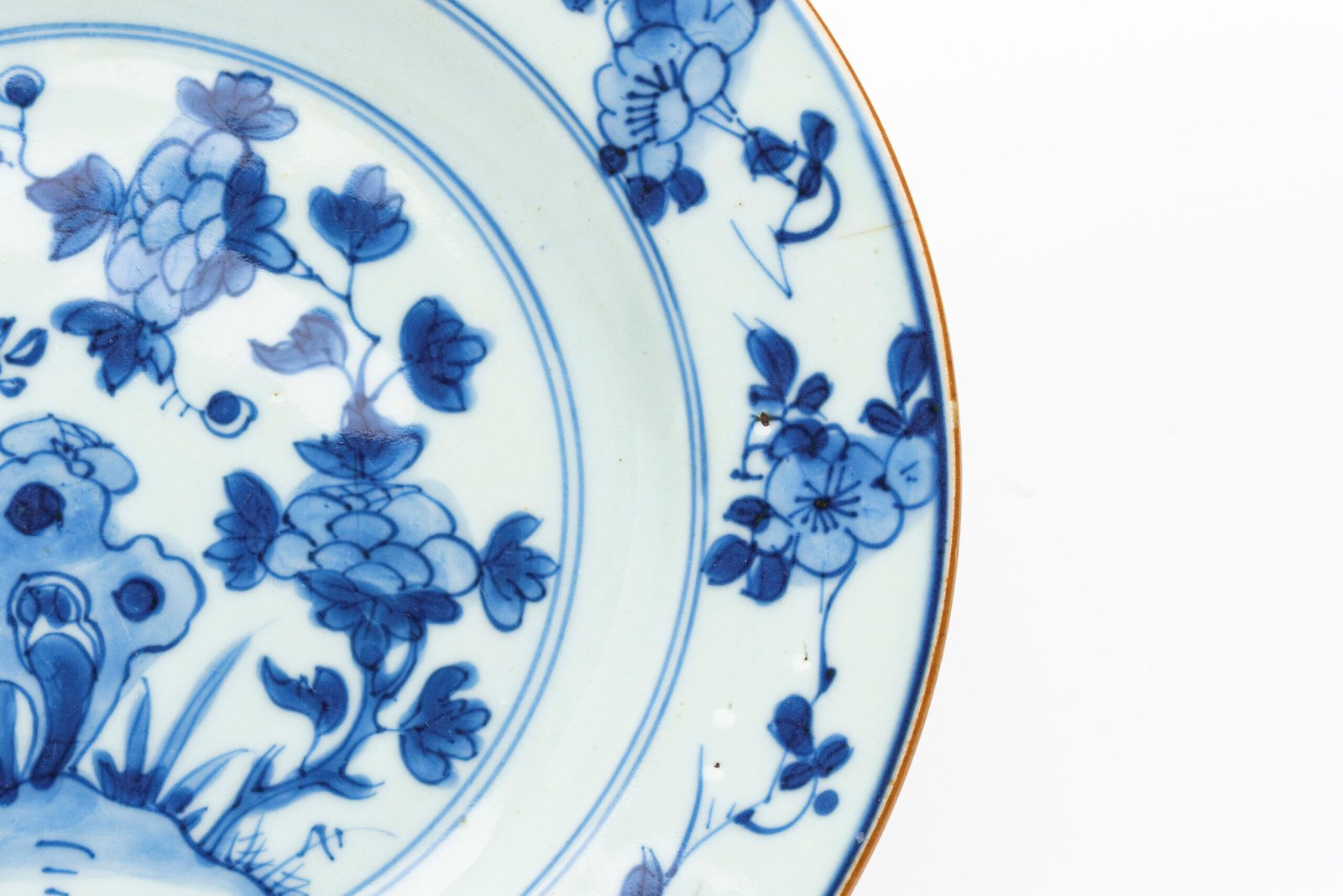
Decoration: Peony blossom with floral sprays and rock motif in Blue & White
Marked: Unmarked
Measurements:
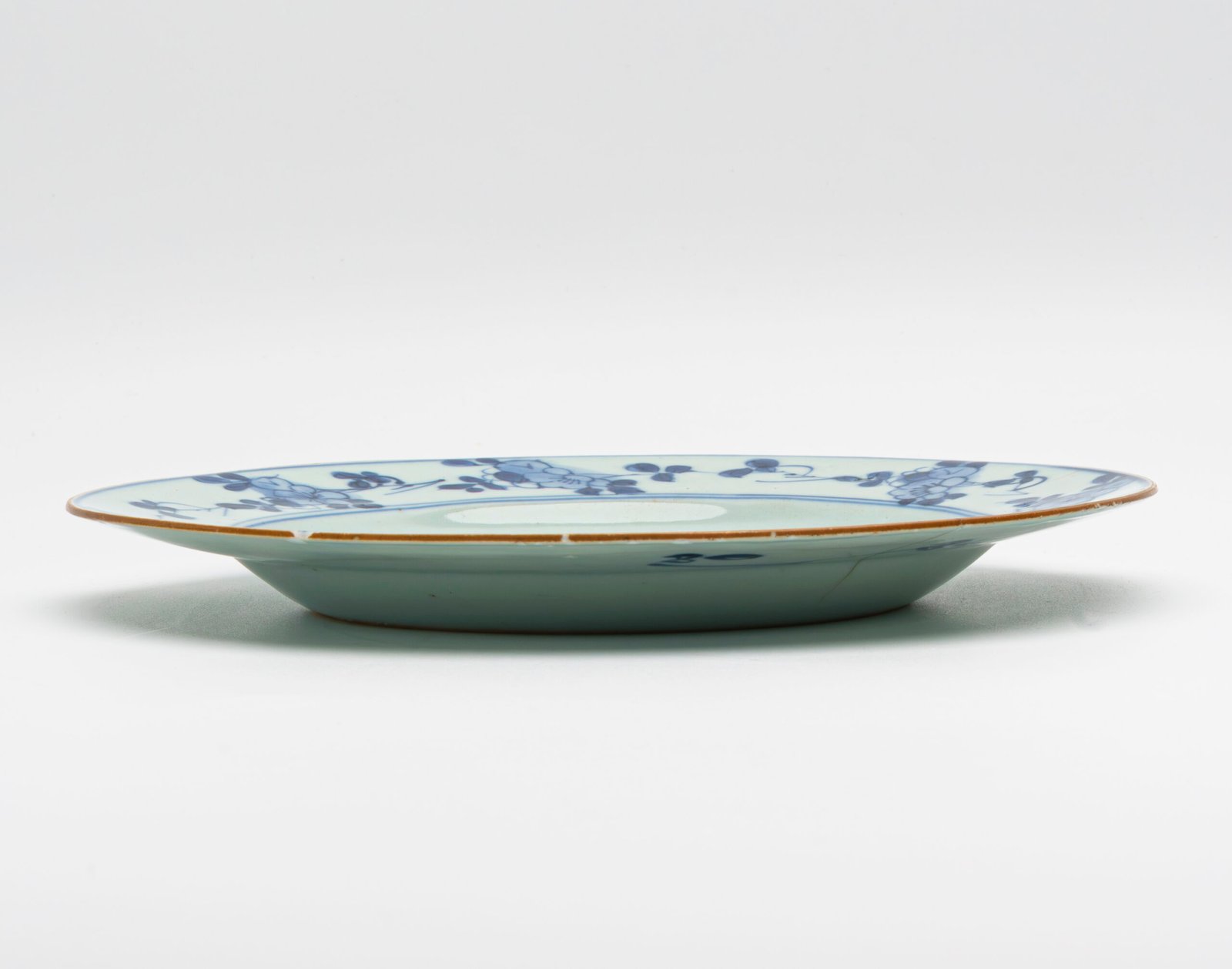
Height Approx. 2.5 cm
Diameter Approx. 21.5 cm
Condition:
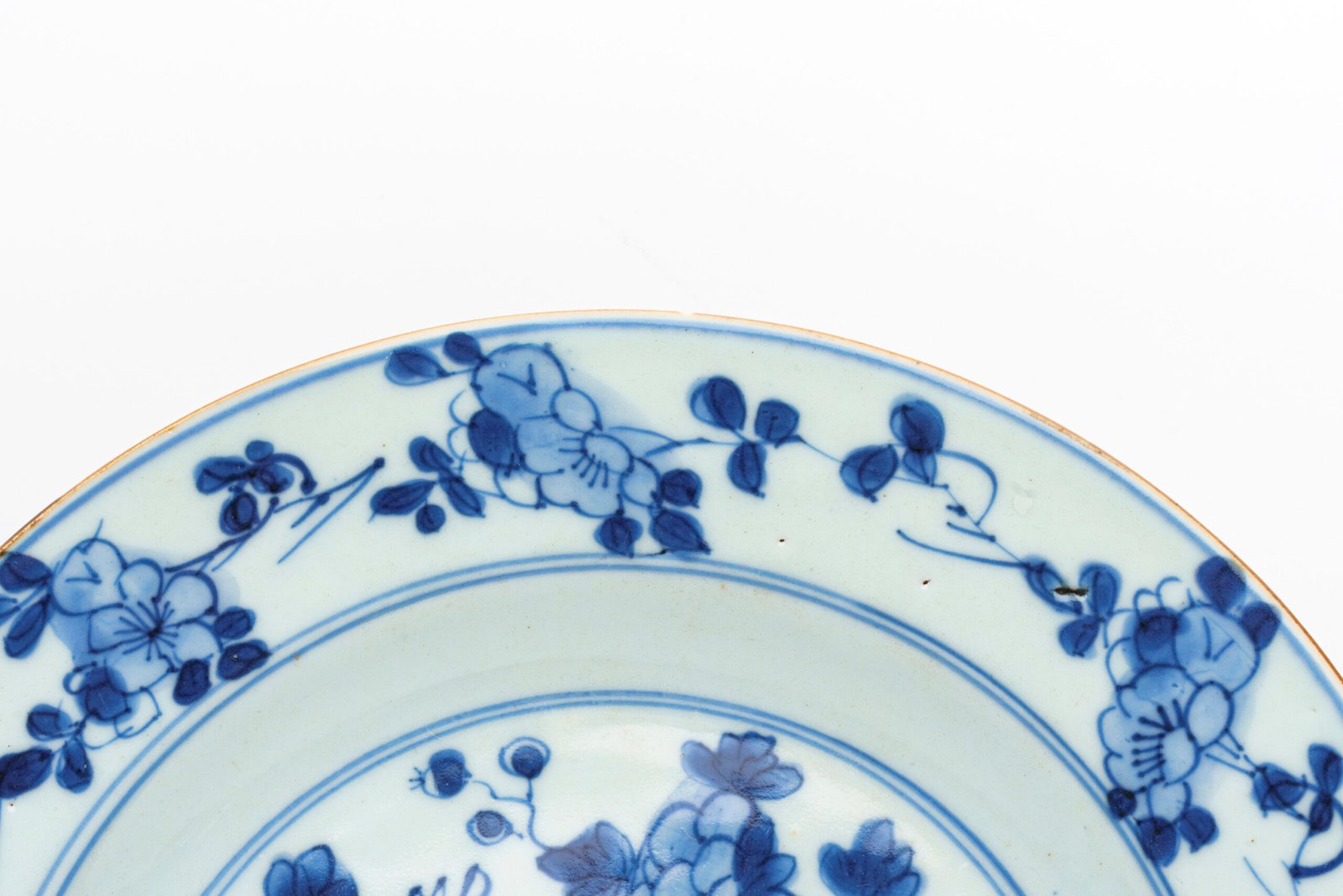
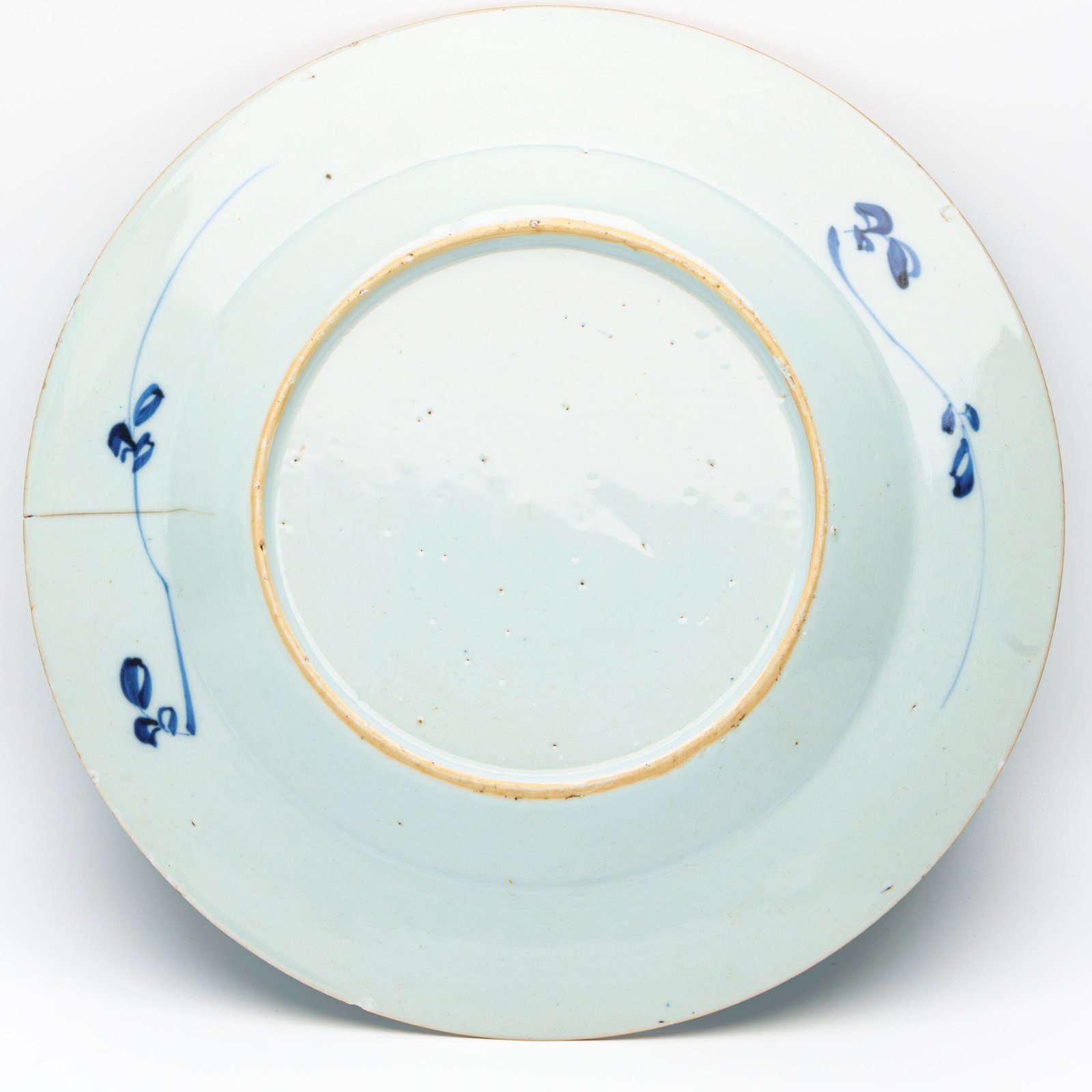
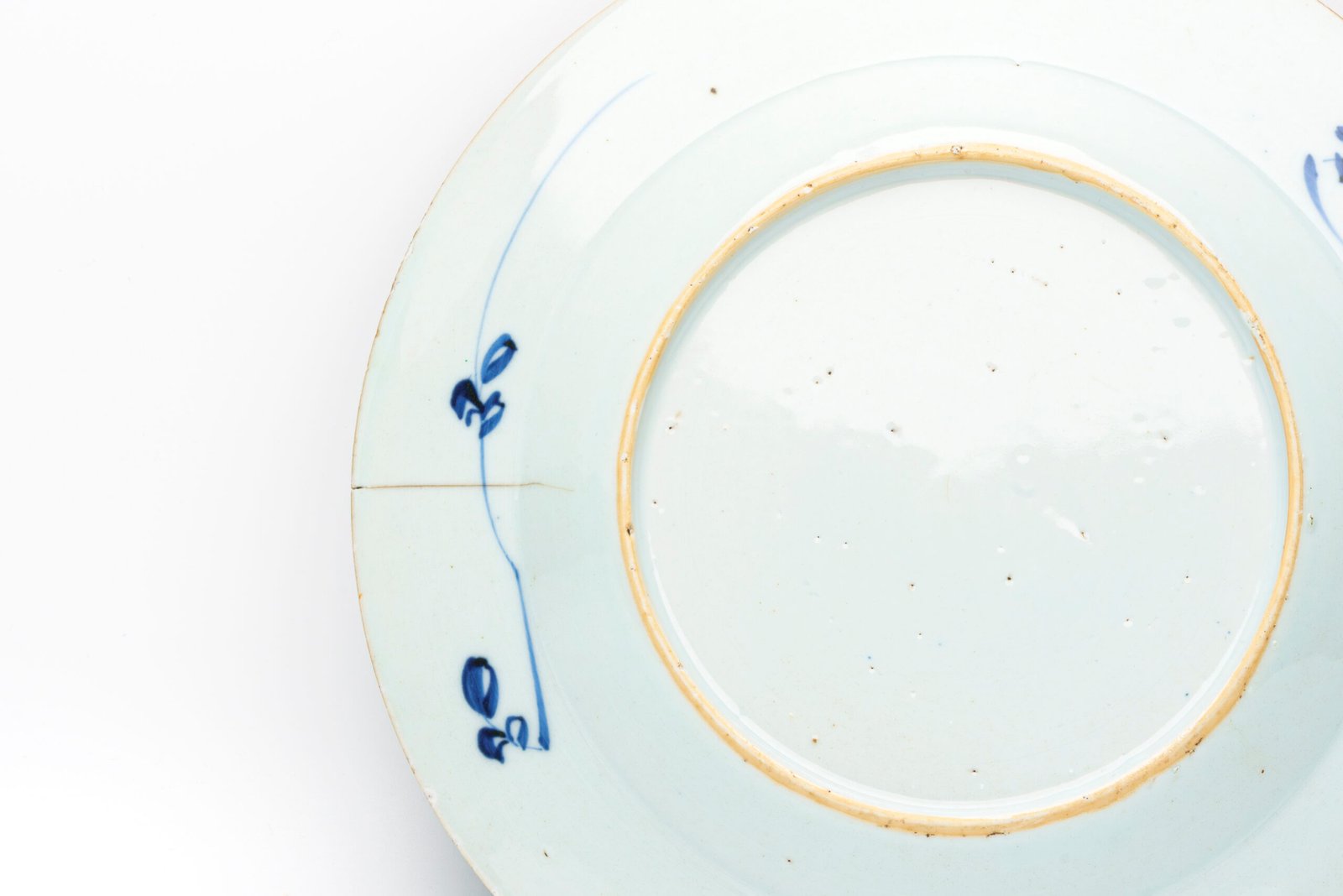
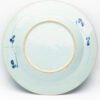
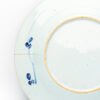
GOOD ⭐⭐⭐⭐☆ (4/5) – Fine hairline crack on the rim approx. 5 cm, minor glaze imperfections and age-related wear. Please review the photos carefully for more details.
International Shipping
We ship worldwide using tracked and insured services. Prices are calculated at checkout. All items are securely packaged with care and experience.
Pricing
Prices reflect past sales and our assessment of each item’s rarity and condition. Contact us if you would like to discuss.
Research
All item details are based on our own research and evaluation. We welcome questions or feedback.
Authenticity
Every item is guaranteed to be as described, with provenance provided where available.
Refunds
We accept returns within 14 days of delivery. Please contact us first to arrange a return and refund.
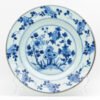
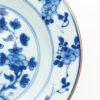
Fine Chinese Porcelain Blue & White underglaze. The central medallion features a Peony blossom arrangement issuing from a stylized rock, surrounded by delicate floral sprays and a repeating border of blossoms along the rim.
The plate displays a characteristic brown rim (iron-oxide dressed edge), typical of Kangxi period wares. The cobalt tones vary from deep to soft washes, showing skilled brushwork and depth.
Visible kiln grit and natural glaze imperfections consistent with early Qing production are present on the reverse.
Collector’s Notes: Kangxi period Blue & White Porcelain is highly prized for its vibrant cobalt and refined painting. The Peony symbolizes wealth and honor in Chinese culture, making such plates desirable among collectors. The brown rim is a classic feature often seen on export and domestic wares of the late 17th to early 18th century.
Related products
-

Chinese Qianlong Porcelain Plate Famille Rose Gilt European Aqua Birds Qing 18C
£95.00 -
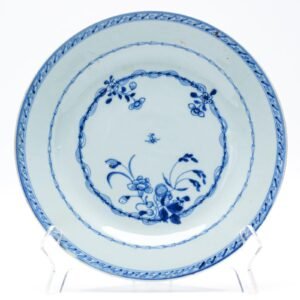
Chinese Porcelain Plate Blue White Peony Flower Plants Symbol Qianlong 18C
£55.00 -
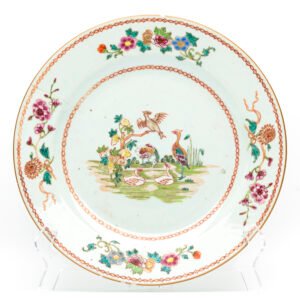
Chinese Qianlong Porcelain Plate Famille Rose Gilt European Aqua Birds Qing 18C
£110.00 -
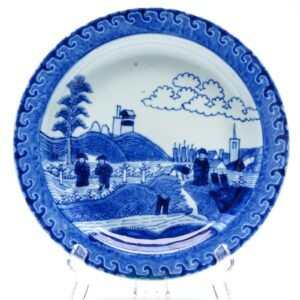
Chinese Porcelain Plate Blue Deshima Island Van Frytom Style Yongzheng Qing 18C
£349.99