

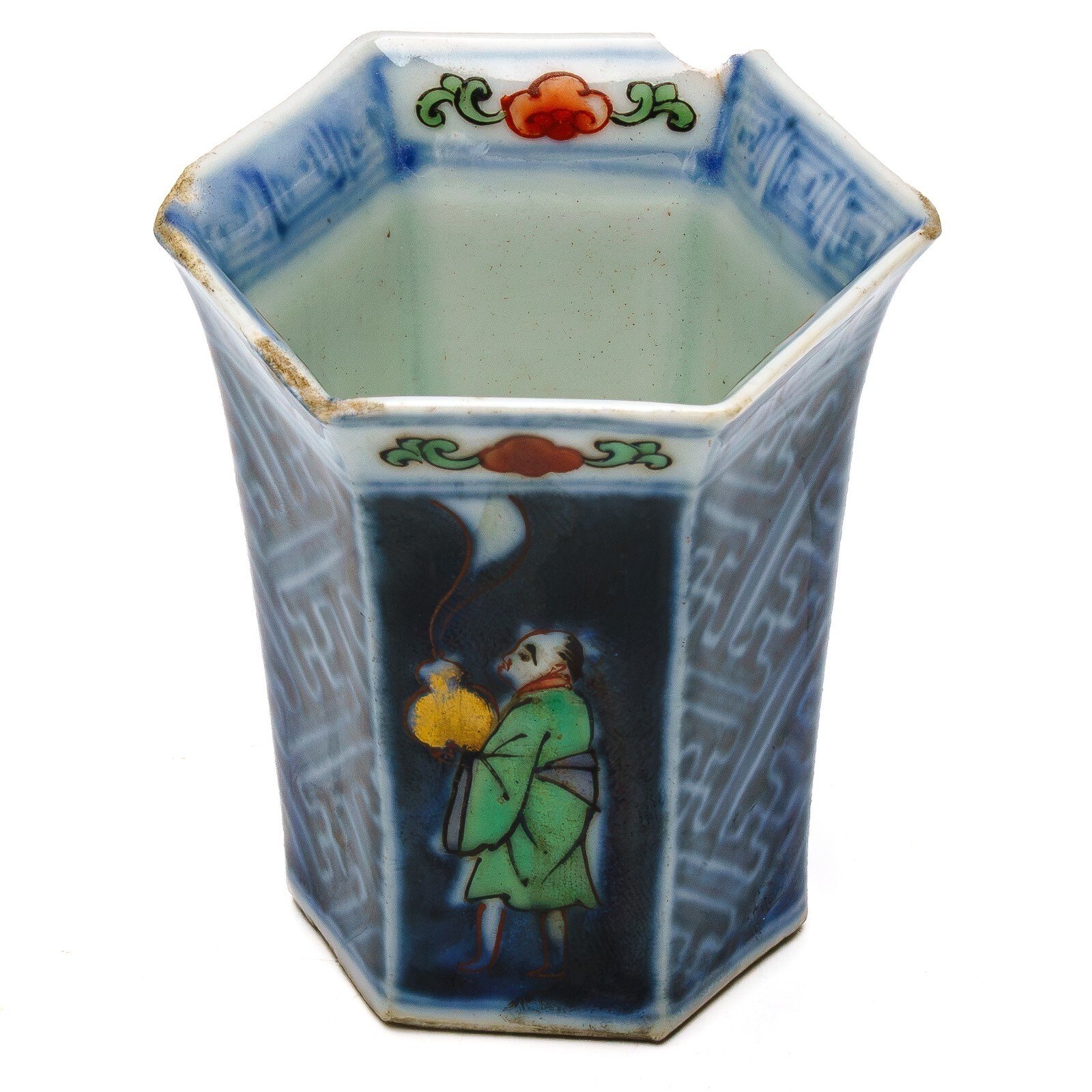
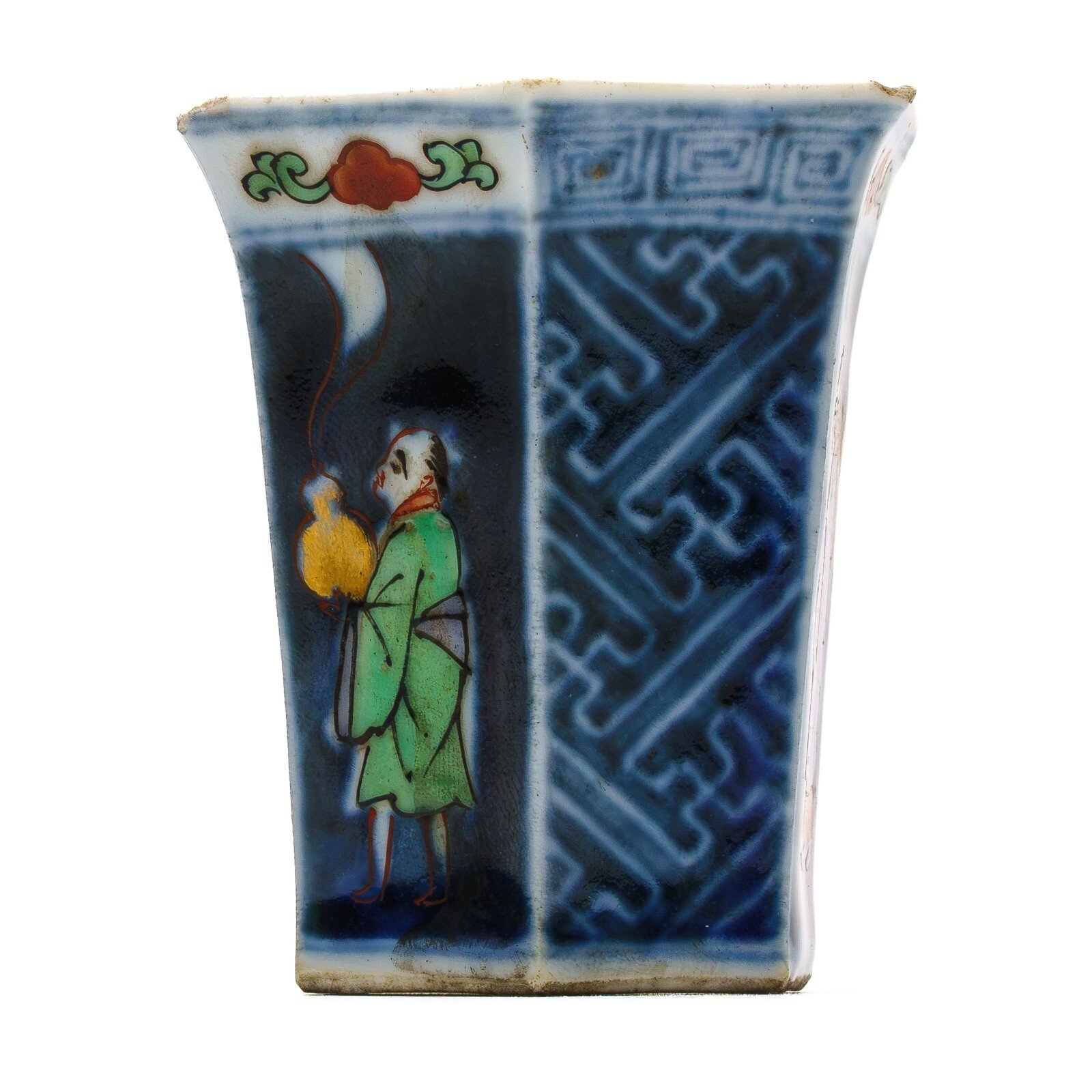
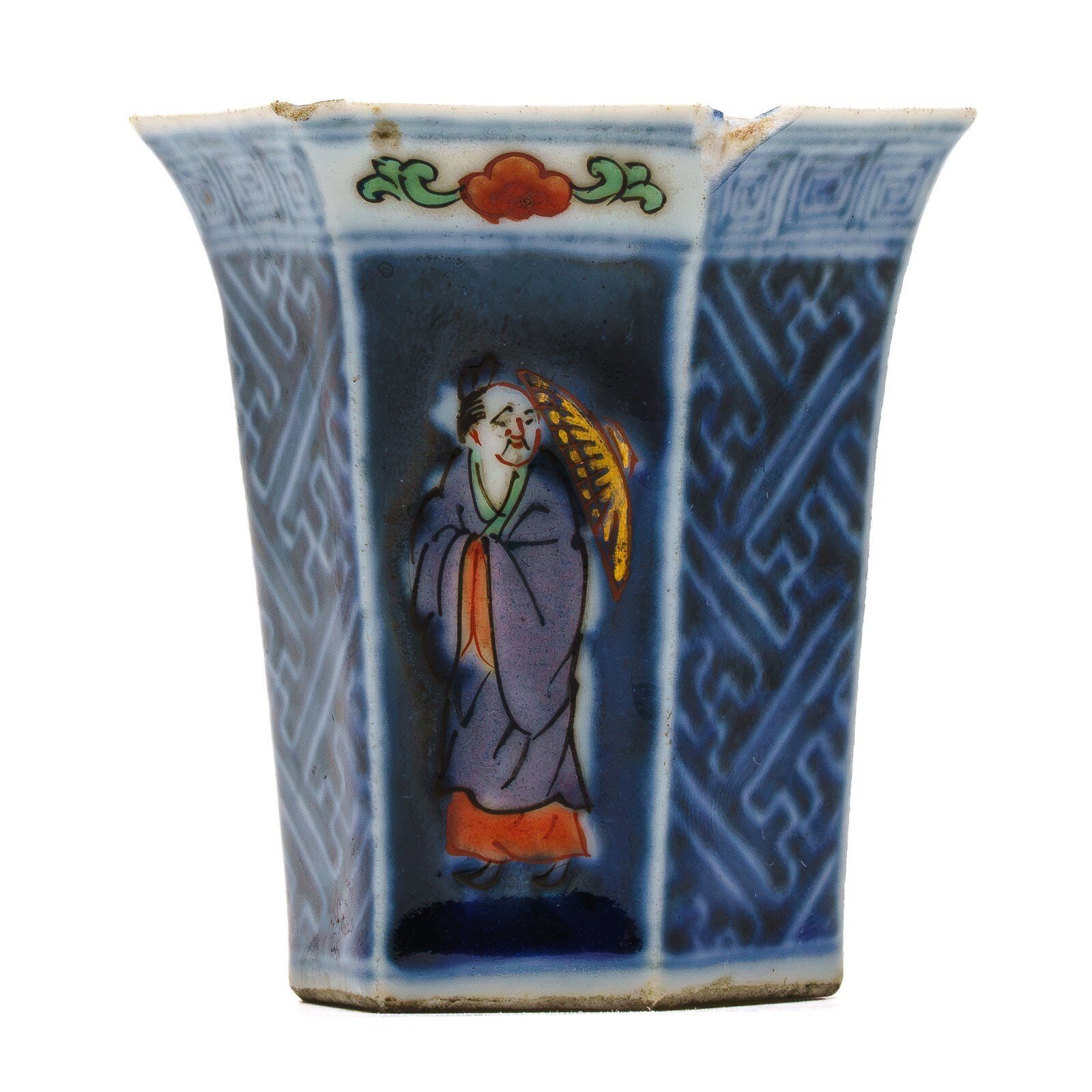

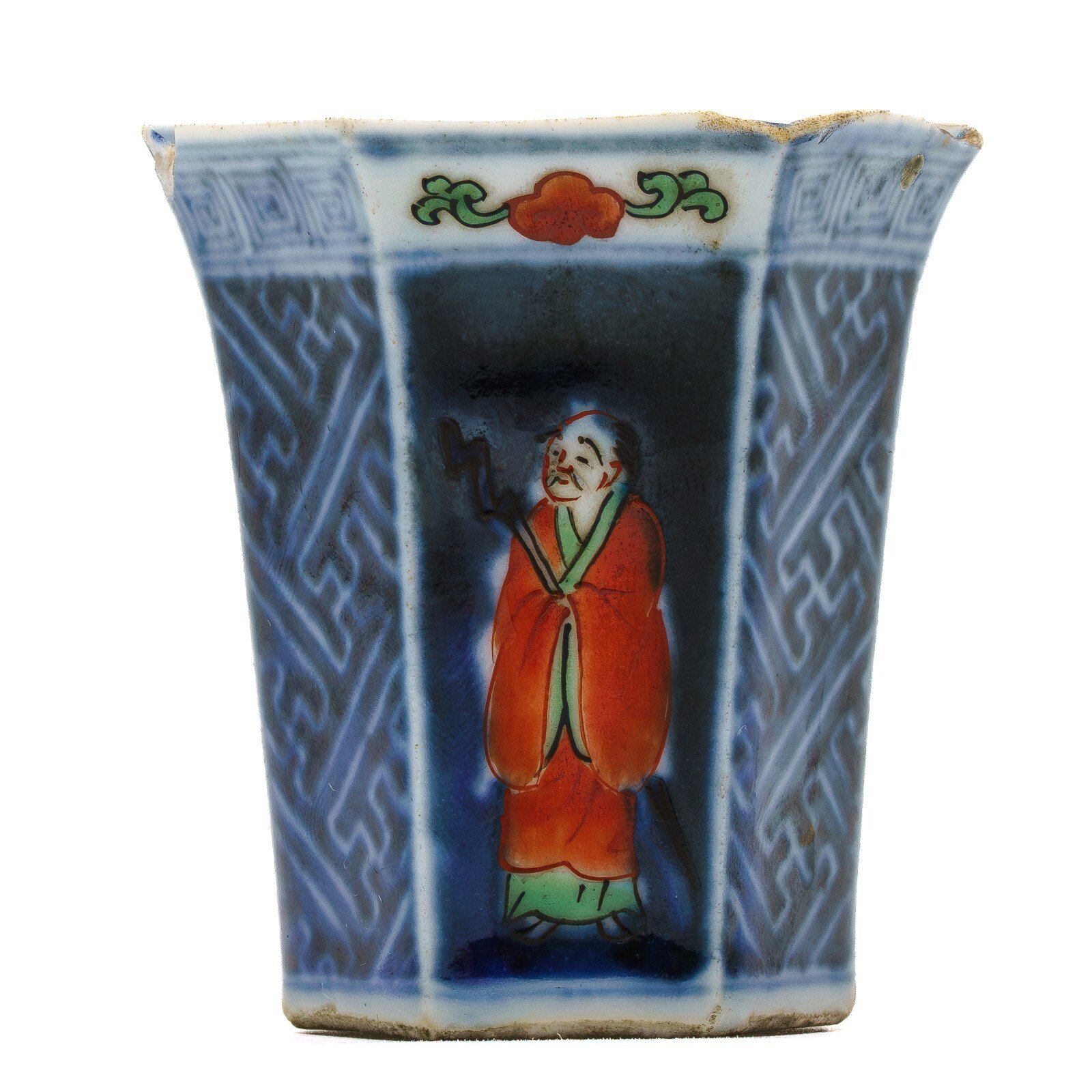

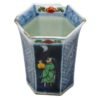


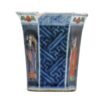



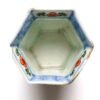

Japanese Porcelain Wine Cup Blue Enamel Immortals Edo Meiji Mark Eiraku 19th C
£110.00
Inventory Code: INV5130
Object: Wine Cup
Material: Porcelain
Origin: Japan
Period: Late Edo to Meiji
Date: 19th Century
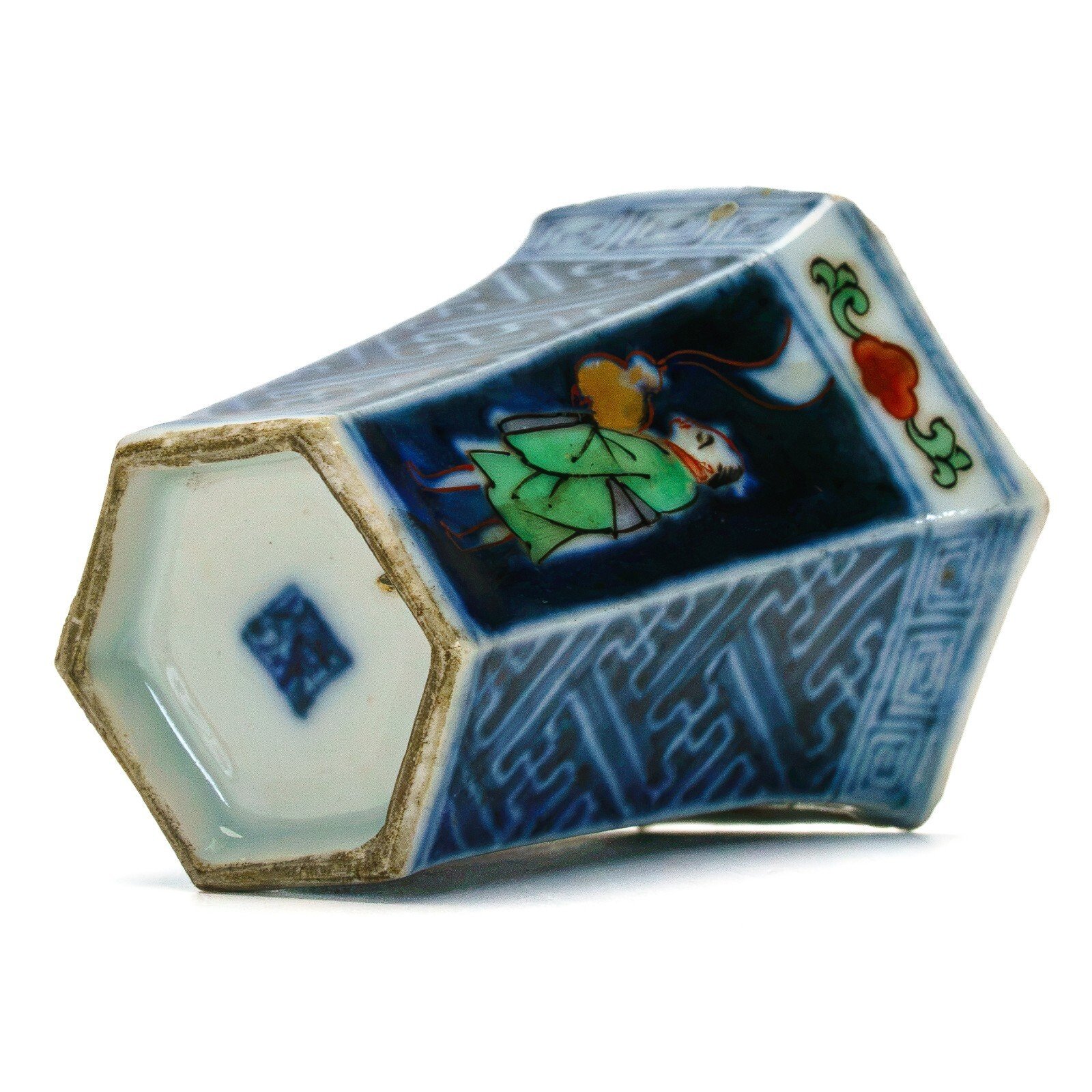
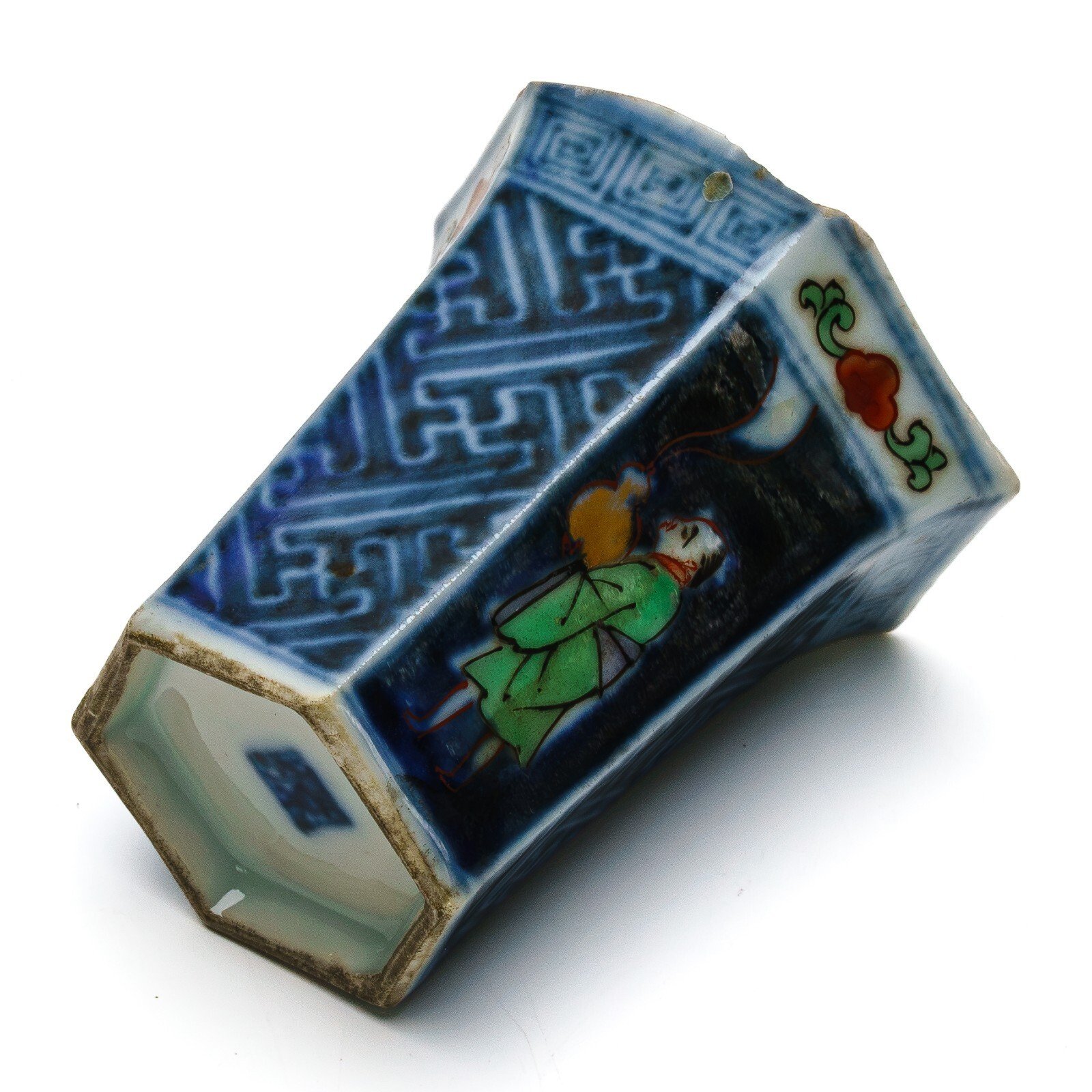
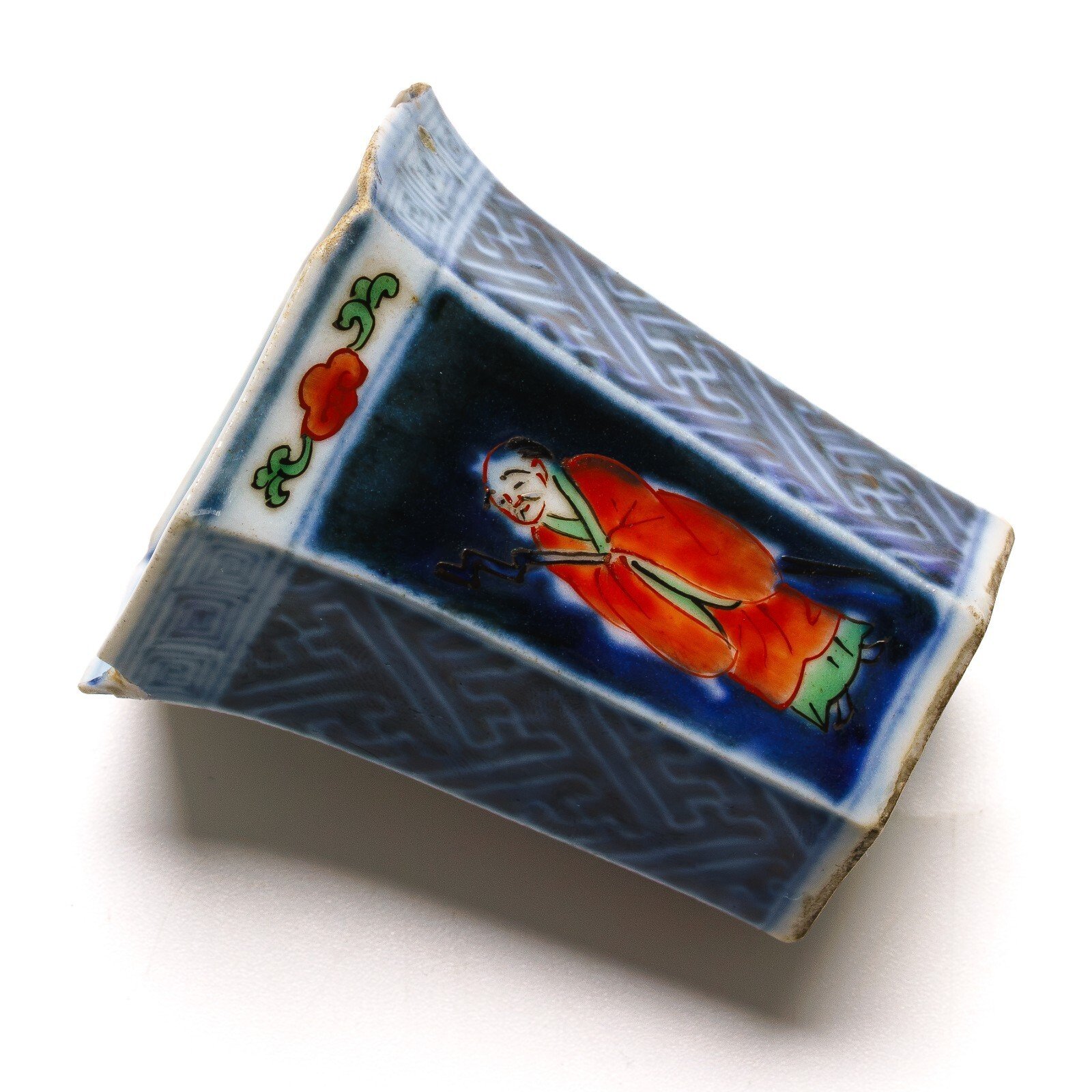
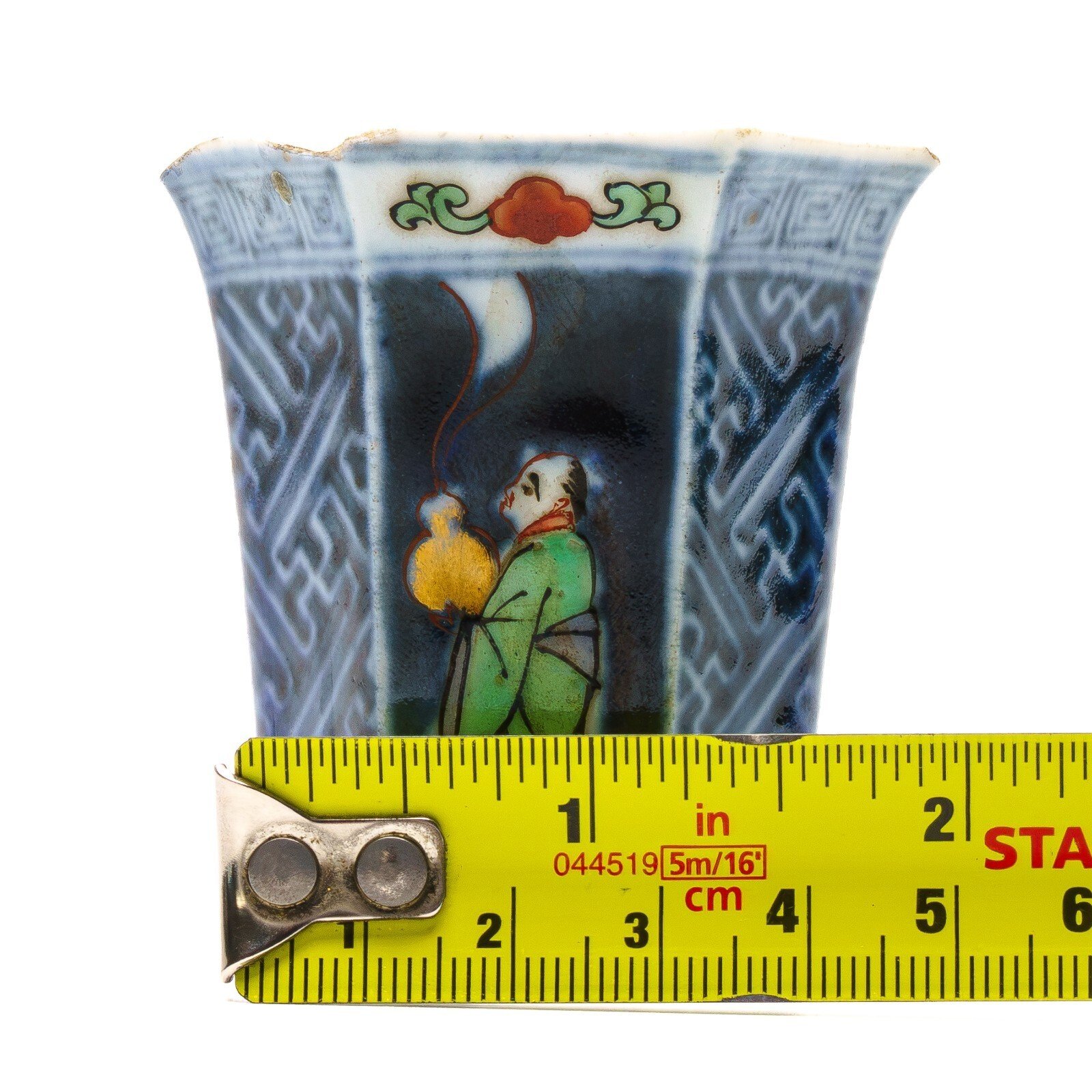
Decoration: Blue ground with geometric patterns and polychrome figure holding a double gourd
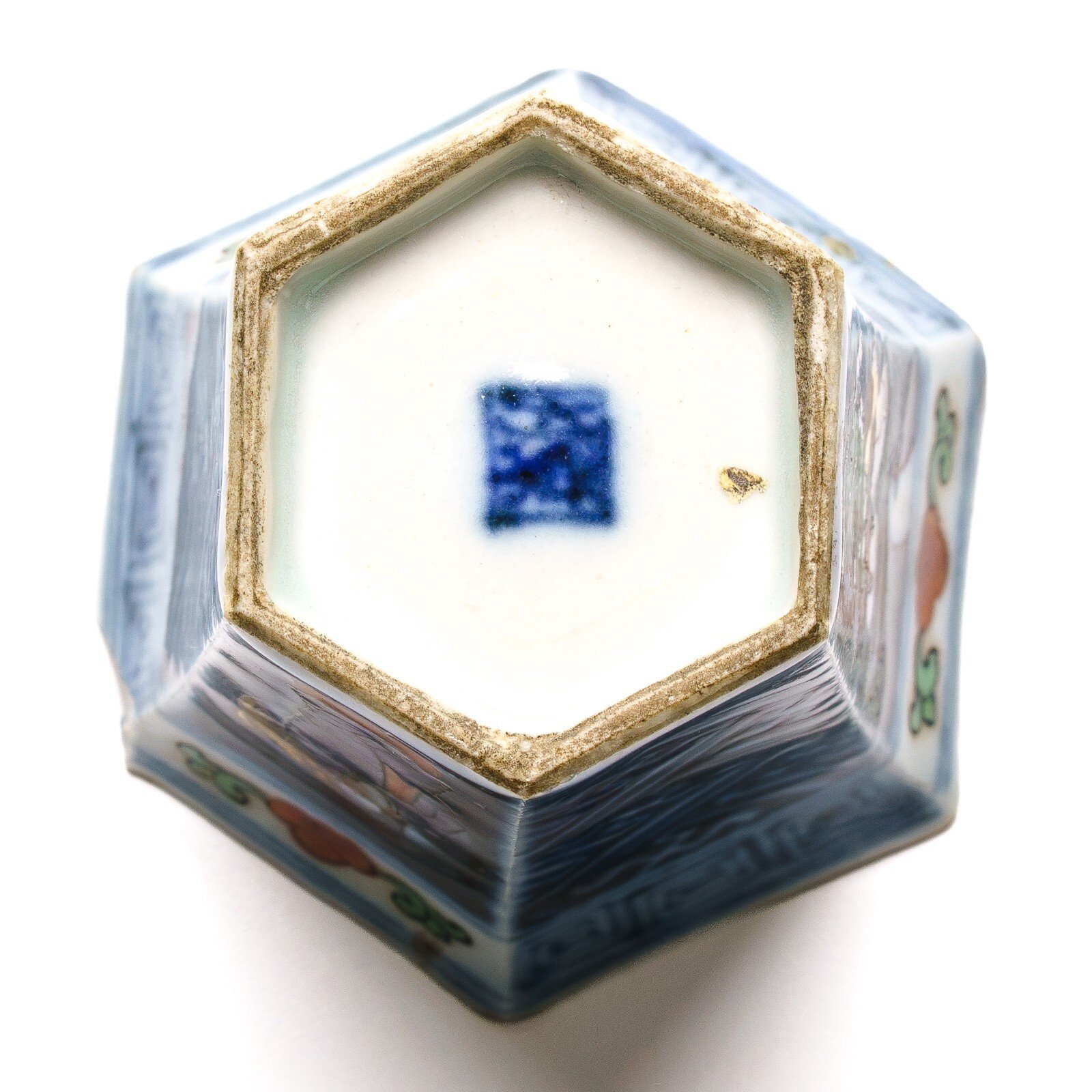
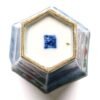
Marked: Underglaze blue mark to base, attributed as Eiraku
Measurements:
Diameter: 2.2 in / 5.5 cm
Height: 2.4 in / 6.0 cm
Base Diameter: 1.4 in / 3.5 cm
Condition:
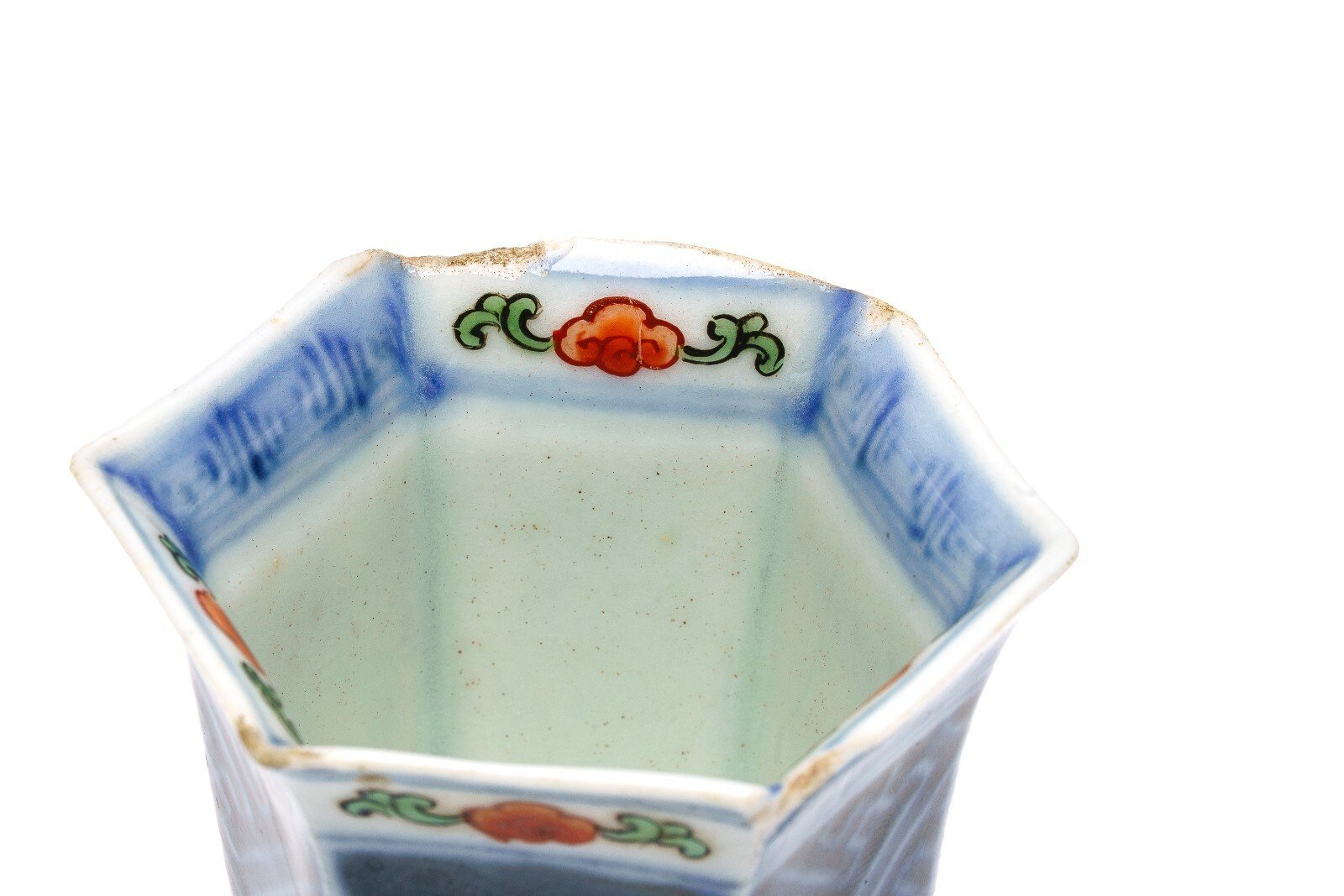
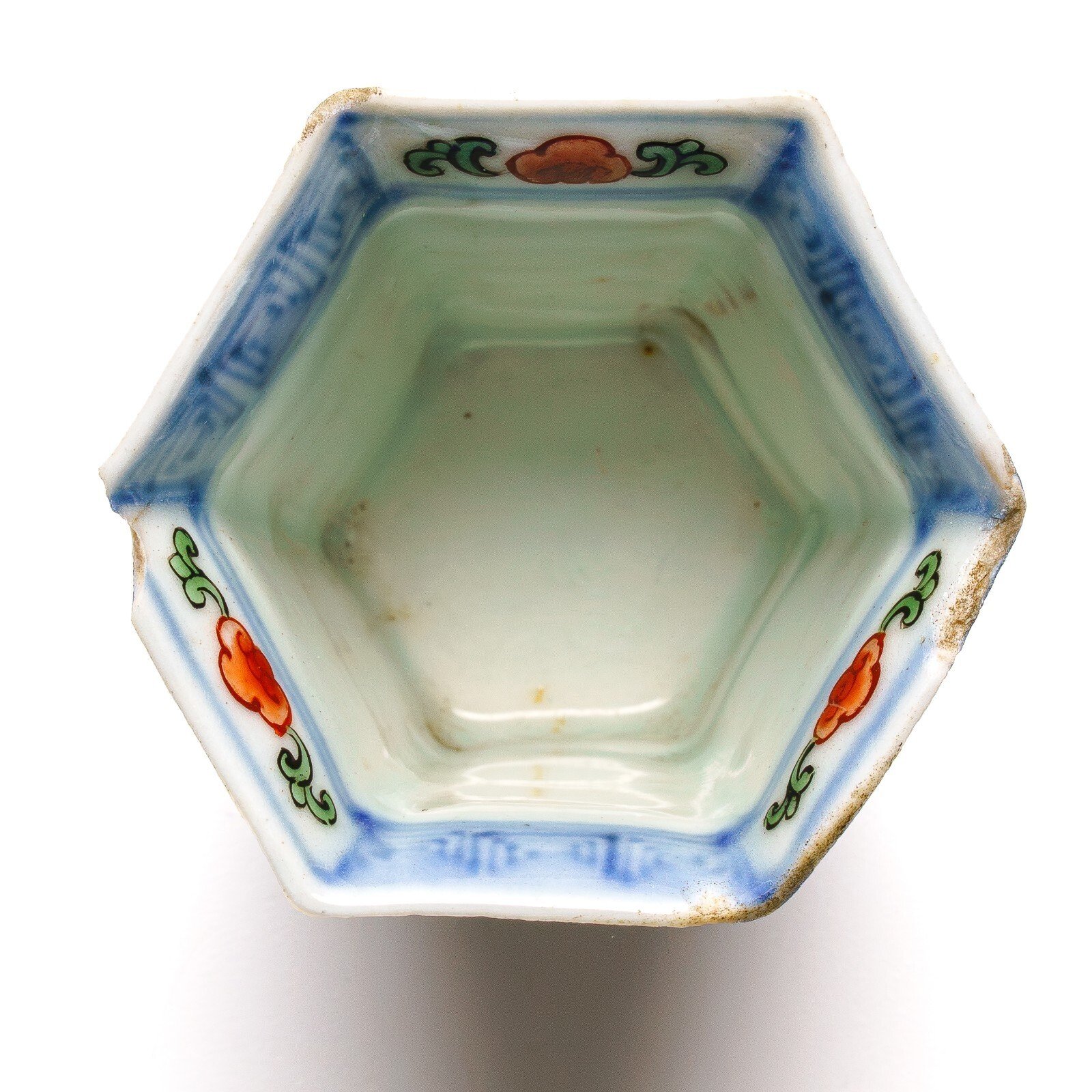
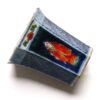
FAIR (3/5) - Several chips and frits around the shaped rim, with rubbing, surface wear and minor firing imperfections consistent with age. Please review the photos carefully for more details.
International Shipping
We ship worldwide using tracked and insured services. Prices are calculated at checkout. All items are securely packaged with care and experience.
Pricing
Prices reflect past sales and our assessment of each item’s rarity and condition. Contact us if you would like to discuss.
Research
All item details are based on our own research and evaluation. We welcome questions or feedback.
Authenticity
Every item is guaranteed to be as described, with provenance provided where available.
Refunds
We accept returns within 14 days of delivery. Please contact us first to arrange a return and refund.
DESCRIPTION
A distinctive Japanese porcelain wine cup of hexagonal form dating to the 19th century. The exterior is richly decorated in deep blue with repeating geometric patterns alternating with figural panels. The principal figure is painted in green, yellow and iron red enamels and carries a double gourd, a motif associated with Daoist and popular East Asian immortal imagery. Stylized red and green ornament decorates the upper border, while the interior is finished in a pale celadon-toned glaze. An underglaze blue mark is present on the recessed base.
COLLECTOR’S NOTE
Small Japanese porcelain vessels combining underglaze blue decoration with colored enamels were produced in a wide variety of forms during the late Edo and Meiji periods. The unusual hexagonal shape, figural imagery and marked base give this example particular decorative and collecting interest.
NOTES
Please review all photos carefully as they form part of the description.
Related products
-

Chinese Porcelain Cup Mandarin Rose Gilt Garden Chicken Scene Qing Qianlong 18C
£170.99 -

Chinese Export American Cup Saucer Sepia Shipyard Qianlong Blue Gilt Enamel 18C
£90.00 -

Chinese Tongzhi Porcelain Iron Red Gilt Cup Pomegranate Shou Bat Qing Mark 19C
£71.00 -

Chinese Kangxi Porcelain Bowl Fish Cafe Au Lait Blue Mark Qing Period 19th C.
£40.00