
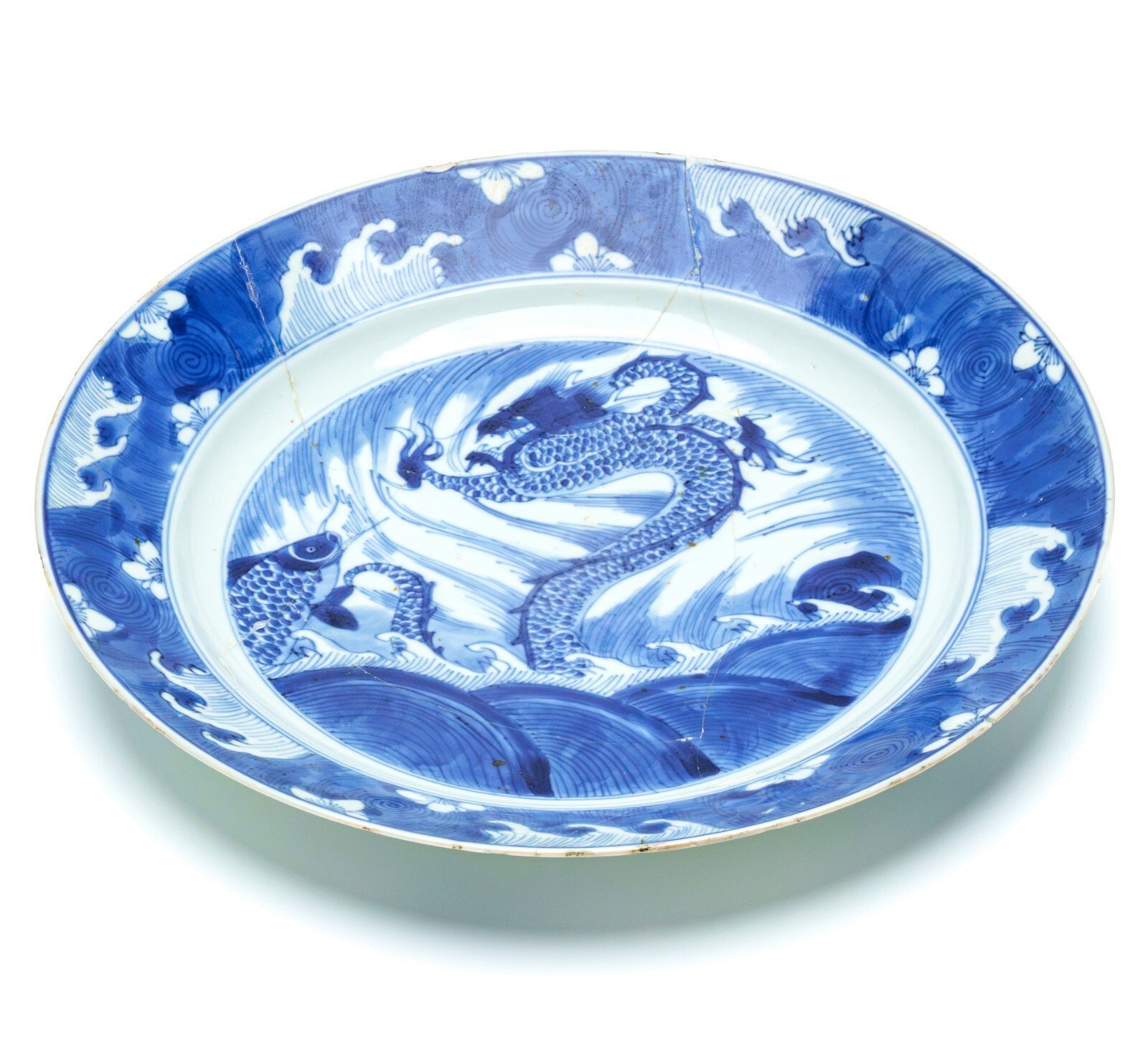
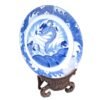
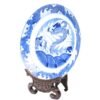





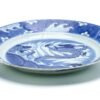


Chinese Porcelain Plate Blue White Leaping the Dragon Gate Kangxi Mark Qing 18C
£250.00
Inventory Code: INV4806
Object: Plate
Material: Porcelain
Origin: China
Period: Kangxi, Qing Dynasty
Date: Late 17th to early 18th century
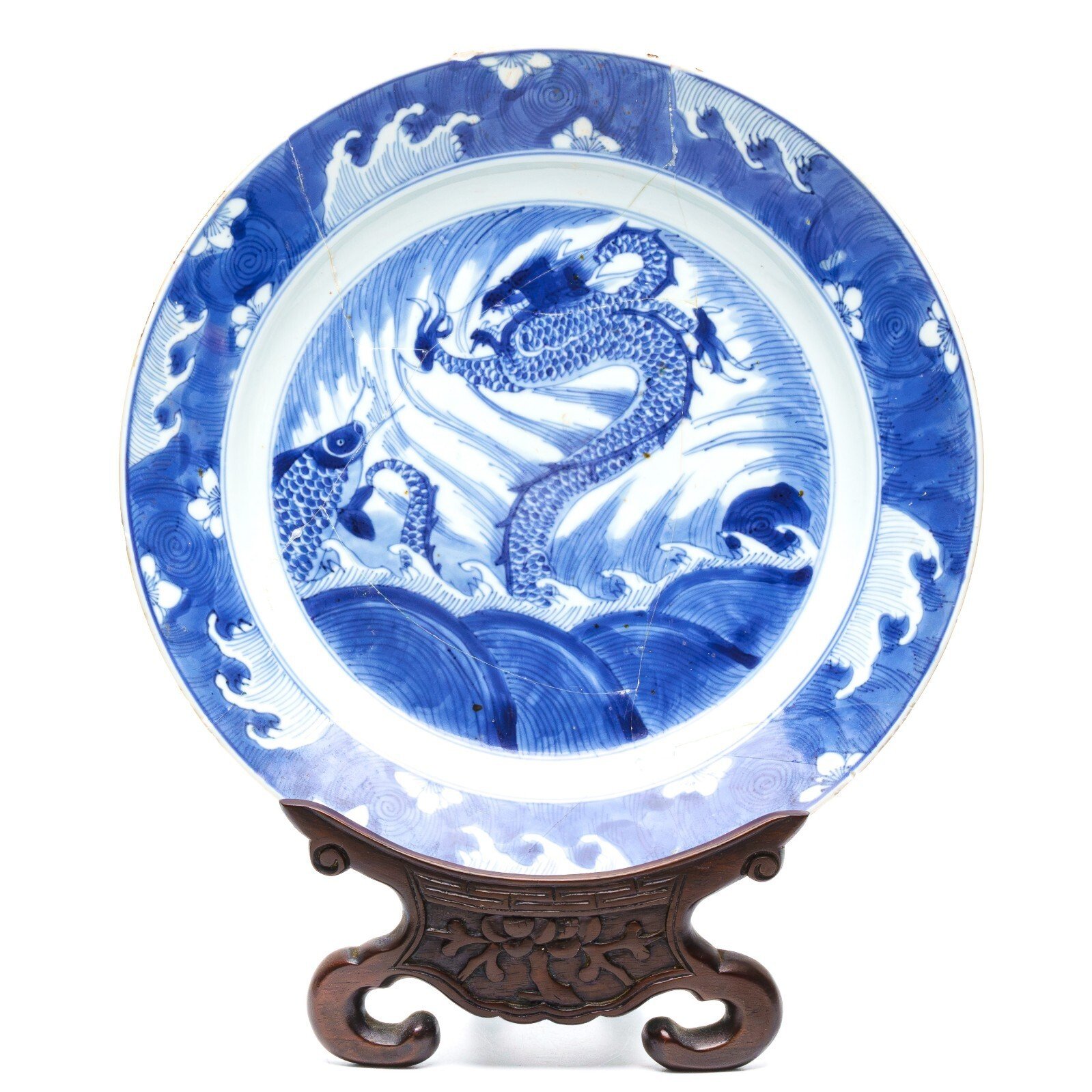
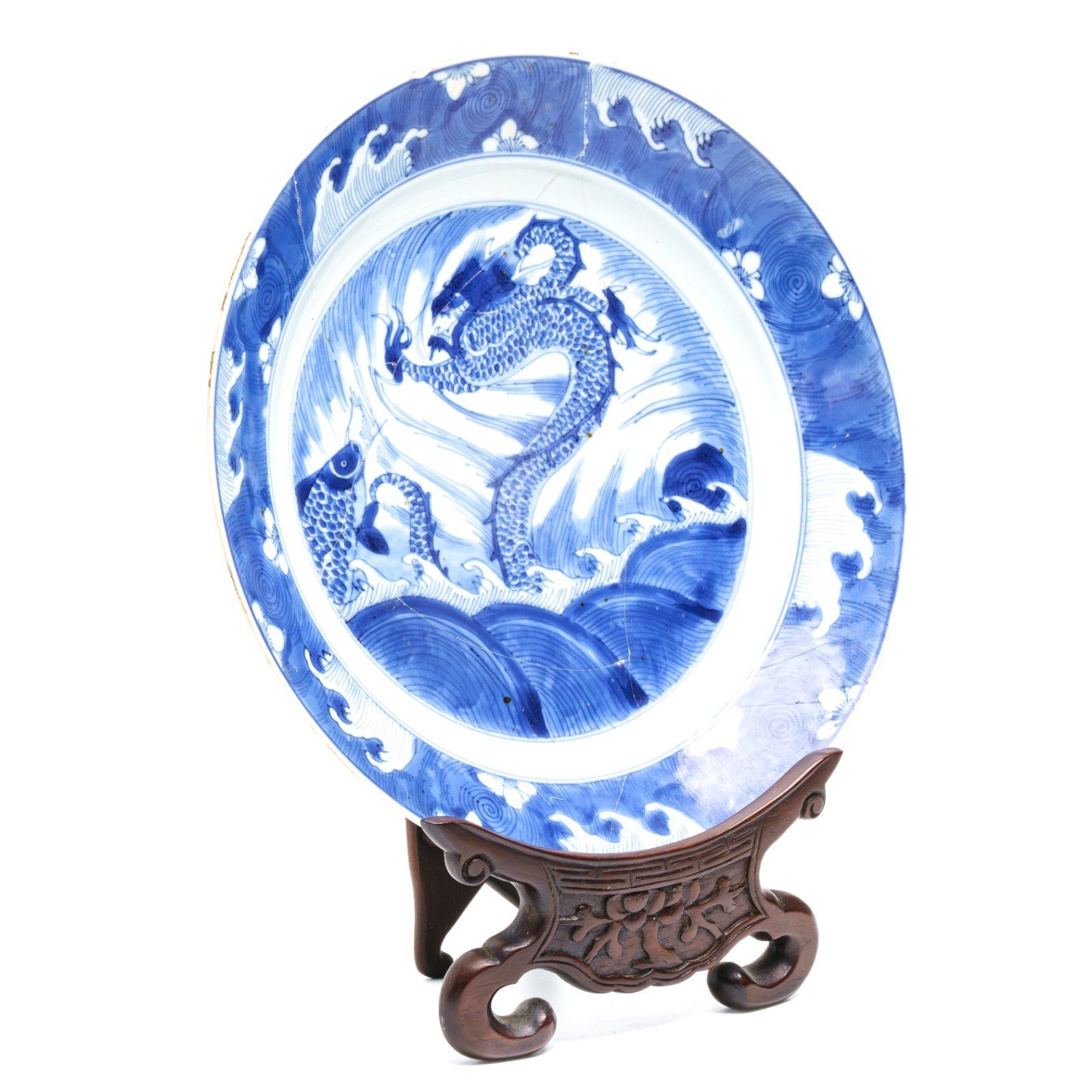
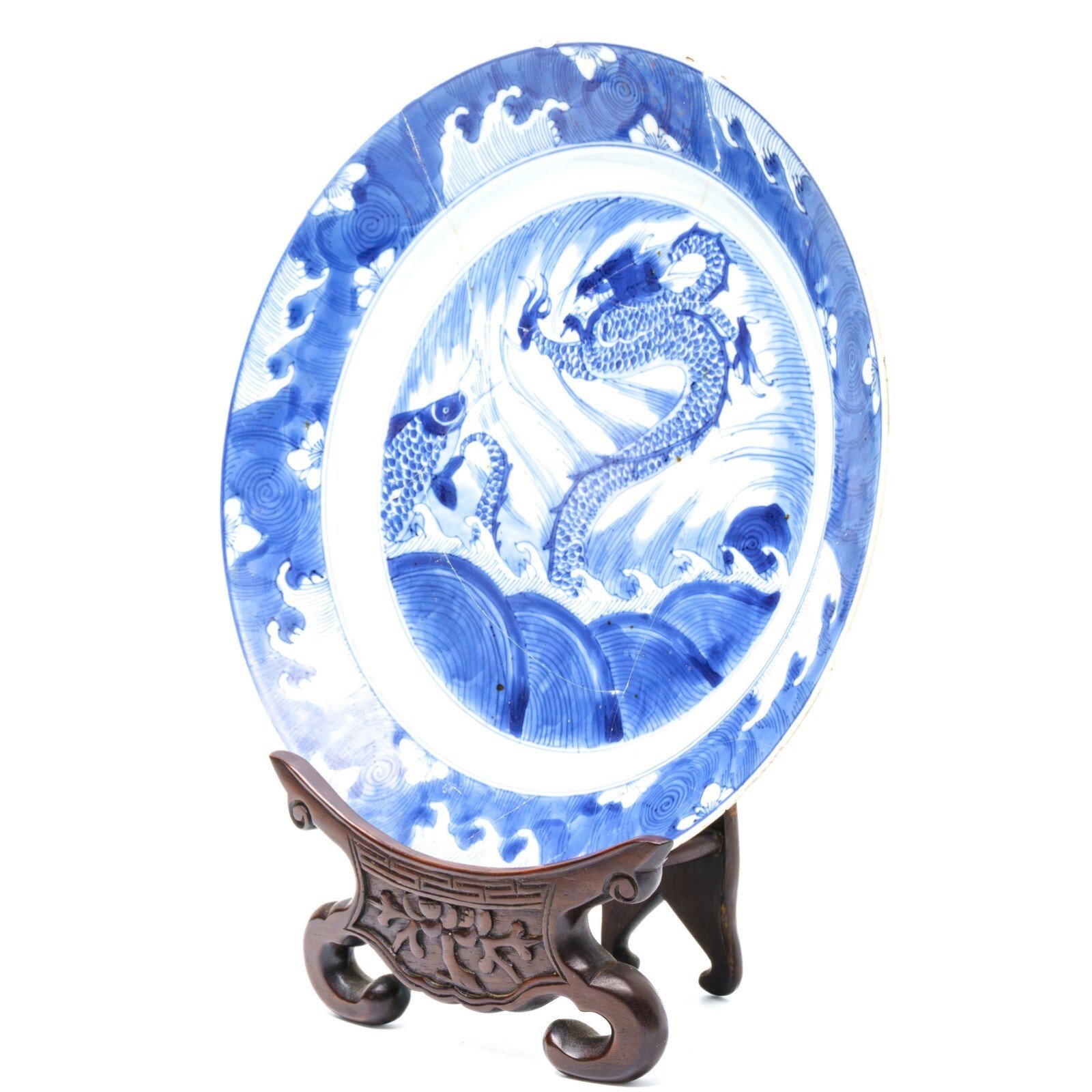
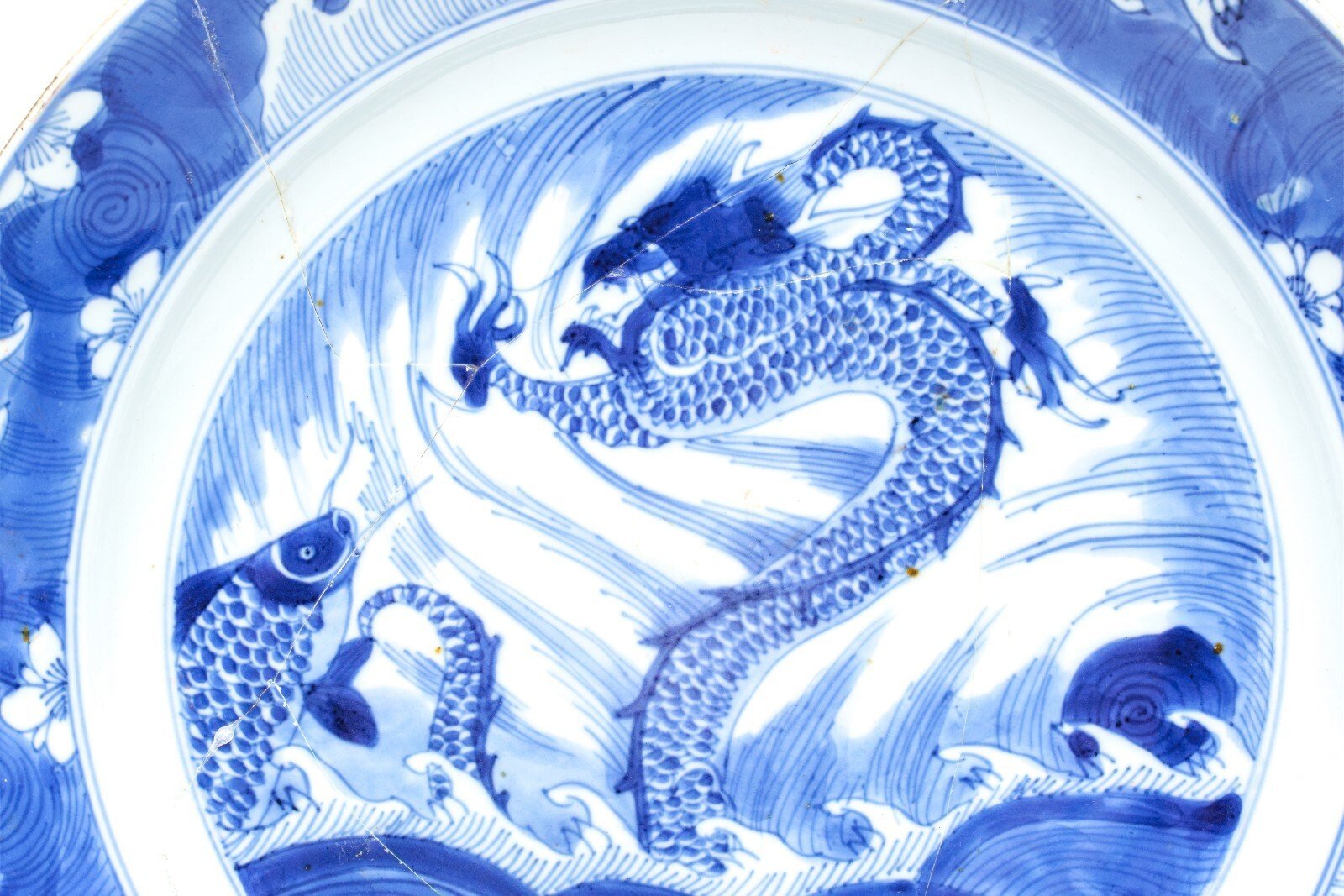
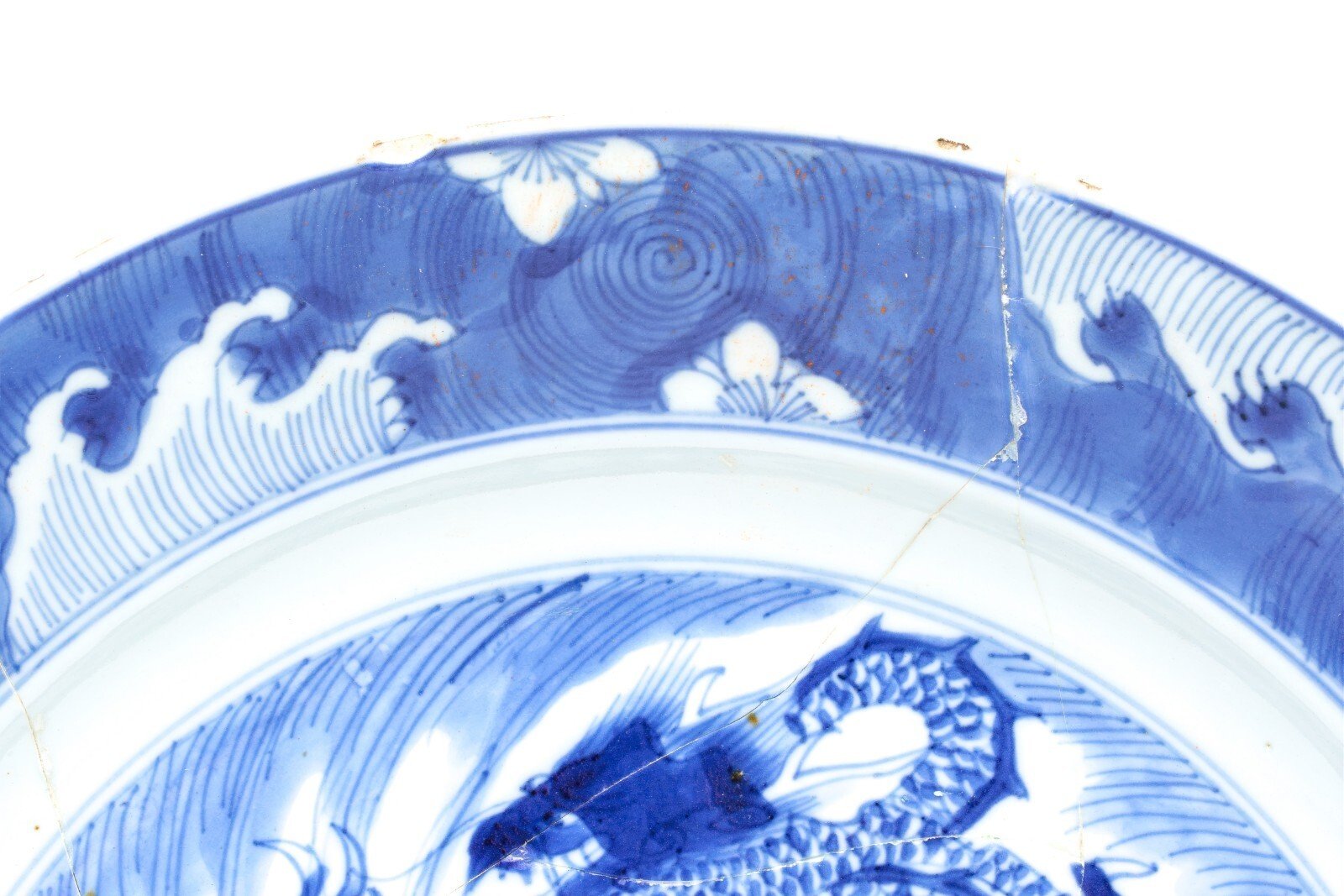
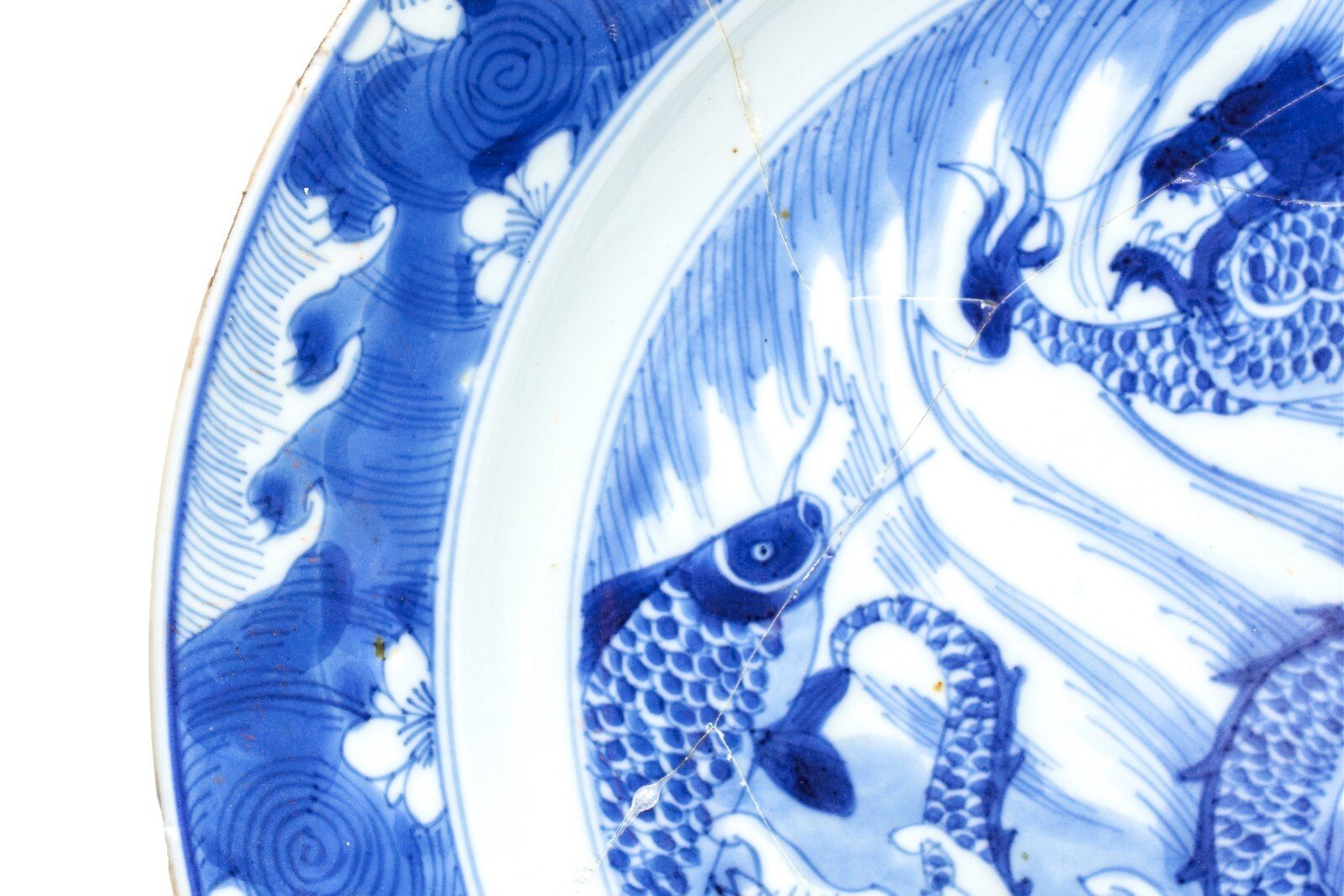
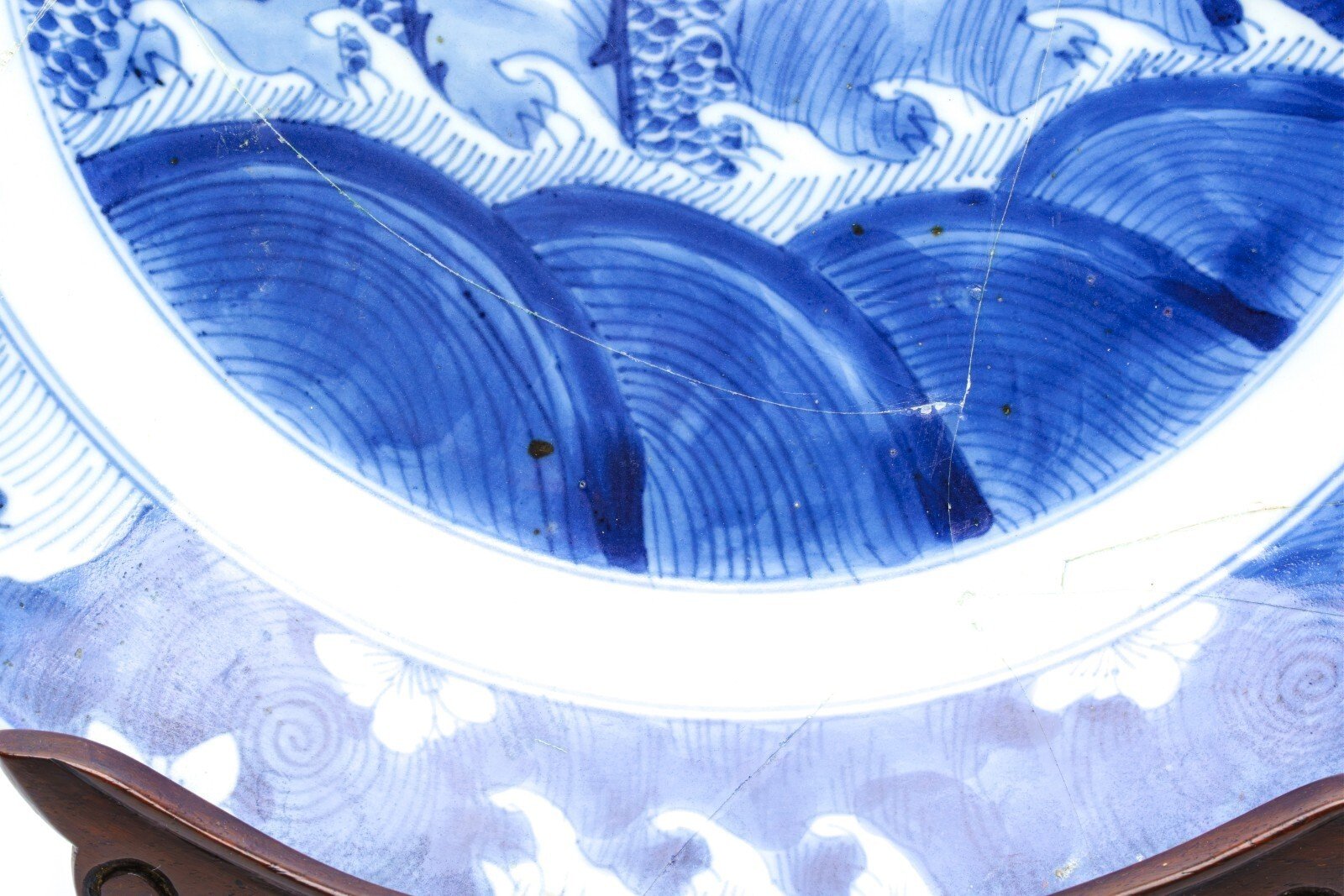
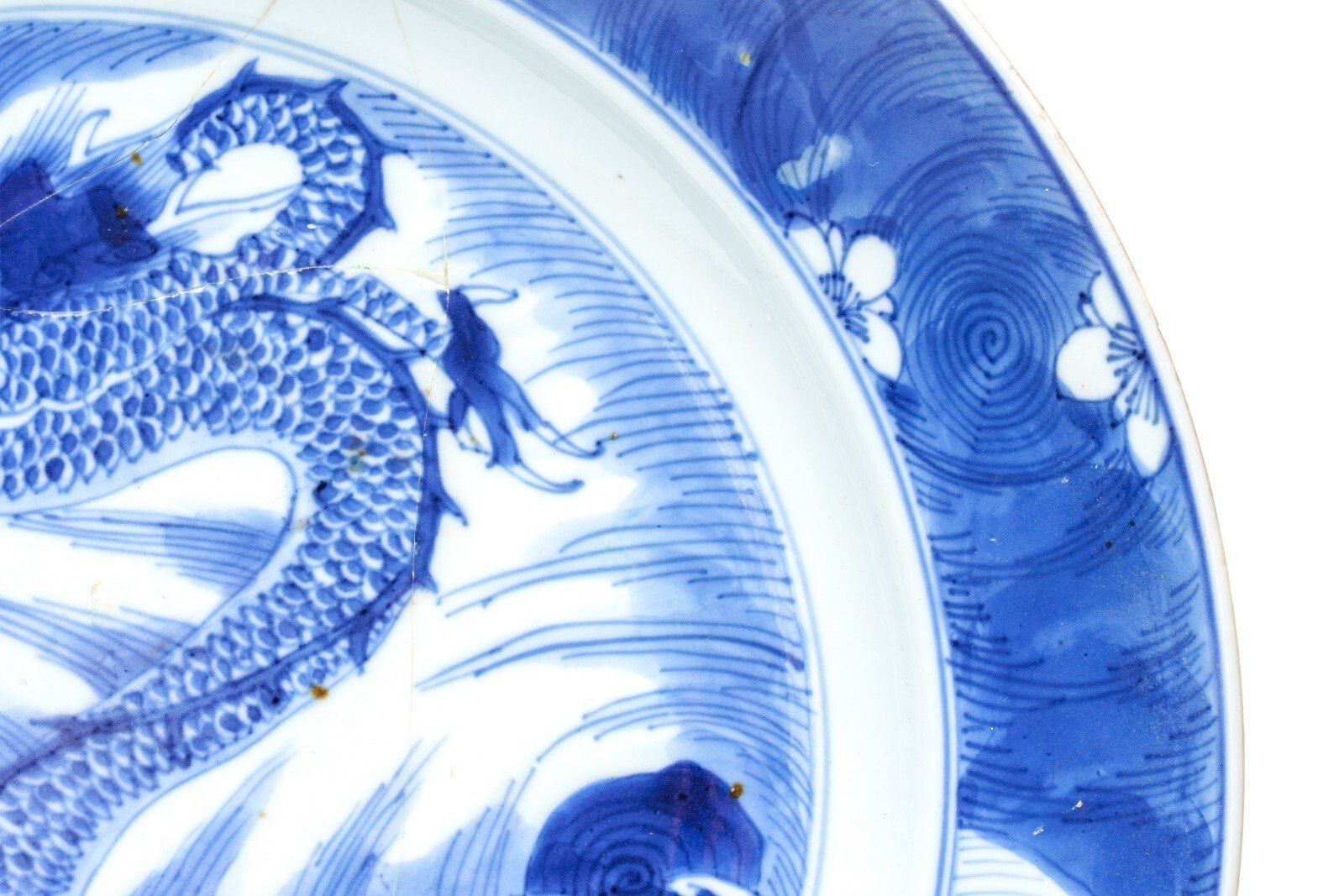
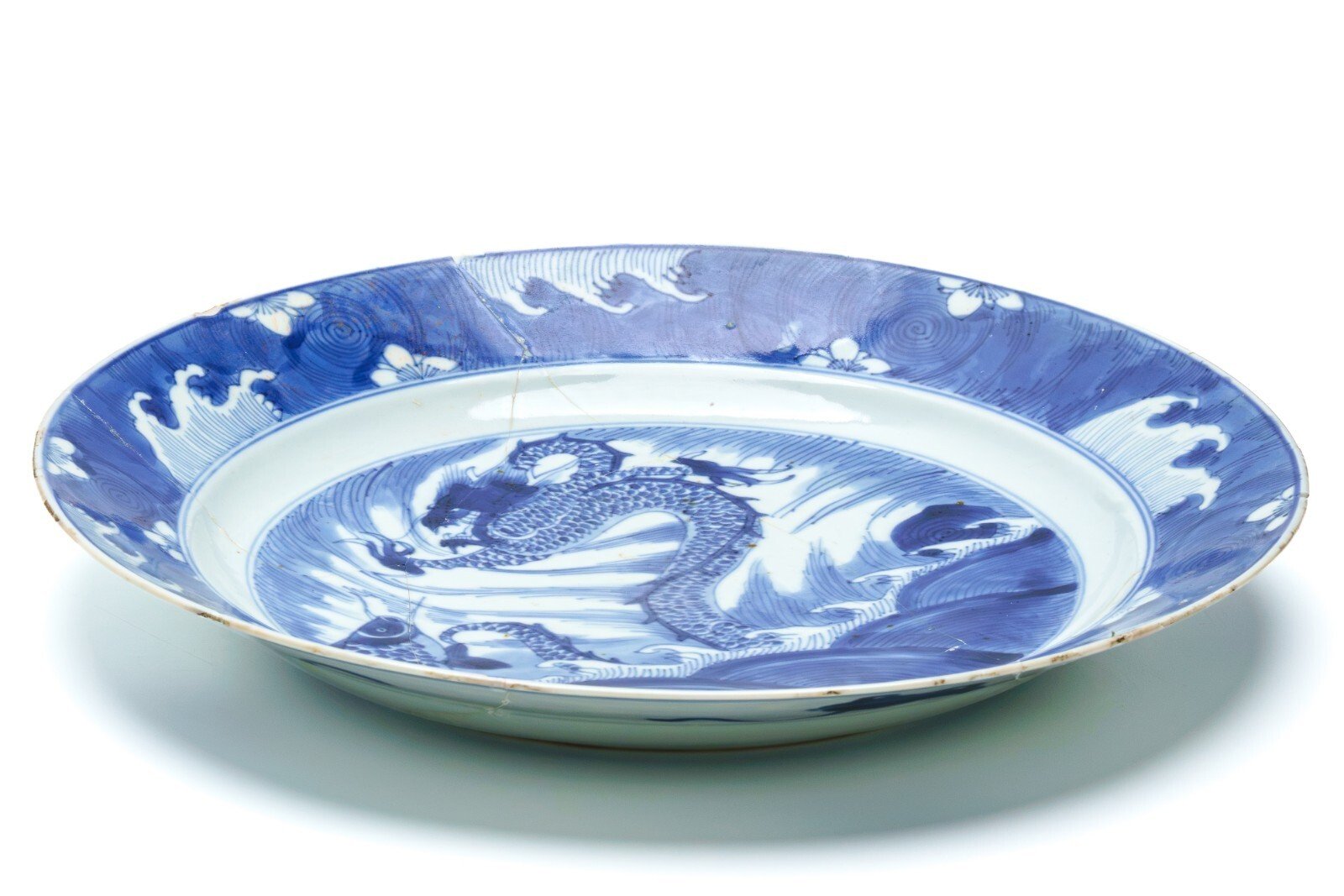
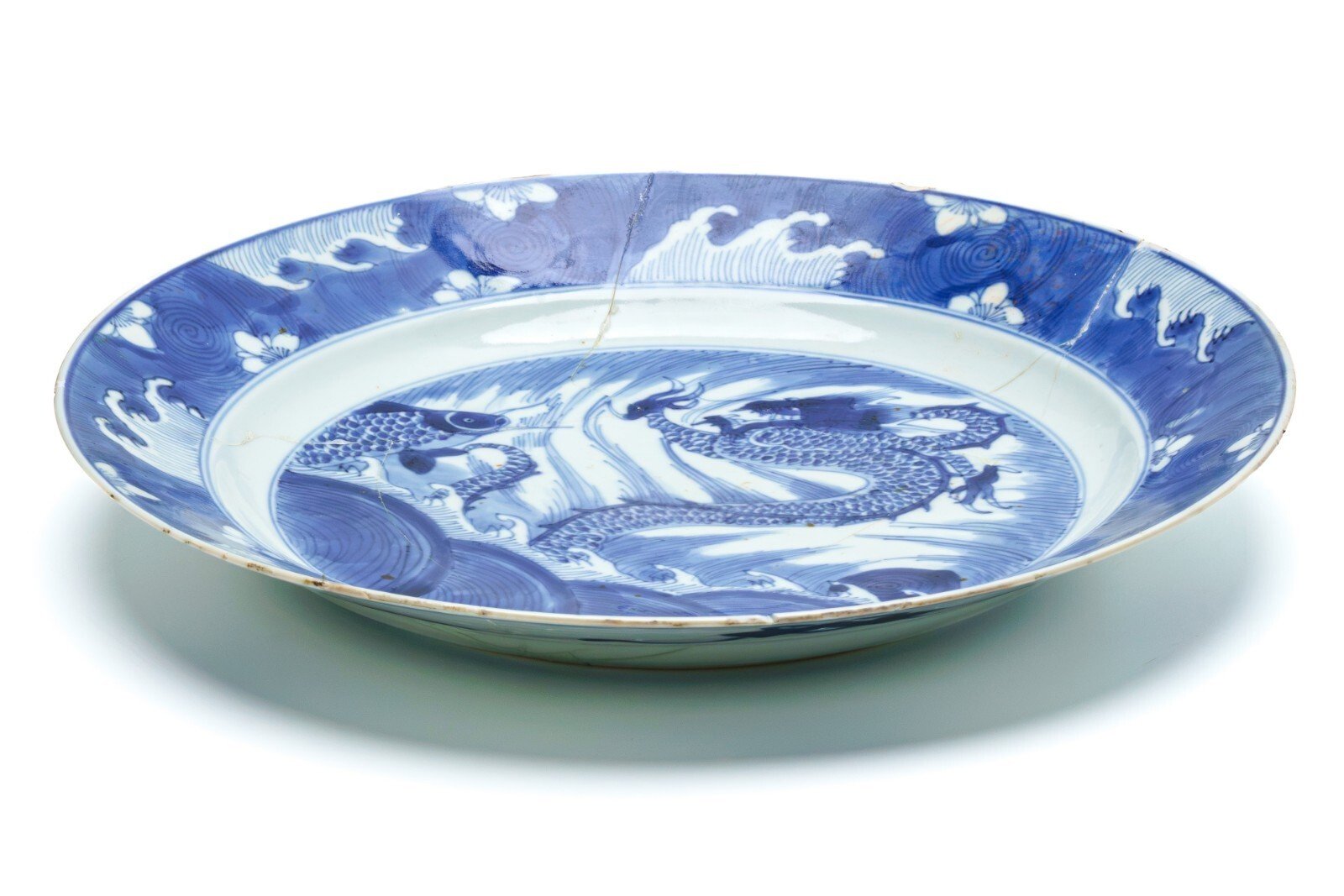
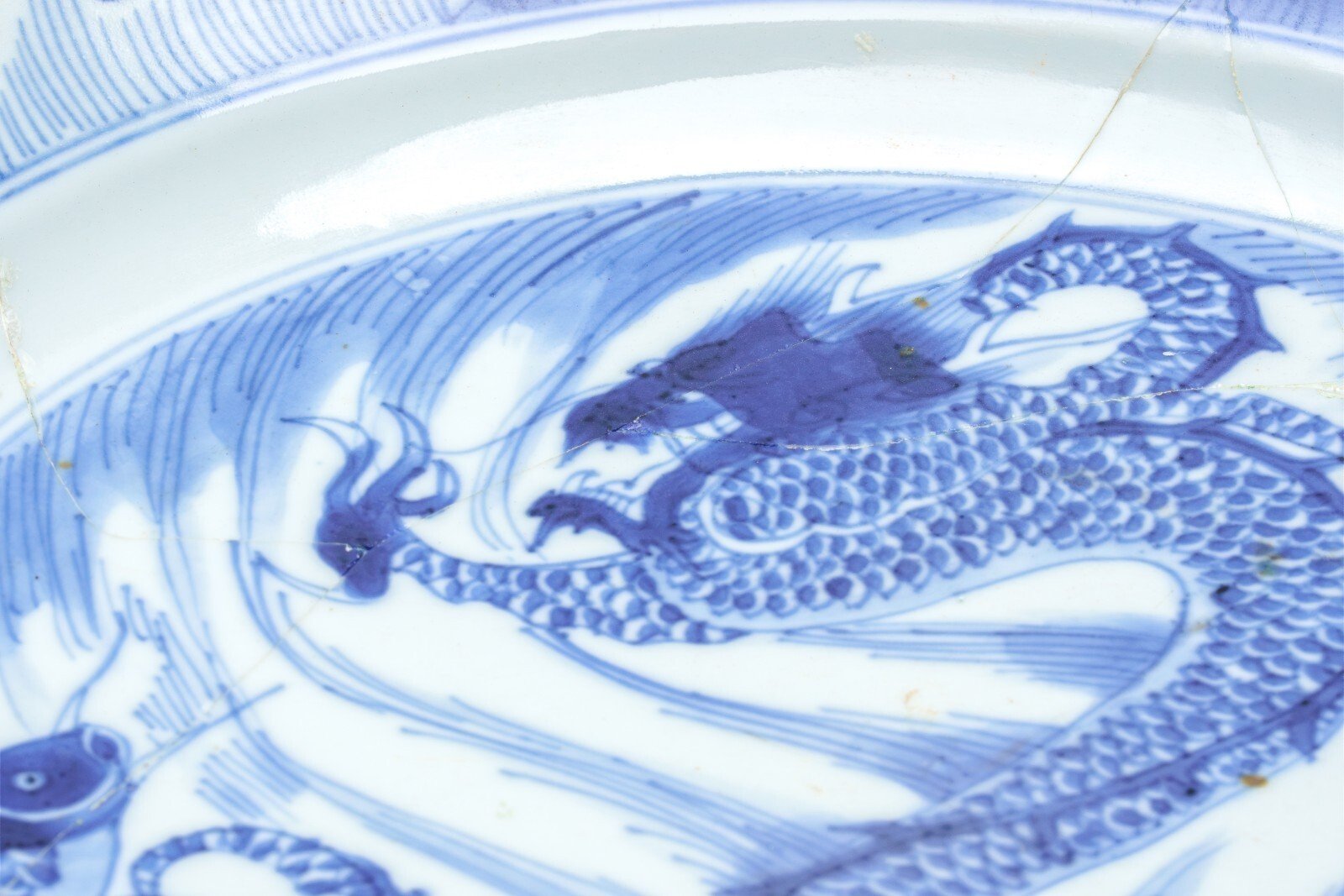
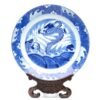
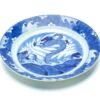
Decoration: Underglaze blue carp transforming into a dragon among waves, wave and blossom border
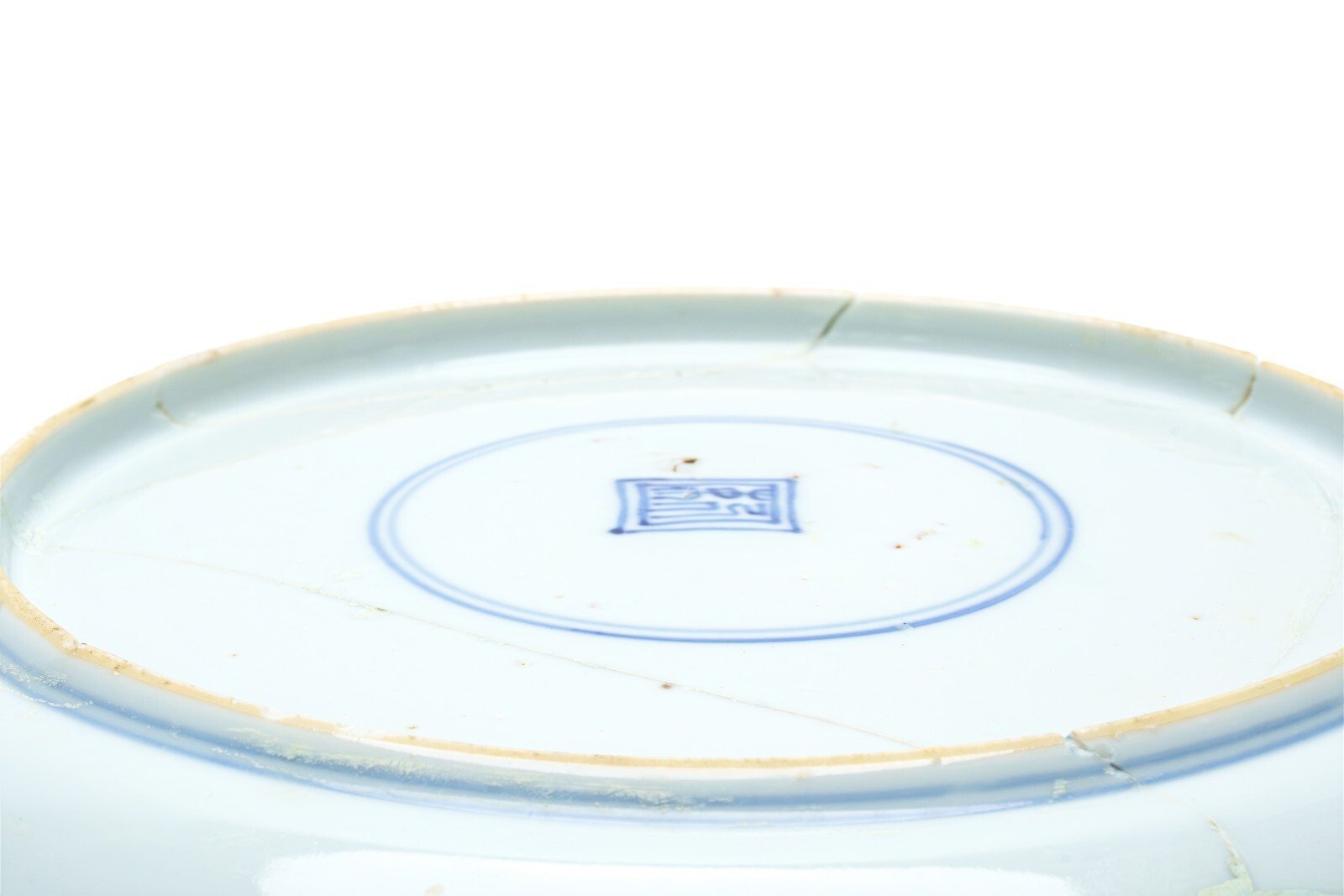
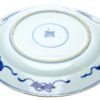
Marked: Four character Kangxi reign mark
Measurements:
Diameter: 10.7 in / 27.0 cm
Height: 1.7 in / 3.5 cm
Condition:
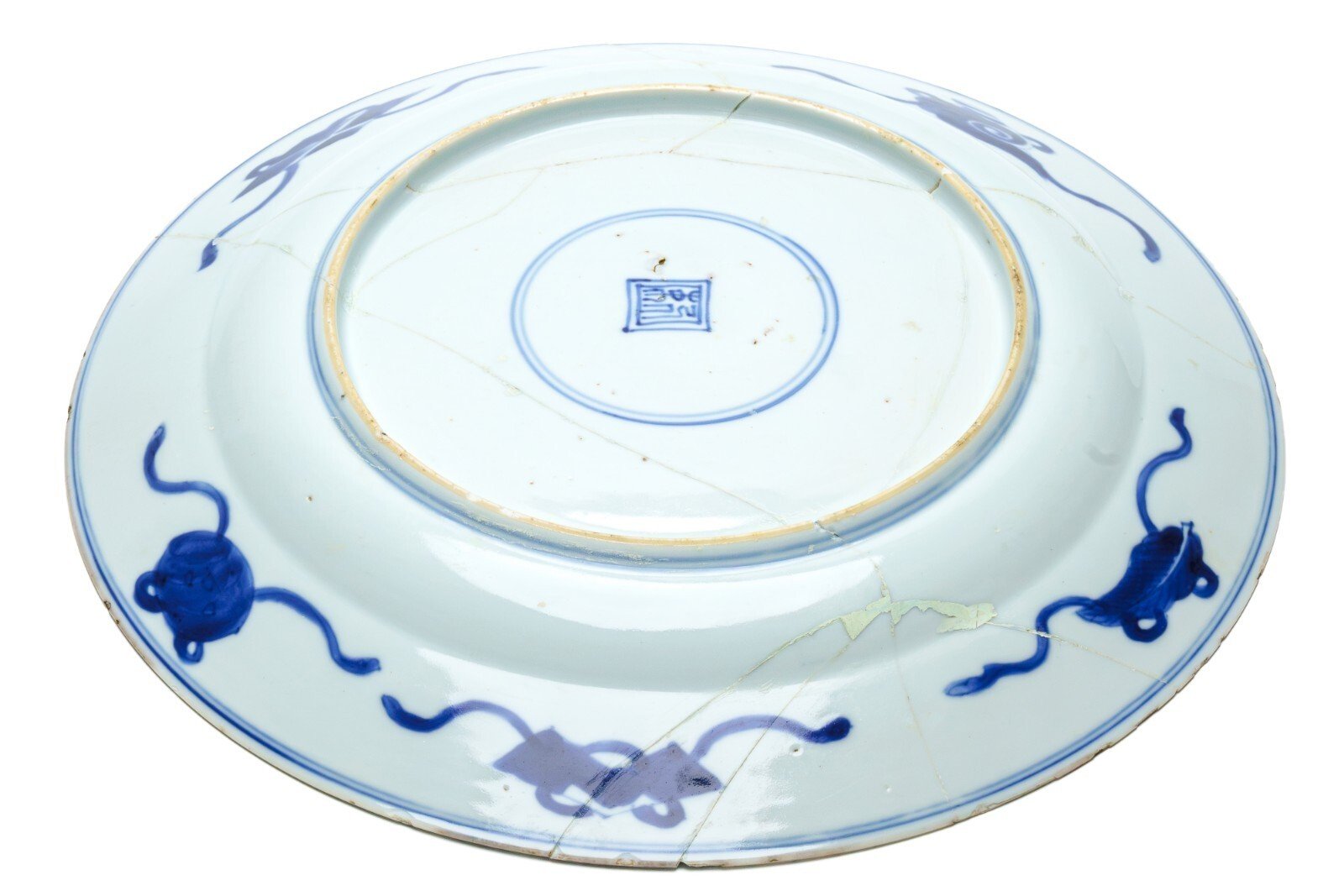
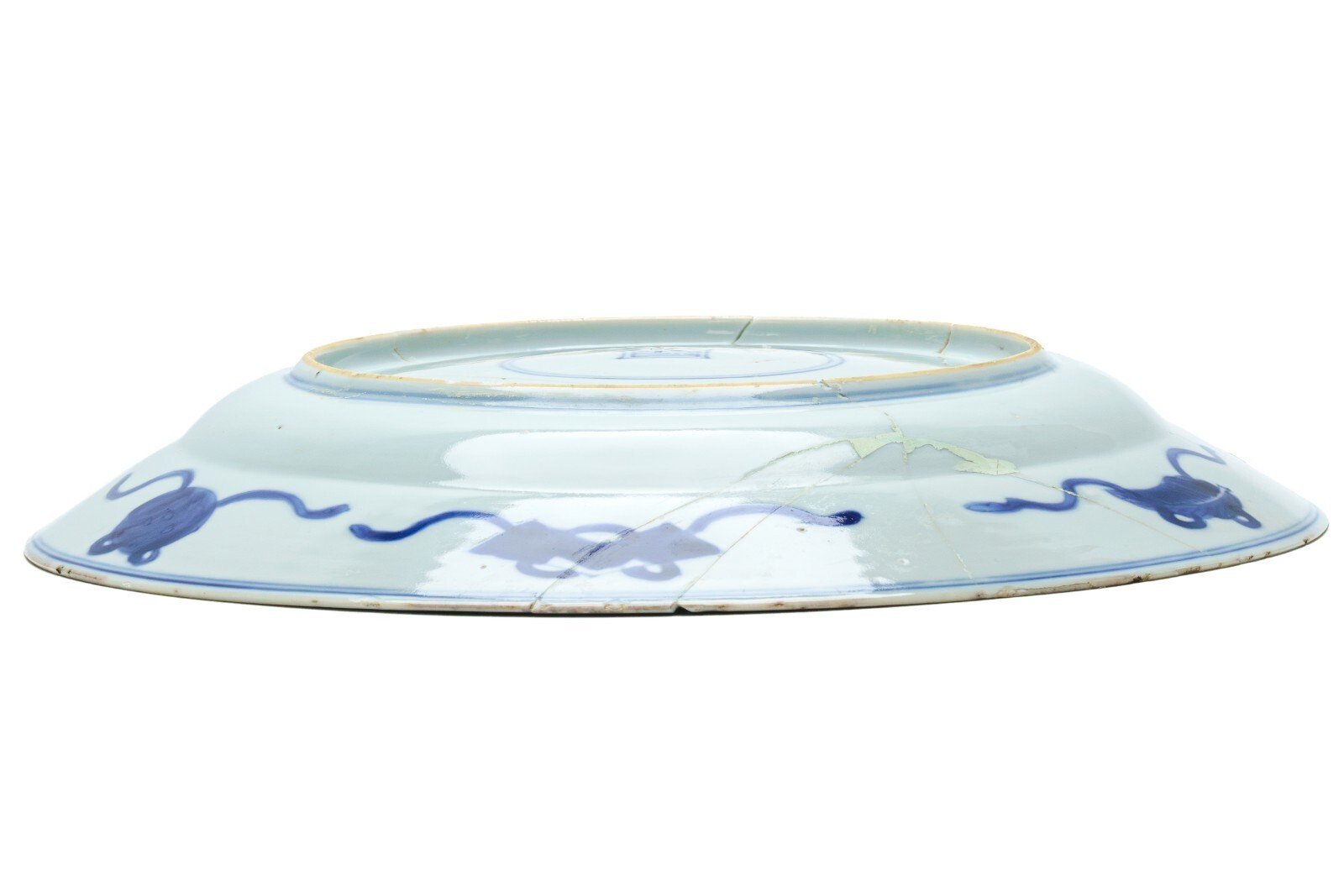
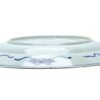
FAIR/RESTORED (2/5) - Broken and professionally restored from multiple pieces with visible restoration lines and old repairs. Minor rim fritting and age-related wear. Please review the photos carefully for more details.
International Shipping
We ship worldwide using tracked and insured services. Prices are calculated at checkout. All items are securely packaged with care and experience.
Pricing
Prices reflect past sales and our assessment of each item’s rarity and condition. Contact us if you would like to discuss.
Research
All item details are based on our own research and evaluation. We welcome questions or feedback.
Authenticity
Every item is guaranteed to be as described, with provenance provided where available.
Refunds
We accept returns within 14 days of delivery. Please contact us first to arrange a return and refund.
DESCRIPTION
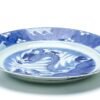
An antique Chinese blue and white porcelain plate dating to the Kangxi period of the Qing Dynasty. The center is finely painted with the auspicious “Fish Leaping the Dragon Gate” scene, depicting a carp transforming into a dragon amid swirling waves. The wide rim is decorated with crashing waves and floral motifs in vibrant underglaze cobalt blue. The reverse bears ribboned precious objects and a four character Kangxi reign mark within double circles.
COLLECTOR’S NOTE
The “Fish Leaping the Dragon Gate” (Yu Hua Long) is one of the most enduring symbols in Chinese art. According to legend, a carp that successfully leaps the Dragon Gate waterfall is transformed into a mighty dragon. The subject represents perseverance, academic success, promotion to high office, and the rewards of determination. During the Qing Dynasty it was especially popular as an auspicious motif celebrating achievement and prosperity.
NOTES
Please review all photos carefully as they form part of the description.
Related products
-
Chinese Porcelain Bencharong Plate Dish Red Peony Qing Thai Asia Market 18/19C
£215.00 -
Chinese Qianlong Porcelain Plate Famille Rose Gilt European Aqua Birds Qing 18C
£55.00 -
Chinese Porcelain Plate Famille Rose Gilt Garden Spear Arrow Qing Qianlong 18C
£54.00 -
English Porcelain Armorial Style Plate Replica Chinese Hickes Arms Gilt 19th C
£55.00