Definition
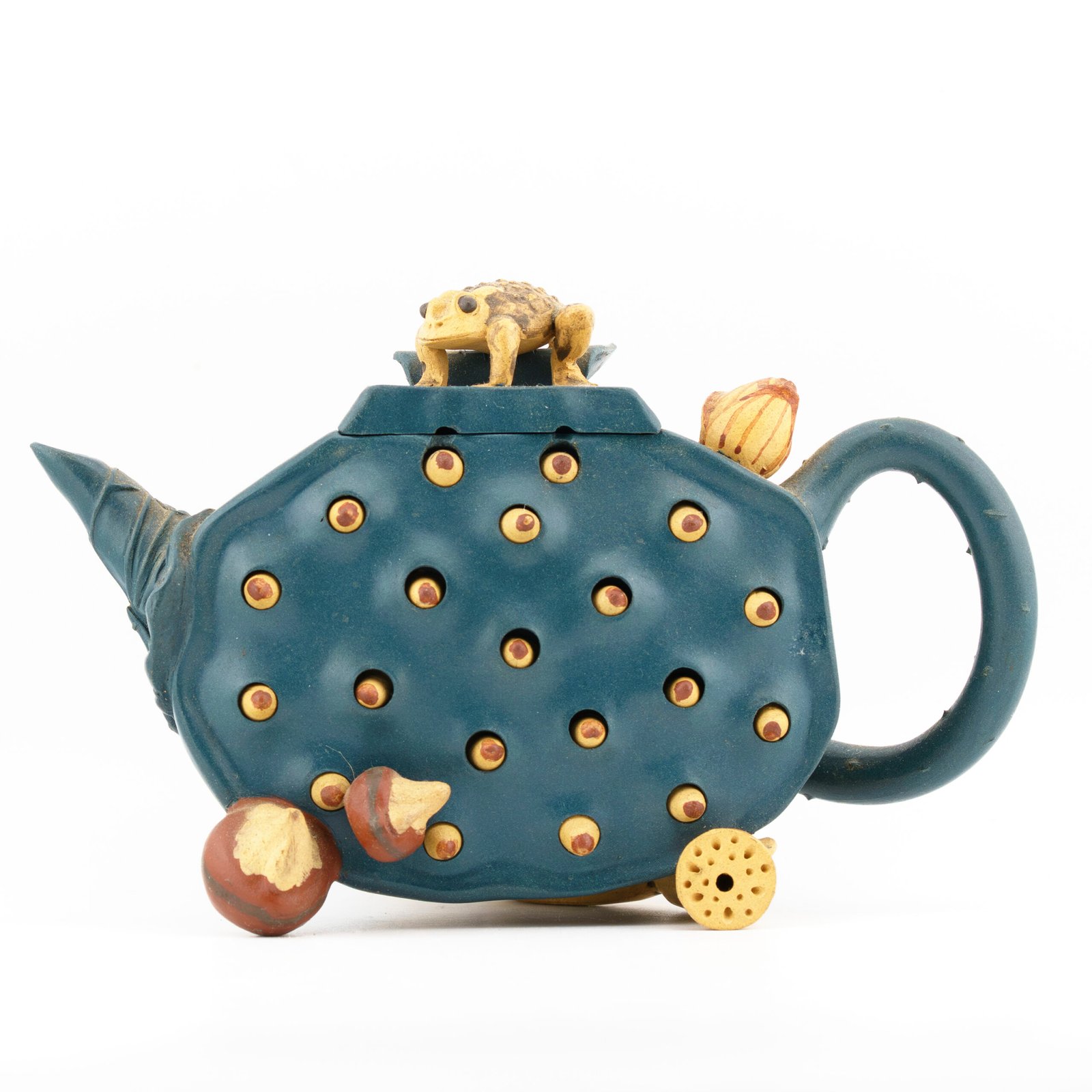
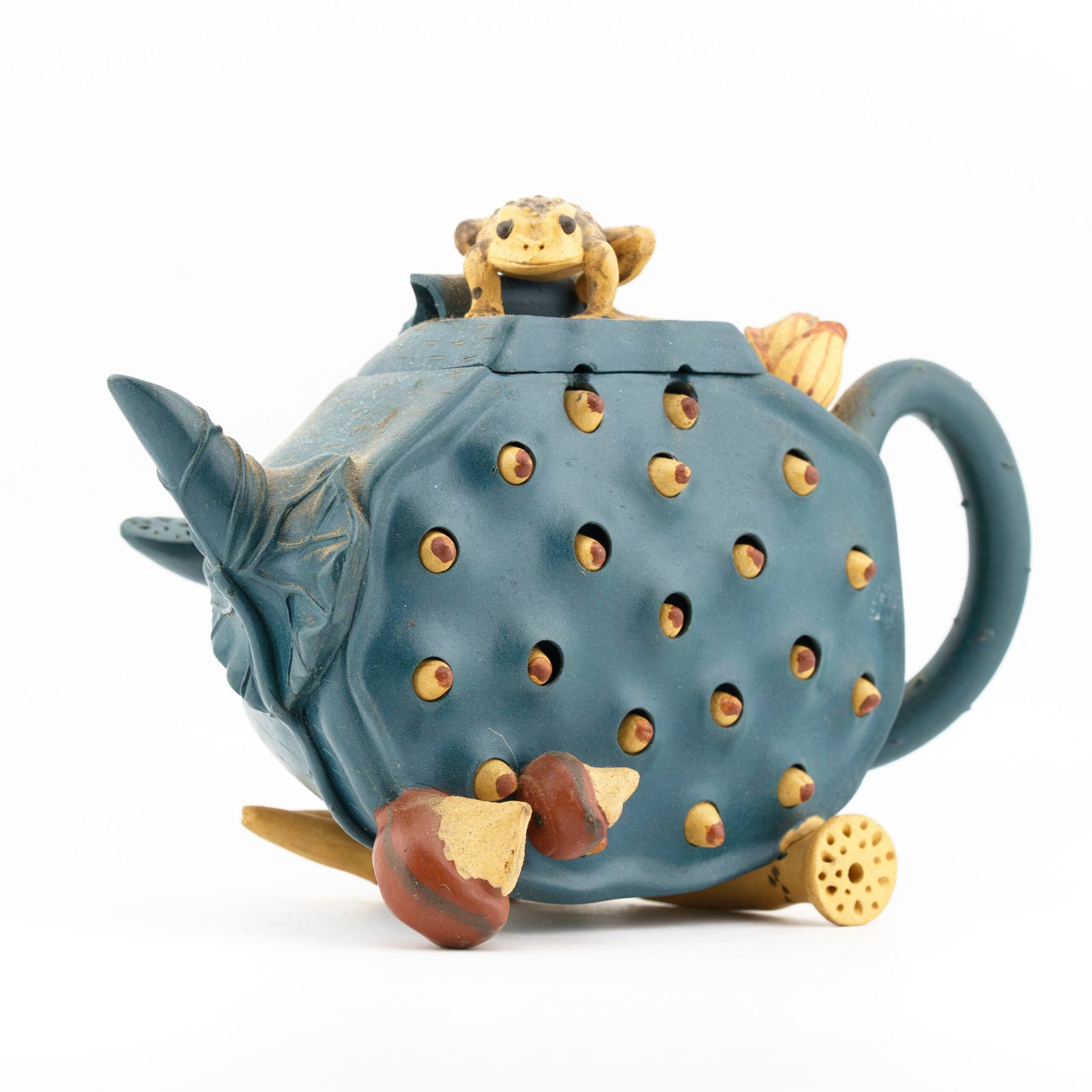
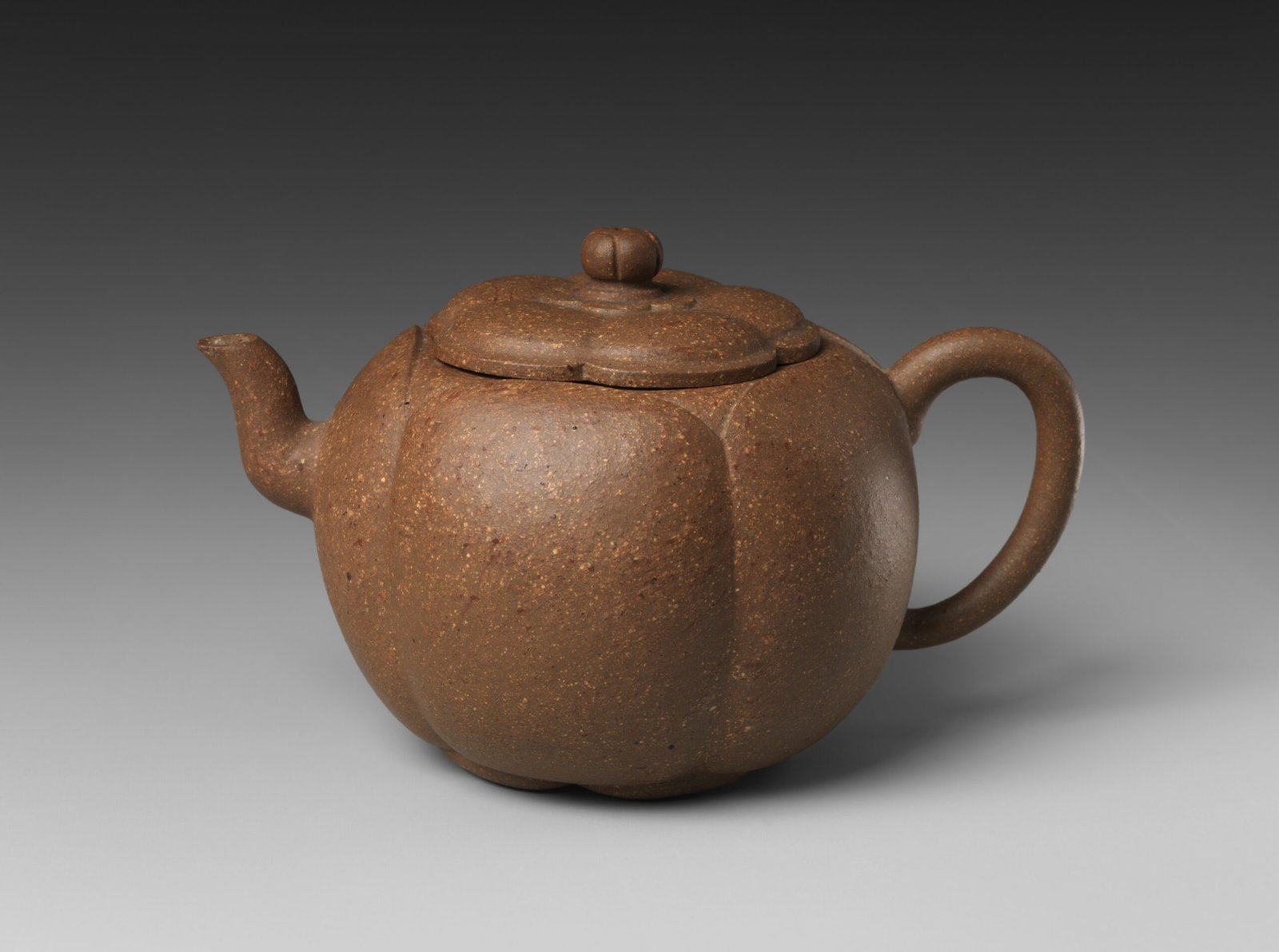
Yixing ware, known in Chinese as zisha (紫砂, “purple clay”), refers to a distinctive group of high-fired unglazed stonewares produced in Yixing County, Jiangsu Province, near Lake Tai (Taihu).
Celebrated for its tactile surface and subtle interaction with tea, Yixing pottery occupies a unique position between functional object, scholarly art, and material expression.
Origins & Historical Development
Kilns in the Yixing region were active as early as the Han dynasty, producing utilitarian wares in grey and red bodies.
The true emergence of zisha ware, however, is now associated with the Northern Song period (10th–12th century), with full artistic maturity reached in the Ming dynasty, when Yixing became China’s foremost centre for teapot production.
During the Qing dynasty, the tradition evolved further:
- Collaboration between potters and literati scholars
- Integration of poetry, calligraphy, and personal expression
- Expansion into refined objects beyond teapots
Unlike imperial porcelain centres such as Jingdezhen, Yixing retained a more individual, artist-led tradition, where named craftsmen and studios could achieve lasting recognition.
Material & Technical Character
The defining element of Yixing ware lies in its clay.
Zisha clay:
- Is a compressed sedimentary deposit rich in iron
- Occurs in multiple tones: purple, red, buff, and dark brown
- Is carefully refined and sieved, using only the finest particles
- Fires at approximately 1100–1200°C, remaining porous rather than vitrified
This results in:
- A dense yet slightly absorbent body
- A surface capable of developing a soft sheen and patina through use
- A material that responds directly to handling and time
The technical refinement of clay preparation—rather than glaze chemistry—is central to Yixing excellence.
Function & Tea Aesthetics
Yixing teapots are inseparable from Chinese tea culture.
Their qualities include:
- Controlled, even pouring
- Precisely fitted lids forming a near airtight seal
- A clear, resonant tone when struck
Because the clay absorbs tea oils:
- Each pot is traditionally dedicated to a single type of tea
- Over time, it develops an internal residue and aroma, valued by connoisseurs
In this sense, a Yixing teapot is not static—it is seasoned and transformed through use.
Decoration & Literati Expression
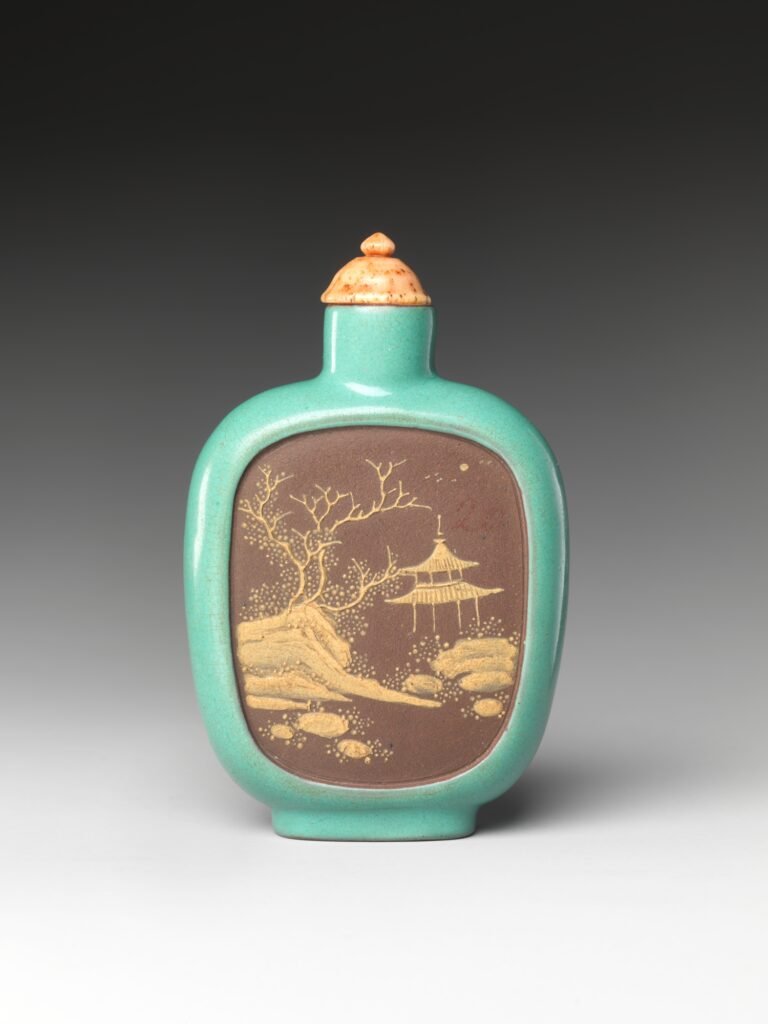
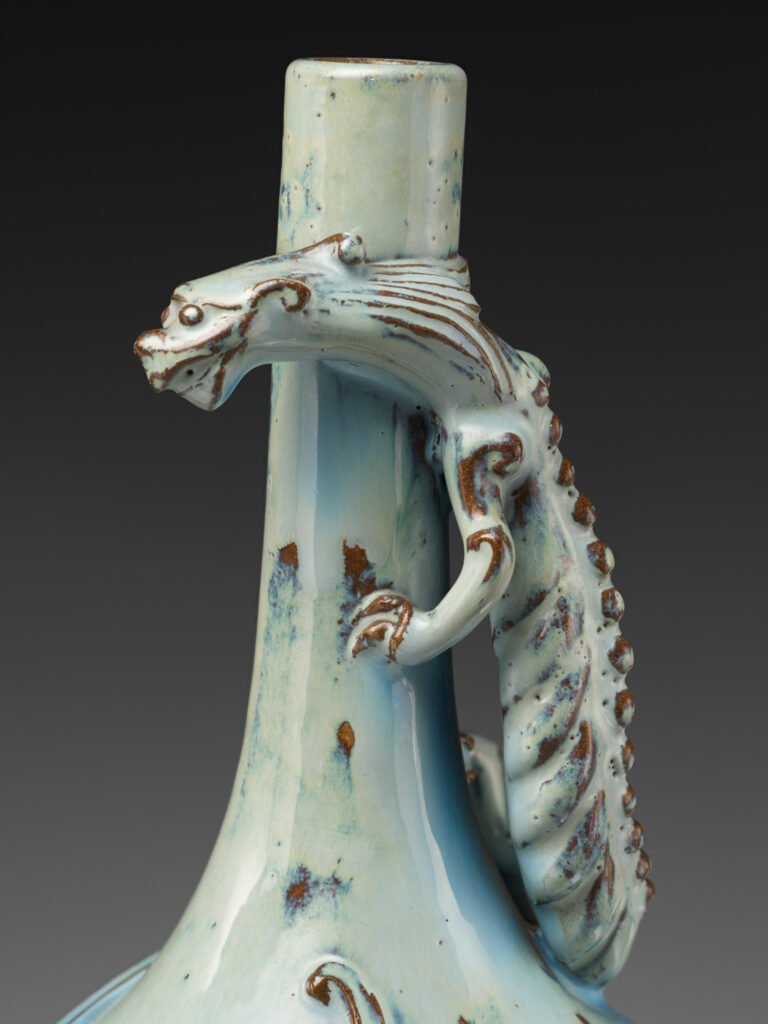
Yixing ware is defined by restraint.
Most pieces:
- Are unglazed, revealing the natural clay body
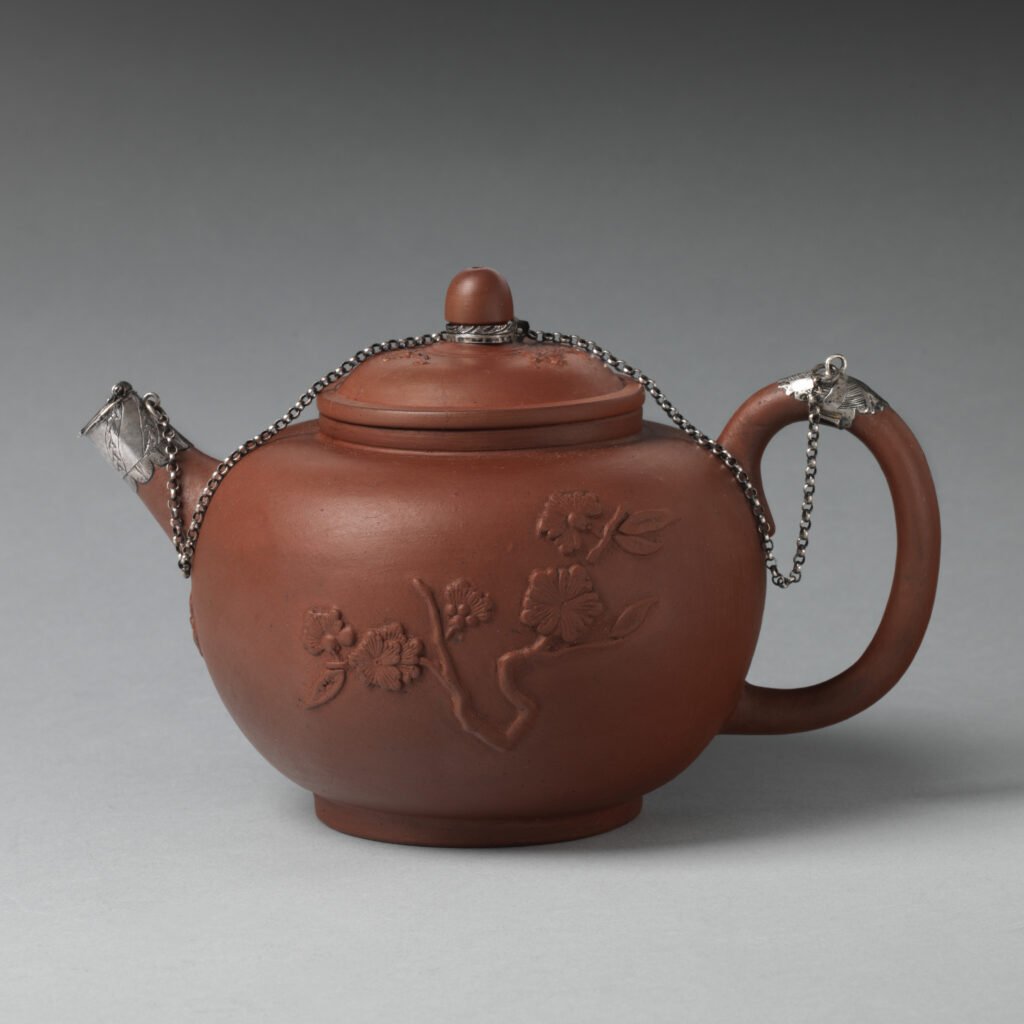
- Feature incised calligraphy, seals, or low relief decoration
- Emphasize form, proportion, and surface texture over colour
Typical motifs include:
- Bamboo, prunus, and natural forms
- Birds, branches, and poetic imagery
- Scholar’s objects and literary references
Rare variations include:
- Jun-type or “robin’s egg” glazes
- Enamel-painted wares (primarily later, 19th century)
- Slip-painted decoration in subdued tones
The aesthetic aligns closely with literati ideals:
understatement, intellectual engagement, and harmony with nature
Forms & Artistic Freedom
Yixing potters exploited the versatility of their clay to create:
- Classical geometric teapots
- Naturalistic forms (tree trunks, fruits, bamboo)
- Brushpots and scholar’s desk objects
- Miniatures and experimental forms
Unlike porcelain production, where forms were often standardized, Yixing allowed for greater artistic individuality.
Marks, Makers & Attribution
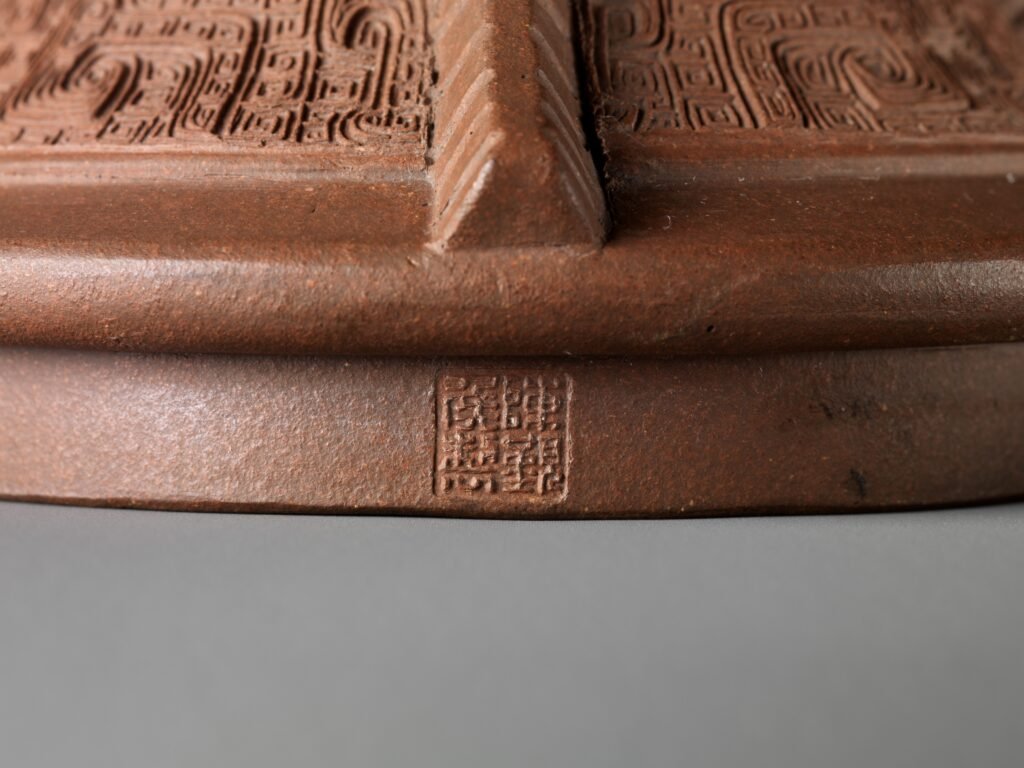
A distinctive feature of Yixing ware is the long tradition of signed works.
- Many Ming and Qing examples bear seals of known potters
- Workshops and studios maintained identifiable styles
- However, traditional forms were continuously reproduced
As a result:
dating is often complex, and modern works may closely resemble earlier pieces
Careful study of:
- Clay quality
- Surface wear and patina
- Craftsmanship and proportion
is essential for accurate attribution.
Global Influence
From the late 17th century, Yixing wares were exported to Europe, where they inspired:
- Dutch red stonewares
- English teapots (Staffordshire and others)
- German ceramic imitations
These adaptations reflect the early European fascination with Chinese tea culture and material aesthetics.
Collector’s Note
Yixing ware is best understood not as decorative ceramic alone, but as a living object shaped by use.
Collectors value:
- The quality and colour of the clay
- The refinement of form and balance
- Signs of age and tea patina
- Association with known potters or literati
A fine Yixing piece embodies both:
- Technical discipline
- Personal expression
Why It Matters
Yixing zisha ware represents one of the purest expressions of Chinese ceramic philosophy:
- Material over surface
- Use over display
- Restraint over ornament
Its influence extends across cultures, yet its essence remains deeply rooted in the scholarly and contemplative traditions of China.