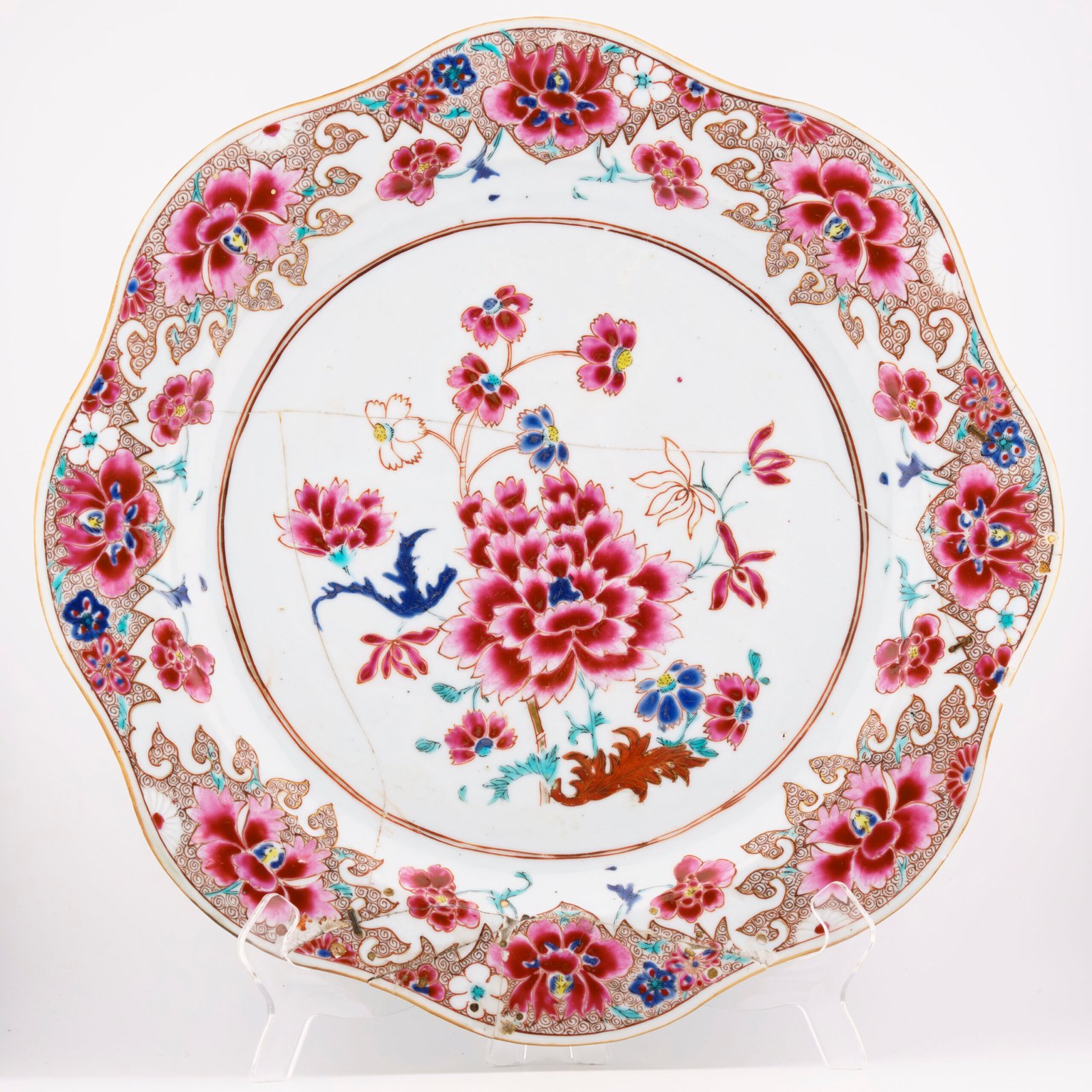
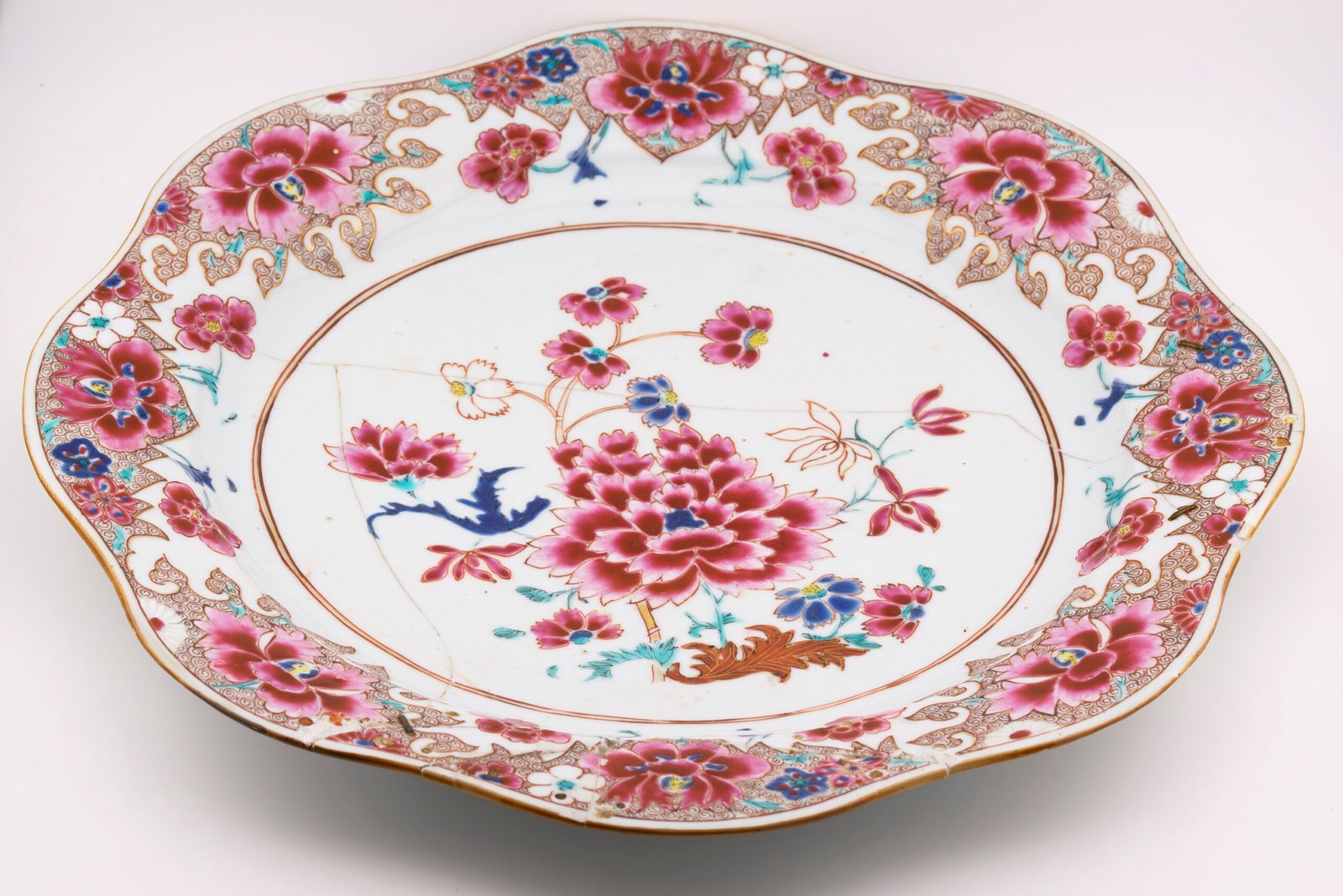
Famille Rose Porcelain: A Collector’s Guide
Attribution Confidence — Famille Rose Porcelain
68%
粉彩 · Famille Rose · Yangcai · Foreign Colour Enamels
🌸 Slide to explore enamel technique, palette & period confidence 🌸
Baseline attribution. Famille rose palette present, but enamel handling and dating remain open.
- Opaque pinks and whites visible
- General famille rose vocabulary
Famille rose spans nearly two centuries. Later wares can appear deceptively refined.
1. Introduction – The Allure of Famille Rose
Famille Rose Porcelain — How to Read It
Beginner view:
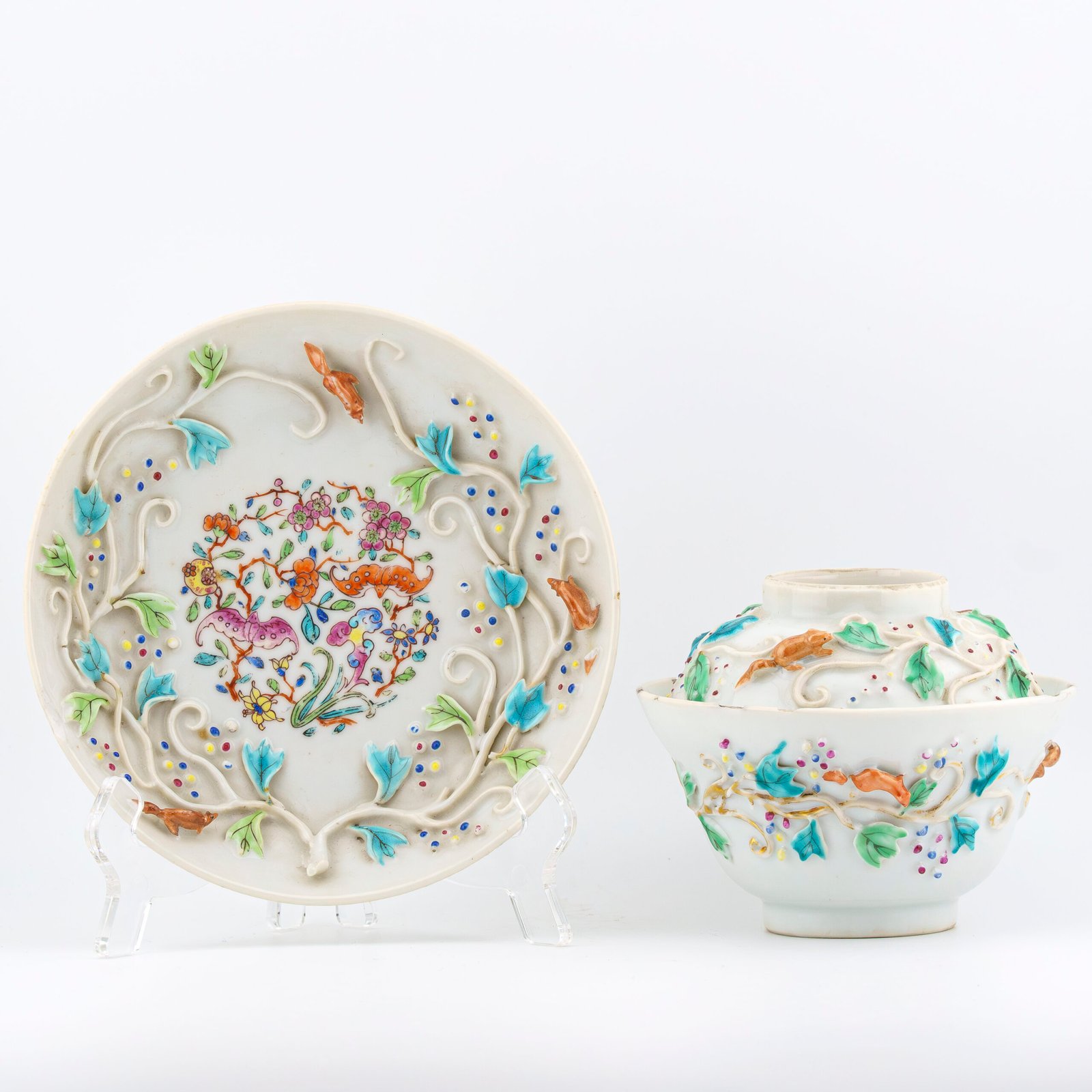
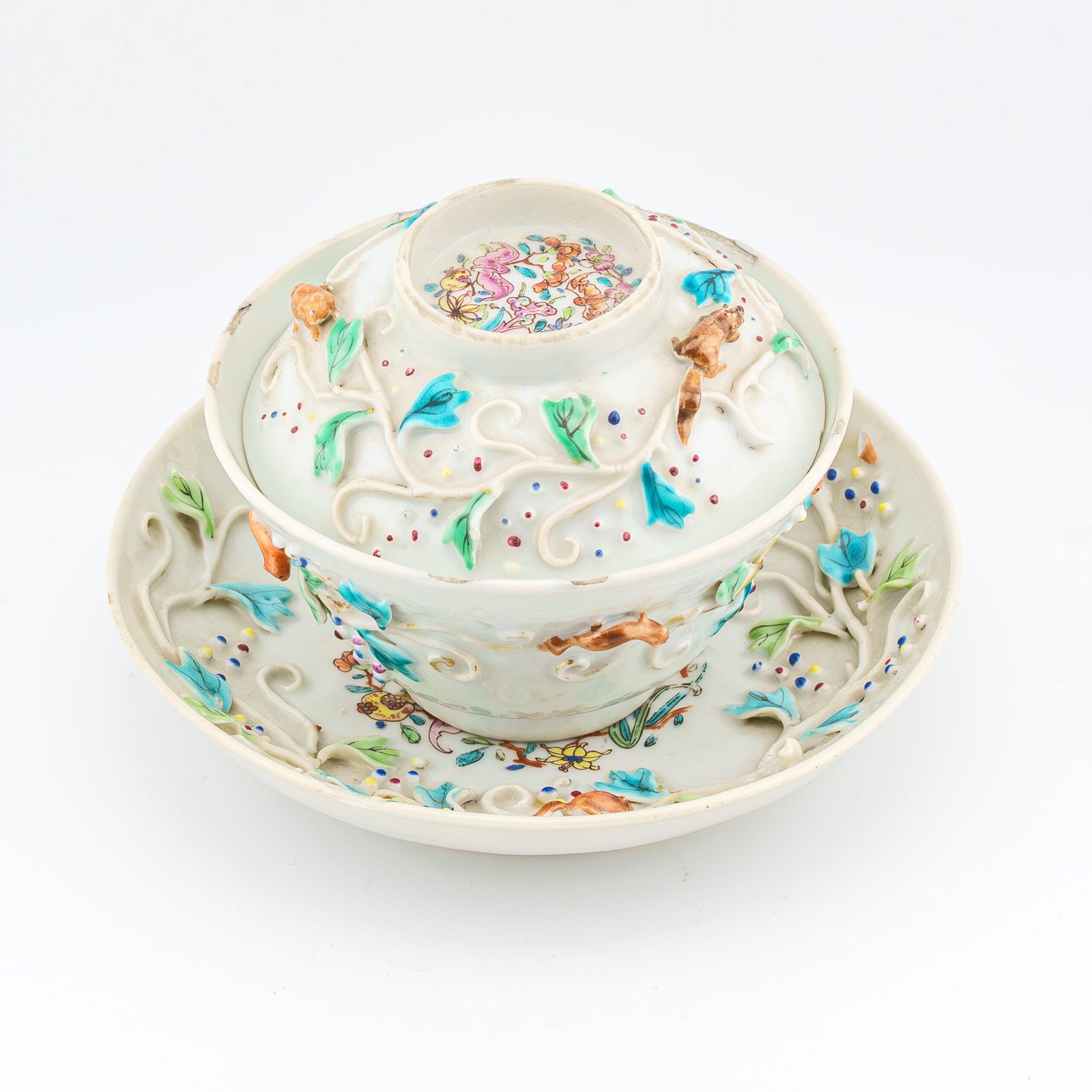
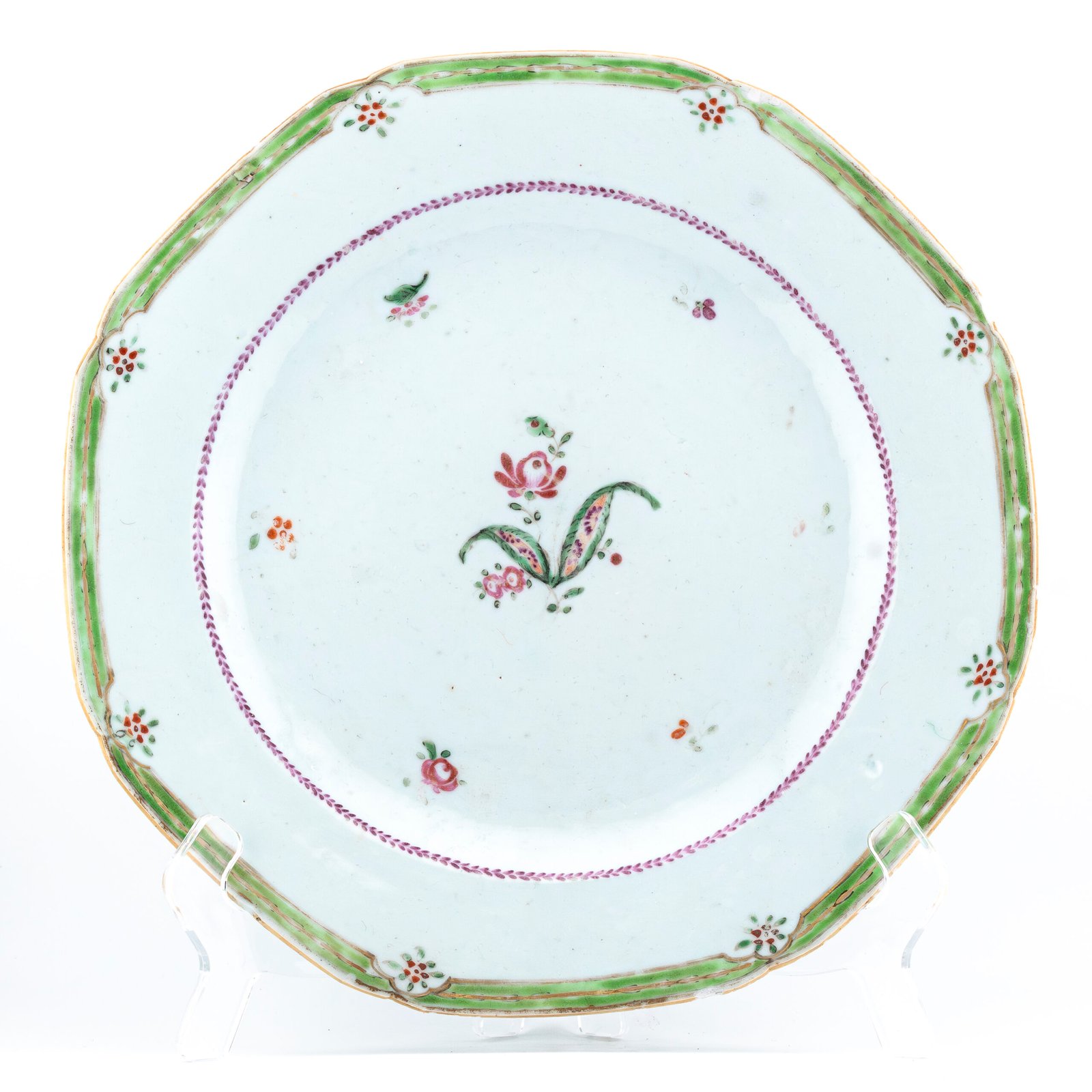
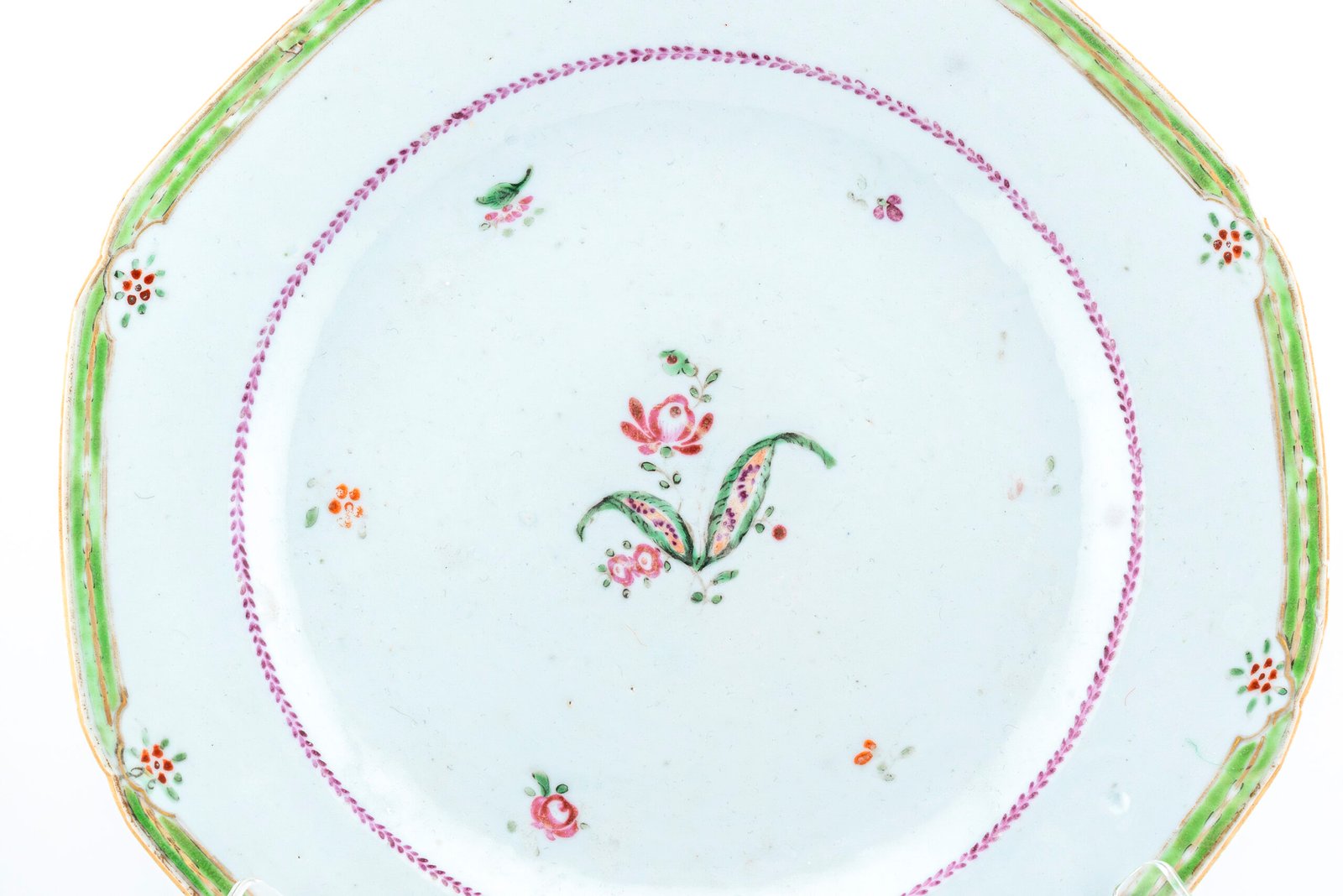
Famille rose refers to a group of Chinese porcelains decorated with soft pink, white, and pastel enamels. These colours allowed artists to create more naturalistic flowers, figures, and landscapes than earlier styles.
For beginners, focus on:
Famille rose refers to a group of Chinese porcelains decorated with soft pink, white, and pastel enamels. These colours allowed artists to create more naturalistic flowers, figures, and landscapes than earlier styles.
For beginners, focus on:
- Are the pinks soft and opaque rather than bright or glossy?
- Do the colours sit slightly raised above the glaze?
- Is the decoration hand-enamelled, not printed?
- Does the overall style feel 18th–19th century?
Among the vast spectrum of Chinese porcelain, few wares have captured the imagination of collectors as vividly as famille rose. Distinguished by its soft pink tones and delicate shading, this palette transformed the visual language of Chinese ceramics in the early eighteenth century. Where earlier wares relied on bold contrasts of underglaze blue or the translucent greens and yellows of famille verte, famille rose introduced subtlety — petals blushed in shades of pink, figures painted with lifelike shading, and compositions that could rival fine painting on silk.
But famille rose was more than an artistic innovation. It was a cultural encounter, born at the crossroads of Chinese technical mastery and European influences, shaped by imperial patronage, and spread across continents as one of the most recognisable faces of Qing porcelain.
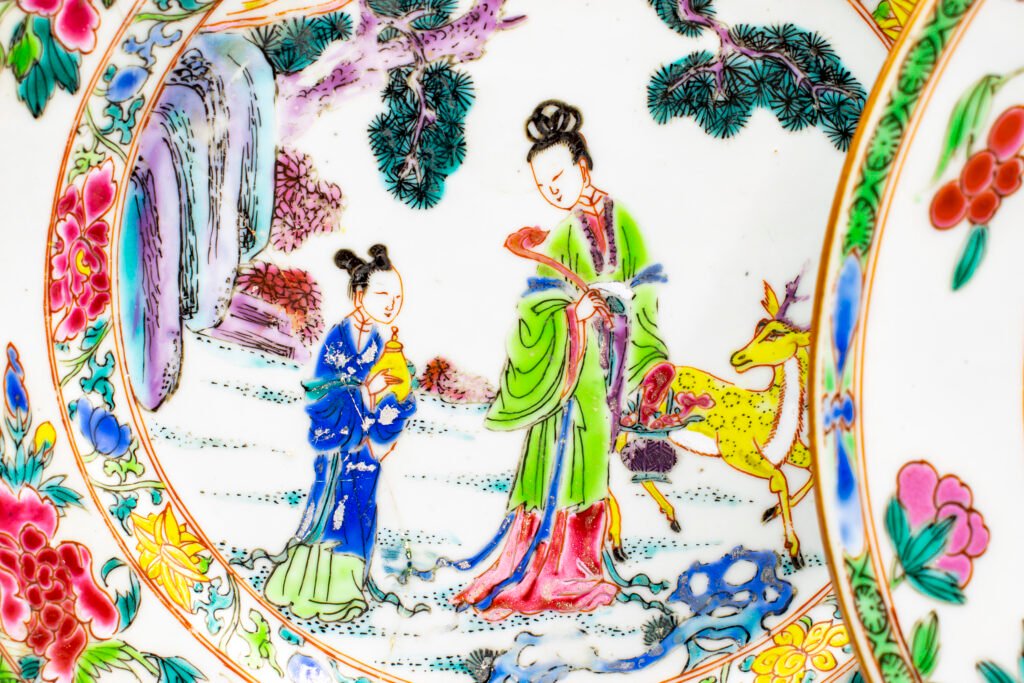
🌸 Why does pink porcelain matter?
Famille rose marked a turning point in Chinese ceramics, introducing soft pastel tones that transformed porcelain into a canvas of naturalism and elegance. Its subtle beauty captured the imagination of emperors, collectors, and global trade.
2. The Birth of Pink Enamel
The breakthrough of famille rose lay in the discovery of a new enamel colour — a translucent pink derived from colloidal gold. This technology, long known in Europe for ruby glass, was introduced into China in the late Kangxi period (c. 1720). Sources disagree on how: some credit Jesuit missionaries at the Beijing court, while others suggest Chinese artisans developed it independently.
Regardless of origin, the effect was revolutionary. Mixed with a white enamel derived from arsenic or lead, the pink could be softened into a wide tonal range — from delicate blushes to deep rose — allowing painters to achieve naturalistic shading unseen in earlier wares.
This development extended the earlier famille verte palette and opened the way for what Chinese sources called fencai (粉彩, “powdery colours”) or ruancai (軟彩, “soft colours”). Western collectors, however, coined the term famille rose in the nineteenth century, adopting the system of colour-family labels (famille verte, jaune, noire, rose) popularised by Albert Jacquemart.
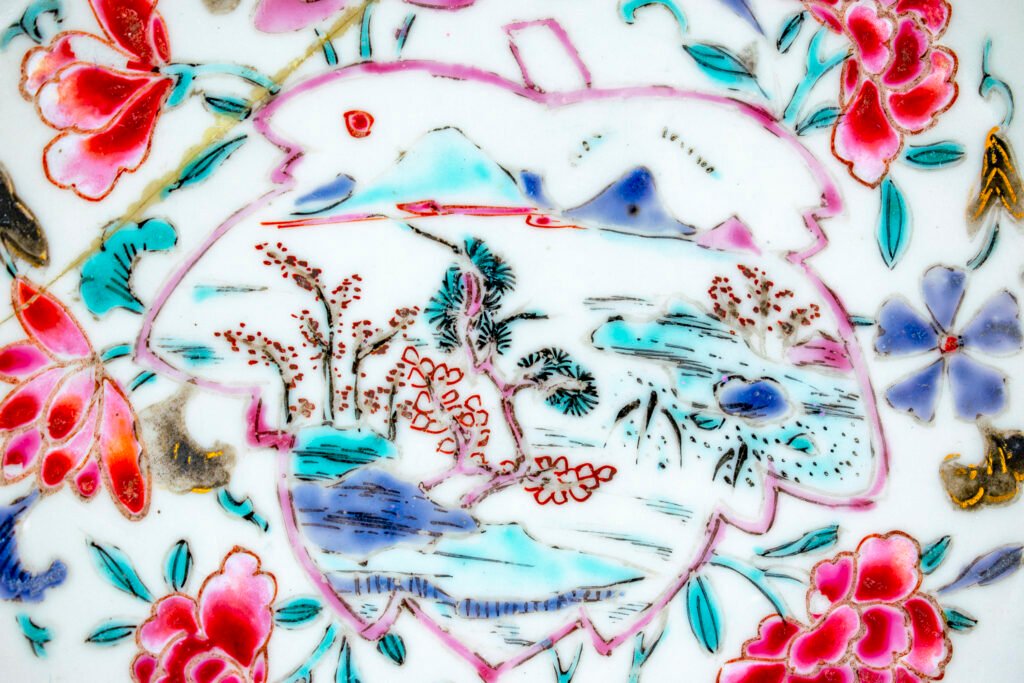
💡 Did you know? The delicate pink of famille rose porcelain was made using real colloidal gold, introduced to Jingdezhen during the late Kangxi period.
3. Yongzheng Period (1723–1735) – Perfection & Restraint
If Kangxi (1662–1722) witnessed the birth of pink enamel, it was under his successor Yongzheng (1723–1735) that famille rose reached perfection.
The Yongzheng court, under the supervision of Tang Ying at Jingdezhen, demanded technical refinement and artistic discipline. Thinly potted porcelain of “eggshell” translucency was decorated with miniature-like precision. Flowers were shaded petal by petal, often in compositions inspired by court paintings. Leaves were rendered with a naturalism resembling album painting in ink and colour.
Characteristic features:
- A restrained, pastel palette with dominant pinks and whites.
- Use of ruby-backs (deep pink enamel covering the reverse of dishes).
- Themes of flowers, birds, boys at play, and auspicious symbols.
- Frequent imperial commissions, with tight quality control.
Yongzheng famille rose wares embody elegance — modest in scale, yet unrivalled in technical finesse.
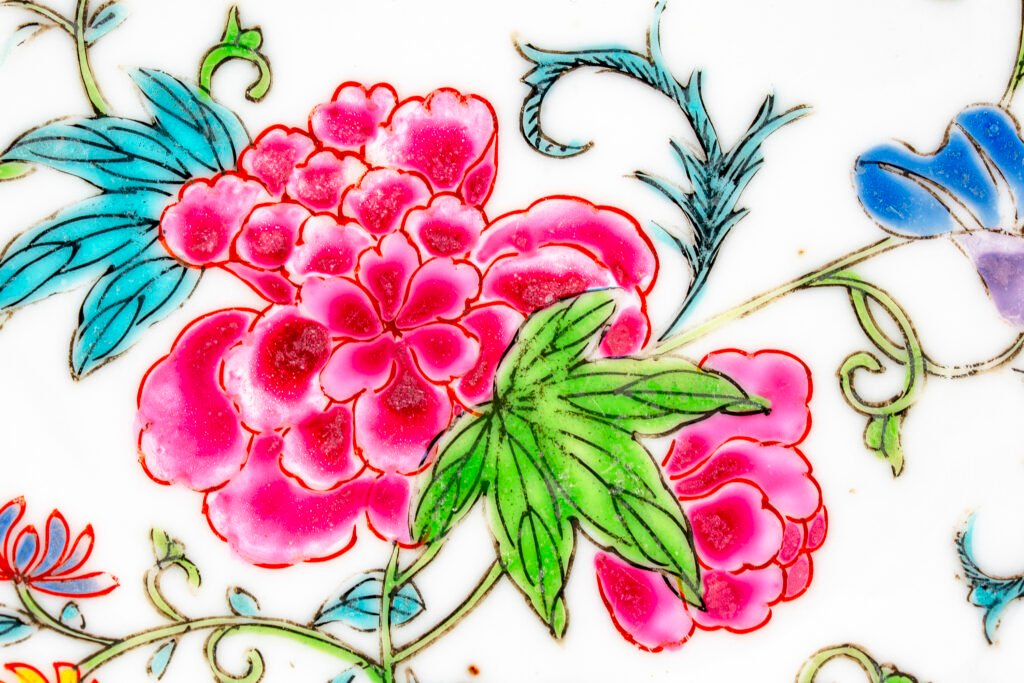
🎨 Imperial precision: Under Yongzheng’s rule, master supervisor Tang Ying refined porcelain at Jingdezhen with unrivalled discipline — setting the standard for Qing artistry.
4. Qianlong Period (1736–1795) – Expansion & Splendour
Where Yongzheng favoured restraint, Qianlong embraced splendour. Under his long reign, famille rose became the dominant decorative style for both imperial and export markets.
Technical advances allowed a broader palette: jewel-like enamels in turquoise, lemon yellow, aubergine, and black were combined with pinks in grand compositions. Vases, jars, and large dishes bore crowded scenes of courtly life, Daoist immortals, or auspicious birthday wishes. The emperor’s love of symbolism meant that peaches (longevity), bats (happiness), cranes, and dragons were endlessly repeated, often in dazzling combinations.
Qianlong famille rose can be recognised by:
- Rich, saturated colours, often outlined in black or iron red.
- Large narrative scenes, with multiple figures and landscapes.
- Highly decorative borders, often brocade-like.
- A sense of opulence — sometimes criticised by later connoisseurs as excessive.
It was also during this period that famille rose was exported in unprecedented quantities to Europe, shaping Western tastes and filling the porcelain cabinets of Dresden, Paris, and London.
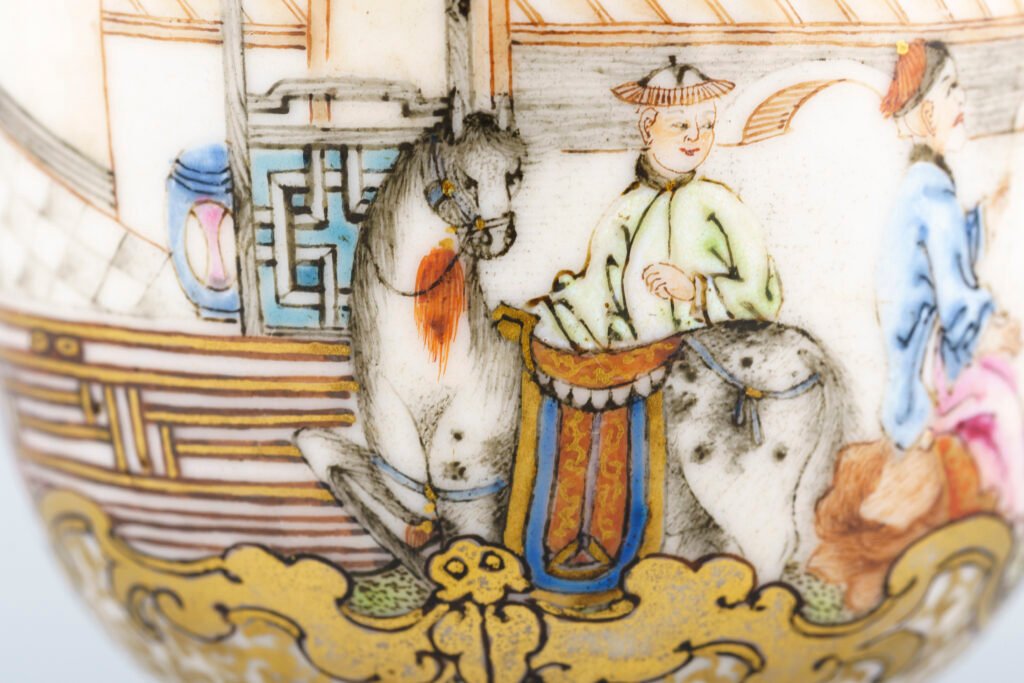
🌸 Opulence in porcelain: Qianlong’s love for splendour defined the golden age of famille rose, dazzling both the imperial court and Europe’s collectors.
5. Later Qing and 19th Century Revivals
By the nineteenth century, famille rose had become the most familiar palette of Chinese porcelain abroad. Export wares for Europe and America often sacrificed refinement for boldness: thick enamels, busy scenes, and heavily gilded borders.
Nonetheless, the palette remained popular both at court and among collectors. Tongzhi and Guangxu revival wares imitated earlier styles, while continuing to experiment with dense over-decoration. Canton workshops produced vast quantities of famille rose for export, decorated with Mandarin figure scenes, birds, flowers, and elaborate borders.
These later wares may lack the delicacy of Yongzheng examples, but they testify to the enduring appeal of the famille rose palette.
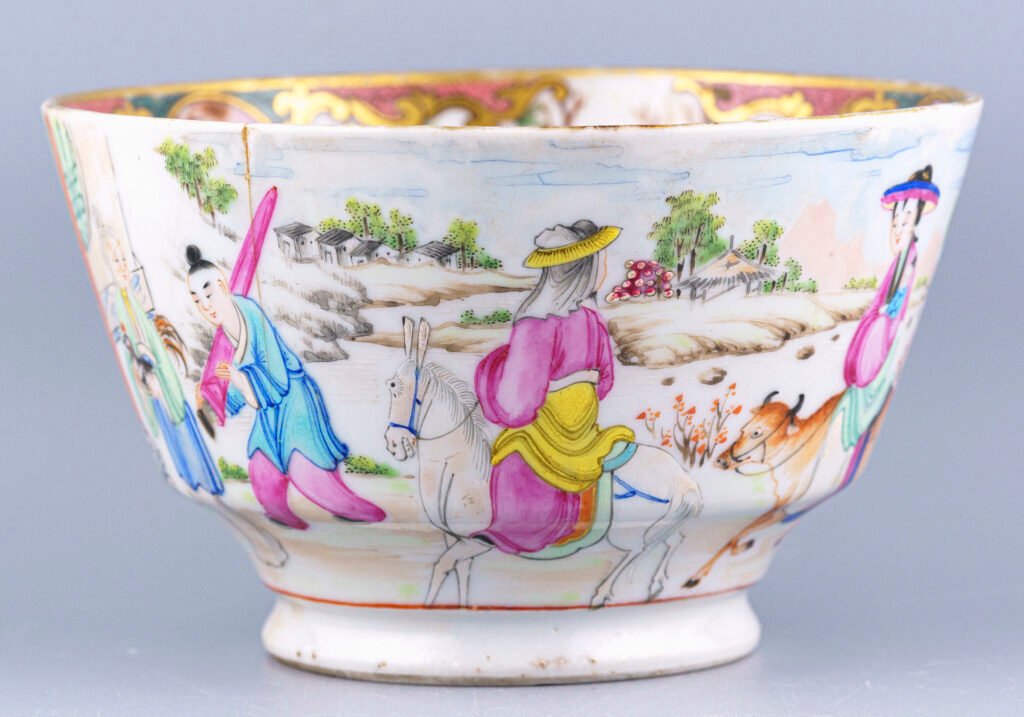
🏮 From palace to parlour: Canton workshops supplied the West, carrying famille rose from the imperial court into everyday European homes.
6. Chemistry & Technique
At the heart of famille rose lies the use of colloidal gold to produce “carmine pink.” This pigment was sometimes combined with lead arsenate, producing a stable and economical colouring agent for porcelain. Unlike the transparent enamels of earlier wucai or famille verte, famille rose employed opaque enamels, which allowed painters to overlay colours and achieve subtle shading.
Chinese sources distinguished between:
- Fencai 粉彩 – “powder colours,” the soft, pastel palette.
- Yangcai 洋彩 – “foreign colours,” referring to European-inspired enamels.
- Falangcai 珐琅彩 – “enamel colours,” often painted directly in the imperial workshops in Beijing.
These terms overlap in usage, but together they reflect the technical and cultural hybridity of the famille rose palette.
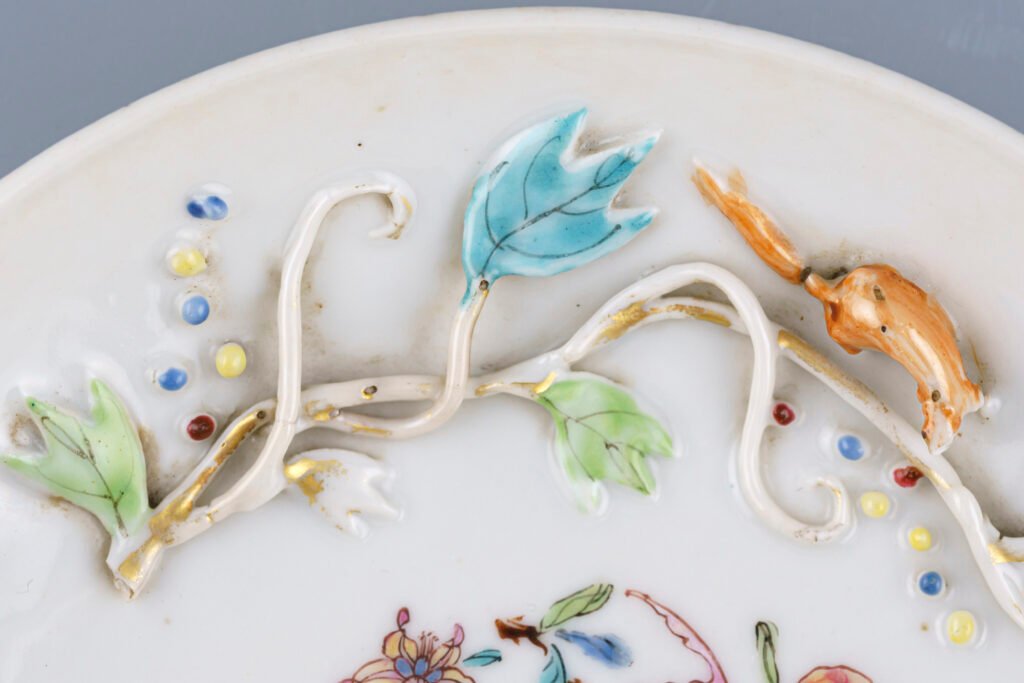
🎨 Different words, same colours? Chinese sources overlap when describing fencai, yangcai, and falangcai.
7. Export & Western Reception
Famille rose entered European collections almost as soon as it was invented. The Elector of Saxony, Augustus the Strong, avidly collected Chinese porcelains in Dresden, where famille rose pieces joined his vast array of Meissen and Chinese wares.
European designers, such as the Dutch artist Cornelis Pronk, were even commissioned to create designs for the China trade, blending Western subject matter with Chinese enamelling. Famille rose dishes with European coats of arms also became symbols of status in Britain and France.
By the nineteenth century, famille rose had become a household name among Western collectors, cemented by Jacquemart’s colour-family terminology.
🌍 From Saxony to Amsterdam – Europe shapes Chinese export.
8. Symbolism & Themes
Famille rose decoration is rich with auspicious motifs:
- Peaches → longevity.
- Bats → happiness (the word for bat, fu, is a homophone for “blessing”).
- Boys at play → fertility and prosperity.
- Lotus, peony, chrysanthemum → seasonal flowers symbolising purity, wealth, and perseverance.
Narrative scenes ranged from Daoist immortals to historical romances, appealing both to imperial tastes and to Western fascination with “exotic” imagery. For collectors today, understanding these symbols adds a deeper layer of appreciation — and often value.
🖋️ Reading porcelain is like reading poetry — every flower has meaning.
9. Collecting Famille Rose Today
Collectors judge famille rose by:
- Quality of potting → thin, translucent body in early pieces.
- Enamel application → fine shading vs. thick enamel “slapped on.”
- Condition → enamels are fragile; many early pieces show wear or flaking.
- Provenance → pieces linked to collections such as Dresden or Augustus the Strong carry prestige.
Market values vary dramatically. A Yongzheng eggshell dish with ruby back can command extraordinary prices at auction, while later nineteenth-century Canton export wares remain affordable entry points for new collectors.
🔎 Tips for collectors: Look for shading, thin potting, enamel quality.
10. Timeline
- c. 1720 (Kangxi) → Pink enamel introduced, likely via Jesuit influence.
- 1723–1735 (Yongzheng) → Technical perfection, pastel palette, eggshell wares.
- 1736–1795 (Qianlong) → Expansion, opulence, export splendour.
- 19th century (Daoguang–Guangxu) → Revival wares, Canton export, busy figural scenes.
- 20th century → Reproductions and continued admiration.
Famille Rose — Snapshot Timeline
Click a dot or a title to see a short note. Dates are approximate; phases overlap.
c.1720 · Invention of pink (late Kangxi)
Carmine pink from colloidal gold enters the palette. Mixed with opaque white, it enabled soft, naturalistic shading—laying the ground for famille rose.
1723–1735 · Yongzheng perfection & restraint
Under Tang Ying, Jingdezhen perfects thin “eggshell” bodies and meticulous painting. Leaves and petals are shaded petal-by-petal with lifelike depth.
1730s · Court refinement
Miniature precision with measured compositions. Famille rose overlaps with terms like fencai (powder colours) and yangcai (foreign colours).
1736–1795 · Qianlong expansion & splendour
Broader palettes (turquoise, lemon yellow, aubergine) + lavish borders. Grand narrative scenes and auspicious emblems flourish for court and export.
19th century · Canton export & revivals
Guangzhou (Canton) enamelling workshops supply Western markets. Styles become busier with rich gilt, crowded scenes, and “Mandarin” figure panels.
20th century · Reproductions & scholarship
Revival pieces and reproductions proliferate. Museums and scholars consolidate terminology; collectors prize earlier, well-shaded examples.
11. Conclusion
Famille rose was more than a palette; it was a cultural encounter that reshaped the art of porcelain. It blended East and West, science and artistry, imperial taste and global trade. From the refined petals of Yongzheng dishes to the exuberant narrative scenes of Qianlong vases, famille rose remains one of the most versatile and enduring achievements of Qing porcelain.
For today’s collector, it offers both the joy of beauty and the thrill of connoisseurship — a reminder that porcelain, like history itself, is never static but always in conversation across cultures.
🎨 A palette that connected China and the world.
📚 Sources & Credits
Li Zhiyan, Virginia L. Bower & He Li (eds.), Chinese Ceramics: From the Paleolithic Period through the Qing Dynasty (2010)
Rose Kerr, Chinese Ceramics: Porcelain of the Qing Dynasty 1644–1911 (V&A, 1986)
D.F. Lunsingh Scheurleer, Chinese Export Porcelain: Chine de Commande (1974)
A Culture Revealed: Kangxi Era Chinese Porcelain from the Jie Rui Tang Collection (2017)
Liu Liang-yu, Ch’ing Official and Popular Wares: A Survey of Chinese Ceramics, Vol. 5 (1991)