
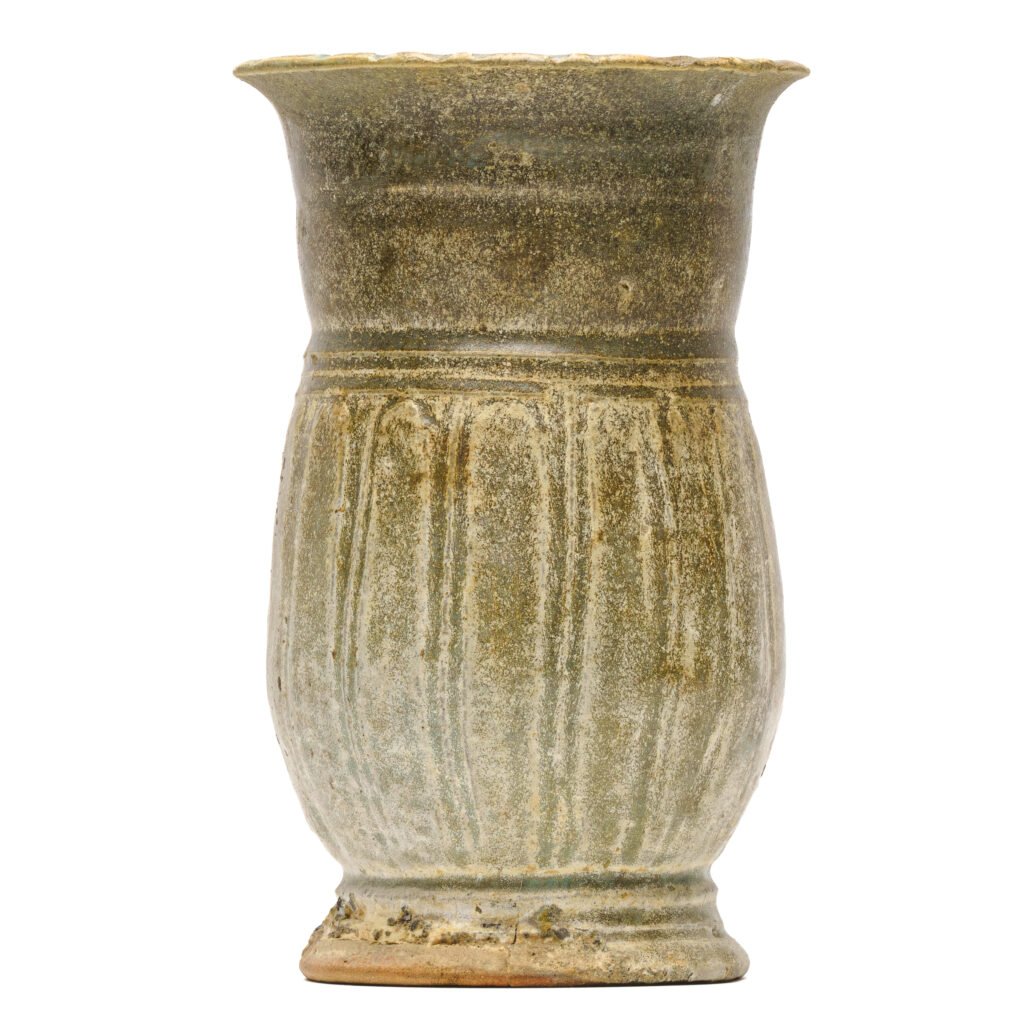
Vietnam & Thailand Dynasties: A Collector’s Guide
Southeast Asian Art & Ceramics
Dynasties, kingdoms, cultures and kiln traditions—from Đông Sơn and Ban Chiang to Nguyễn and Rattanakosin.

The history of Southeast Asian art does not always fit into the neat dynastic sequence familiar to collectors of Chinese porcelain. Vietnam is usually dated through ruling dynasties, but Thailand is more often described through archaeological cultures, regional kingdoms, artistic periods and kiln centres.
This distinction matters. A Ban Chiang vessel does not belong to a “Ban Chiang dynasty,” and a Sawankhalok celadon was not made under a “Sawankhalok dynasty.” The first is an archaeological culture; the second is a ceramic tradition associated principally with the kilns of Si Satchanalai.
Vietnam: a history told through dynasties
Vietnam’s main dynastic sequence developed in the north around the Red River Delta. It existed alongside other cultures and kingdoms—most notably Champa in central Vietnam and Óc Eo–Funan in the Mekong Delta. Consequently, two objects made at the same time within the borders of present-day Vietnam may belong to entirely different cultural traditions.
Đông Sơn culture
Best known for technically accomplished cast-bronze drums decorated with stars, birds, boats and geometric ornament.
Ngô, Đinh and Early Lê dynasties
The consolidation of an independent Vietnamese state after centuries of Chinese administration.
Lý and Trần dynasties
A foundational period for glazed stoneware, including celadon, ivory-white and iron-brown decorated ceramics.
Later Lê dynasty
The great age of Vietnamese blue-and-white export ceramics, especially during the 15th century.
Tây Sơn dynasty
A brief but important period of political transformation before reunification.
Nguyễn dynasty
The final imperial dynasty, ruled from Huế and overlapping with the French colonial era.
The Lý and Trần age of celadon
Under the Lý dynasty (1009–1225), Vietnamese potters developed sophisticated glazed stonewares that absorbed ideas from Chinese ceramics while forming a distinctly local vocabulary. Lotus petals, scrolling foliage and restrained incised decoration were especially well suited to the soft green and ivory-toned glazes of the period.
During the Trần dynasty (1225–1400), celadon production expanded and diversified. Bowls, dishes, jars and ewers were made for both domestic use and wider exchange. The distinction between Lý and Trần ceramics is not always absolute, which is why respected museum catalogues sometimes use the combined attribution “Lý or Trần dynasty, 12th–14th century.”


The Lê export world
Vietnamese blue-and-white ceramics flourished during the 15th century under the early Later Lê dynasty. The kilns around Hải Dương—including Chu Đậu—produced vessels painted with flowers, birds, fish, Buddhist emblems and lively landscapes.
These wares travelled far beyond Vietnam. Archaeological finds and shipwreck cargoes demonstrate their circulation through maritime Southeast Asia, the Middle East and other international markets. Their cobalt decoration can recall Chinese prototypes, but the drawing is often freer, more rhythmic and immediately recognisable as Vietnamese.

Parallel traditions: Champa and the southern regions
Champa occupied changing territories along central and southern Vietnam from approximately the 2nd century until 1832. Its Hindu and Buddhist sculpture, architectural ceramics and trade connections belong to a cultural history distinct from the northern Vietnamese dynasties. In the Mekong Delta, the Óc Eo–Funan tradition flourished from roughly the 1st to 7th centuries.
| Date | Vietnamese dynasty or period | Collector’s note |
|---|---|---|
| c. 700 BCE–AD 100 | Đông Sơn culture | Prehistoric bronze and pottery tradition; not a dynasty. |
| 111 BCE–AD 939 | Han–Viet and Chinese administration | Includes periods of revolt and temporary independence. |
| 938–965 | Ngô dynasty | Beginning of sustained Vietnamese independence. |
| 968–980 | Đinh dynasty | Foundation of Đại Cồ Việt. |
| 980–1009 | Early Lê dynasty | Also called the Anterior Lê. |
| 1009–1225 | Lý dynasty | Celadon, white ware and iron-brown decoration. |
| 1225–1400 | Trần dynasty | Expanded production of glazed stoneware. |
| 1400–1407 | Hồ dynasty | Short transitional dynasty. |
| 1407–1427 | Ming occupation | Period of direct Chinese rule. |
| 1428–1527 | Early Later Lê | Major period for blue-and-white export ceramics. |
| 1527–1592 | Mạc dynasty | Overlapped with competing Lê authority. |
| 1533–1788 | Restored Later Lê | Nominal Lê rule; Trịnh lords governed the north. |
| 1558–1777 | Nguyễn lords | Controlled and expanded southern territories. |
| 1778–1802 | Tây Sơn dynasty | Brief unifying dynasty. |
| 1802–1945 | Nguyễn dynasty | Final imperial dynasty, centred at Huế. |
The safest attribution begins by identifying whether a name describes a ruler, a culture, a kingdom, a region or a kiln.
Thailand: overlapping cultures and kingdoms
Thailand does not have one uninterrupted dynastic sequence comparable with China or Vietnam. Before the rise of the major Thai kingdoms, the region contained Mon, Khmer, Malay and Tai centres whose territories and artistic traditions frequently overlapped.
Ban Chiang: before the kingdoms
Ban Chiang is an archaeological culture of northeast Thailand, not a royal dynasty. It is celebrated for prehistoric settlement, metallurgy and distinctive earthenware painted with red spirals and geometric bands.
Dating remains complex. UNESCO places the beginning of occupation around 1495 BCE, while individual museum objects are assigned more specific ranges according to form and decoration. A common museum date for late red-painted vessels is approximately 300 BCE–AD 200.

Dvaravati, Khmer and the early regional traditions
From approximately the 6th to 11th centuries, the term Dvaravati describes a network of predominantly Mon-speaking Buddhist centres in central Thailand. It is best understood as a broad cultural and artistic tradition rather than a tightly unified kingdom.
Other traditions flourished at the same time. Srivijayan influence shaped the southern peninsula; Hariphunchai developed around Lamphun in the north; and Khmer authority strongly affected central and northeastern Thailand between approximately the 9th and 13th centuries. Objects from this last tradition are frequently catalogued as Khmer or Lopburi period.


Sukhothai, Si Satchanalai and Sawankhalok
The Sukhothai kingdom emerged during the 13th century and is closely associated with one of the most elegant sculptural traditions in Thai Buddhist art. It was also connected with important ceramic industries.
Collectors should distinguish the political name Sukhothai from the ceramic labels Si Satchanalai and Sawankhalok. Si Satchanalai was the principal kiln centre; “Sawankhalok” became the familiar trade and collecting name for much of its output. Celadons, underglaze-black wares, jars, dishes and animal-shaped vessels were produced largely between the 14th and 16th centuries.

Kiln evidence: fused and misfired wares
Collectors often learn as much from kiln waste as from a perfect vessel. Warping, fused stacks, glaze runs and firing scars preserve evidence of how ceramics were loaded and fired. Such material can help connect a ware to a production tradition, although the kiln site should not be named without firm provenance.

Ayutthaya, Thonburi and Bangkok
Ayutthaya became the dominant Siamese kingdom from 1351 until its destruction in 1767. Its long history absorbed Sukhothai, Khmer, Persian, Chinese, Japanese and European influences. The brief Thonburi kingdom under King Taksin followed from 1767 to 1782.
Ayutthaya’s international ports also received large quantities of Chinese ceramics. Zhangzhou—often called Swatow—wares were made in southern China for maritime markets; examples found or collected in Southeast Asia illustrate exchange rather than Thai manufacture.
In 1782, Rama I founded the Chakri dynasty and established the capital at Bangkok. This begins the Rattanakosin—or Bangkok—period, which continues to the present day.

| Date | Thai culture, kingdom or period | Collector’s note |
|---|---|---|
| c. 1500 BCE–AD 200 | Ban Chiang culture | Prehistoric archaeological culture; dates vary by phase and object. |
| 6th–11th century | Dvaravati period | Mon Buddhist cultural and artistic tradition. |
| 7th–13th century | Srivijaya period | Important in southern peninsular Thailand. |
| 8th–13th century | Hariphunchai kingdom | Mon kingdom centred at Lamphun. |
| 9th–13th century | Khmer / Lopburi period | Khmer influence in central and northeastern Thailand. |
| c. 12th–15th century | U Thong period | Primarily an art-historical classification. |
| 1238–1438 | Sukhothai kingdom | Major Buddhist-art and ceramic period. |
| c. 1292–1775 | Lan Na kingdom | Northern Thailand, centred principally at Chiang Mai. |
| 14th–16th century | Sawankhalok / Si Satchanalai ceramics | Kiln and ware designation, not a dynasty. |
| 1351–1767 | Ayutthaya kingdom | Principal Siamese kingdom. |
| 1767–1782 | Thonburi kingdom | Reign of King Taksin. |
| 1782–present | Rattanakosin period | Bangkok period under the Chakri dynasty. |
How to describe the period correctly
For collectors and dealers, precise wording is more valuable than forcing every object into a dynasty. These formulations are historically accurate and immediately understandable:
Lý or Trần dynasty
Use when a medieval celadon cannot be confidently separated between the two dynasties.
Chu Đậu ware, Early Lê
Appropriate for 15th-century blue-and-white ceramics associated with the Hải Dương kilns.
Ban Chiang culture
Never “Ban Chiang dynasty.” Add the relevant early, middle or late phase only when supported.
Mon-Dvaravati period
A cultural and artistic description, especially useful for Buddhist sculpture and terracotta.
Sawankhalok ware
Prefer “Si Satchanalai kilns, 15th century” where the production centre is reasonably secure.
Ayutthaya period
A kingdom and historical period, suitable for art produced between 1351 and 1767.
Chronology is a framework rather than a substitute for examining the object itself. Clay body, glaze, firing marks, construction, decoration, burial deposits, restoration and provenance must all support the proposed date. Used carefully, however, these period names reveal the extraordinary cultural range behind the ceramics and works of art that travelled through Southeast Asia.