
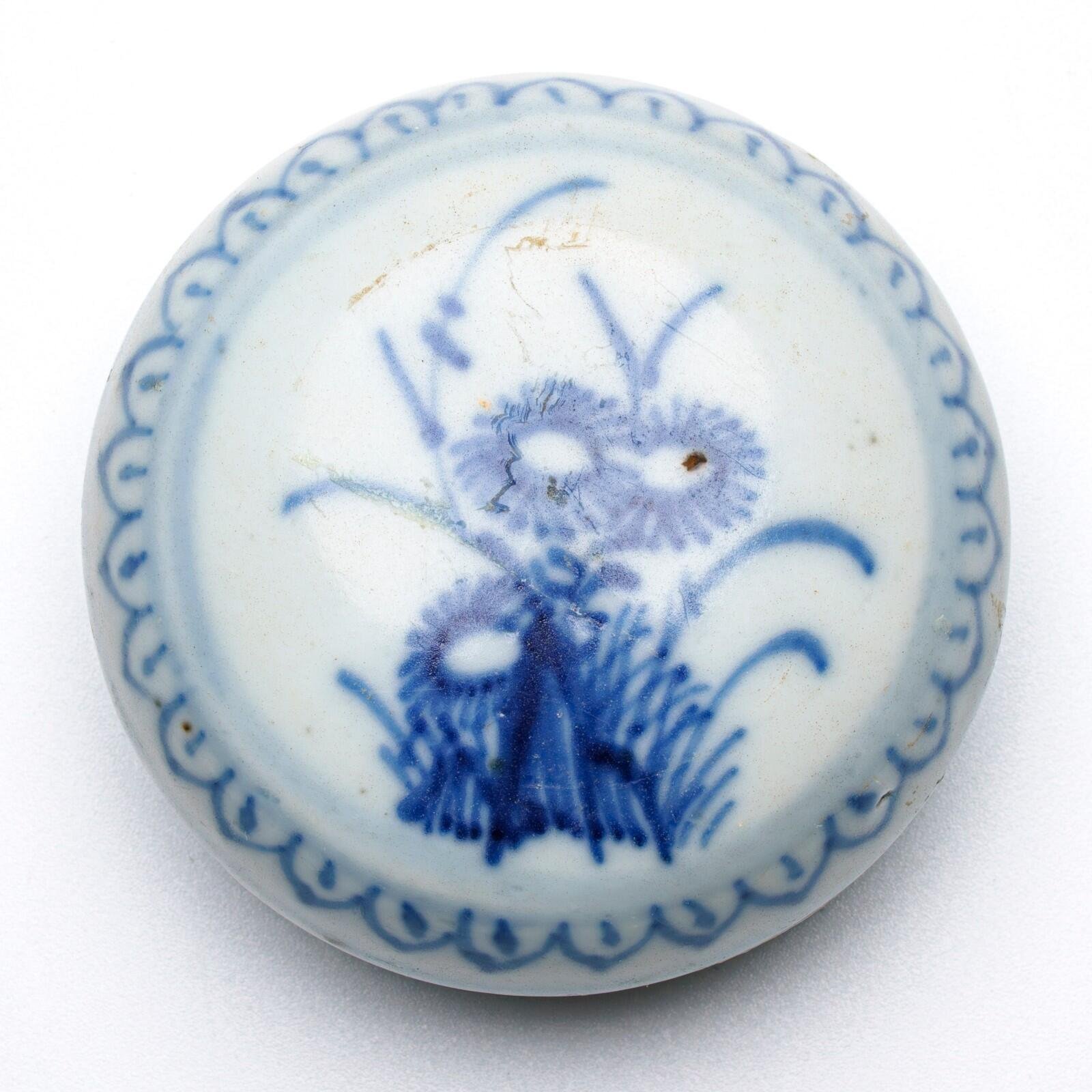
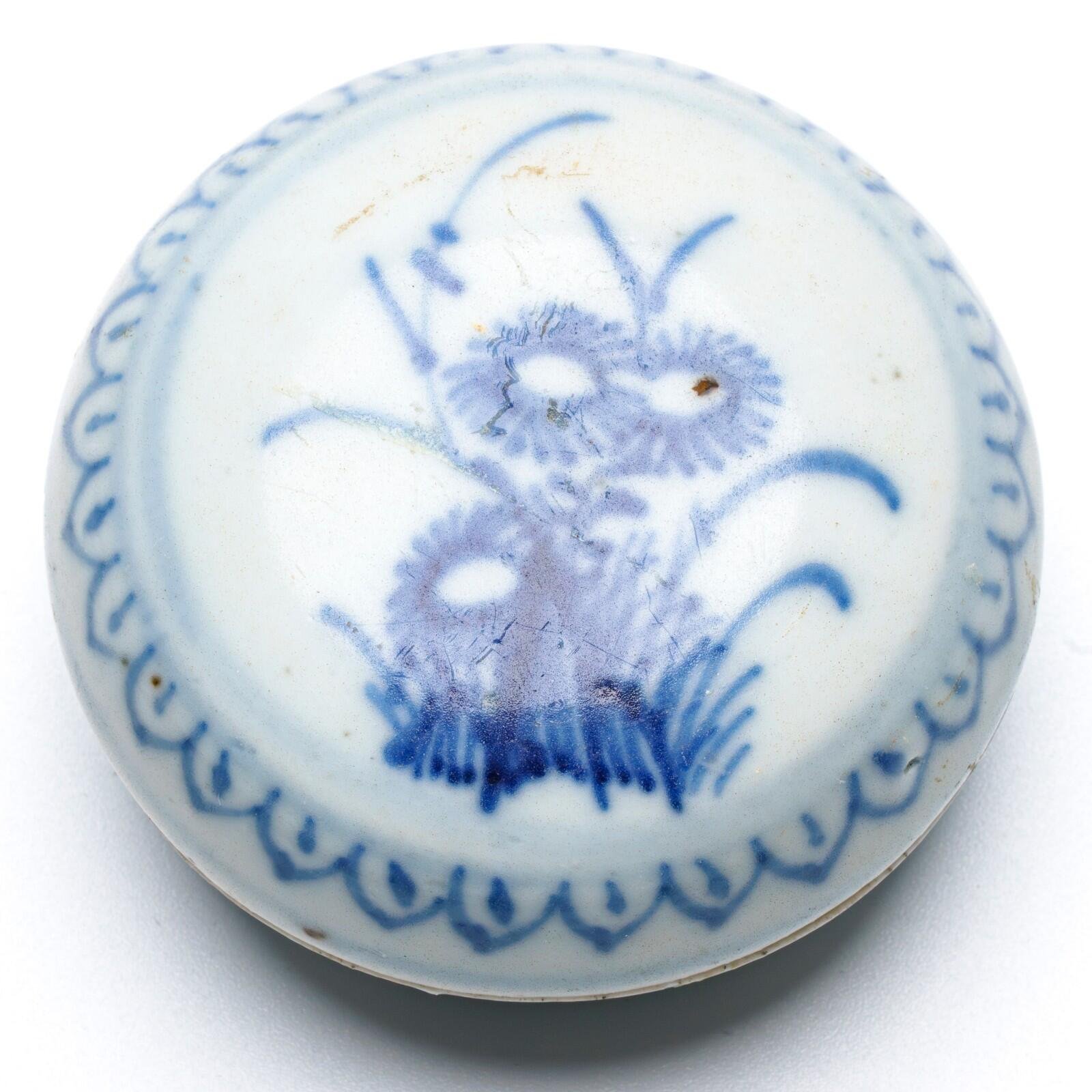
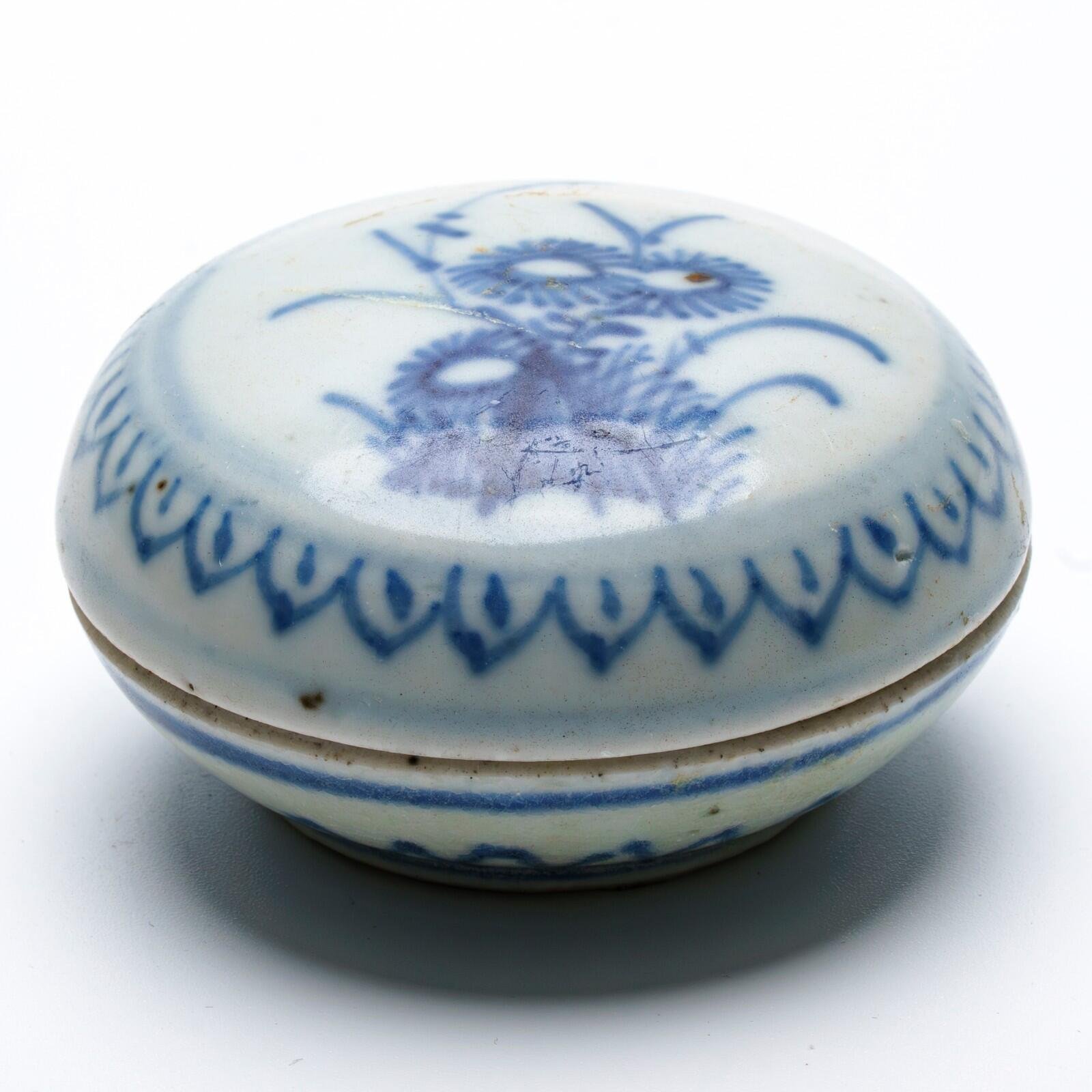
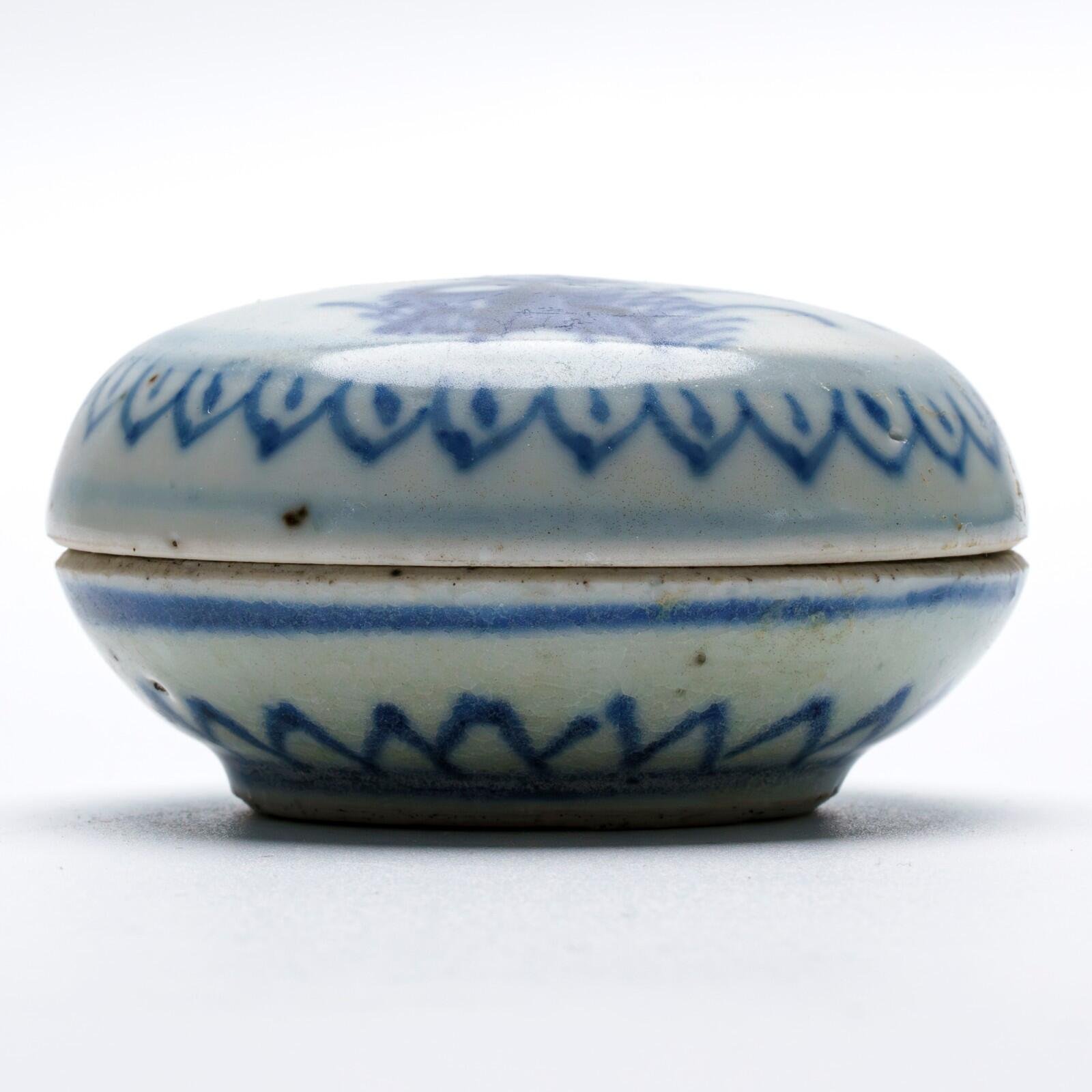
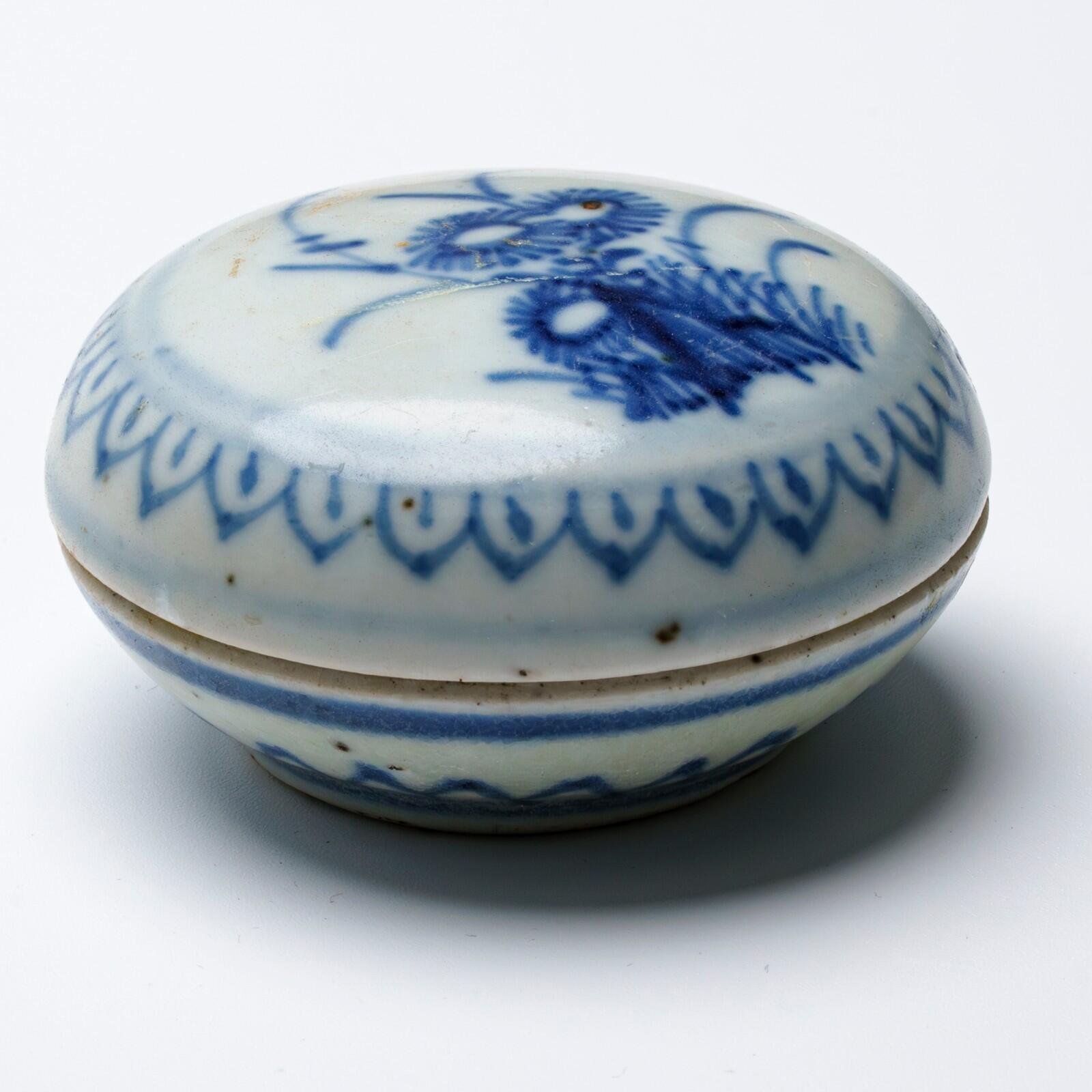
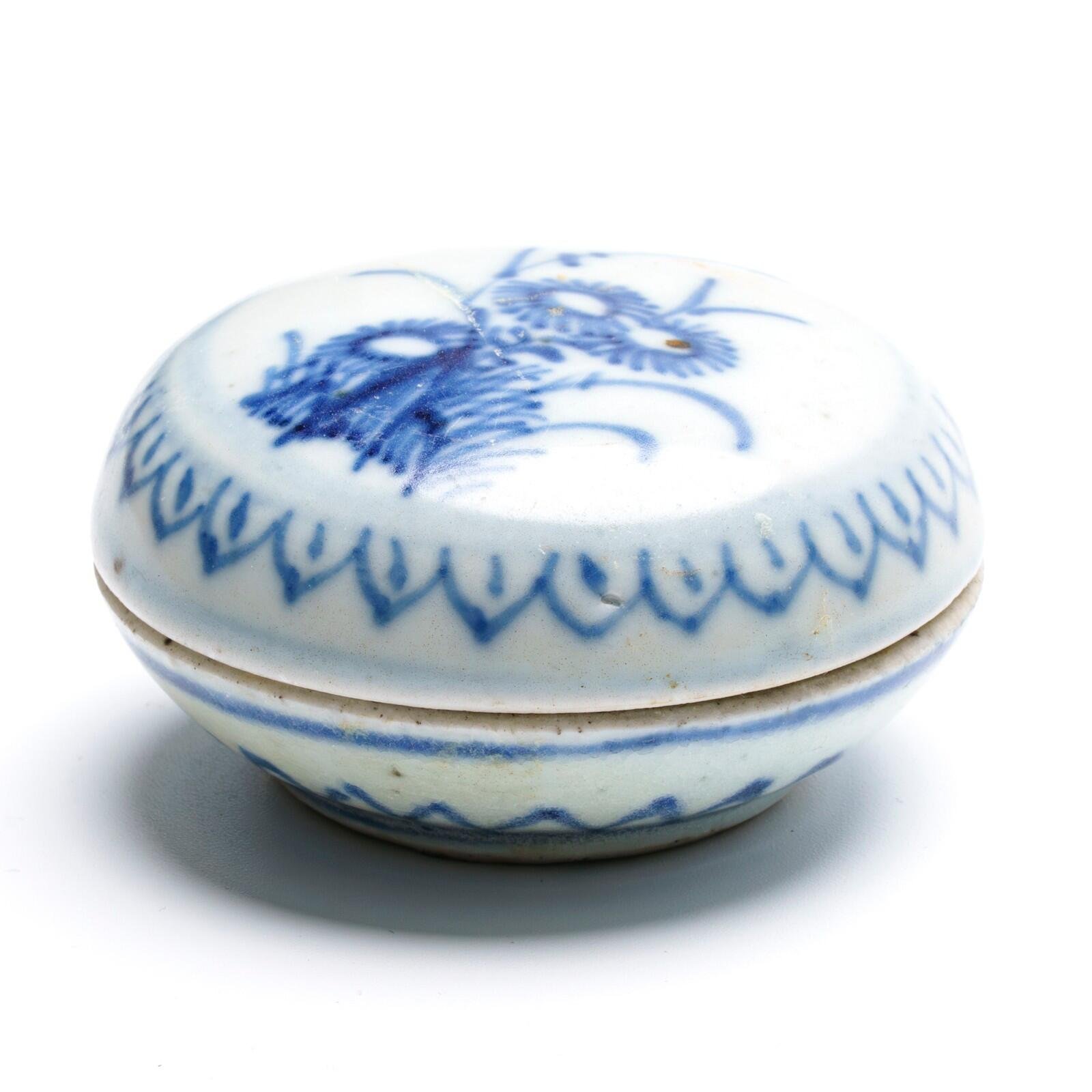
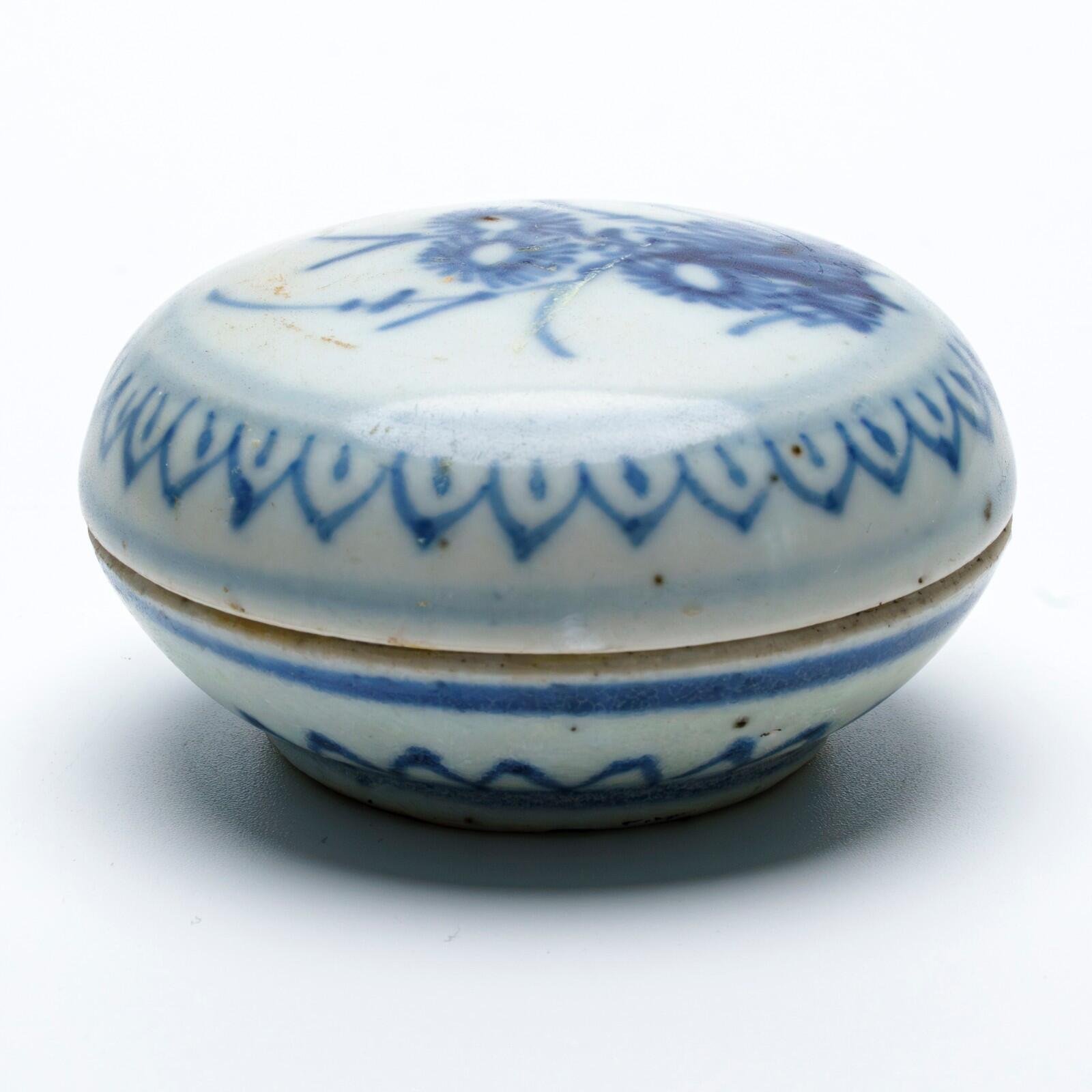
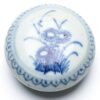
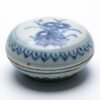
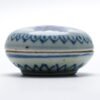
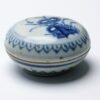
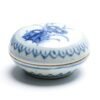
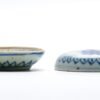
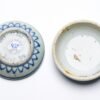
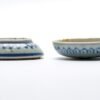
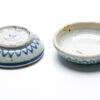
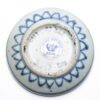
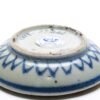
Chinese Porcelain Seal Box Blue White Flower Shipwreck Ca Mau Binh Thuan 15C
£33.60 Sold
Inventory Code: INV4470
Object: Seal Box
Material: Porcelain
Origin: China
Period: Ming Dynasty
Date: 15th Century
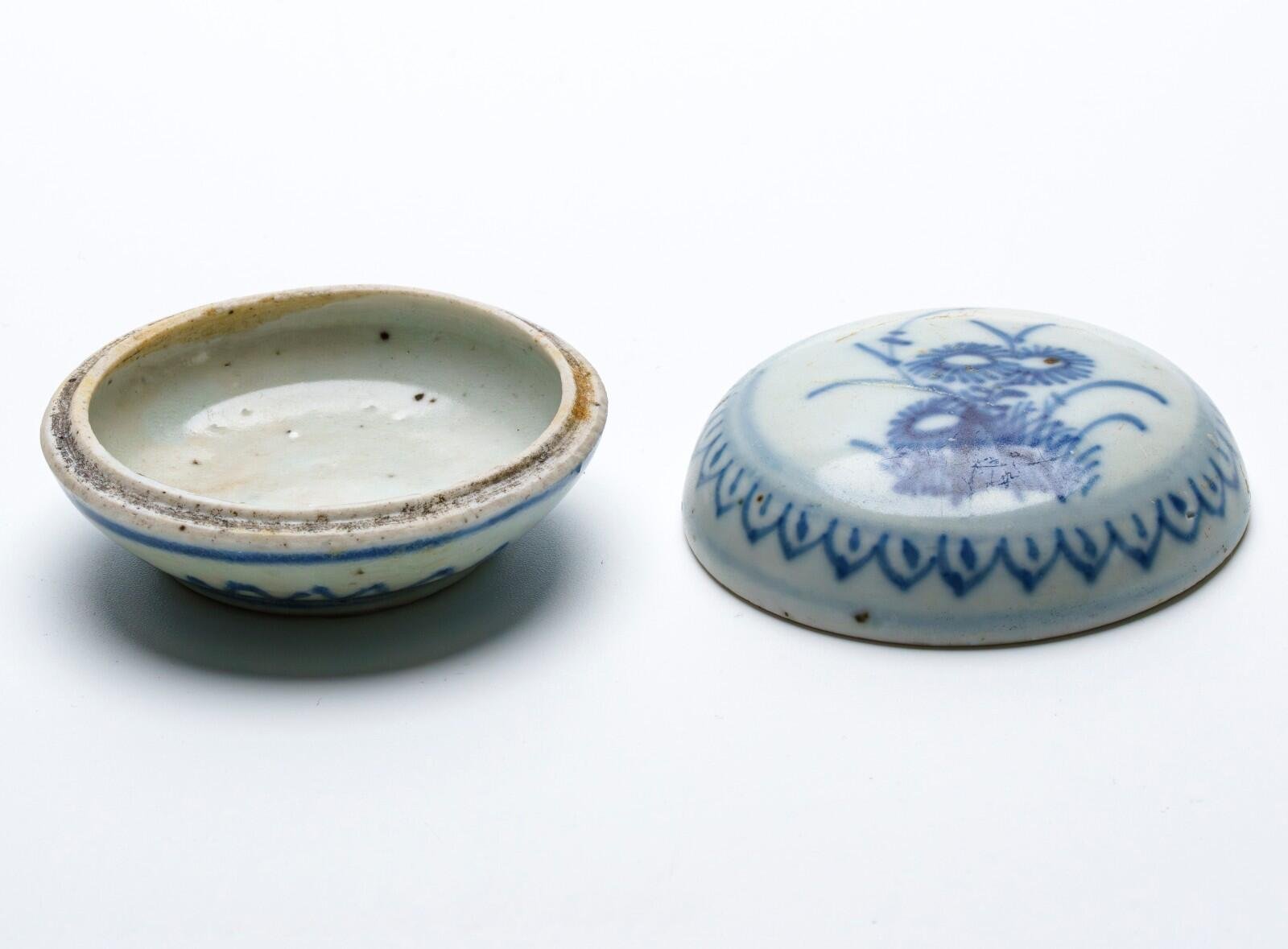
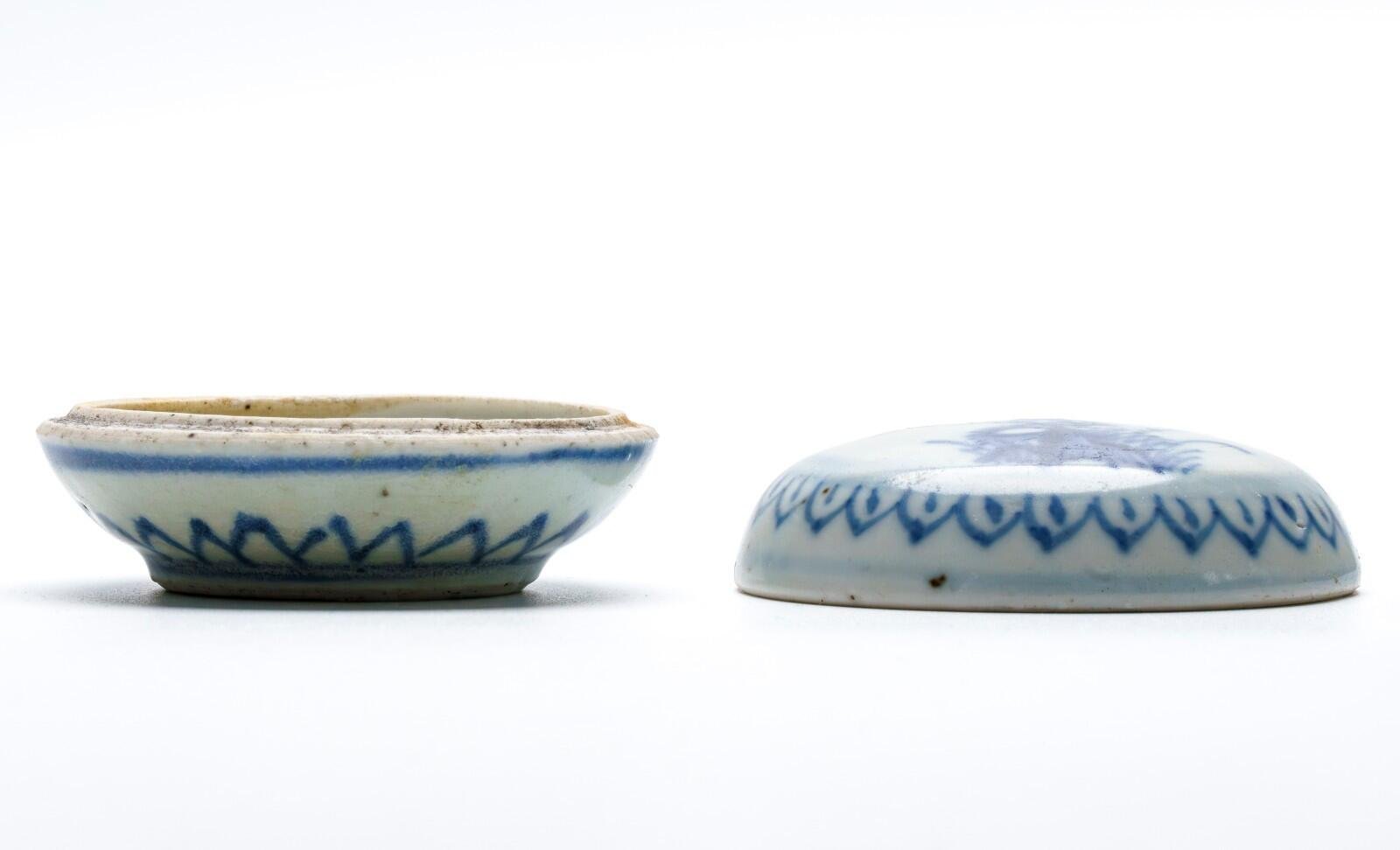
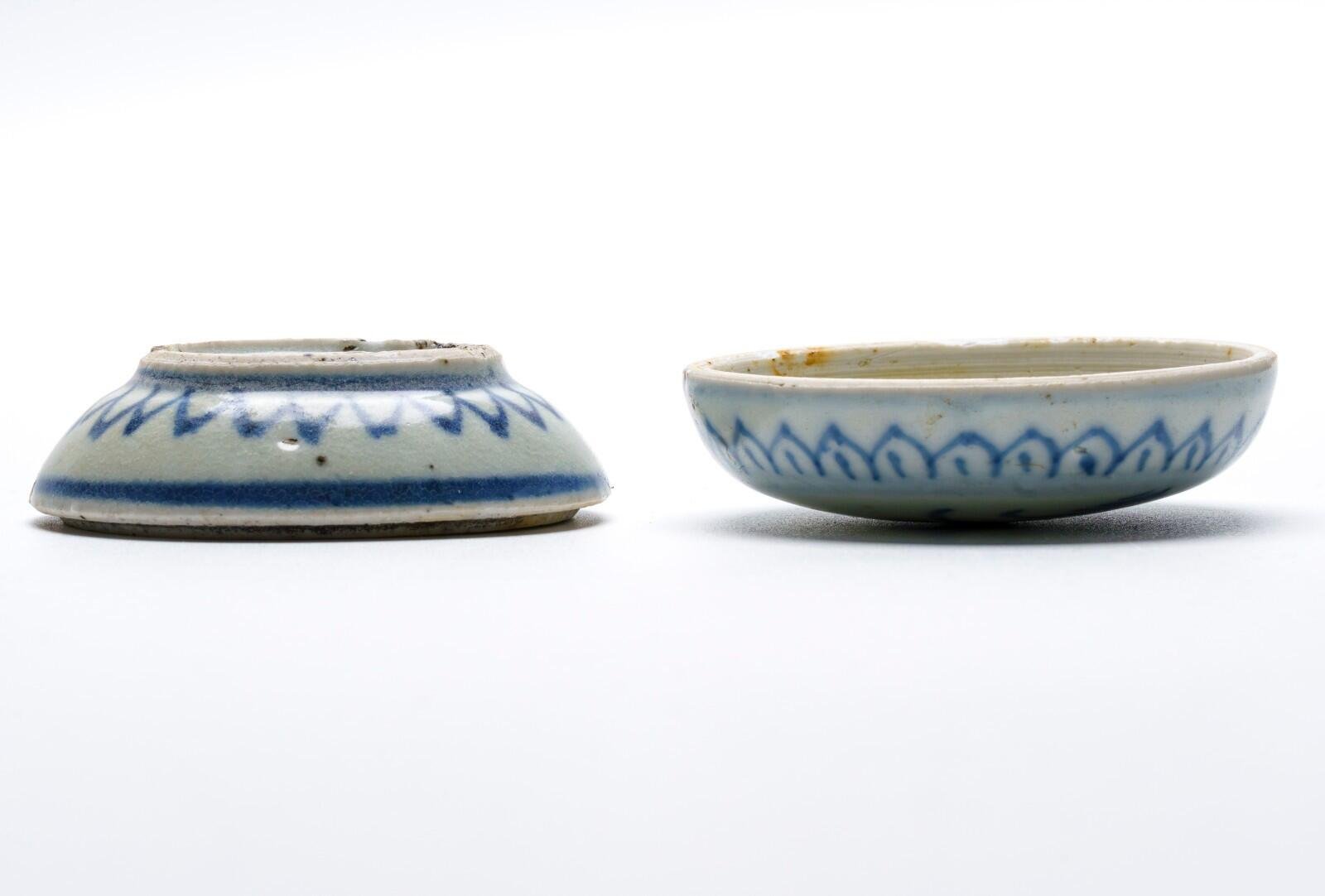
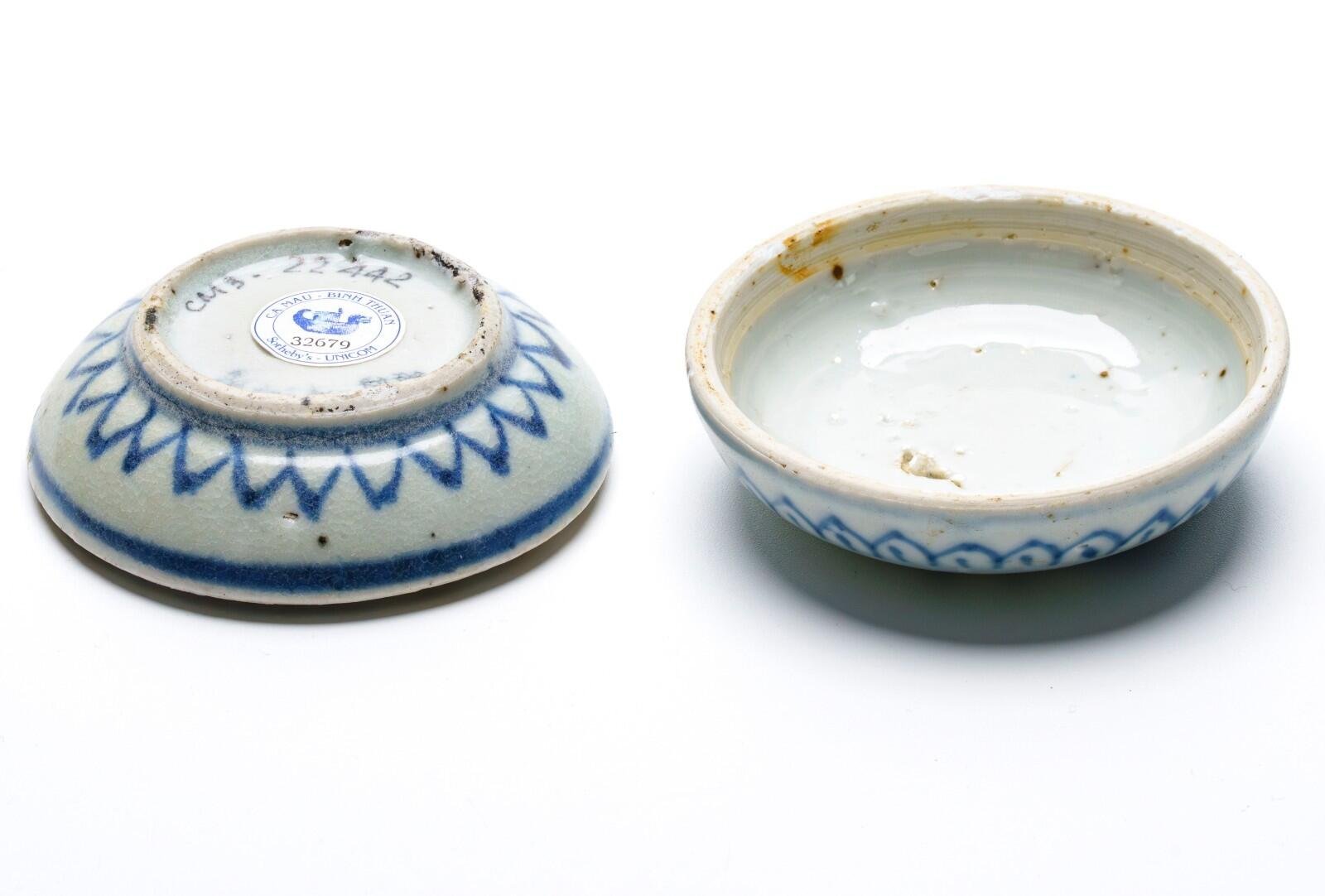
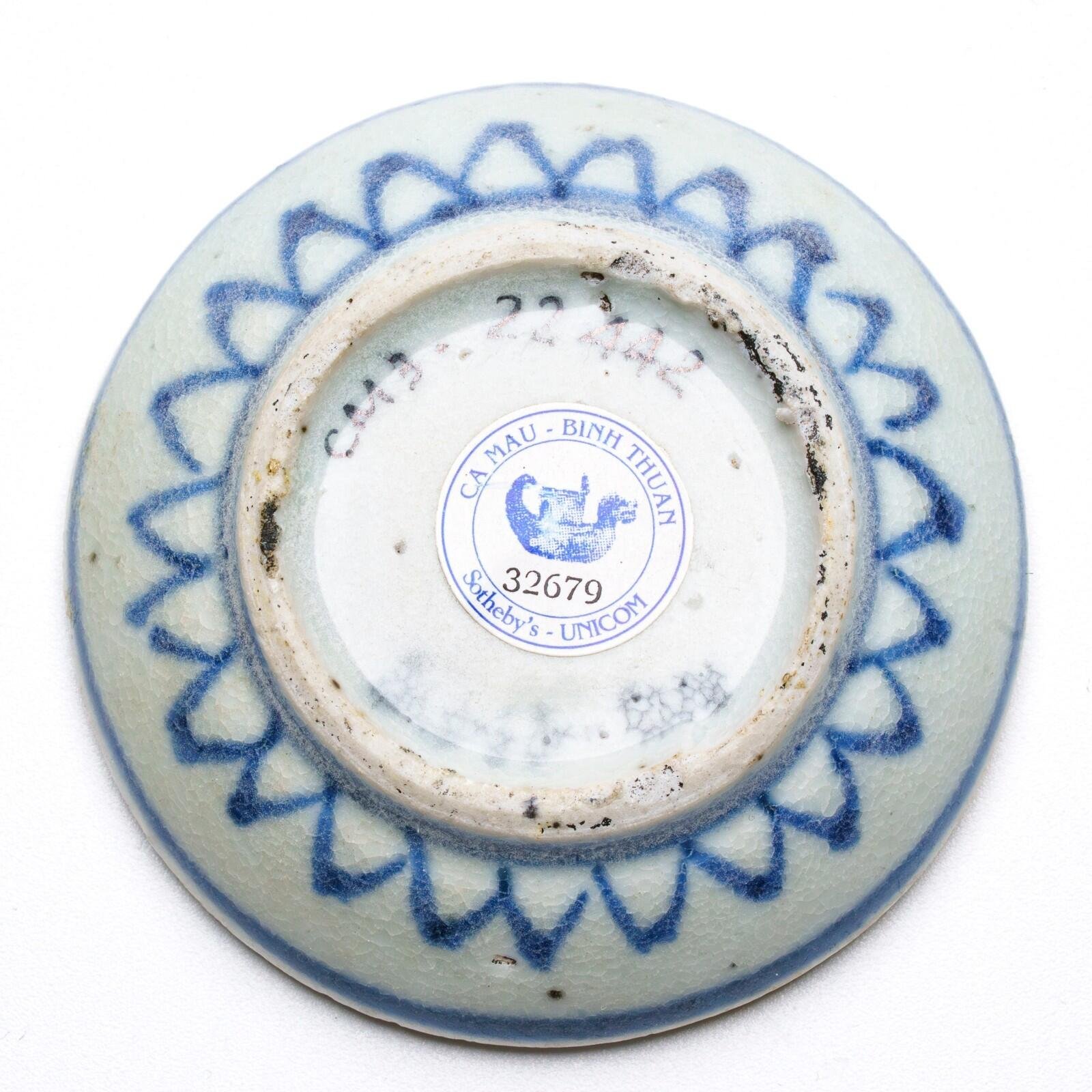
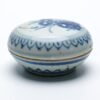
Decoration: Blue and white floral decoration with petal border motifs
Marked: Unmarked
Measurements:
Diameter: 2.9 in / 6.2 cm
Height: 1.2 in / 3.0 cm
Condition:
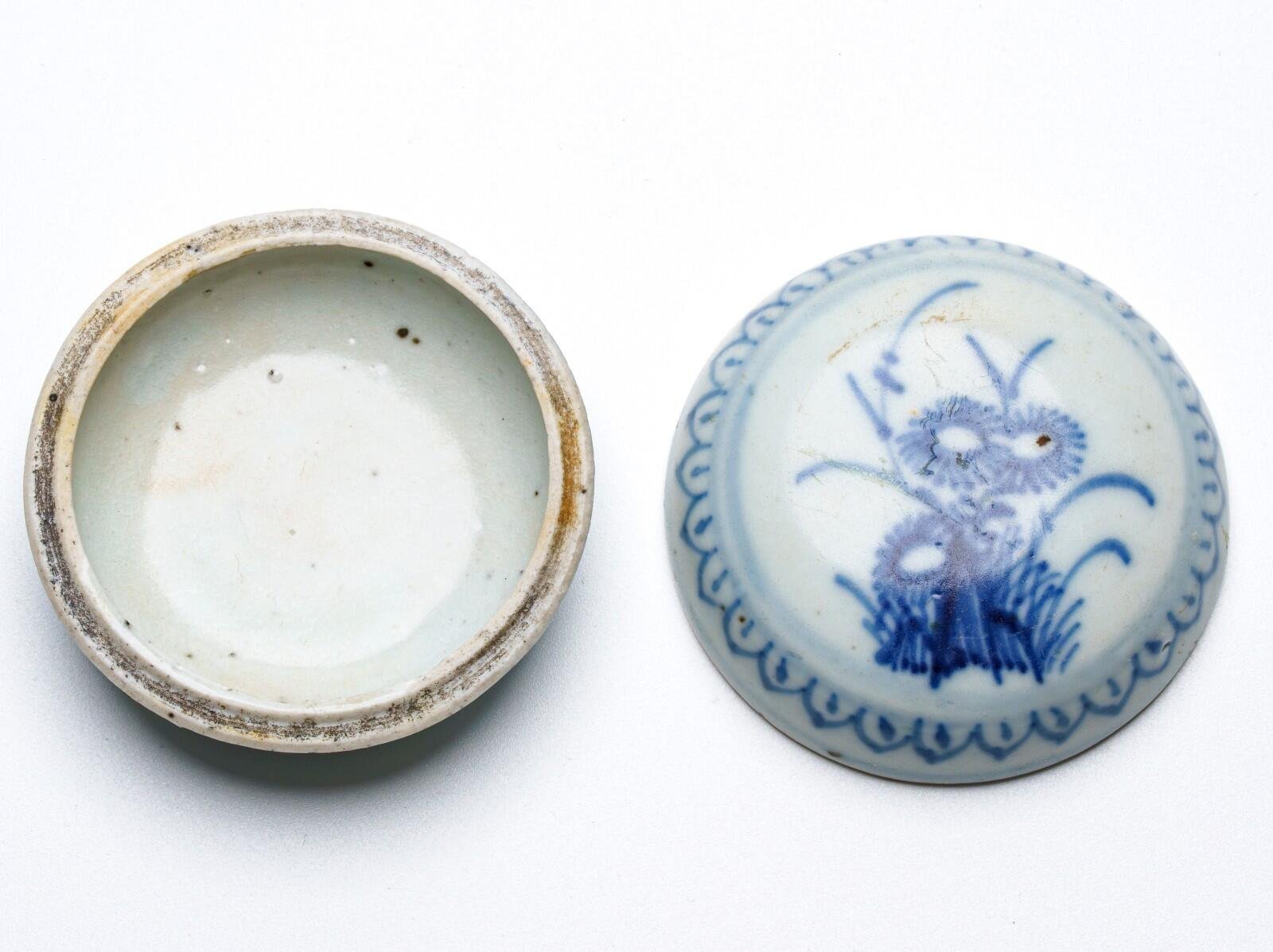
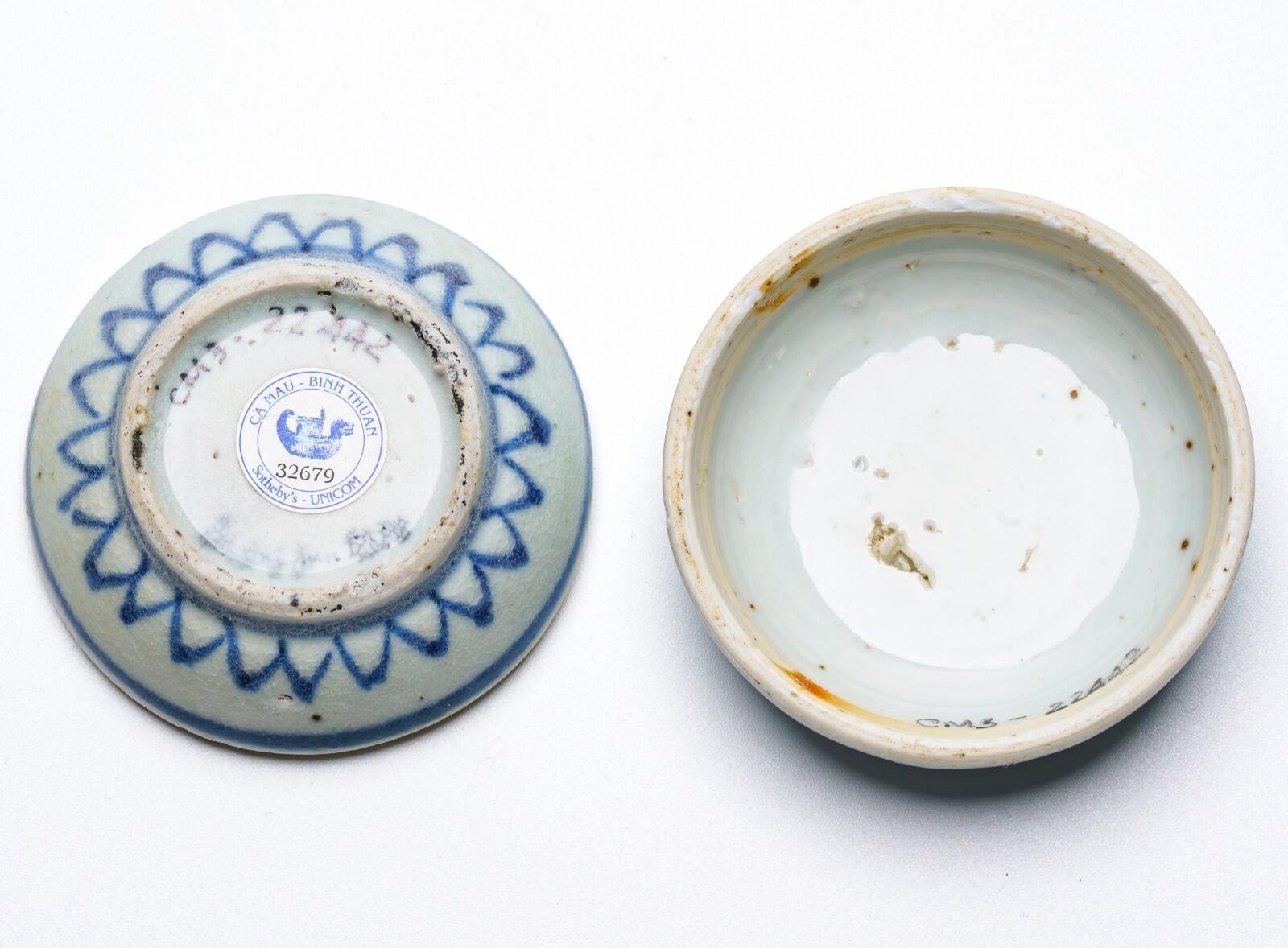
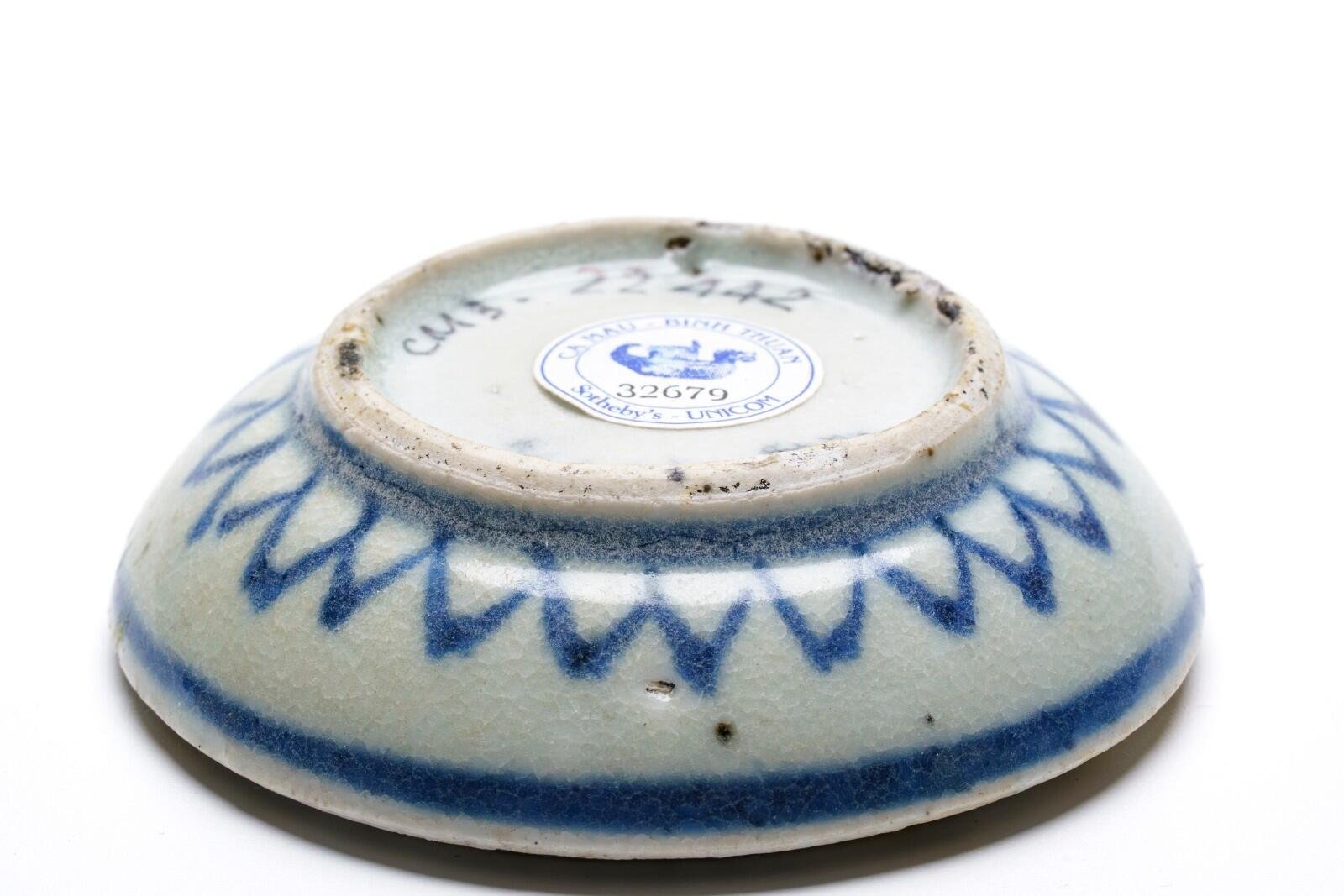
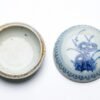
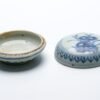
GOOD (4/5) - Glaze crackling, kiln imperfections, surface wear, marine encrustations and staining consistent with shipwreck recovery. Small firing flaw and losses visible to the interior. Please review the photos carefully for more details.
International Shipping
We ship worldwide using tracked and insured services. Prices are calculated at checkout. All items are securely packaged with care and experience.
Pricing
Prices reflect past sales and our assessment of each item’s rarity and condition. Contact us if you would like to discuss.
Research
All item details are based on our own research and evaluation. We welcome questions or feedback.
Authenticity
Every item is guaranteed to be as described, with provenance provided where available.
Refunds
We accept returns within 14 days of delivery. Please contact us first to arrange a return and refund.
DESCRIPTION
Small Chinese porcelain seal box and cover decorated in underglaze blue with stylized floral motifs.
The domed cover features a central flower spray enclosed by a repeating petal border, while the base is similarly decorated around the exterior.
The piece exhibits an attractive pale blue glaze with pronounced craquelure and marine accretions acquired during long submersion.
Retains a Ca Mau – Binh Thuan Sotheby’s Unicom collection label to the underside, linking the piece to a documented shipwreck assemblage.
COLLECTOR’S NOTE
Chinese export porcelains recovered from Southeast Asian shipwrecks provide valuable evidence of historic maritime trade routes.
Objects bearing references to the Ca Mau and Binh Thuan discoveries are collected for their archaeological interest, distinctive preservation, and connection to international commerce during the Ming period.
NOTES
Please review all photos carefully as they form part of the description.