
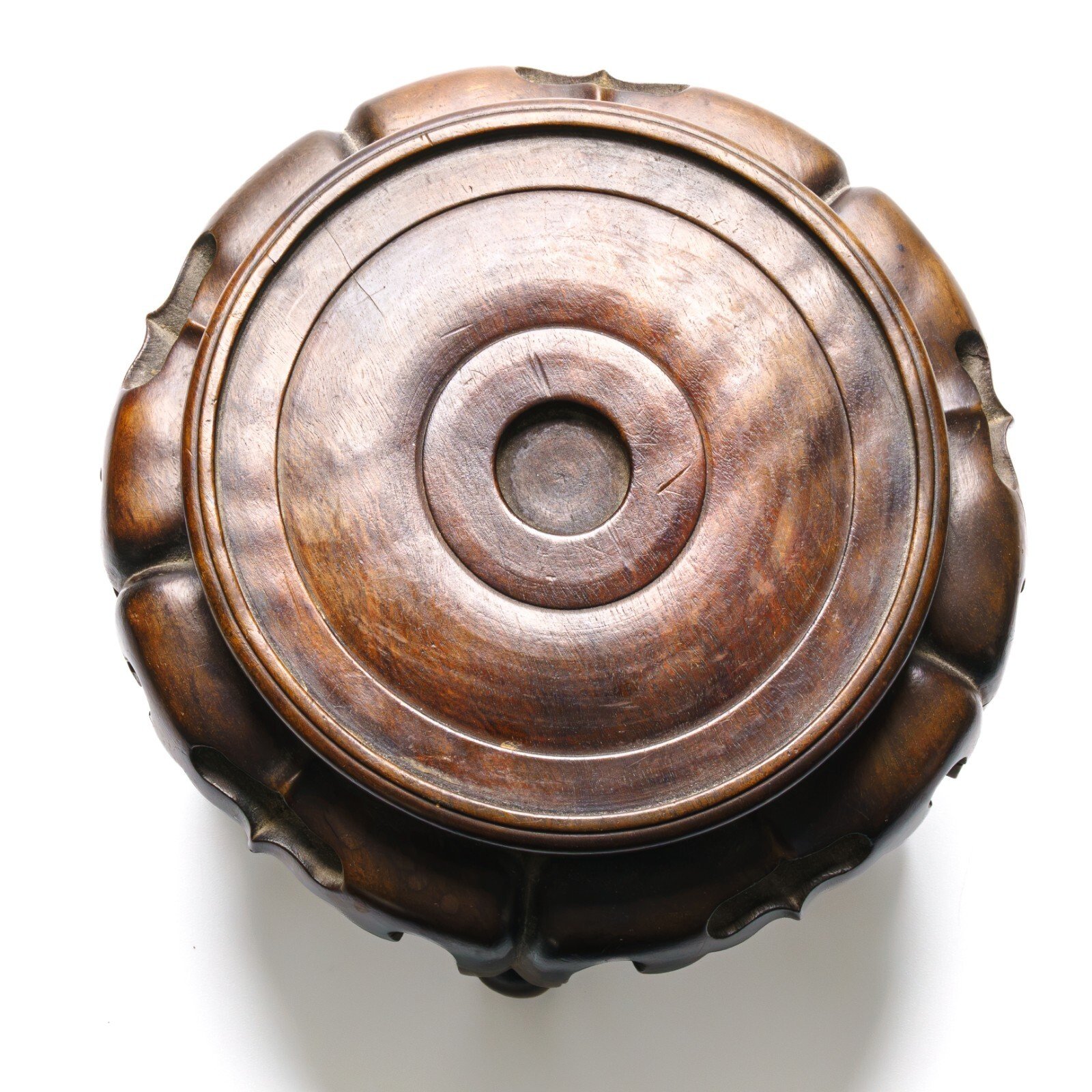
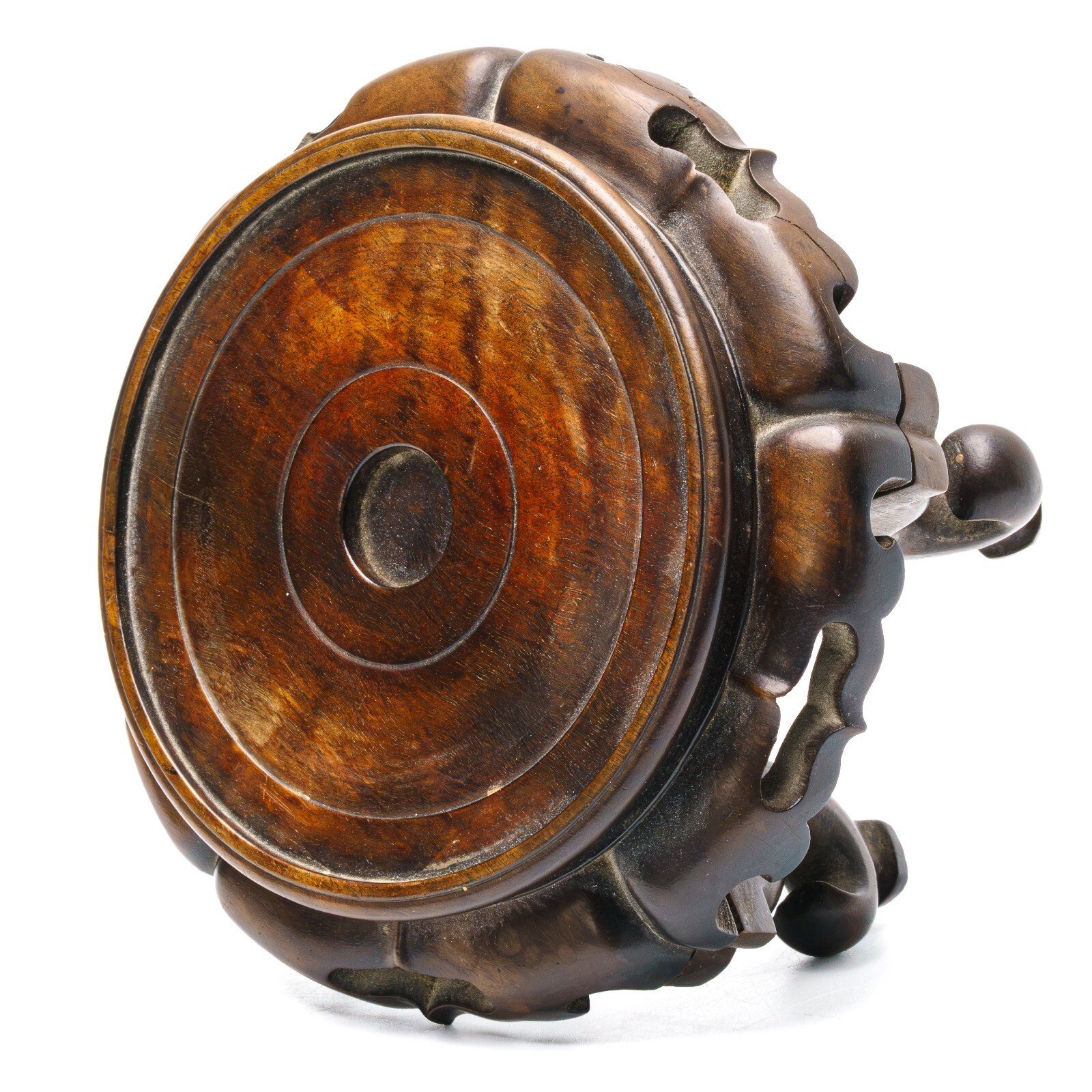
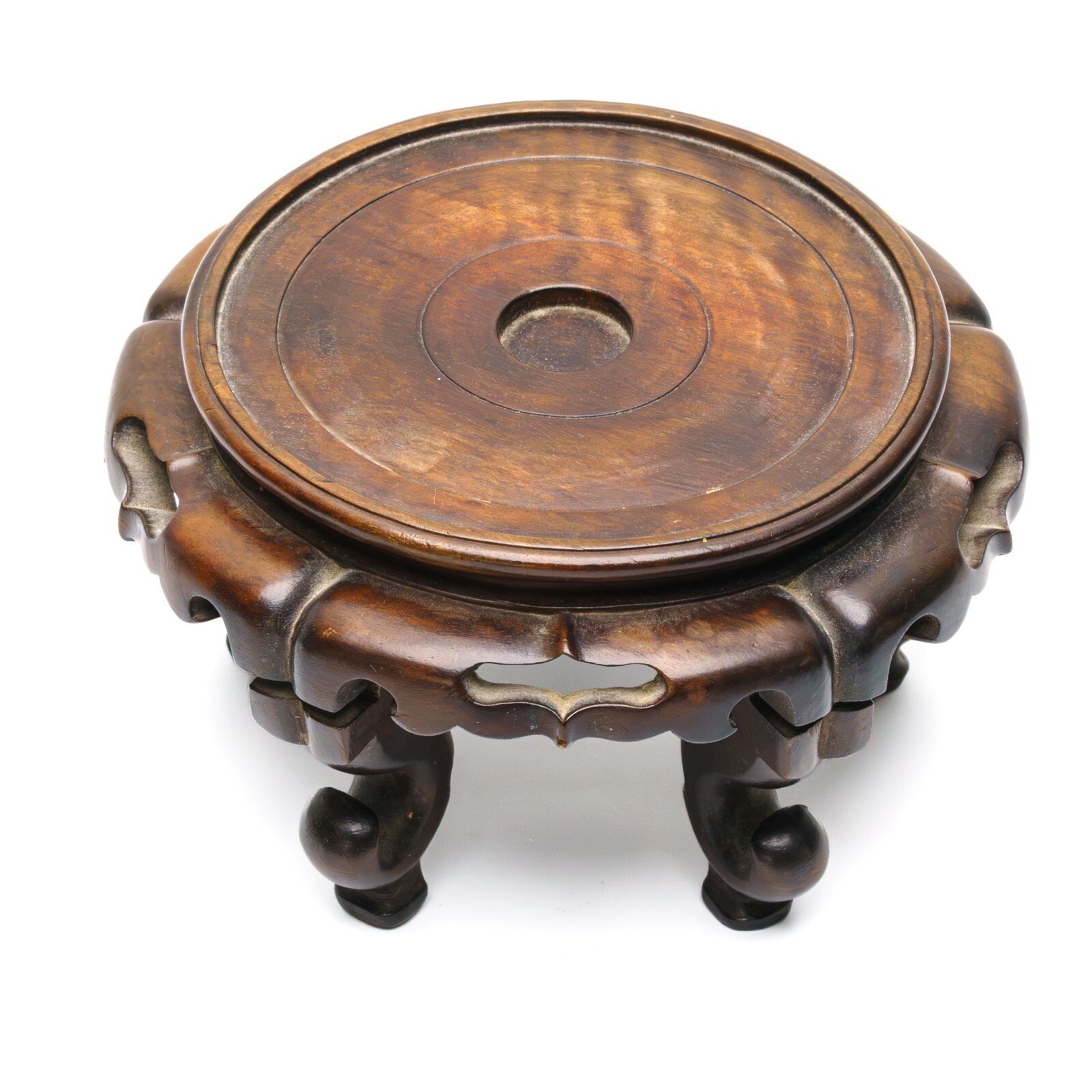
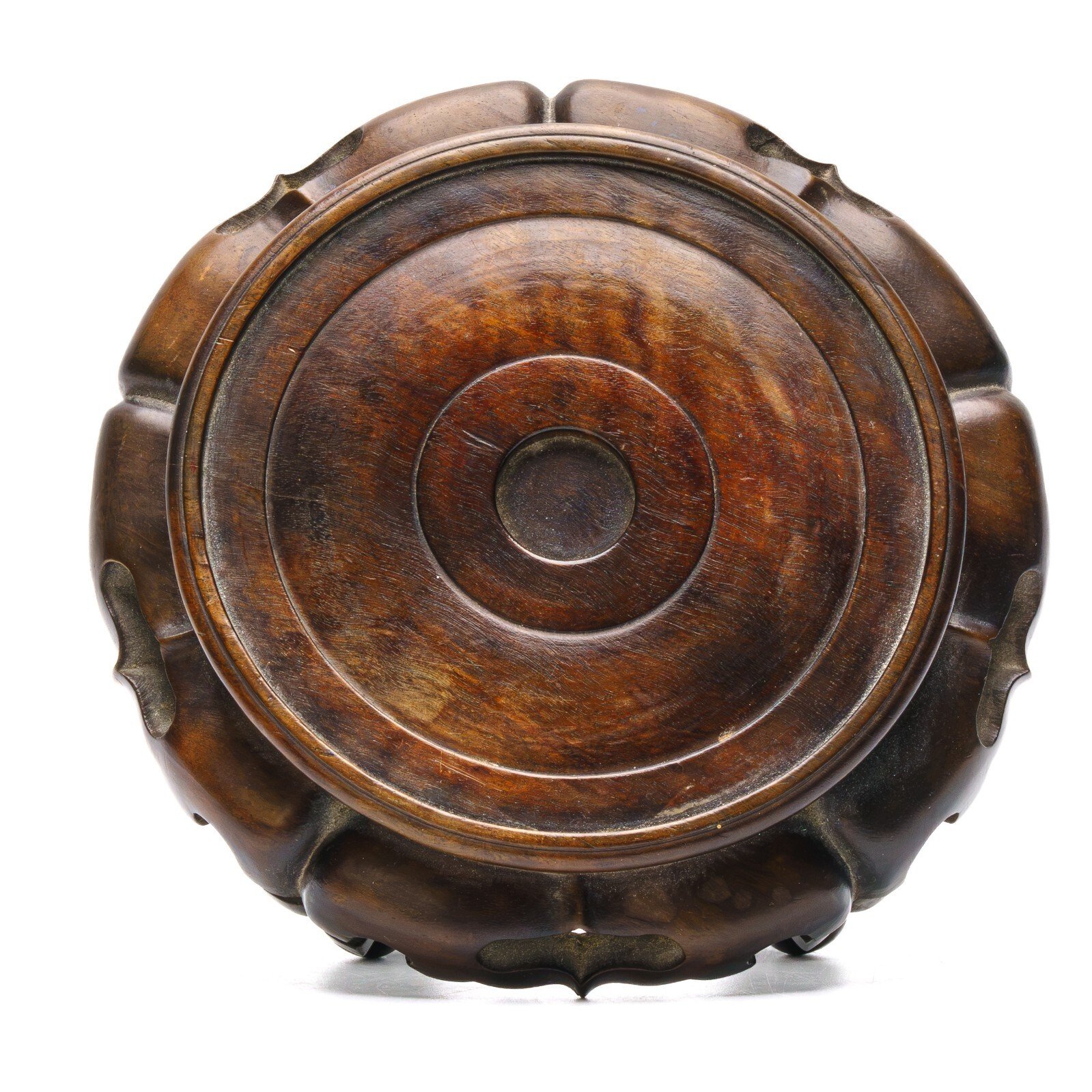
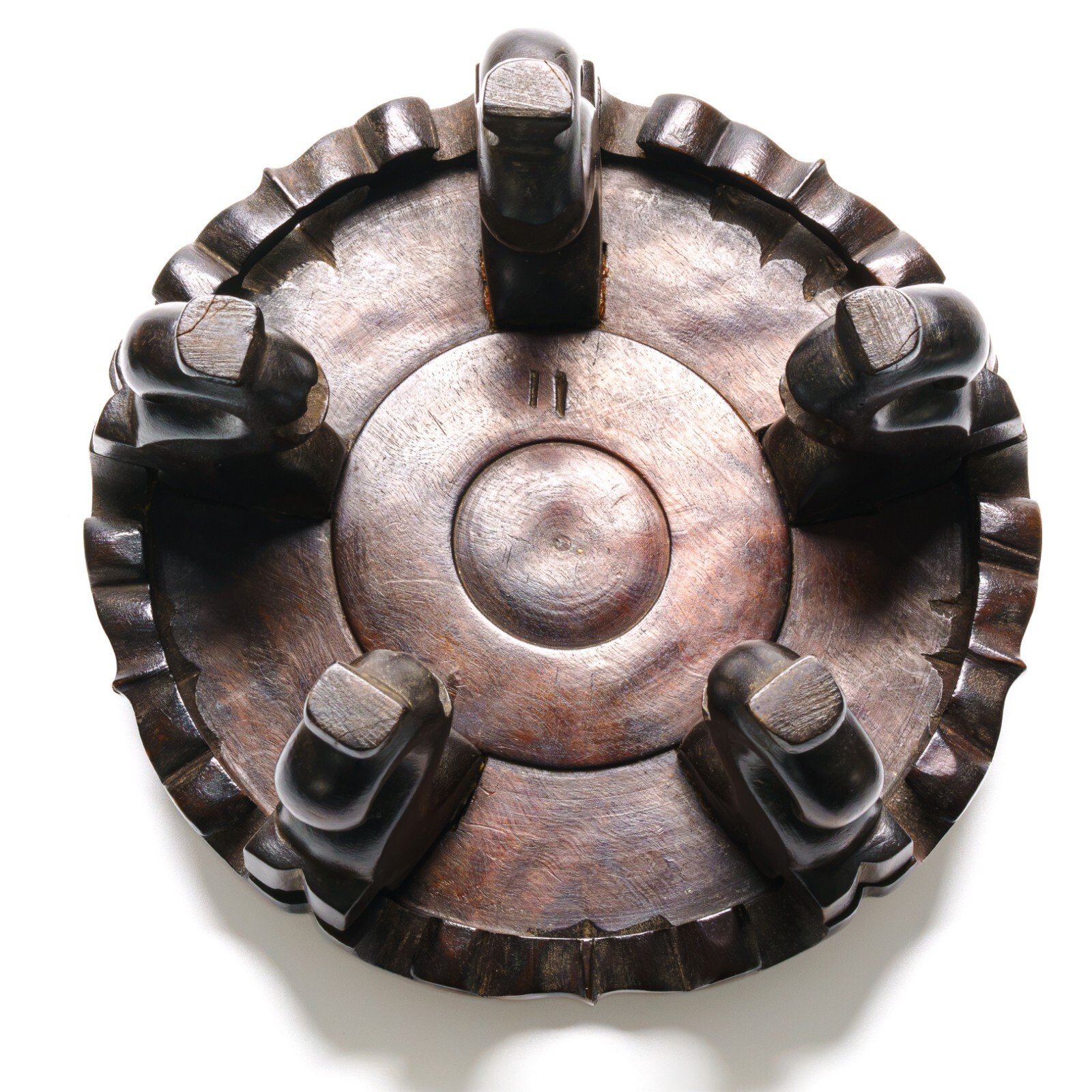
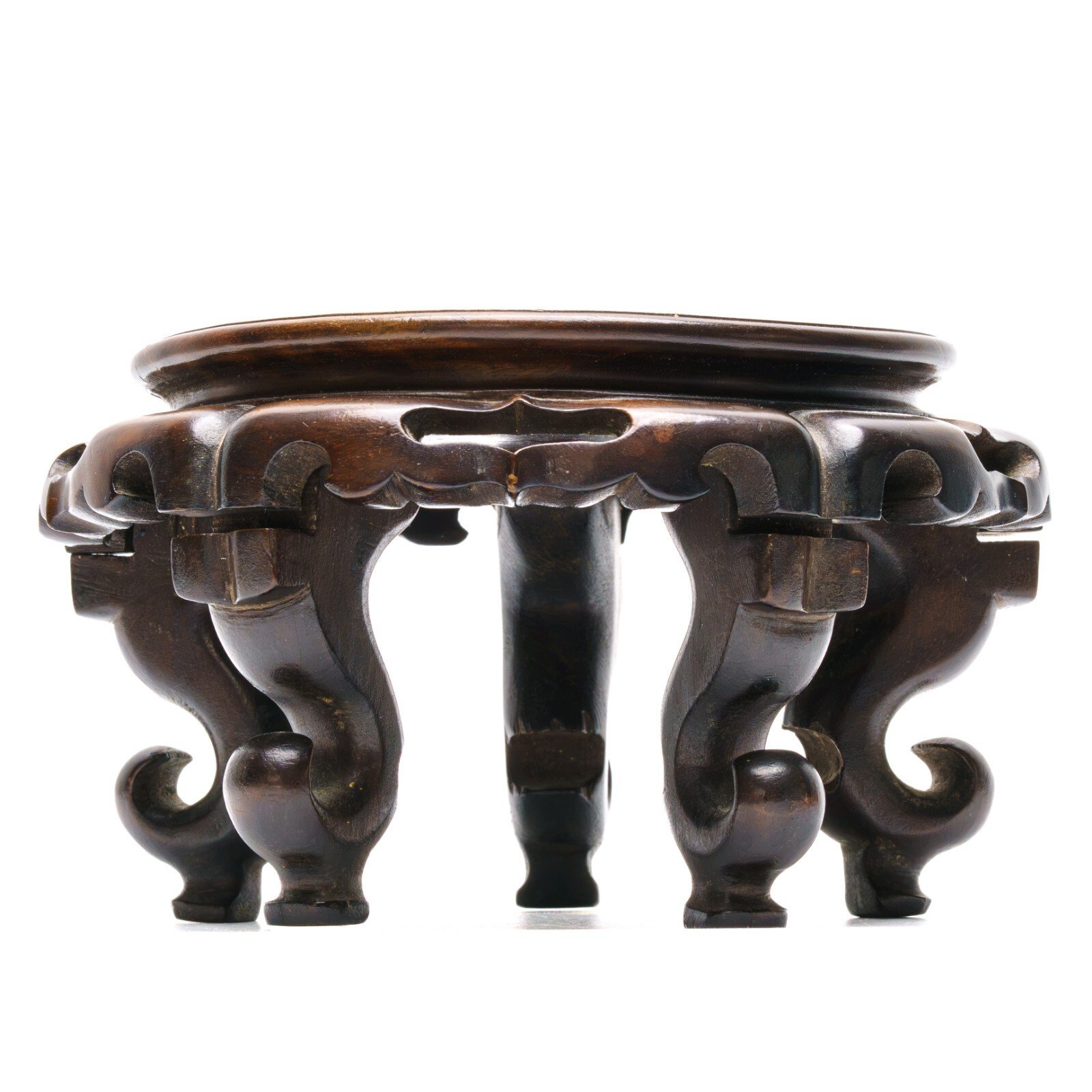
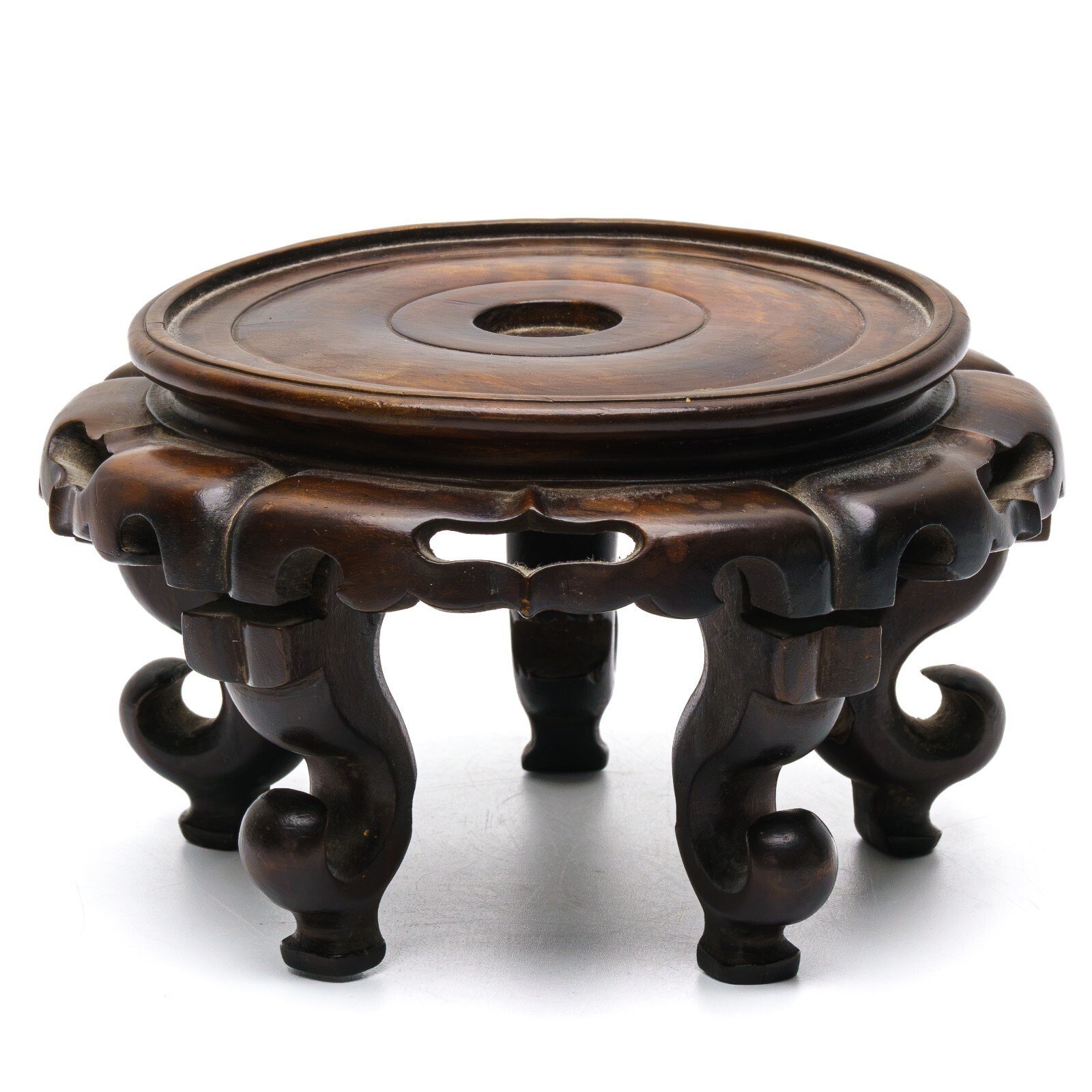
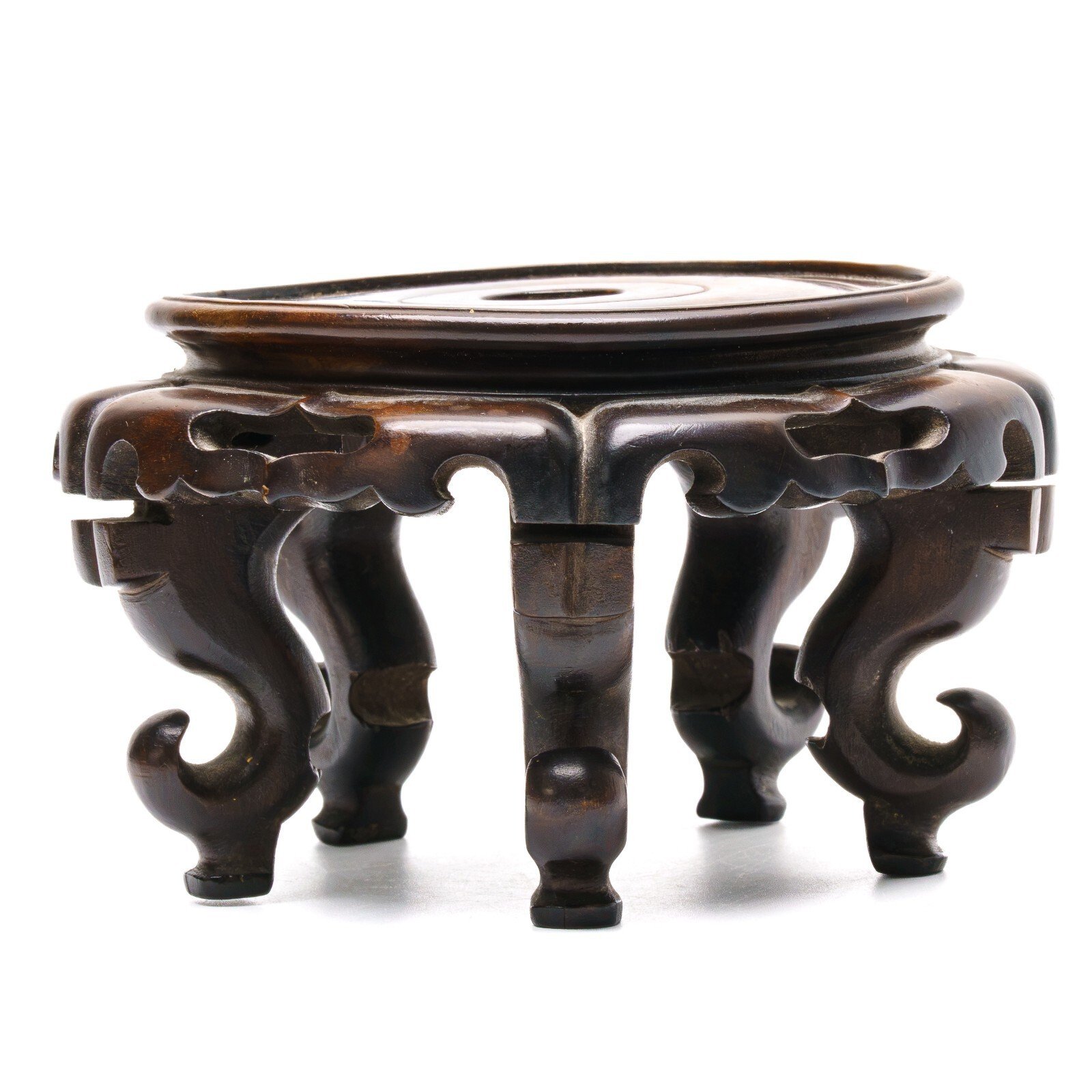
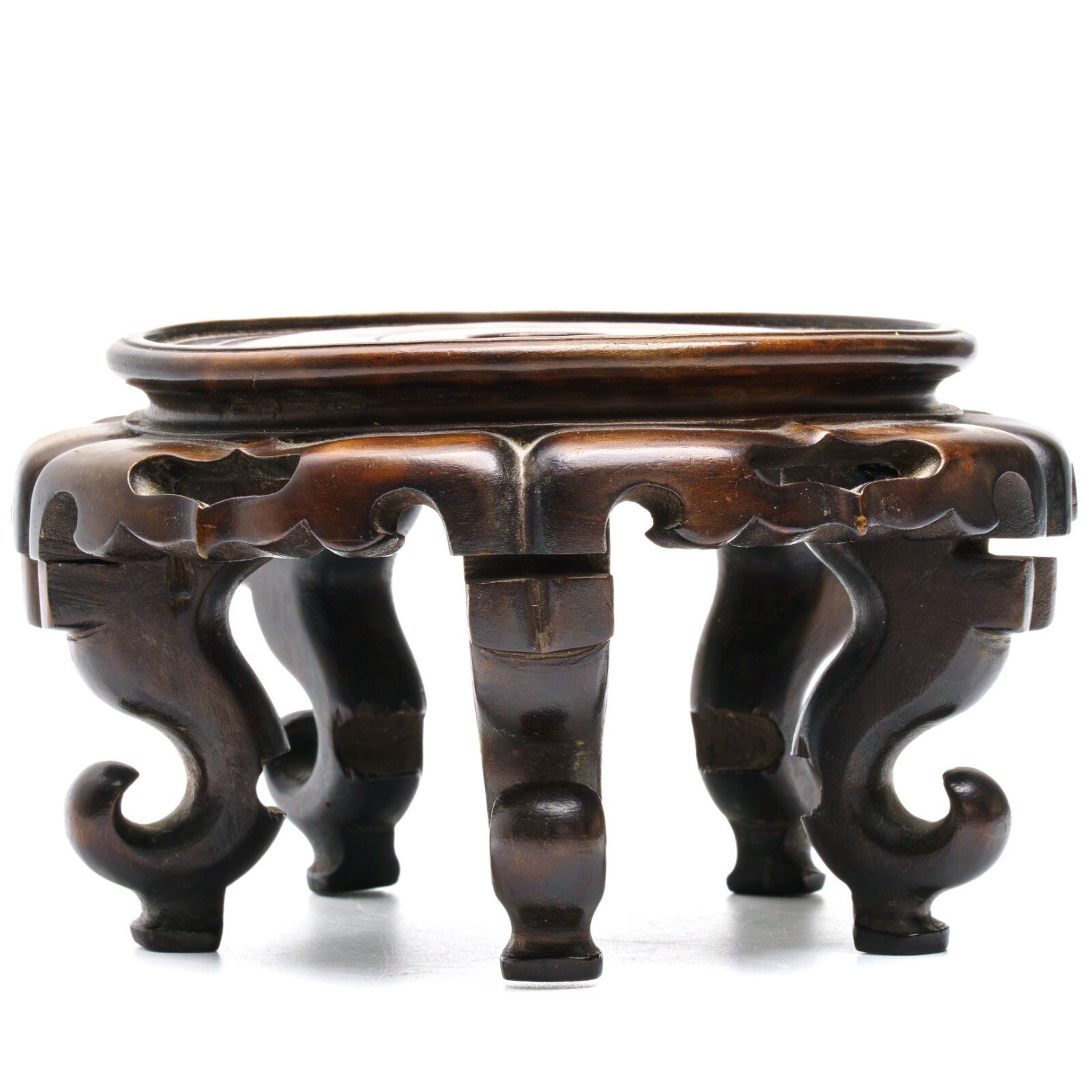
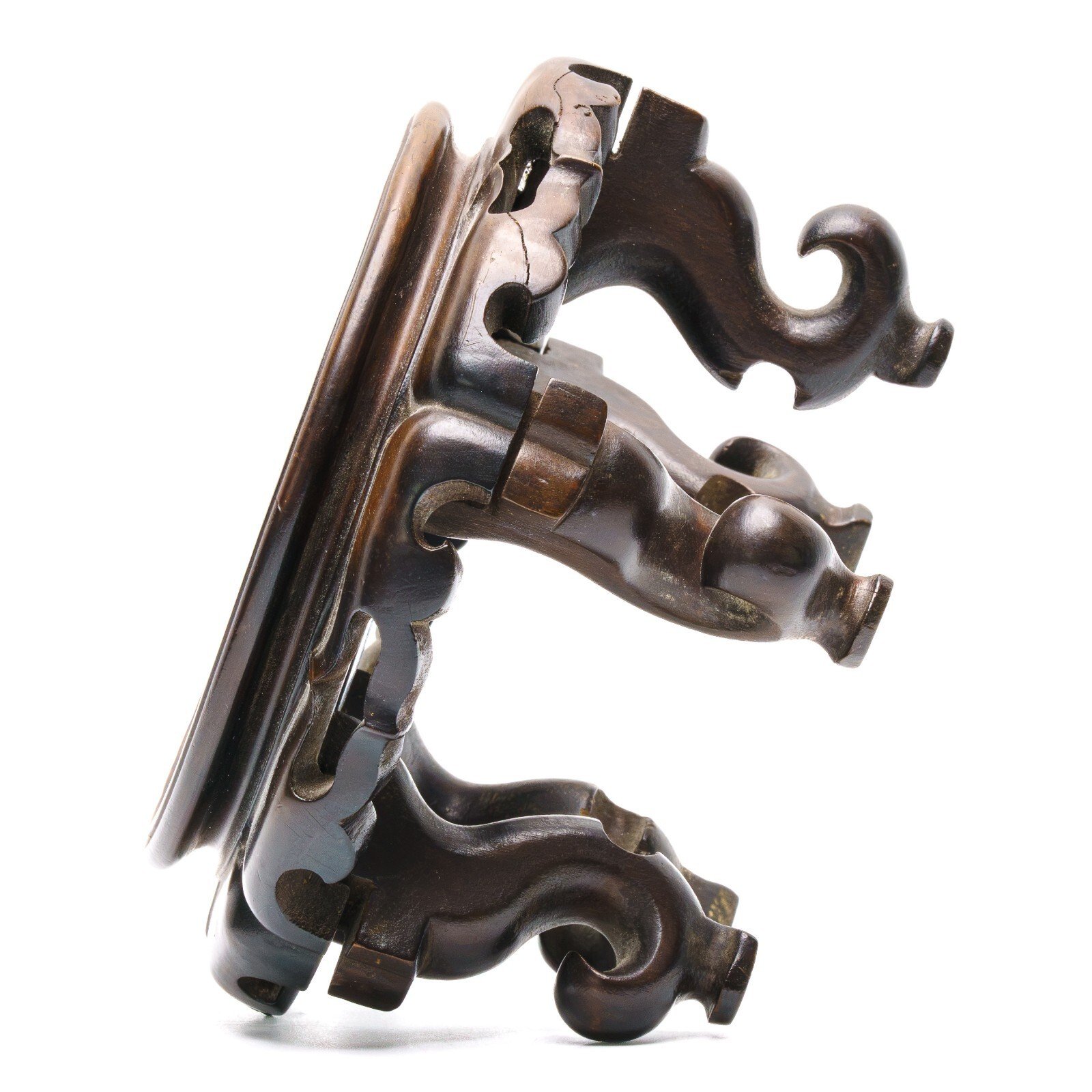
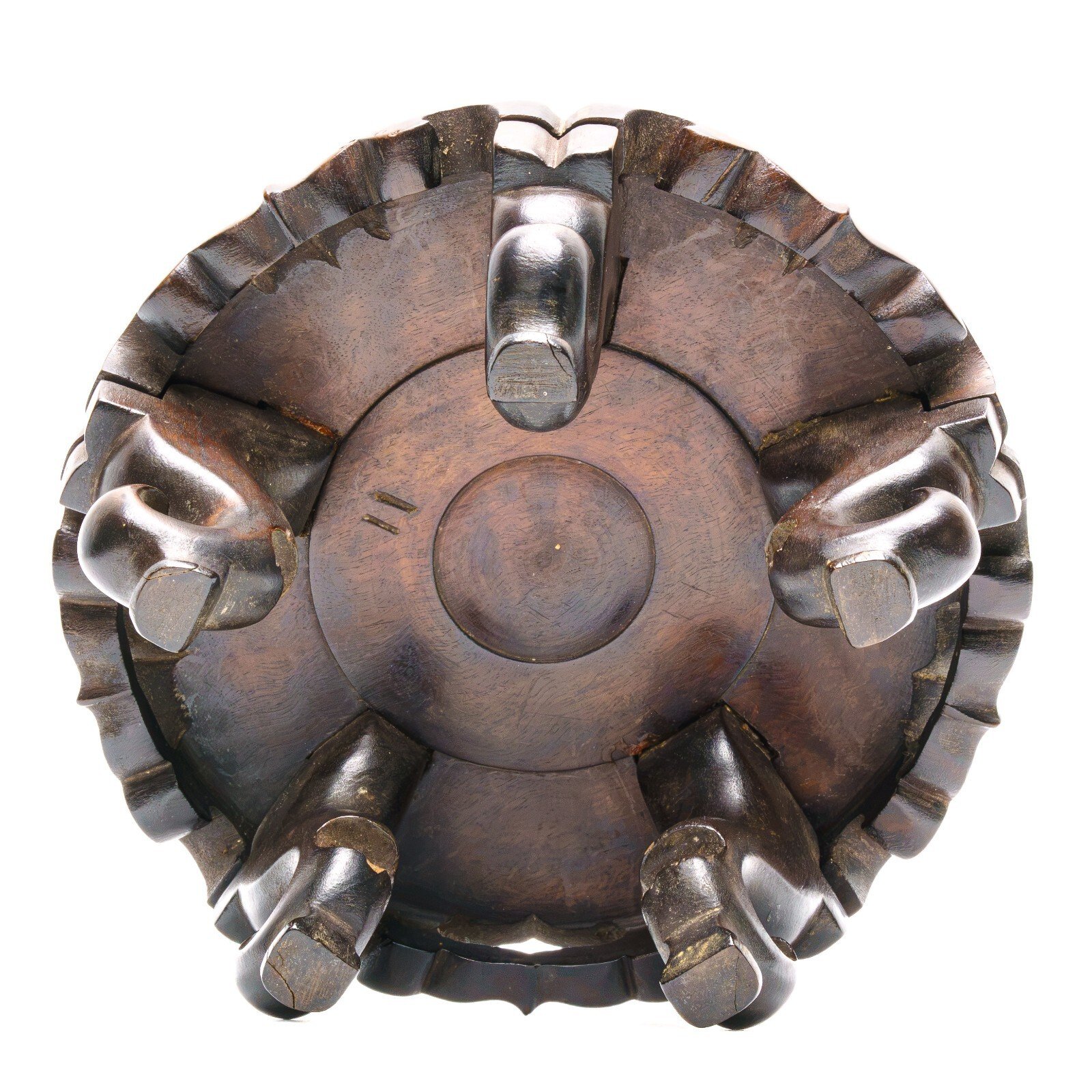
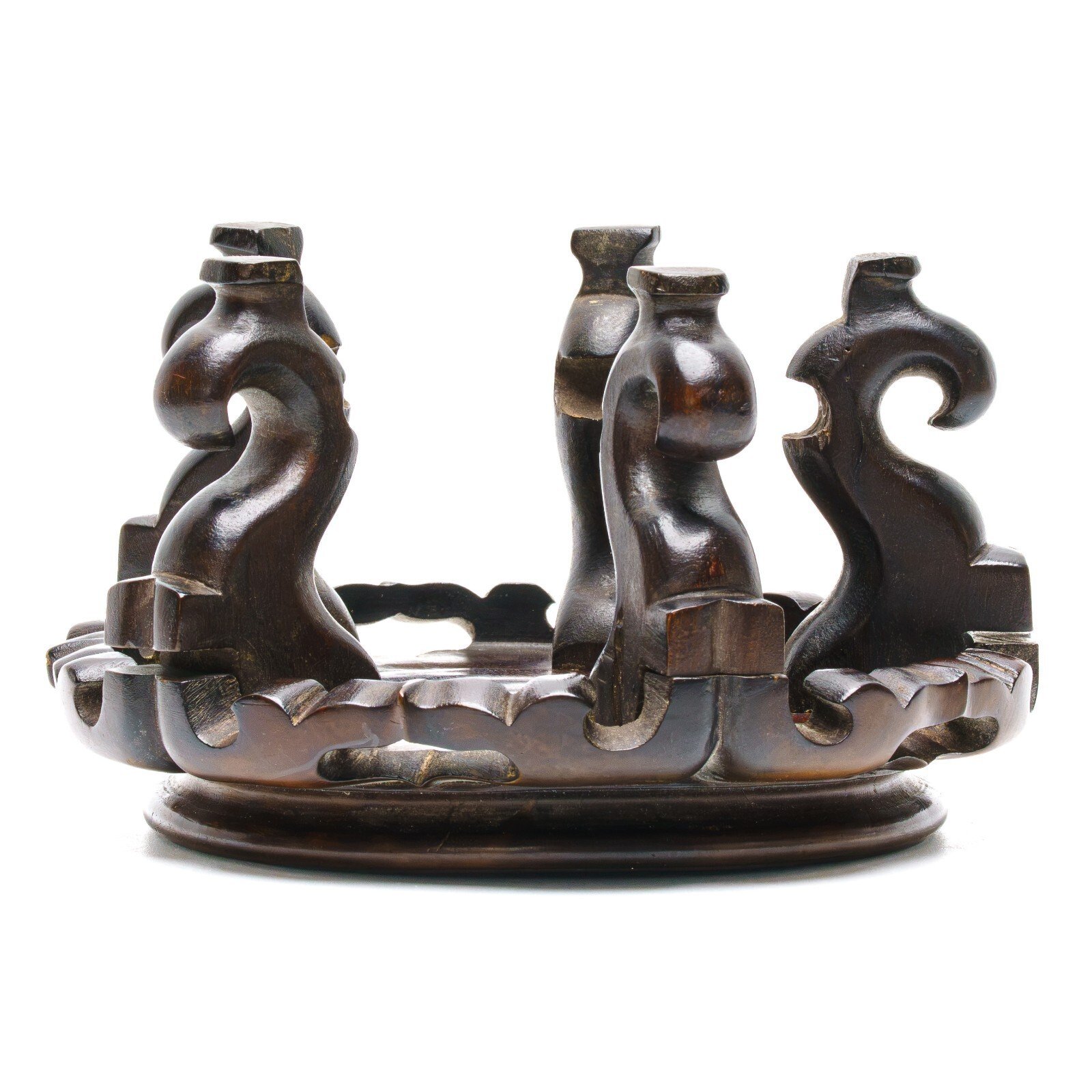
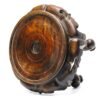
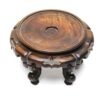
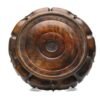
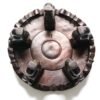
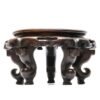
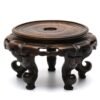
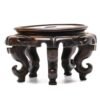
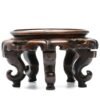
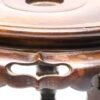
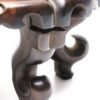
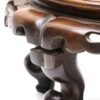
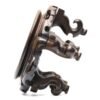
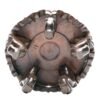
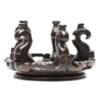
Chinese Carved Wood Stand Vase Legged Round Pierced Lotus Late Qing Period 19C
£75.00
Inventory Code: INV4952
Object: Vase or display stand
Material: Carved wood
Origin: China
Period: Late Qing Dynasty
Date: 19th Century
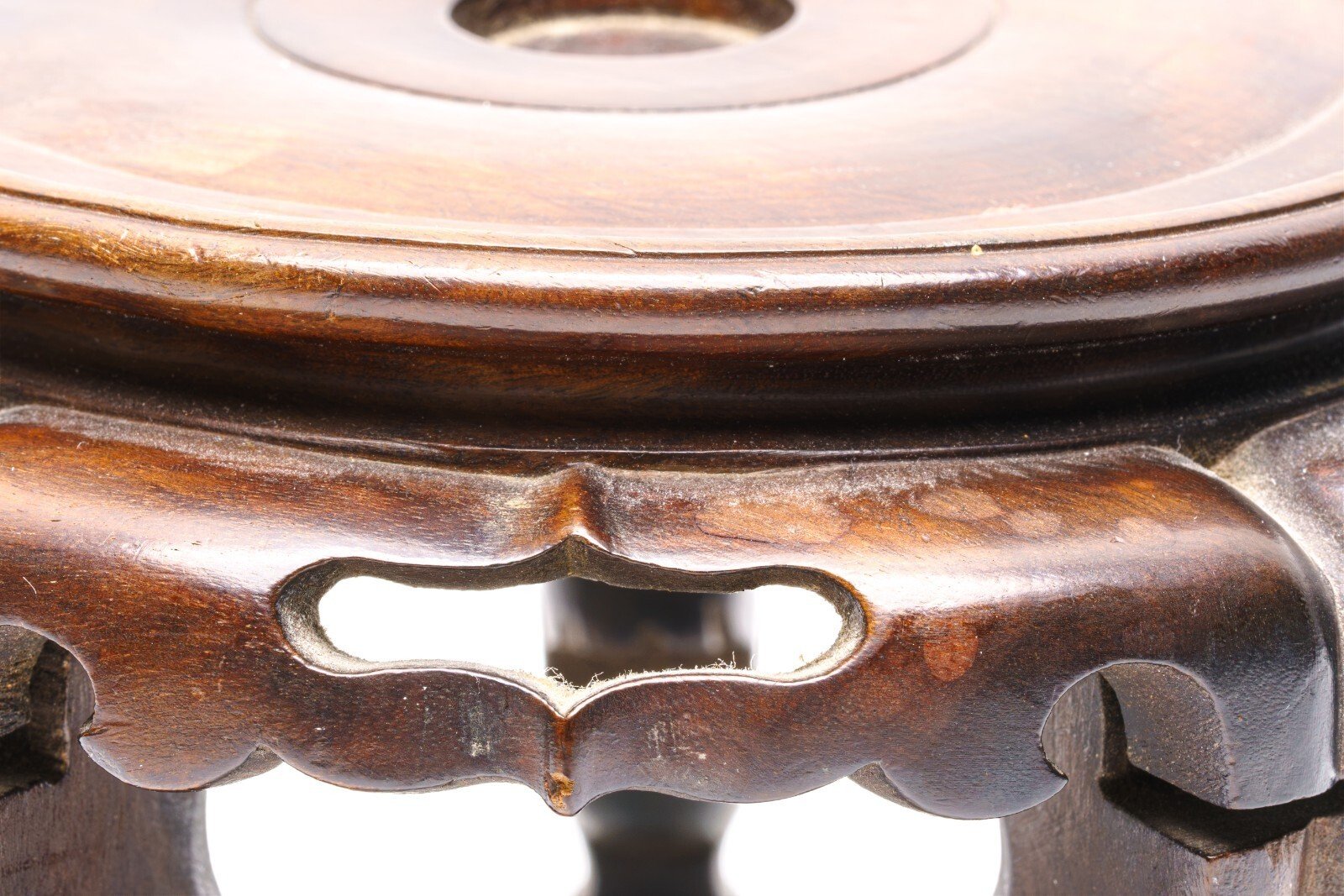
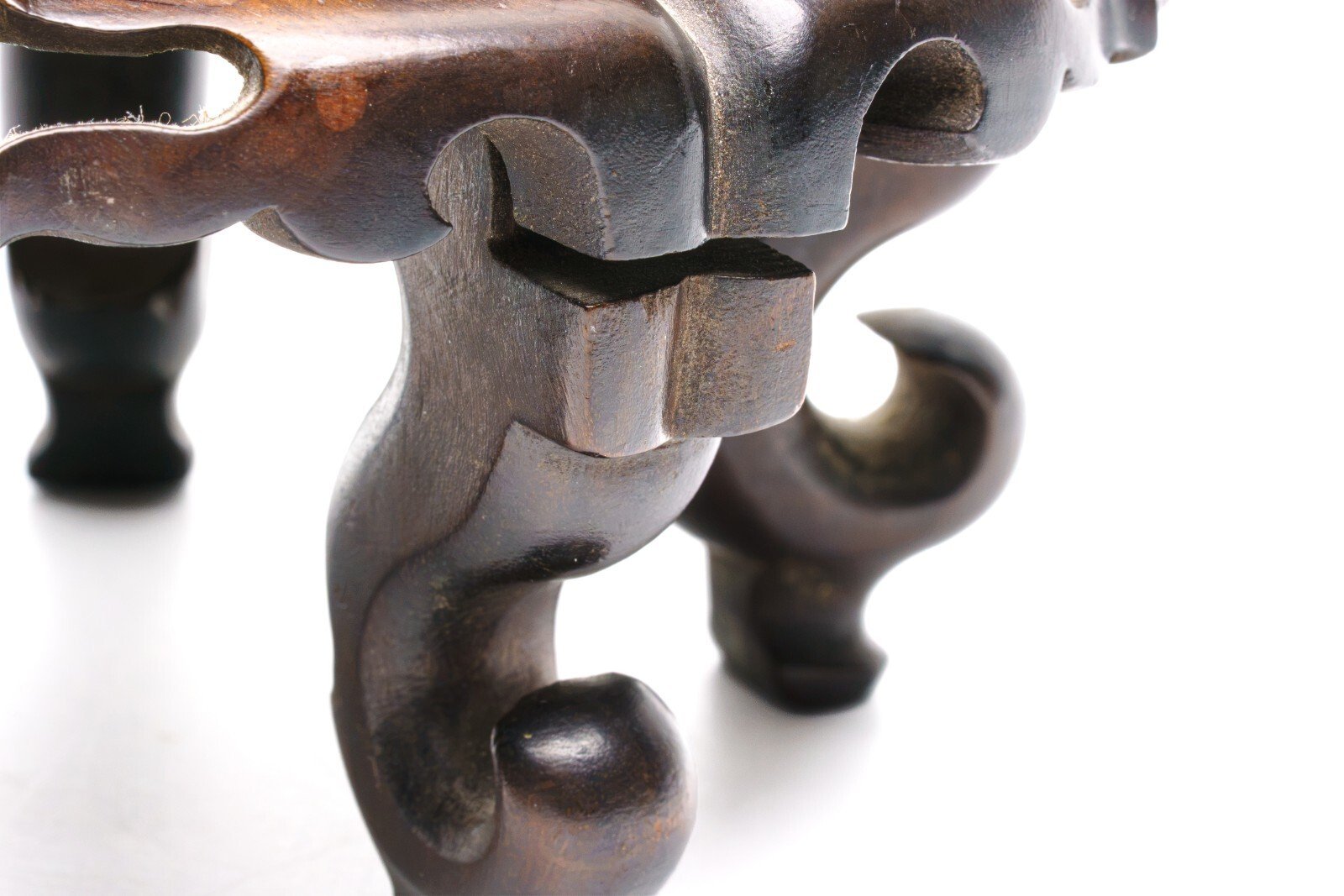
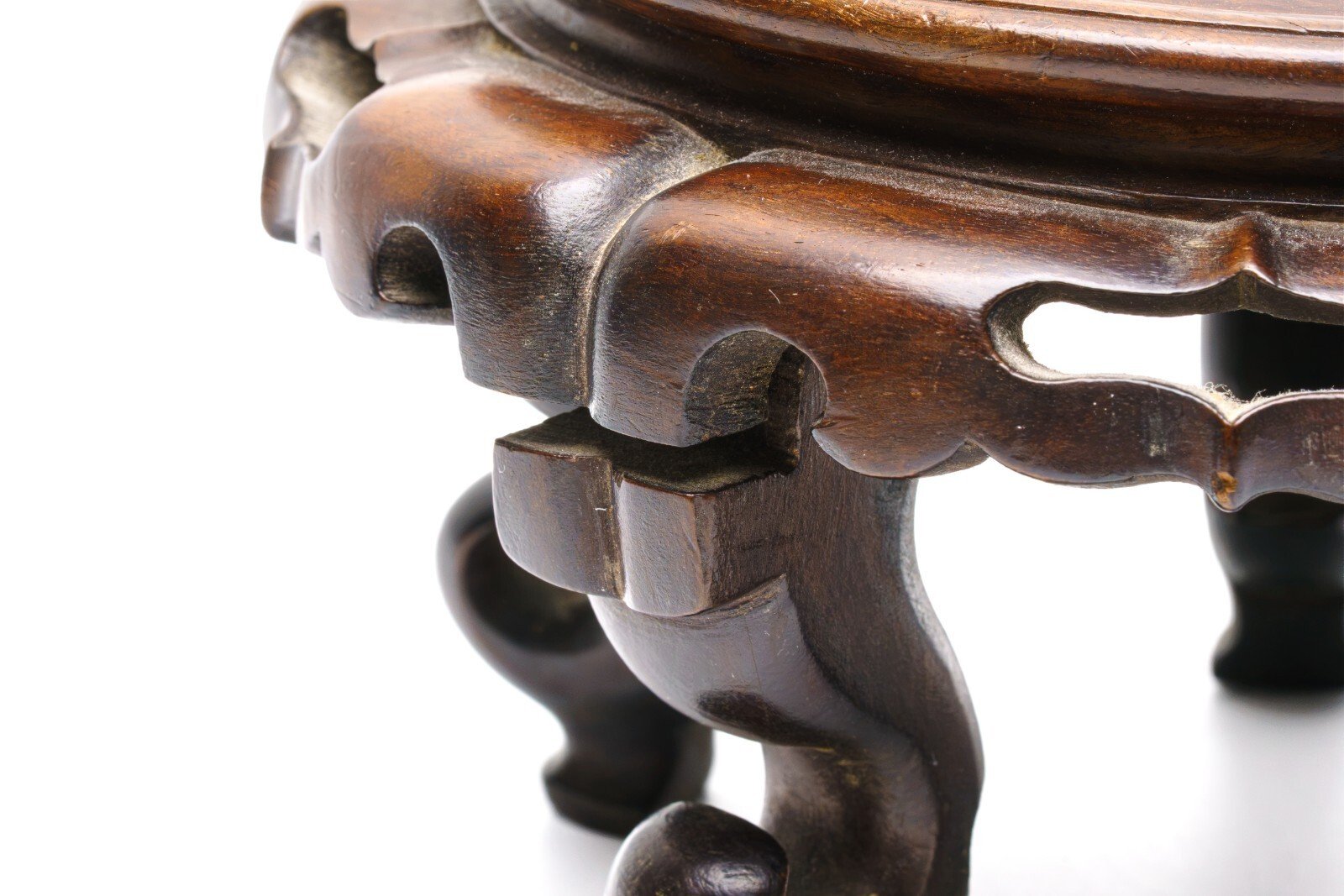
Decoration: Circular raised top with pierced shaped apron and five carved scrolling legs
Marked: Unmarked
Measurements:
Diameter: 6 in / 15.5 cm
Height: 3.5 in / 9.0 cm
Inner Circle: 4.5 in / 11.5 cm
Condition:
GOOD (4/5) - General surface wear, scratches, rubbing and age-related marks are visible, with some small splits and minor losses to the carved wood. Please review the photos carefully for more details.
International Shipping
We ship worldwide using tracked and insured services. Prices are calculated at checkout. All items are securely packaged with care and experience.
Pricing
Prices reflect past sales and our assessment of each item’s rarity and condition. Contact us if you would like to discuss.
Research
All item details are based on our own research and evaluation. We welcome questions or feedback.
Authenticity
Every item is guaranteed to be as described, with provenance provided where available.
Refunds
We accept returns within 14 days of delivery. Please contact us first to arrange a return and refund.
DESCRIPTION
A Chinese carved wood display stand dating to the late Qing period, with a circular raised platform designed to support a vase, bowl or other decorative object. The stand is constructed with an open pierced apron and five boldly carved scrolling legs arranged around the circular body. The warm dark brown surface displays attractive variation in tone and a naturally aged appearance. Its substantial carving, pierced details and distinctive scrolling supports give the stand a strong decorative character suitable for displaying Chinese ceramics or works of art.
COLLECTOR’S NOTE
Carved hardwood stands were traditionally made in China to complement and elevate prized ceramics, bronzes and other scholar’s objects. Their individually fitted forms and elaborate carving became an important part of the presentation of Chinese decorative arts during the Qing period.
NOTES
Please review all photos carefully as they form part of the description.
Related products
-
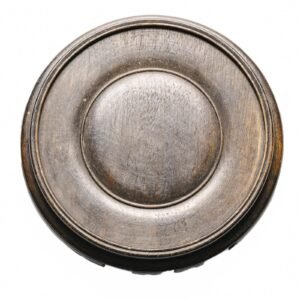
Chinese Wood Carved Stand Round Archaic Platform Vase Display Qing Period 19C
£15.00 -
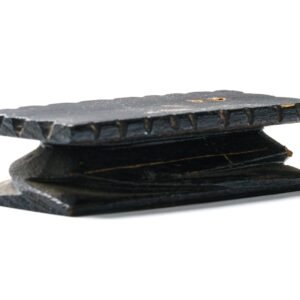
Chinese Miniature Display Stand Carved Hardwood Black Late Qing Republic 20th C
£7.00 -
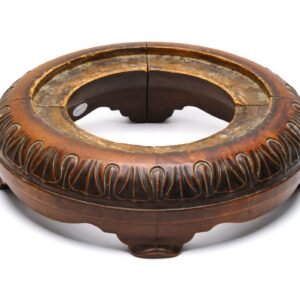
Chinese Hardwood Carved Vase Stand Display Base Circular Plant Pot 20th Century
£250.00 -
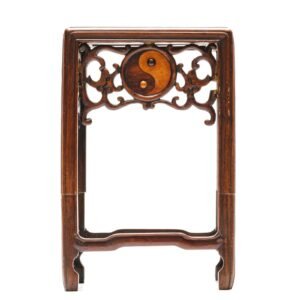
Chinese Wood Carved Stand Square Yin Yang Chilong Scroll Qing Period 19th C
£129.99