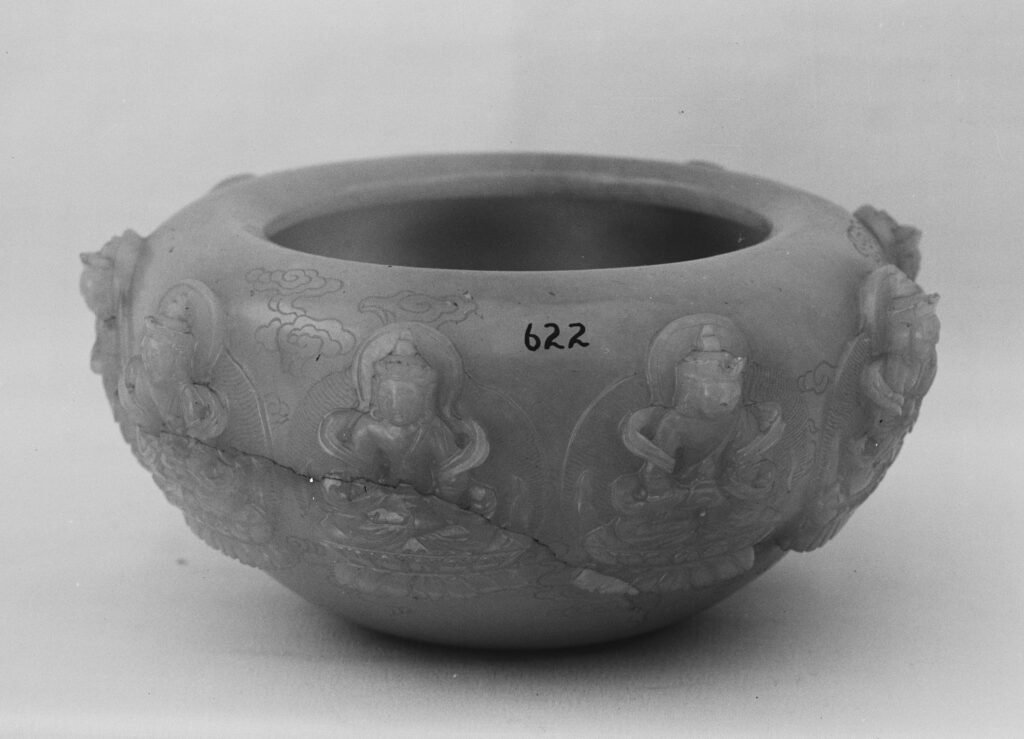
Alms Bowl
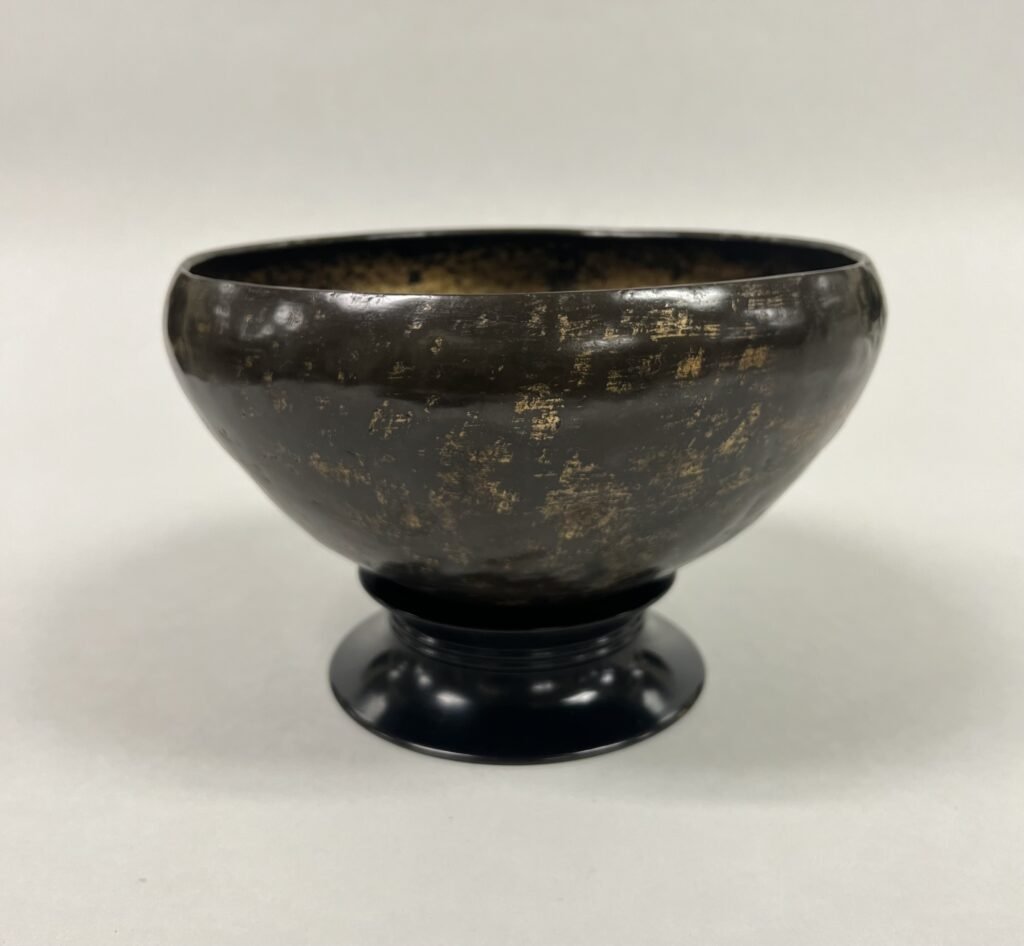
The alms bowl is one of the most essential and meaningful objects in Buddhism. At its simplest, it is a vessel used to receive food, yet its meaning goes far beyond daily necessity. It represents humility, acceptance, and the discipline of living without desire. The Buddha himself refused bowls made of precious materials and chose instead a simple vessel, teaching that true value lies not in wealth, but in purpose.
Because the bowl must remain empty in order to receive, it became a symbol of openness and readiness. It reflects the idea that one must let go of attachment before gaining understanding. In this way, emptiness is not absence, but a form of strength.
In Buddhist stories and later Chinese painting, the alms bowl takes on an even deeper meaning. In the tale of Hārītī, the Buddha hides her child beneath his bowl, and despite great effort, no force can lift it. The bowl becomes immovable, not because of its weight, but because it represents spiritual authority and moral truth. It marks the moment where power fails and transformation begins.
In later art and imperial objects, the dramatic story disappears, but the meaning remains. The bowl is decorated with symbols such as the lotus and the Eight Buddhist emblems, expressing purity, harmony, and enlightenment. What was once shown through narrative is now conveyed through quiet balance and refined design.
The alms bowl, therefore, is not simply a ritual object. It is a reminder that true strength lies in restraint, and that what appears empty may hold the greatest meaning.