
Crackle Glaze (Ge-type)
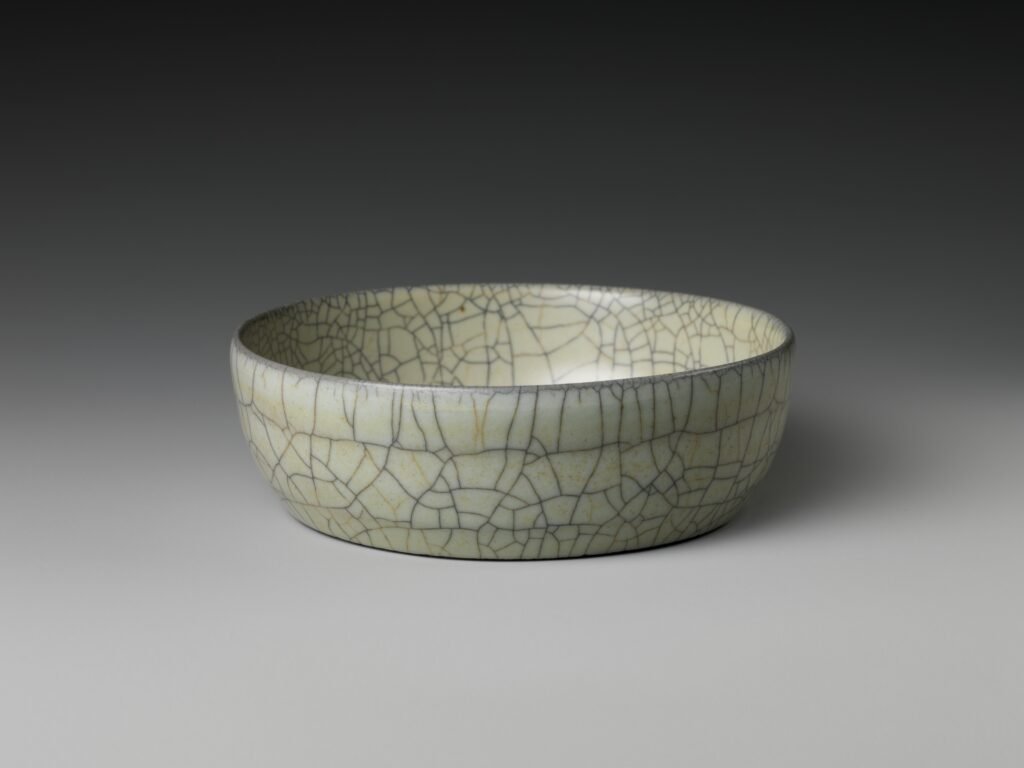
Crackle Glaze
Crackle is a network of fine fractures confined to the glaze of a ceramic object. It forms when the fired clay body and glaze contract at different rates as the vessel cools. The resulting stress is released through lines in the glaze surface, while the ceramic body may remain structurally sound.
Cracks may begin during cooling and continue to develop for days or even weeks after firing. Their size and density are influenced by the composition and thickness of the glaze, the ceramic body, firing temperature and rate of cooling.
Intentional crackle in Chinese ceramics
Crackle can occur accidentally as a technical fault, but it also became an important decorative feature in Chinese ceramics. Crackled glazes are particularly associated with Song and Yuan dynasty celadons and wares traditionally classified as Ru, Guan and Ge.
On early wares, the effect may initially have resulted from the materials and firing technology. Nevertheless, the irregular lines became aesthetically valued and were subsequently controlled and deliberately reproduced. Ming and Qing potters later created numerous archaistic versions inspired by earlier crackled wares.
Crackle continued to be used on porcelain, stoneware and export ceramics into the nineteenth and twentieth centuries and remains part of modern ceramic production.
Crackle patterns
Traditional connoisseurship uses descriptive names for different crackle formations. A broad, widely spaced network may be called “crab’s-claw” crackle, while a fine and closely packed pattern is sometimes described as “fish-roe” crackle. These names describe appearance rather than scientifically defined categories.
The spacing of the crackle can vary across the same object. Thick areas of glaze, changes around moulded decoration and differences in cooling may produce several patterns on one vessel.
Gold thread and iron wire
Ge-type wares are particularly associated with a double crackle known as jinsi tiexian (金丝铁线), meaning “gold thread and iron wire.” This consists of two visually distinct networks:
- Stronger, darker lines resembling iron wire.
- Finer brown or golden lines resembling thin threads.
Recent scientific analysis indicates that some black lines on Ge-type wares were deliberately stained after firing with a carbon-rich substance, possibly prepared from Chinese ink. Some brown crackles appear instead to have absorbed clay or soil during burial. The colour visible inside a crackle should therefore not automatically be regarded as an original firing effect.
Tea, ink, pigments and iron-rich substances have also been used historically to make pale crackles more visible. Ordinary use can gradually darken an unstained crackle as dust, liquid and organic material enter the openings.
Ge and Guan wares
Ge and Guan are traditionally treated as separate categories, but their exact relationship remains the subject of scholarly debate. No universally accepted kiln site has been identified for the group known as Heirloom Ge ware, and proposed dates range from the Southern Song to the Yuan dynasty.
Objects classified as Ge commonly have an opaque grey, grey-green or warm cream glaze with pronounced crackle. Guan wares may display related glazes over a darker body. However, crackle pattern alone is not sufficient to distinguish Ge from Guan.
Later Jingdezhen imitations were generally made with a white porcelain body. Dark brown dressing was sometimes applied around the foot or mouth to suggest the darker body and exposed edges of earlier stonewares. Qing and later copies may reproduce double crackle, archaic forms and apocryphal reign marks.
Crackle, crazing and structural cracks
The terms require careful distinction:
- Decorative crackle is an intended or accepted network within the glaze.
- Crazing is usually used for unwanted glaze cracking caused by poor compatibility between glaze and body.
- A structural crack passes into or through the ceramic body and represents physical damage.
- A hairline is a narrow structural crack, often extending from the rim or foot.
- Burial staining may colour existing crackle without proving that the lines were deliberately stained when the object was made.
A crackled glaze does not by itself demonstrate age, authenticity or underfiring. Modern potters can reproduce convincing crackle patterns, while genuine antique objects may have crackles that developed or darkened long after manufacture.
Condition and care
Crackled surfaces can absorb moisture, dirt and staining more readily than an intact glaze. Immersion in water, chemical cleaners and strongly coloured liquids should be avoided. When examining an object, determine whether the lines remain within the glaze or continue into the ceramic body. This distinction is important when assessing condition.
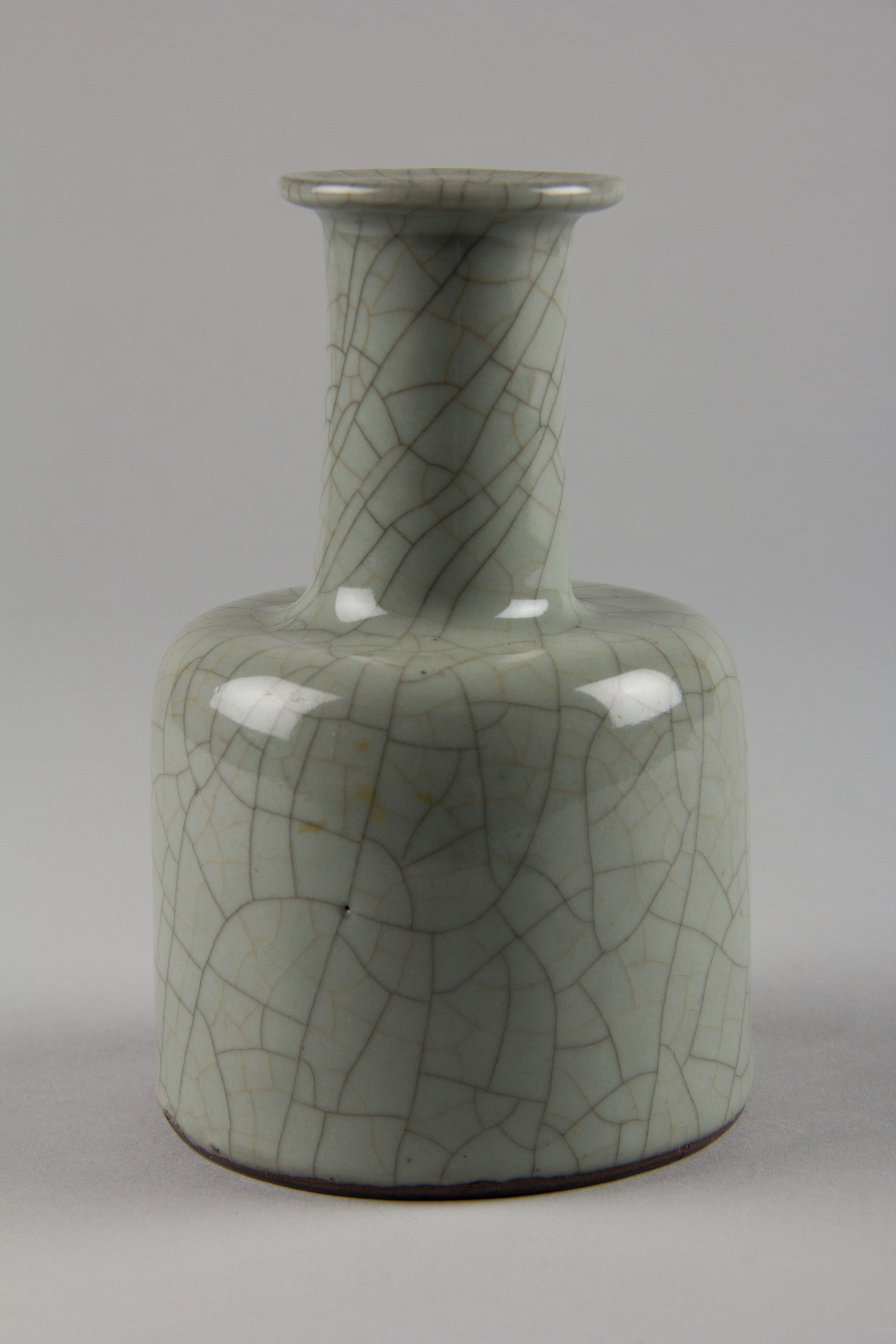
Caption: Mallet-shaped vase with Guan-type crackled glaze, Jingdezhen ware, China, Qing dynasty, 18th century. The Metropolitan Museum of Art, Public Domain.