

🔶 Ding Ware: The Quiet Perfection of the Northern Song
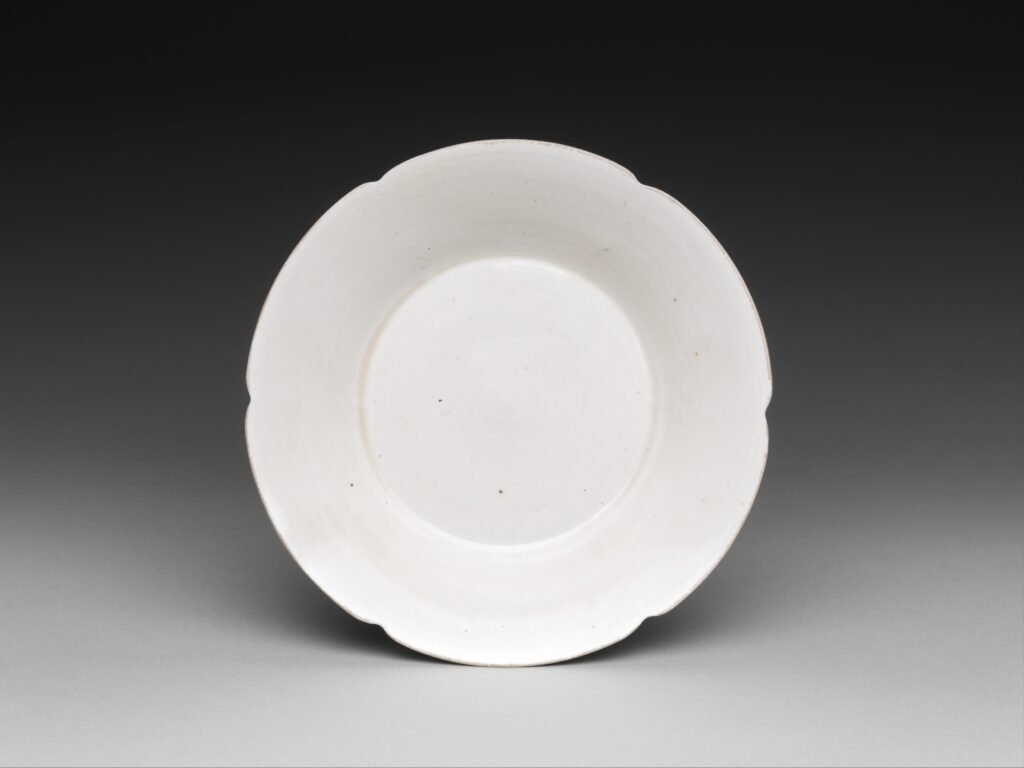
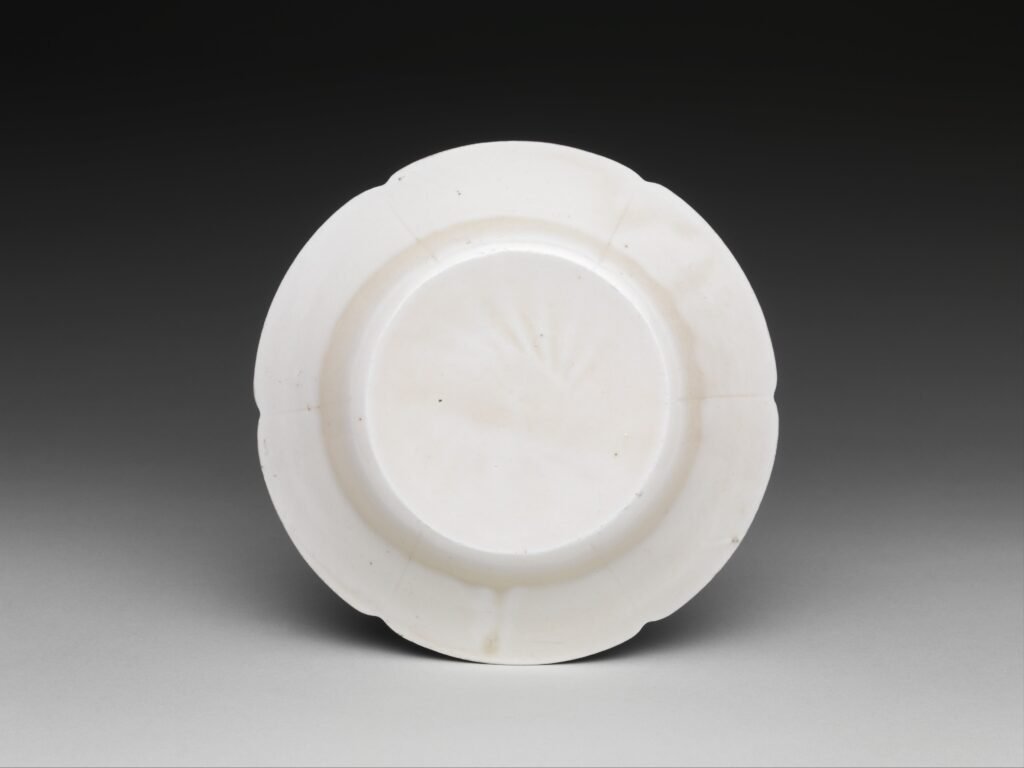
In the northern plains of China, in what is now Quyang County, Hebei province, a tradition emerged that would come to define refinement in Chinese ceramics.
This was Ding ware — one of the celebrated Five Great Wares of the Song dynasty (960–1279) — admired not for bold colour or elaborate decoration, but for something far more difficult to achieve:
absolute restraint.
At first glance, a Ding bowl appears almost plain.
Its surface is covered in a soft, ivory-white glaze, smooth and luminous, with a warmth that distinguishes it from the colder tones of later porcelains. The form is elegant, balanced, and quietly confident.
But look closer.
Beneath the glaze, delicate designs emerge — lotus petals, scrolling foliage, or subtle linear patterns, either carved or moulded into the clay before firing. These motifs are not meant to dominate the surface, but to reveal themselves gradually, as light moves across the vessel.
This refined approach reflects the aesthetic ideals of the Northern Song court, where beauty was found not in excess, but in clarity, balance, and control.
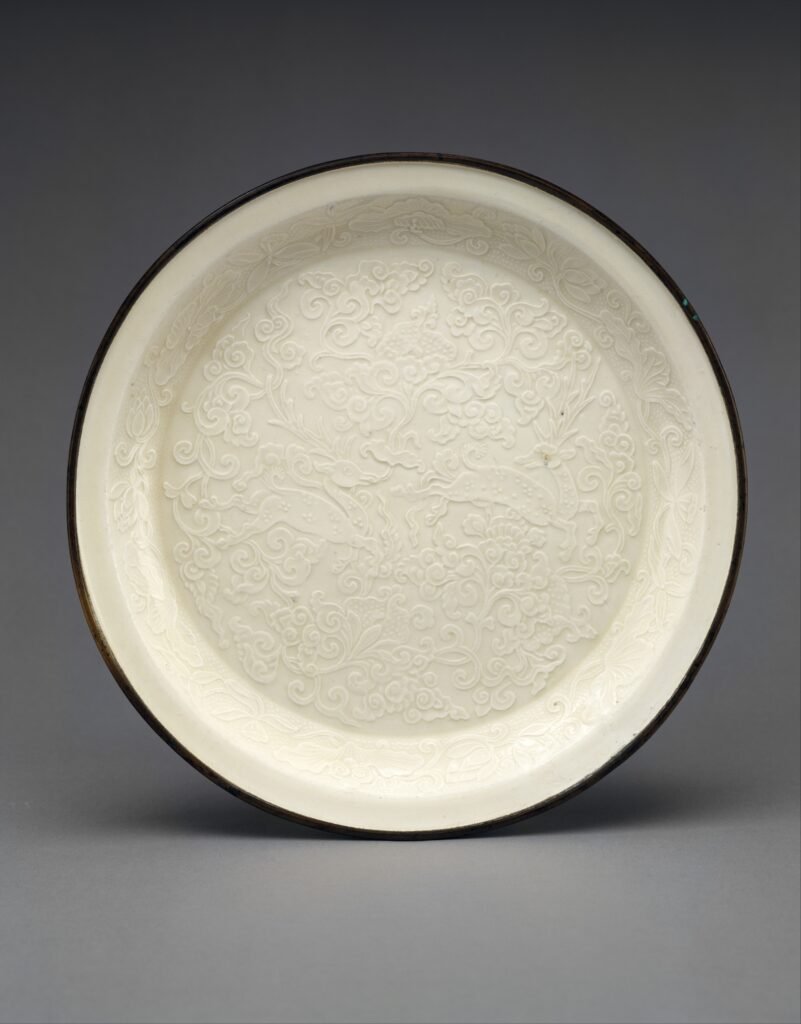
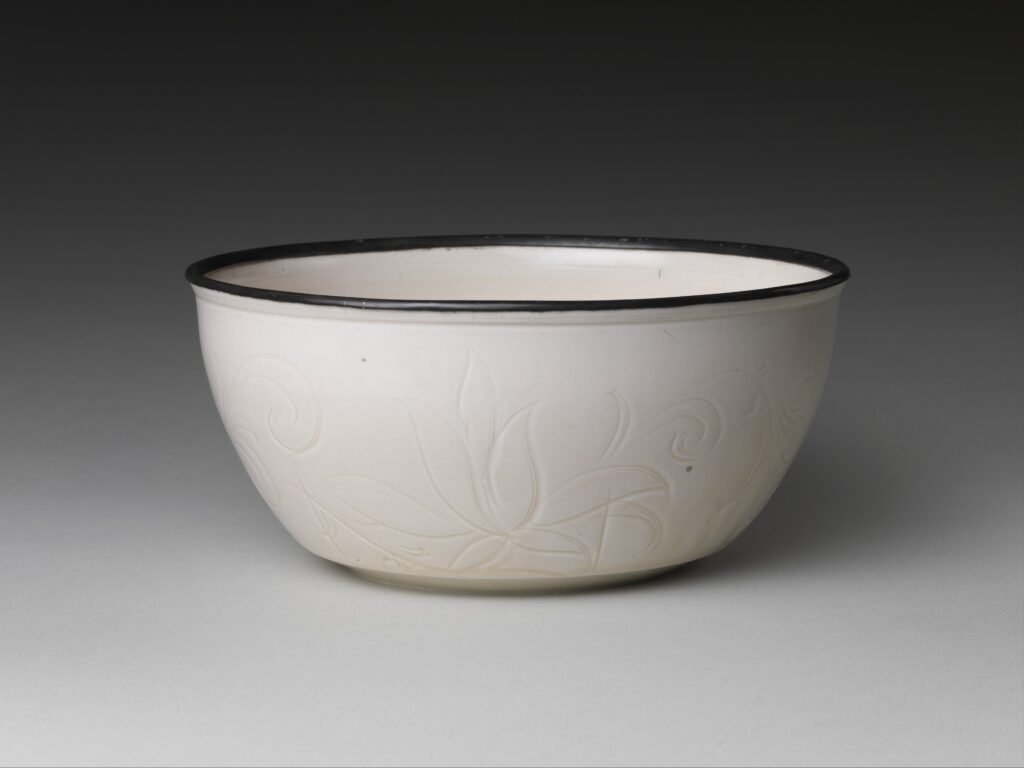
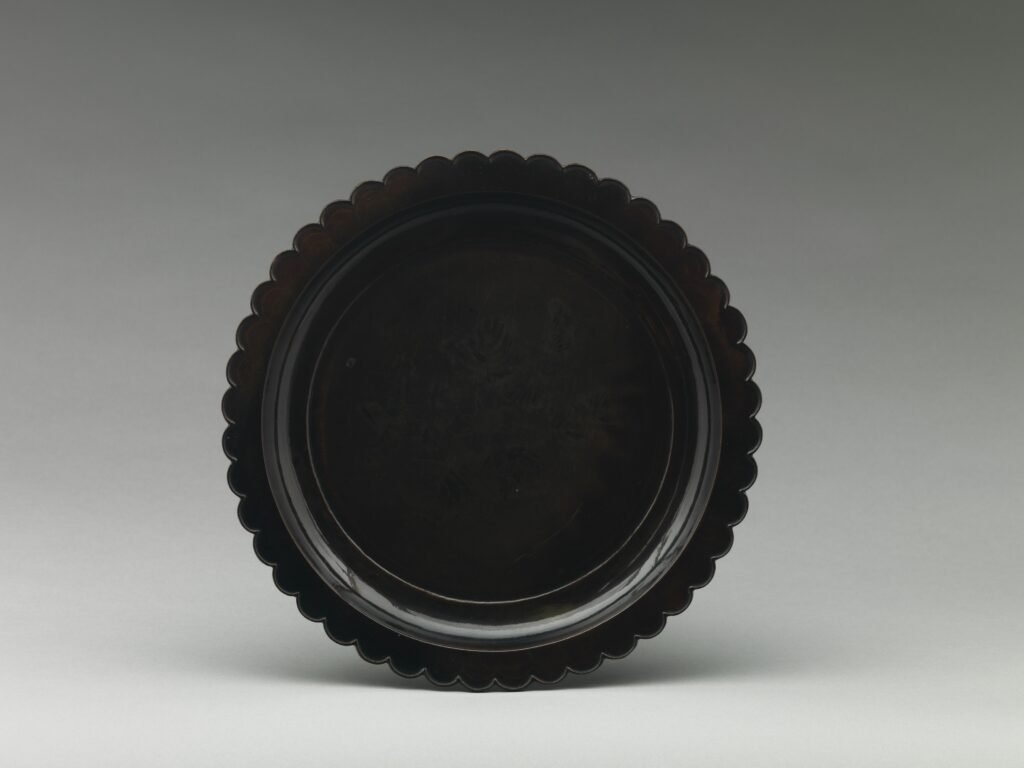
Among the most enduring motifs in Ding ware is the lotus.
Rising clean from muddy water, the lotus had long symbolised purity and moral integrity in Chinese thought. During the Song dynasty, when Confucian ideals shaped both governance and daily life, such imagery carried deep cultural meaning.
On Ding wares, this symbolism is amplified by the material itself. The pale glaze enhances the purity of the form, allowing the decoration to exist in harmony with the surface rather than standing apart from it.
Technically, Ding ware represents a remarkable achievement.
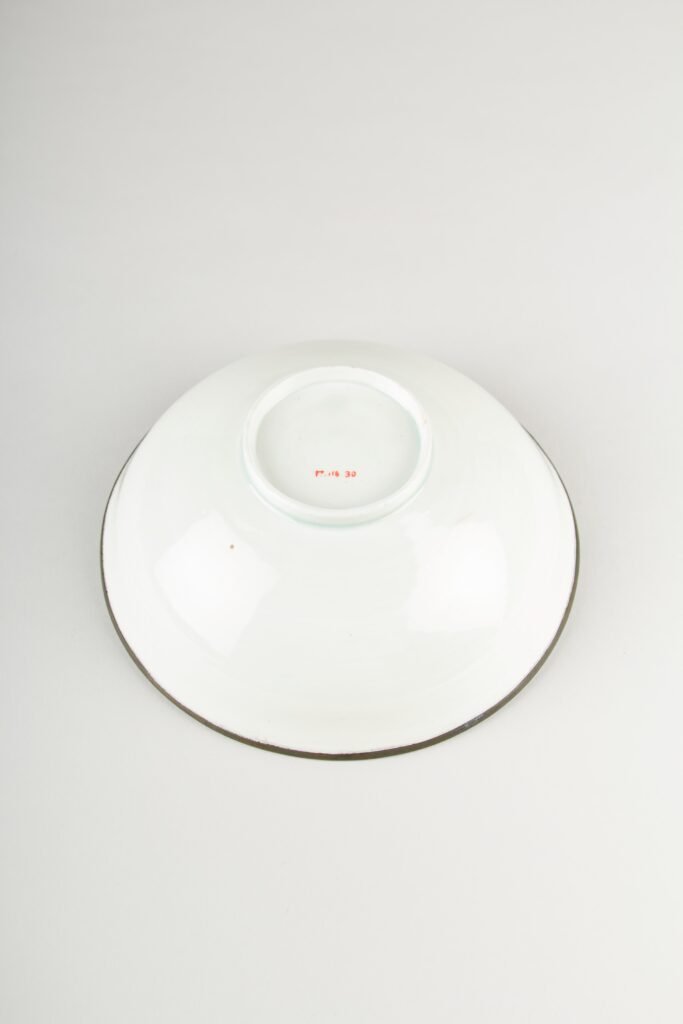
Unlike later porcelain traditions, many Ding vessels were fired upside down in the kiln, which prevented glaze from pooling on the rim. As a result, the lip was often left unglazed and later finished with a metal band, typically copper or silver.
What might appear at first as a flaw became a defining feature — a subtle collaboration between ceramic and metal, practicality and refinement.
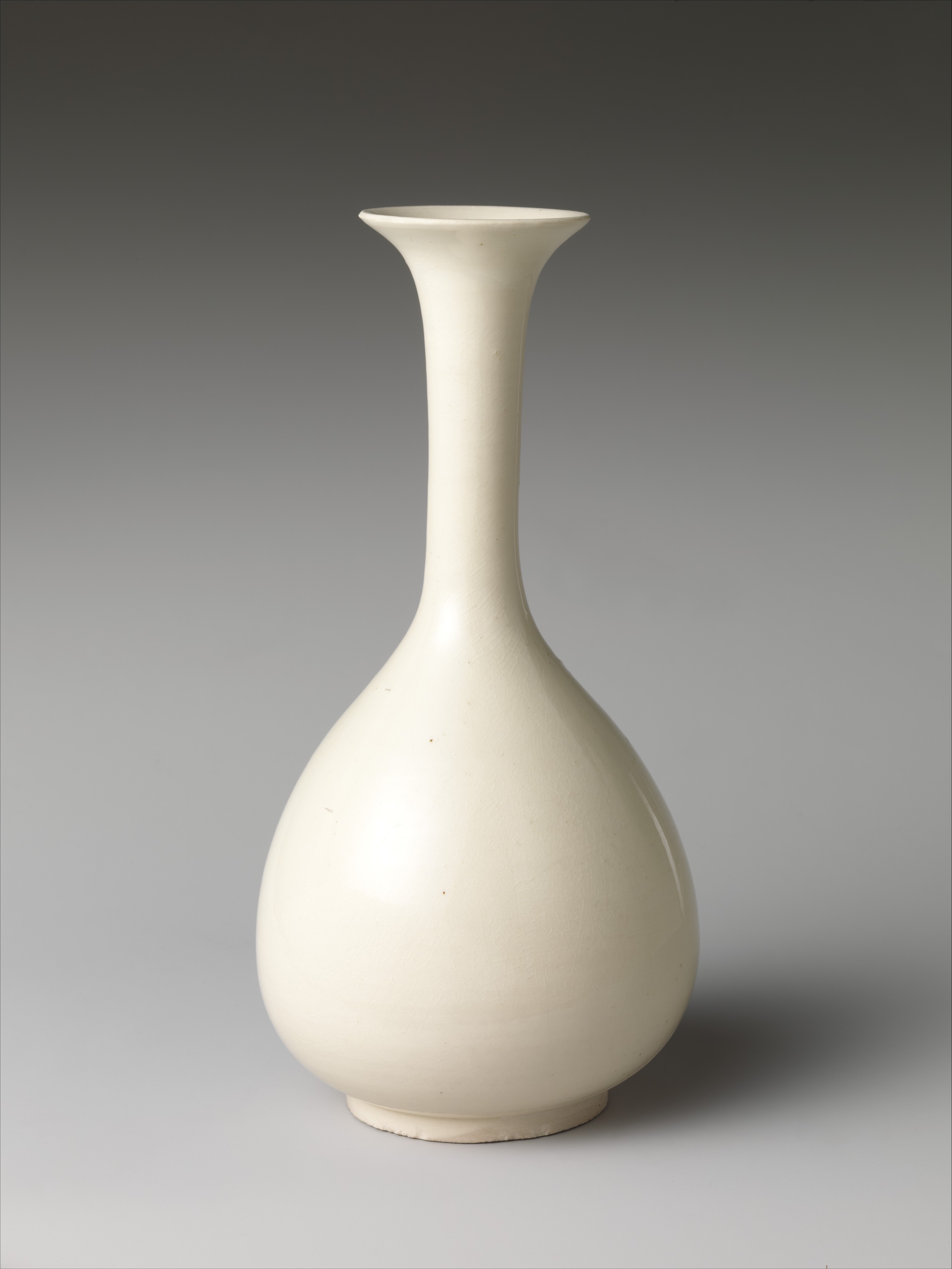
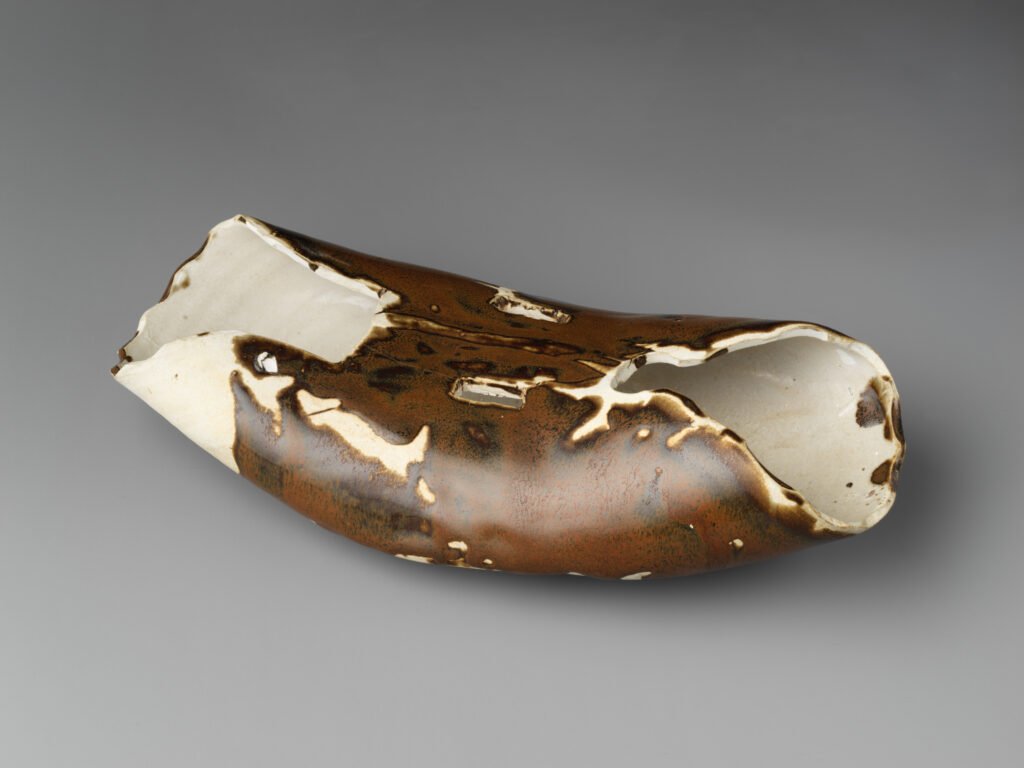
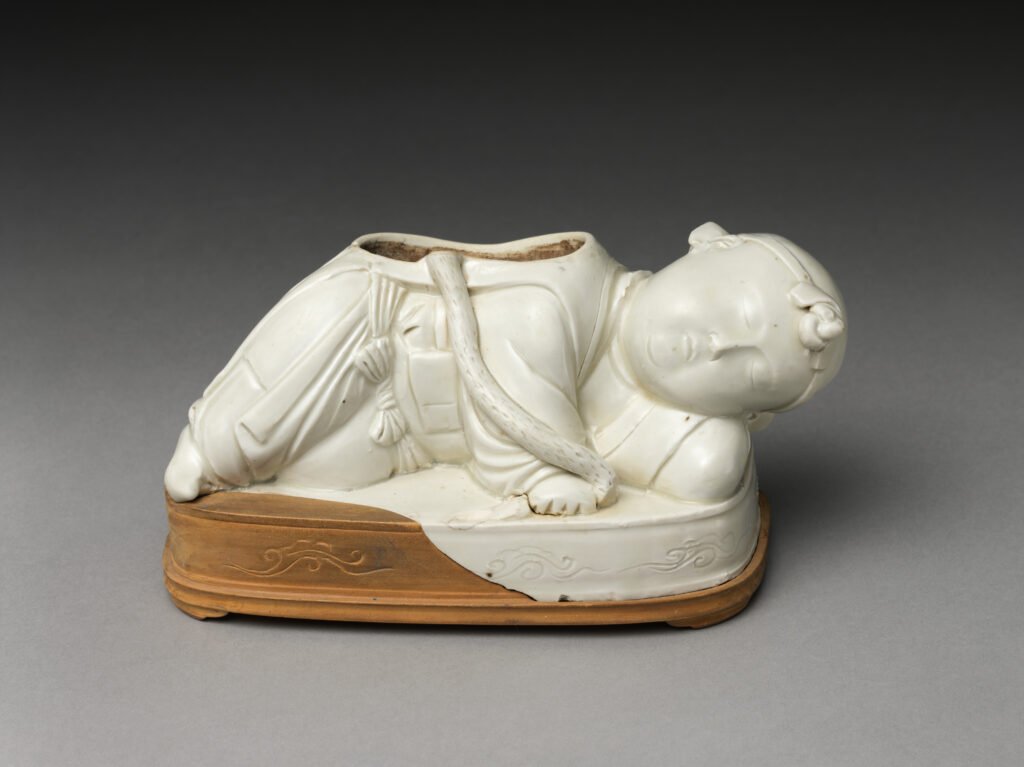
While most Ding wares are known for bowls and dishes, more unusual forms also survive.
Small sculptural pieces — such as figures of reclining or sleeping children — are rare but significant. These objects offer a glimpse into the more intimate side of Song dynasty life, where ceramics extended beyond the table into personal and symbolic spaces.
Such figures are seldom encountered and are often associated with elite patronage or special commissions, further underlining the versatility of the Ding kilns.
Ding ware was not only admired in its own time.
Centuries later, collectors and emperors continued to revere its quiet beauty. Pieces were preserved in important collections, studied in scholarship, and repeatedly compared in major sales, confirming their enduring importance in the history of Chinese ceramics.
Today, examples of Ding ware are held in leading institutions such as the Metropolitan Museum of Art and major Asian collections, where they are regarded as essential expressions of Song dynasty taste and philosophy.
🔥 Why Ding Ware Matters
Ding ware is not about spectacle.
It is about discipline — the ability to achieve elegance with the simplest means.
Where later ceramics dazzle with colour, Ding wares invite the viewer to slow down, to observe, and to appreciate the subtle dialogue between form, surface, and light.
To hold a Ding bowl is to encounter a moment in history when craftsmanship, philosophy, and aesthetics were perfectly aligned.