

🔶 Cizhou Ware: A Story of Ink, Clay, and Everyday Life
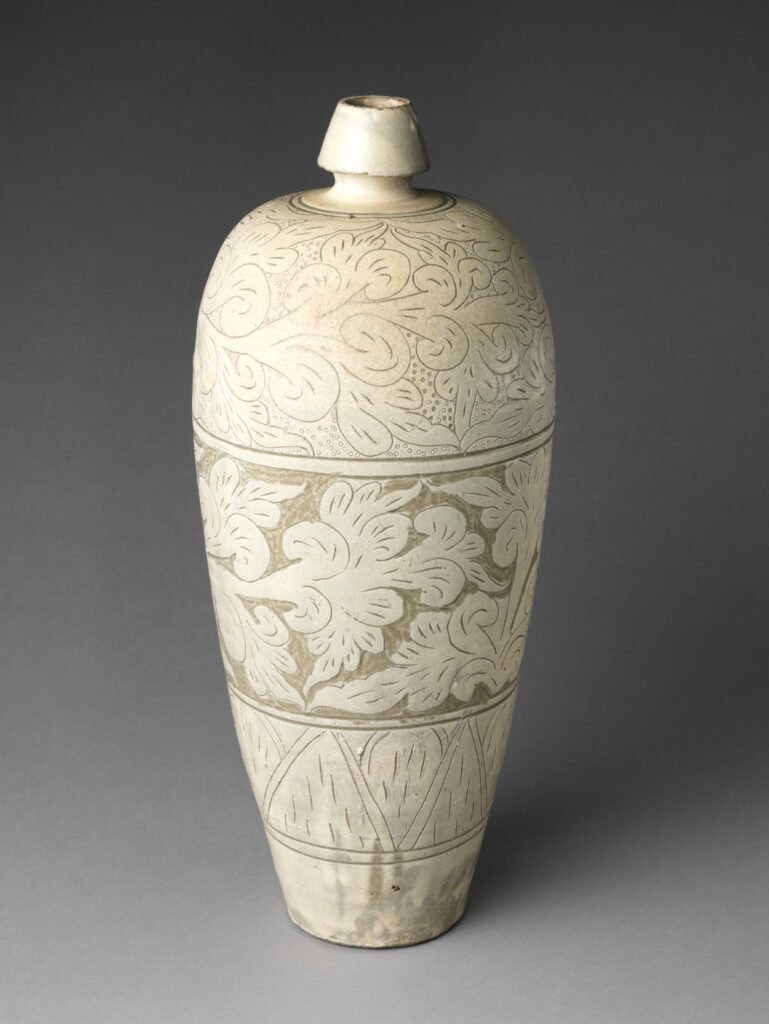
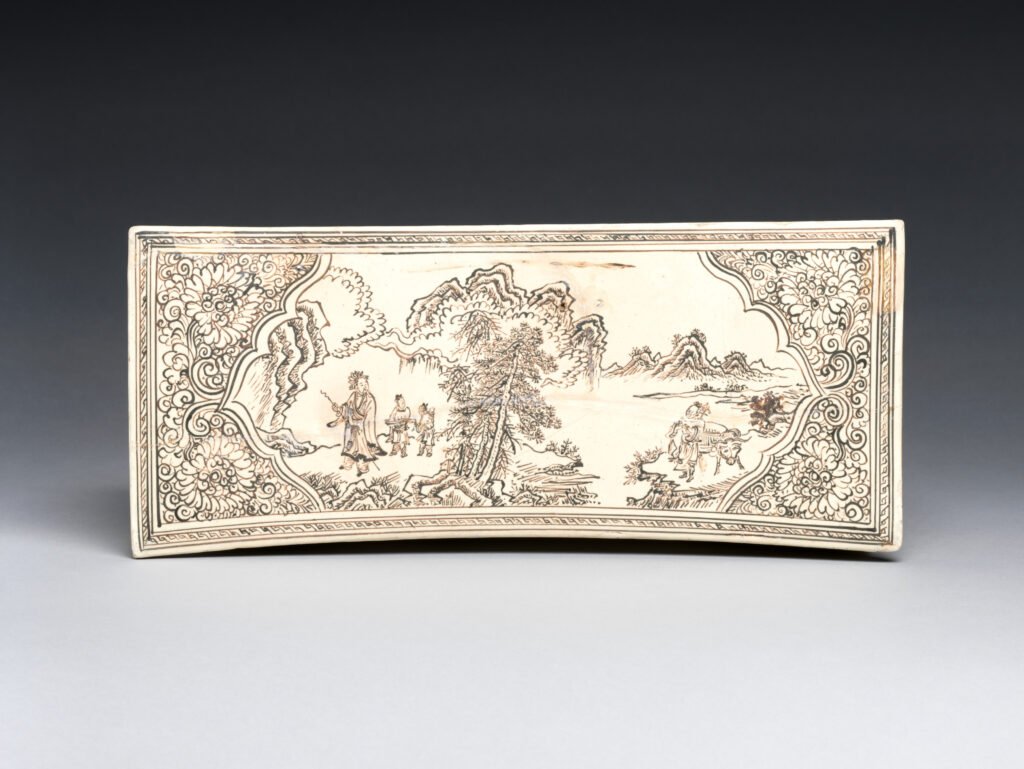
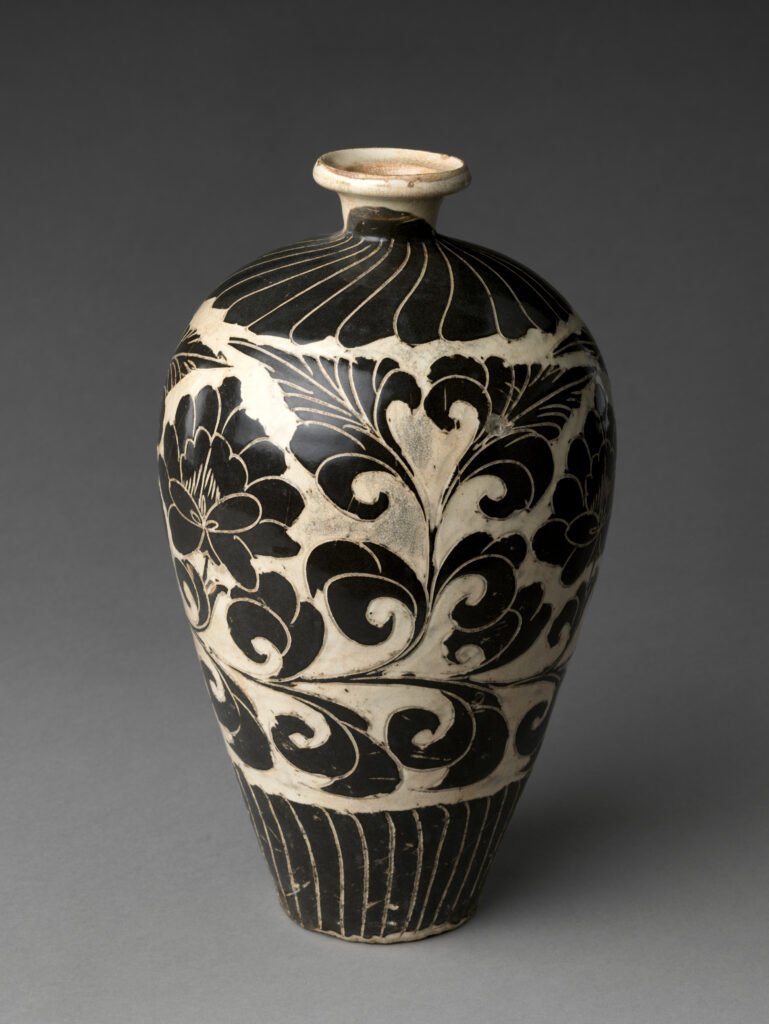
In the north of China, far from the imperial kilns that served the court, a different kind of ceramic tradition emerged — one that spoke not of perfection, but of life itself.
This was Cizhou ware, produced across kilns in what is now Hebei province, most notably at sites such as Guantai, from the Northern Song through the Jin and Yuan dynasties (10th–14th century).
Unlike the refined monochromes of Ru or Ding wares, Cizhou ceramics embraced contrast, movement, and spontaneity. They were not made exclusively for emperors, but for scholars, merchants, and everyday households — and it is precisely this that gives them their enduring vitality.
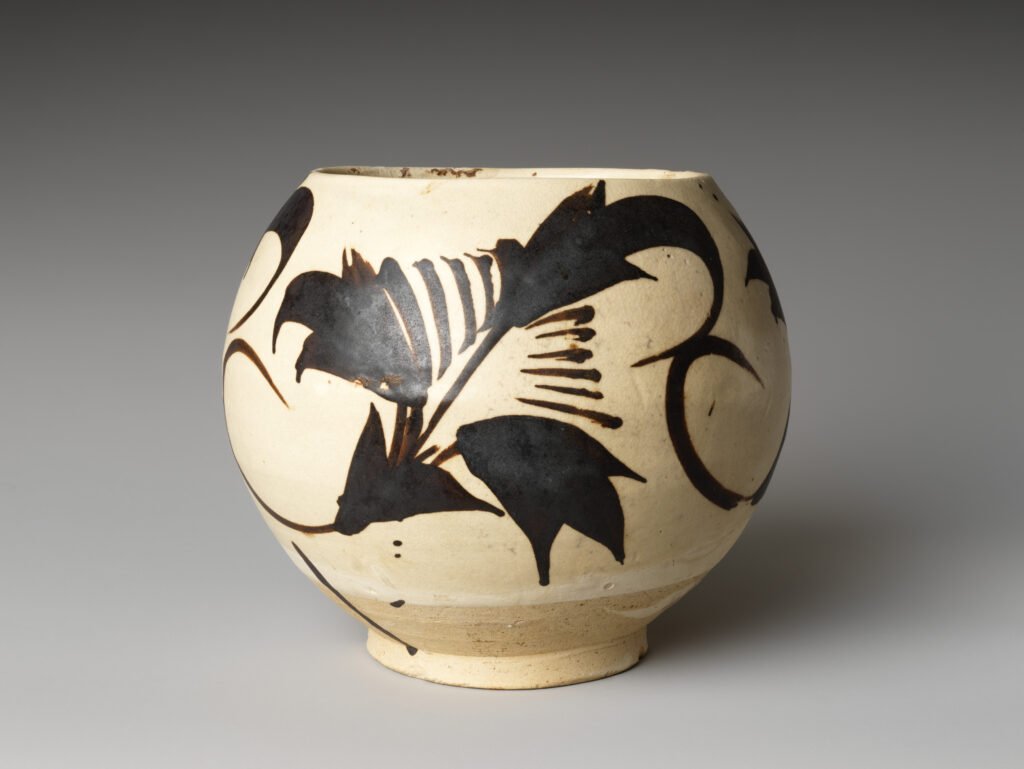
At first glance, a Cizhou vessel appears simple: a body covered in a pale slip, painted with bold black designs.
But look closer.
Each brushstroke carries the rhythm of ink painting. Figures, flowers, birds, and calligraphy unfold across the surface with a freedom rarely seen in more controlled court ceramics. These designs were often executed quickly, directly onto the surface, preserving the immediacy of the artist’s hand.
In many cases, the decoration was carved or painted through layers of slip — a technique that allowed potters to create striking contrasts between dark iron-rich pigments and light grounds.
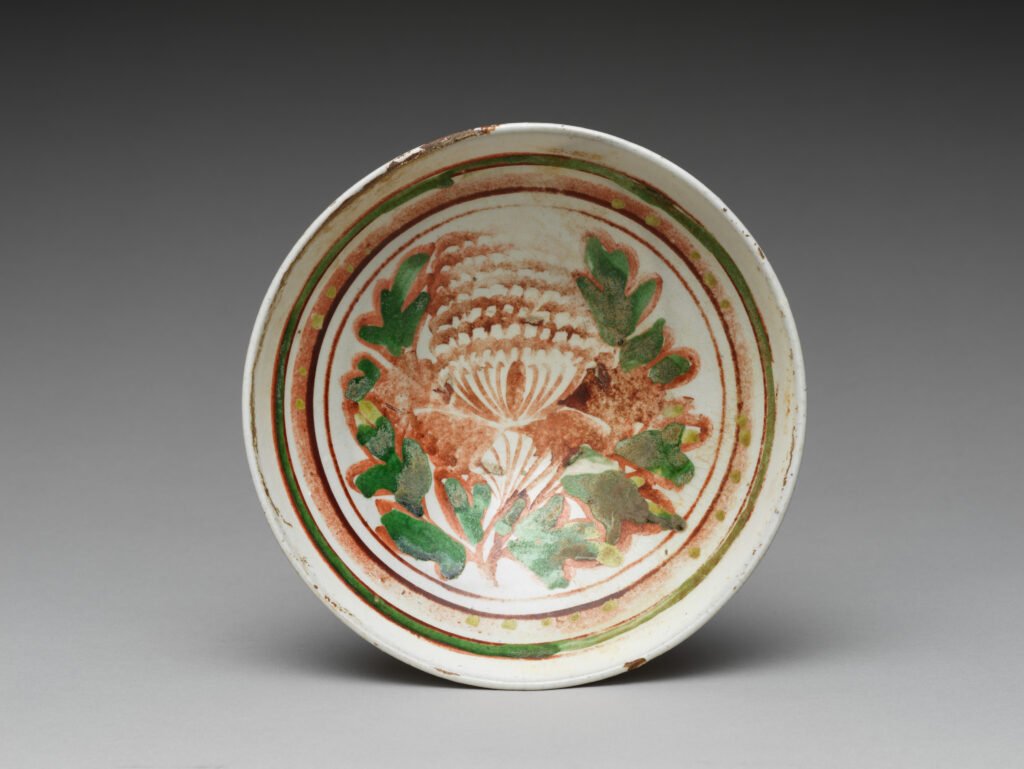
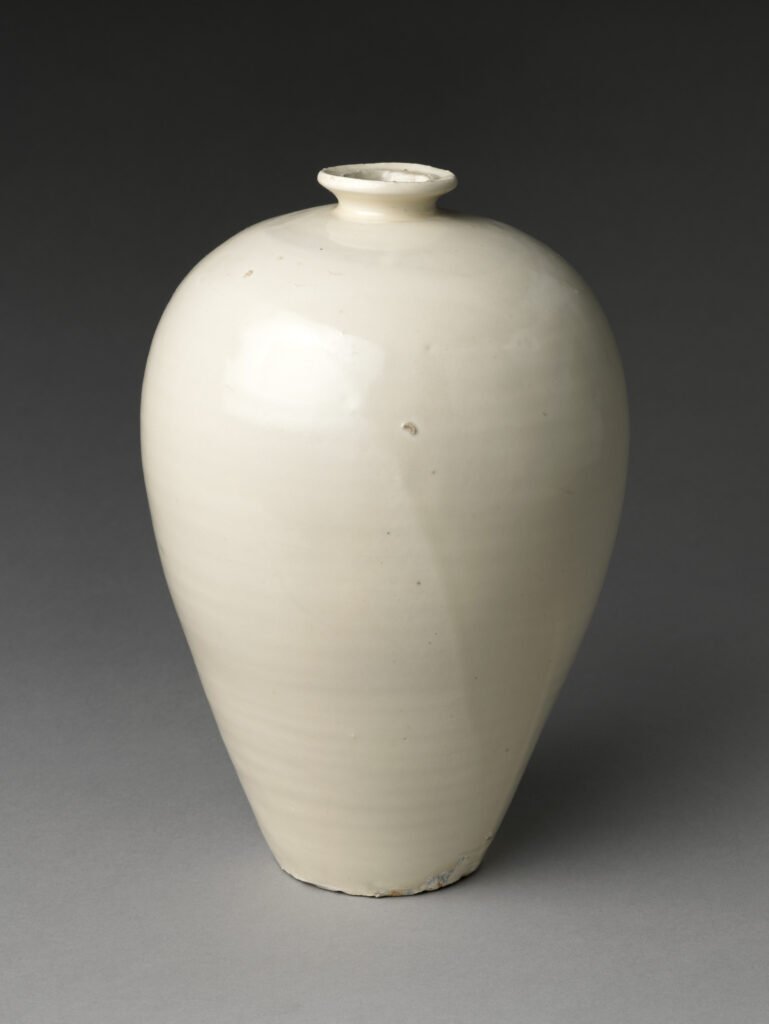
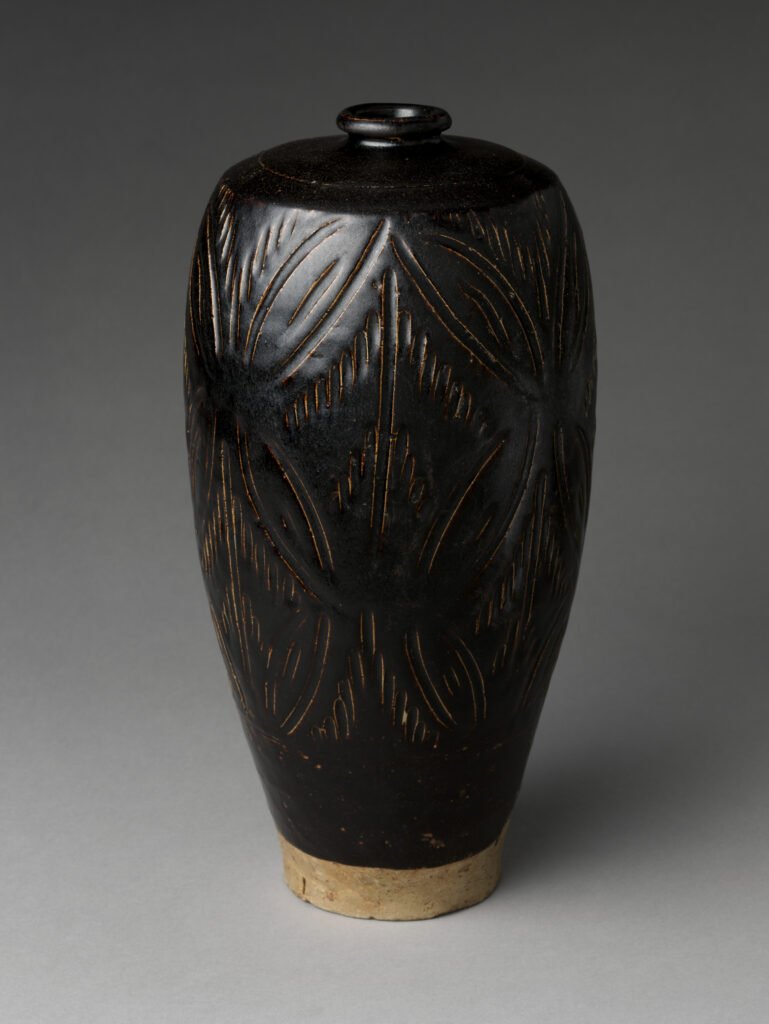
Some of the most remarkable Cizhou wares introduce colour.
Rare examples, such as those with green enamel over black decoration, represent some of the earliest uses of low-fired enamelling on high-fired stoneware. Archaeological evidence from the Guantai kiln sites confirms that these experiments took place during the late Northern Song to early Jin period (c. 11th–13th century).
These pieces are technically significant — not only for their visual impact, but for what they reveal about the innovation of kiln workshops outside the imperial system.
Yet Cizhou ware is not defined by technique alone.
It is also a reflection of cultural life.
Many vessels depict scenes of daily existence — scholars seated in landscapes, figures in conversation, or simple floral motifs rendered with expressive energy. Others carry inscriptions, poems, or auspicious phrases, linking ceramics to the broader literary culture of the time.
Even utilitarian objects, such as ceramic pillows, were transformed into surfaces for artistic expression — sometimes bearing painted decoration, sometimes inscribed with texts, and in rare cases later appreciated and even inscribed by emperors such as Qianlong, who admired their rustic purity and connection to antiquity.
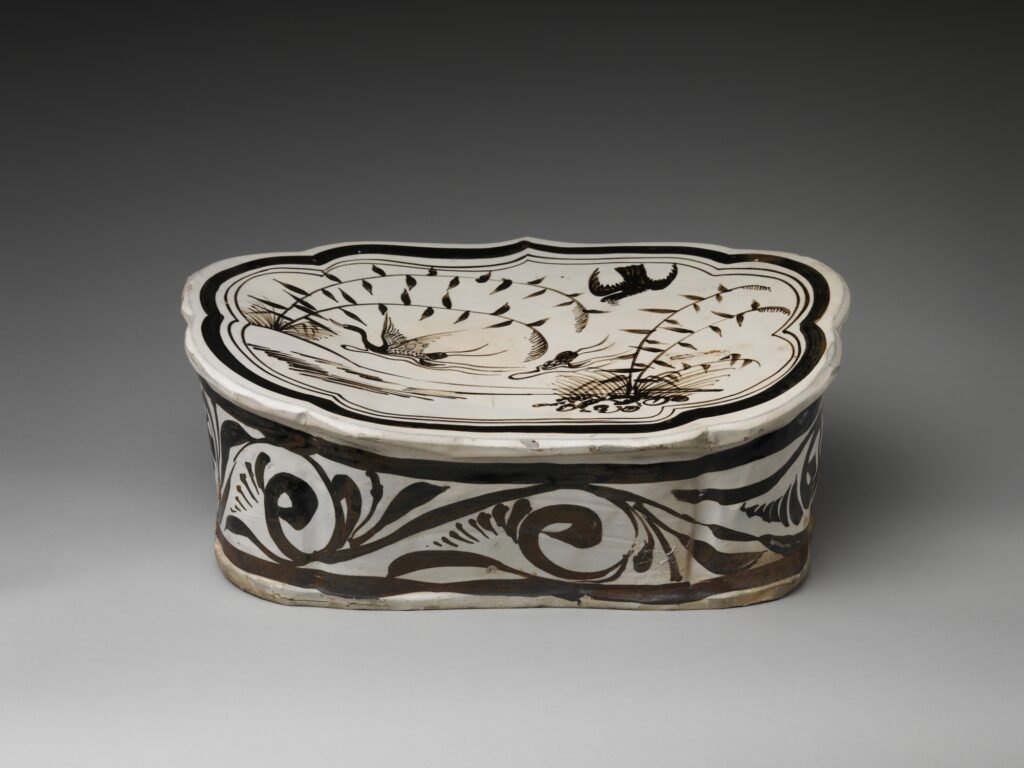
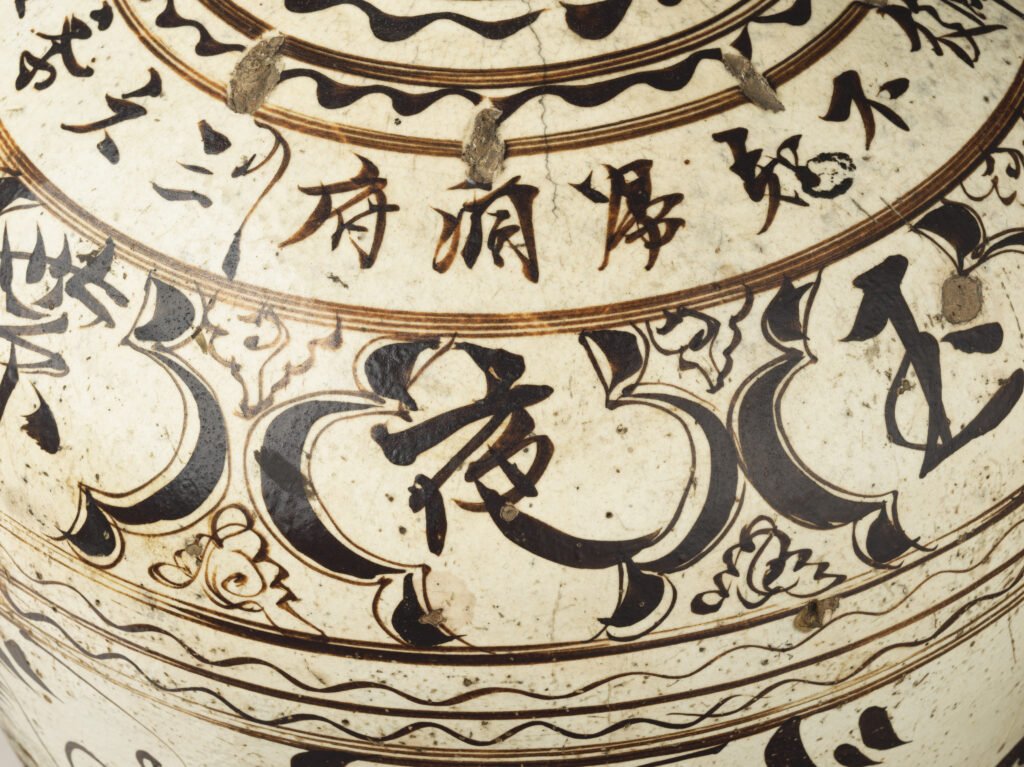
Unlike imperial wares, which often sought perfection, Cizhou ceramics celebrate individuality.
Brushstrokes vary. Forms are sometimes irregular. Decoration may shift slightly from one piece to another. These are not flaws, but evidence of a living tradition — one in which the hand of the maker remains visible across centuries.
Fragments excavated from kiln sites confirm the wide range of forms and styles produced, from large storage jars to finely painted vessels, demonstrating both mass production and artistic diversity.
Today, Cizhou ware occupies a unique place in the history of Chinese ceramics.
It bridges the gap between elite and popular culture, between controlled refinement and expressive freedom. Many important examples are preserved in major museum collections, while others appear on the market with increasing rarity and scholarly interest.
To encounter a Cizhou piece is to see not only an object, but a moment — a gesture captured in clay, where the energy of the brush meets the permanence of the kiln.