

🔶 Bronze: Ritual, Power, and the Authority of the Ancient World
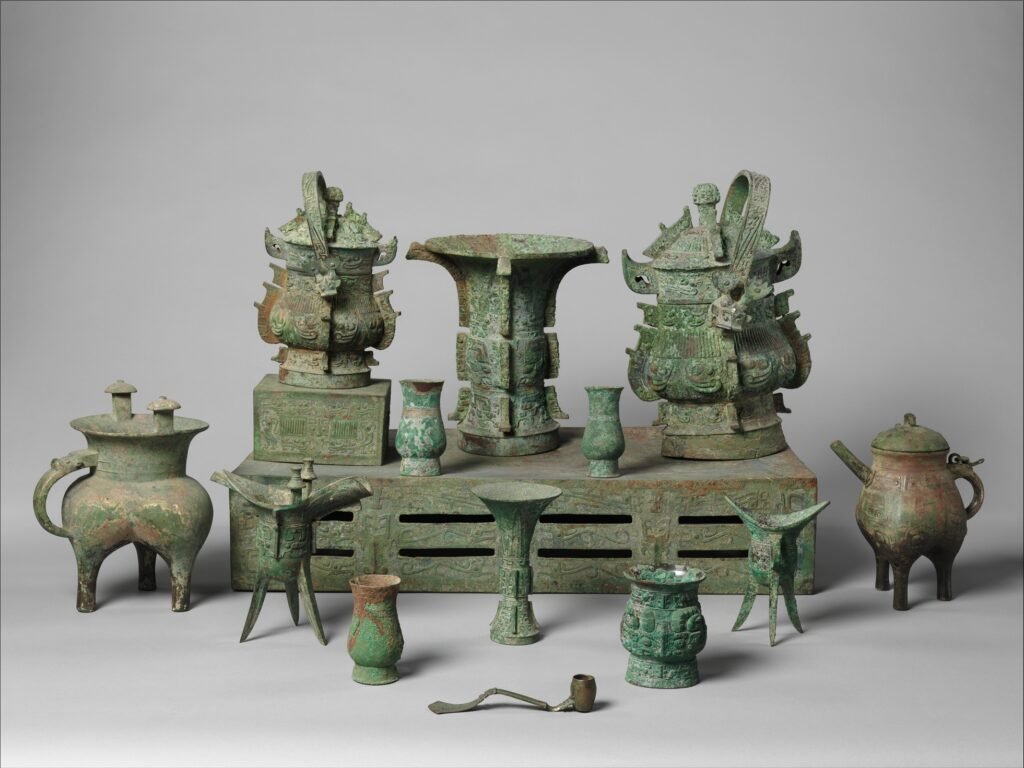
More than three thousand years ago, in the late Shang dynasty (c. 1600–1046 BCE), bronze was not simply a material — it was the foundation of ritual, authority, and belief.
These vessels were cast for ceremonies that connected the living with their ancestors. Placed on altars and used in offerings of food and wine, they formed part of a highly structured ritual system in which lineage, memory, and power were inseparable.
Archaeological discoveries, particularly at sites such as Anyang, the last Shang capital, have revealed entire assemblages of bronze vessels buried in elite tombs — confirming that these objects were central to both ritual life and aristocratic identity.
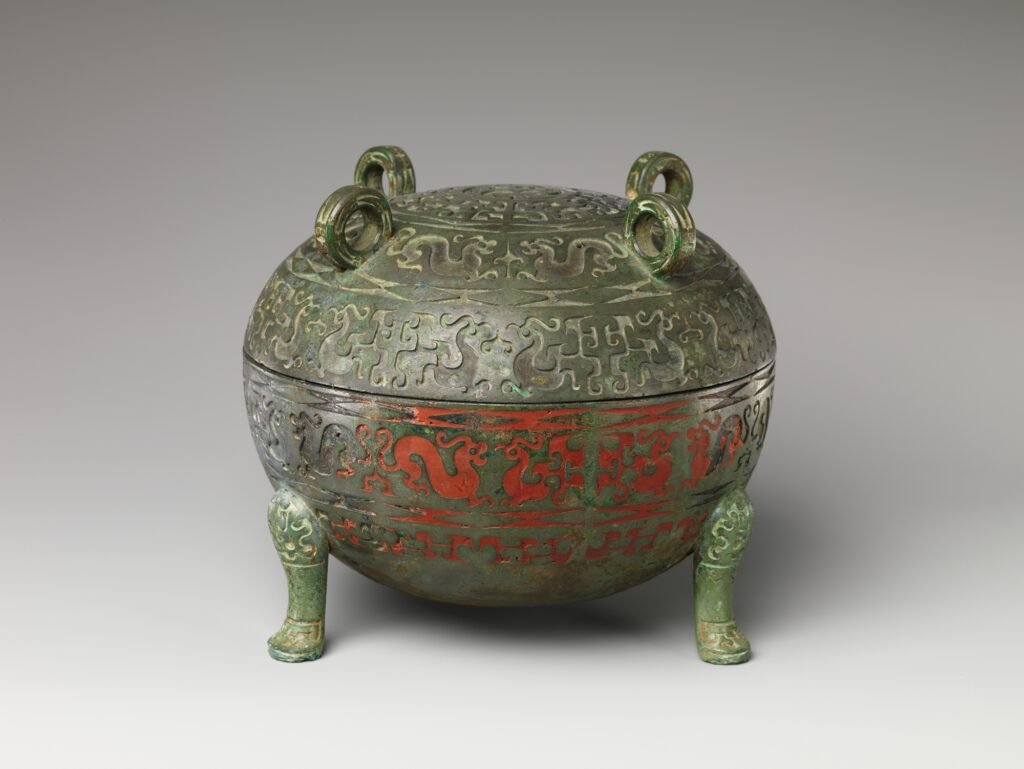
Among the many forms produced, one came to embody authority itself: the ding, a tripod vessel used for food offerings.
Ancient texts record that the legendary ruler Yu the Great cast the Nine Ding, symbolising control over the realm. By the Zhou dynasty (1046–256 BCE), this idea had evolved into a formal system of hierarchy:
- The Son of Heaven was permitted nine ding
- Feudal lords: seven
- High-ranking officials: five
- Lower ranks: three or fewer
This was not symbolic alone — it was a visible, material expression of political order. Bronze vessels, therefore, functioned not only in ritual, but as markers of status, legitimacy, and rank.
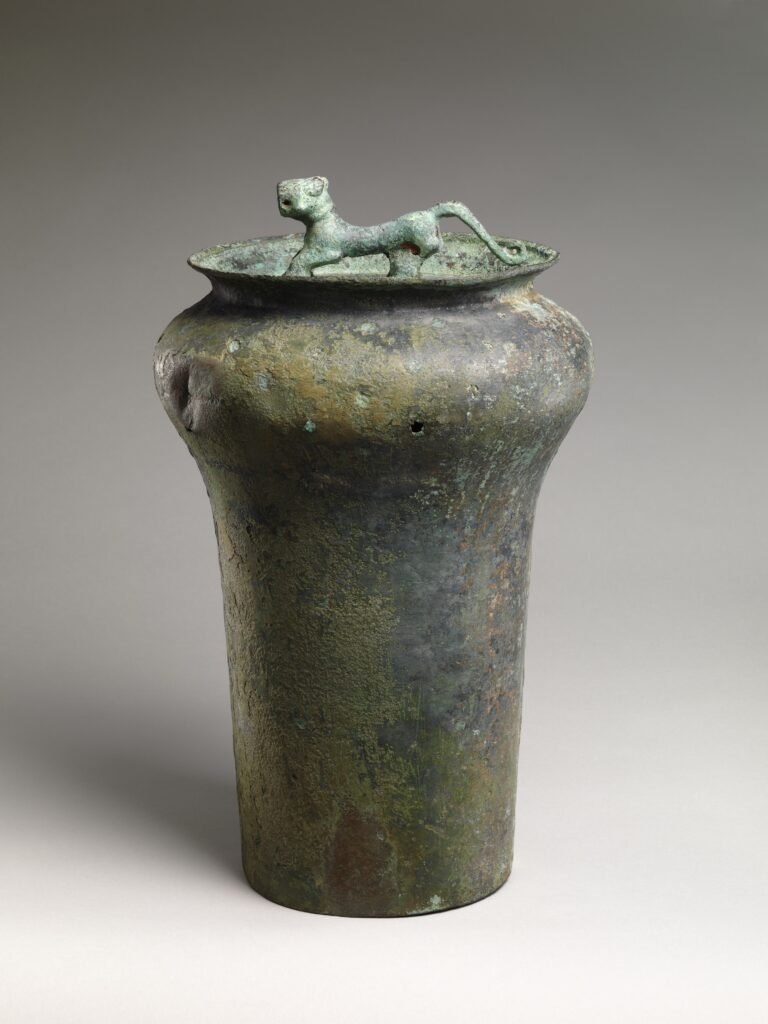
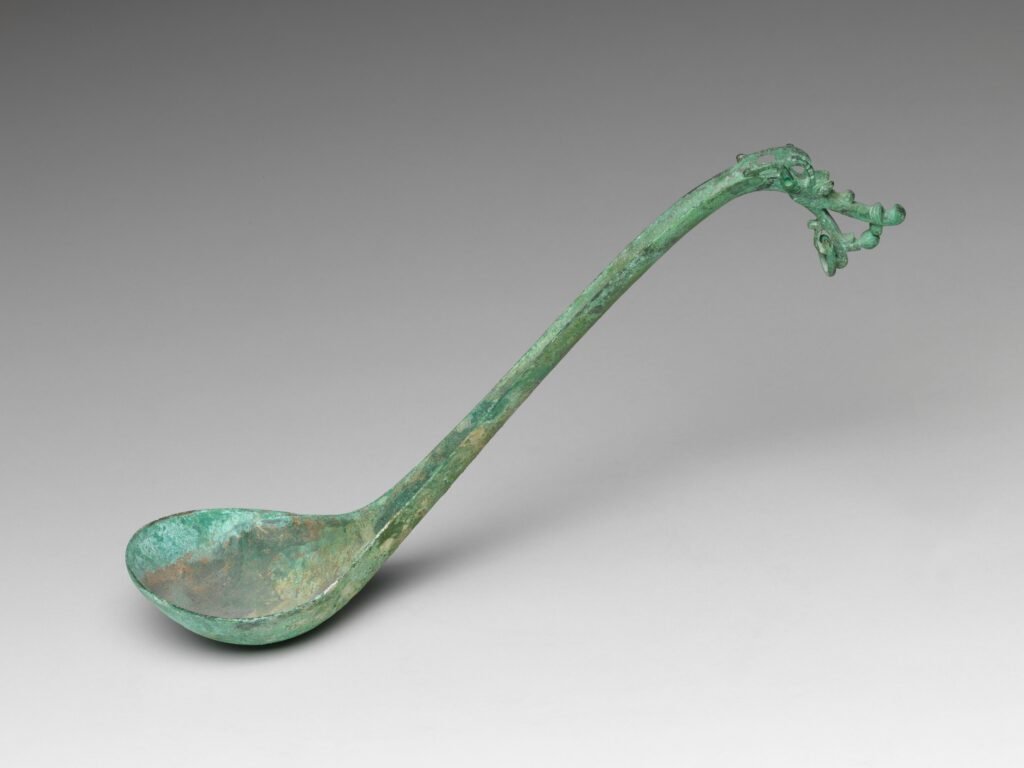
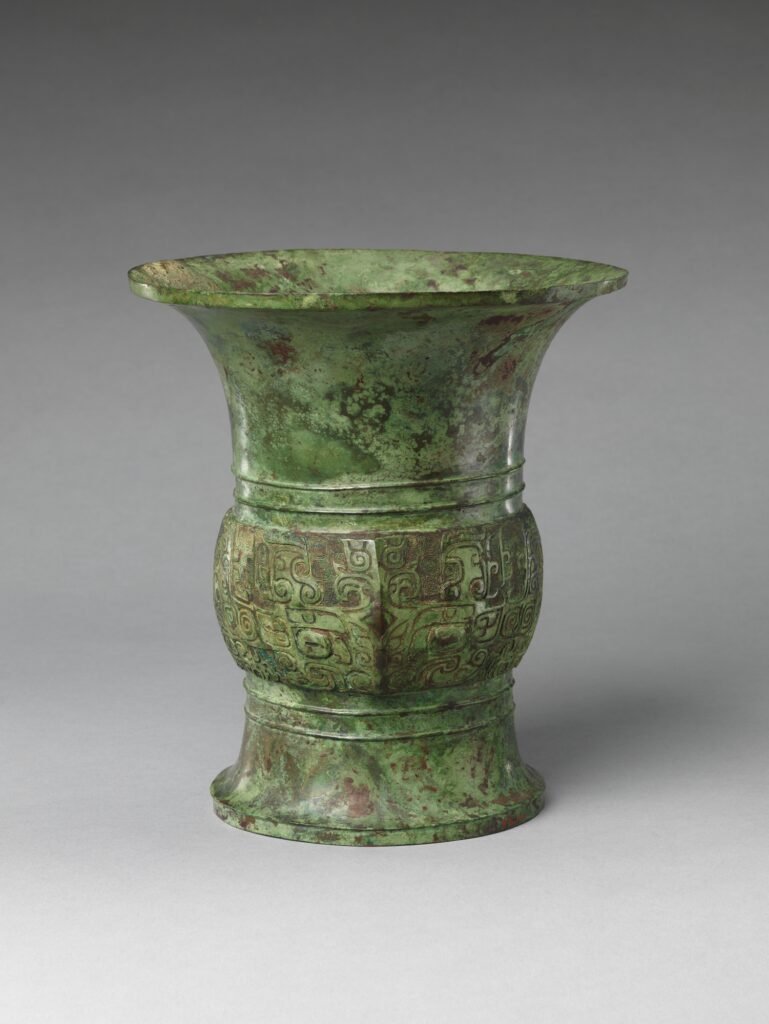
The surfaces of these vessels carry a visual language that remains among the most distinctive in world art.
The taotie mask, with its symmetrical eyes and abstracted features, appears across Shang and Zhou bronzes. While its exact meaning is still debated, it is widely associated with ritual power and spiritual presence.
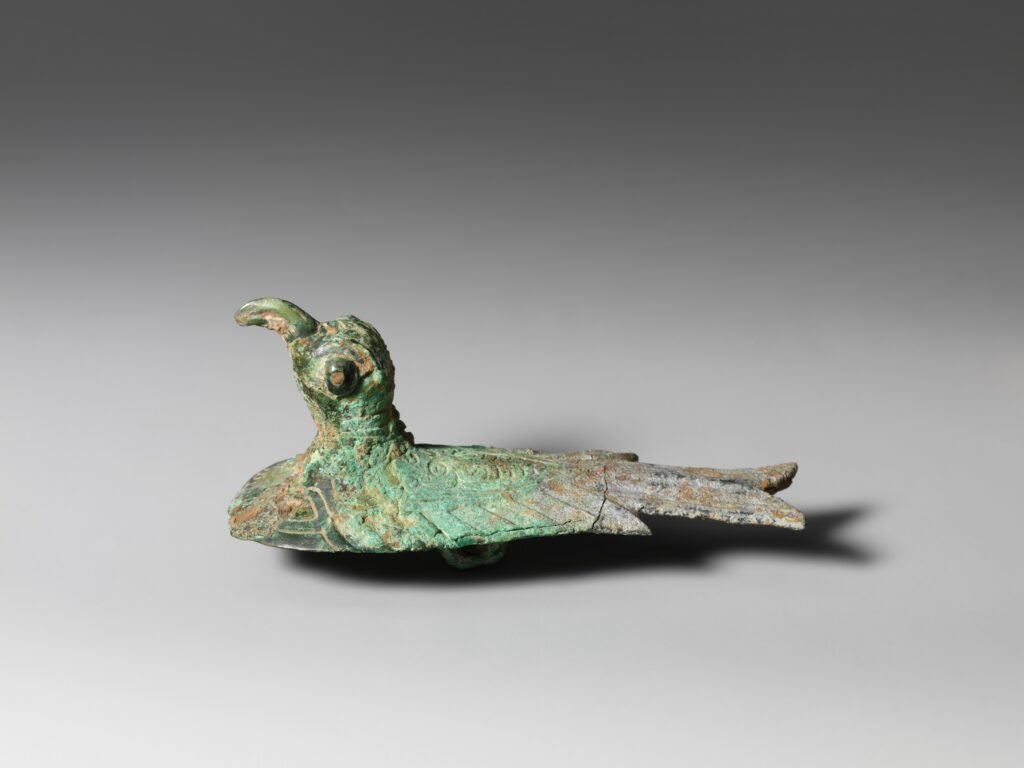
By the Eastern Zhou period, decoration evolved into more fluid and dynamic compositions — interlacing dragons, stylised birds, and complex geometric patterns. In some cases, entire vessels were cast in the form of animals, known today as zoomorphic bronzes, blurring the line between object and living form.
Yet the most direct voices of this world are found inside the vessels themselves.
Many bronzes bear inscriptions, cast or engraved within their interiors. These record clan names, ancestral dedications, or significant events. Some inscriptions correspond to known lineages identified through both bronze studies and oracle bone texts, allowing scholars to connect objects with specific families and historical moments.
In rare cases, clan emblems combine pictographic symbols and abstract motifs, offering insight into early Chinese writing and the structure of aristocratic society.
Technically, these works were produced using the piece-mould casting method, a uniquely Chinese innovation.
Rather than casting from wax models, artisans carved designs into clay moulds, assembling them around a core before pouring molten bronze. This process allowed for:
- exceptionally sharp relief
- complex layered decoration
- precise repetition of forms
The level of control achieved by Shang and Zhou craftsmen remains remarkable even by modern standards.
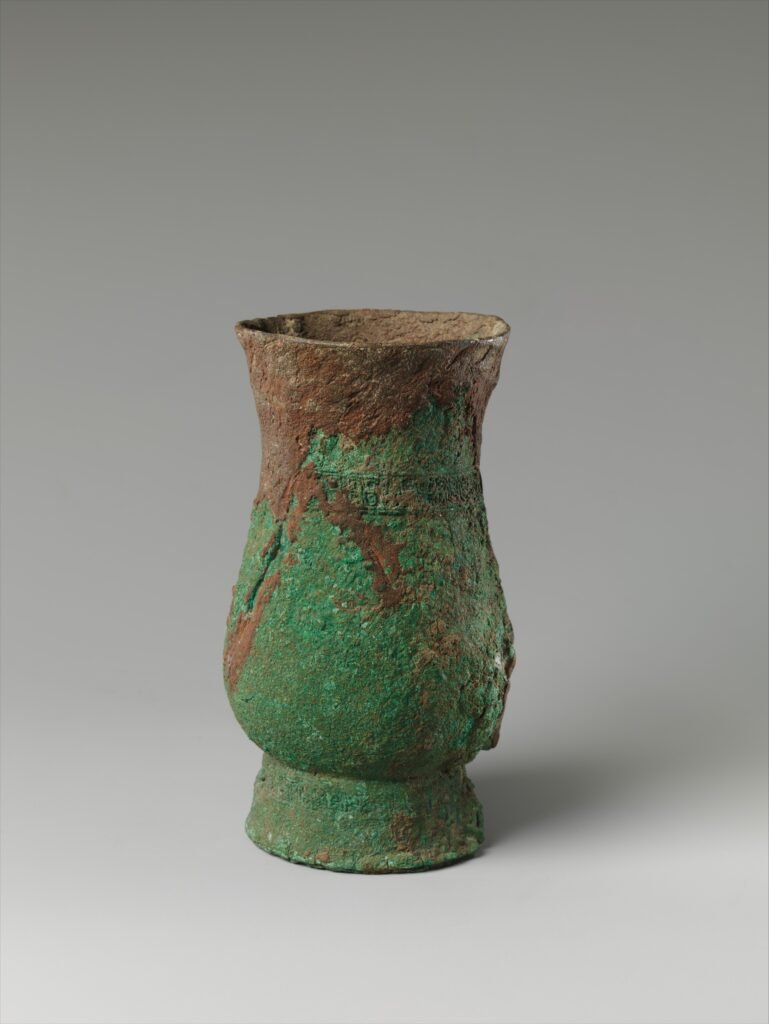
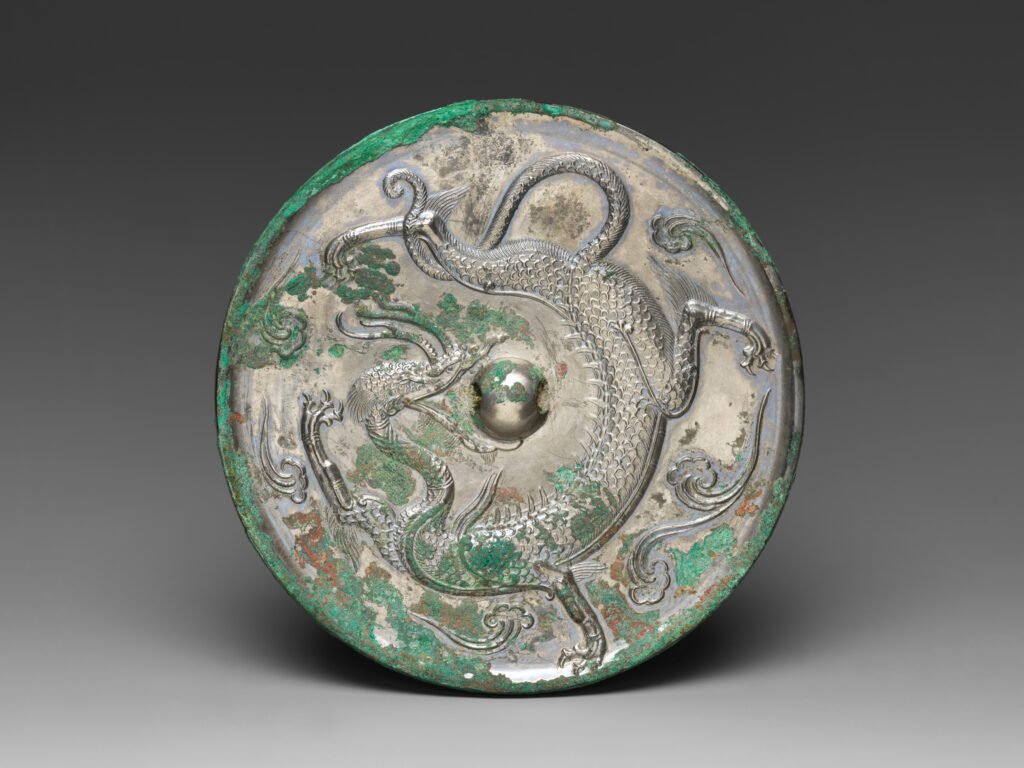
Over time, bronze undergoes transformation.
Buried in tombs or preserved through generations, its surface develops a patina — ranging from deep brown to vivid green and turquoise. This is the result of long-term chemical interaction with the environment, particularly soil composition and moisture.
For collectors and scholars, this surface is not damage, but evidence — a record of age and authenticity.
The story of bronze does not end in antiquity.
From the Song dynasty onward, scholars began systematically studying ancient bronzes, recognising them as objects of historical and cultural significance. This antiquarian tradition reached its height under the Qing dynasty, especially during the reign of the Qianlong Emperor (1736–1795).
Imperial catalogues such as the Huangchao liqi tushi (completed in 1759) documented ritual vessels in detail, and archaistic bronzes were produced in imperial workshops. These later works, often bearing reign marks, were not intended as deceptions, but as conscious revivals of antiquity, reflecting both scholarship and imperial taste.
Today, the finest archaic bronzes are preserved in major institutions, including the Palace Museum, Beijing, the National Museum of China, and leading international collections.
Only a small number enter the market, often accompanied by extensive provenance and scholarly reference.
Each piece is more than an artefact.
It is a document of ritual practice, a symbol of authority, and a surviving witness to one of the earliest and most sophisticated civilisations in human history.