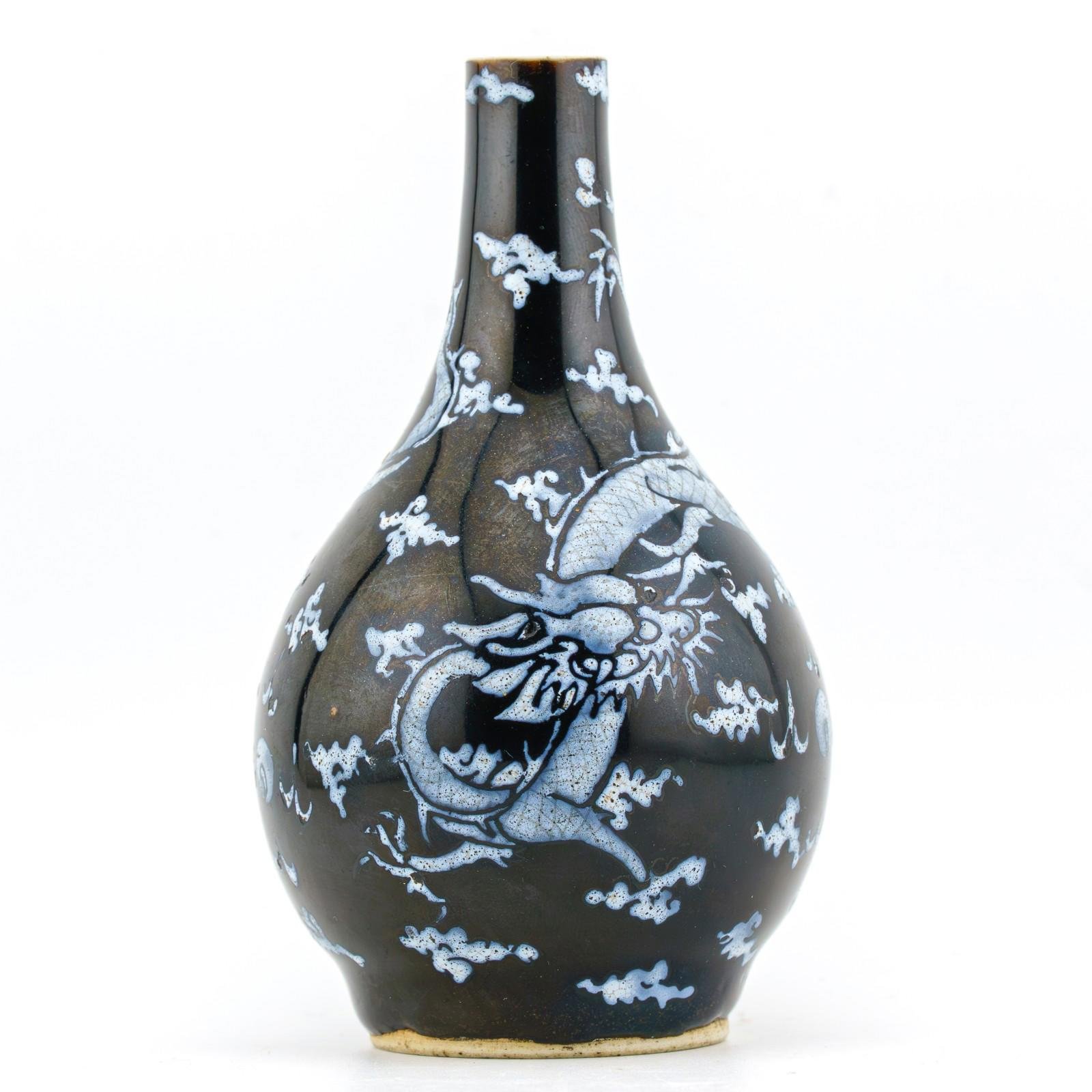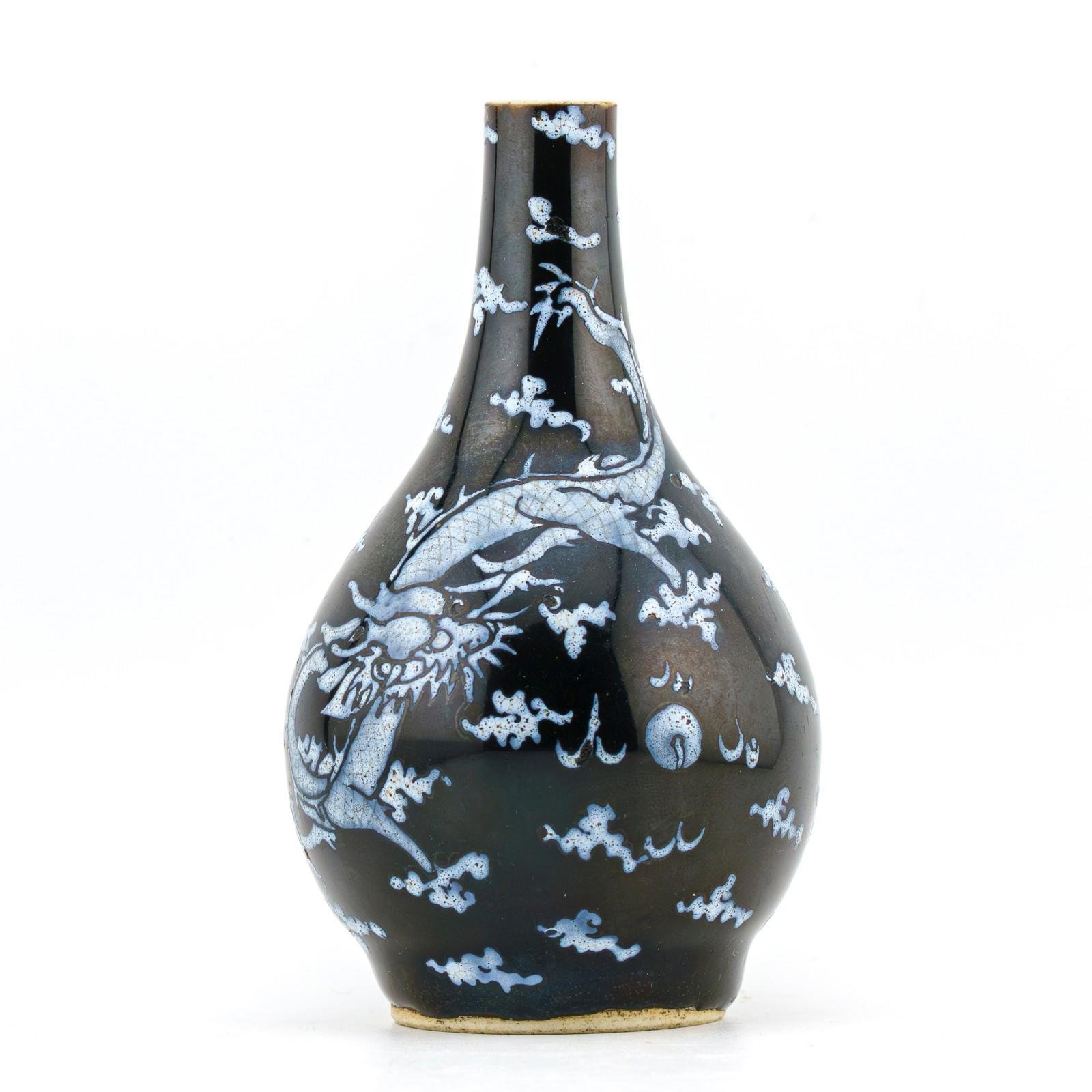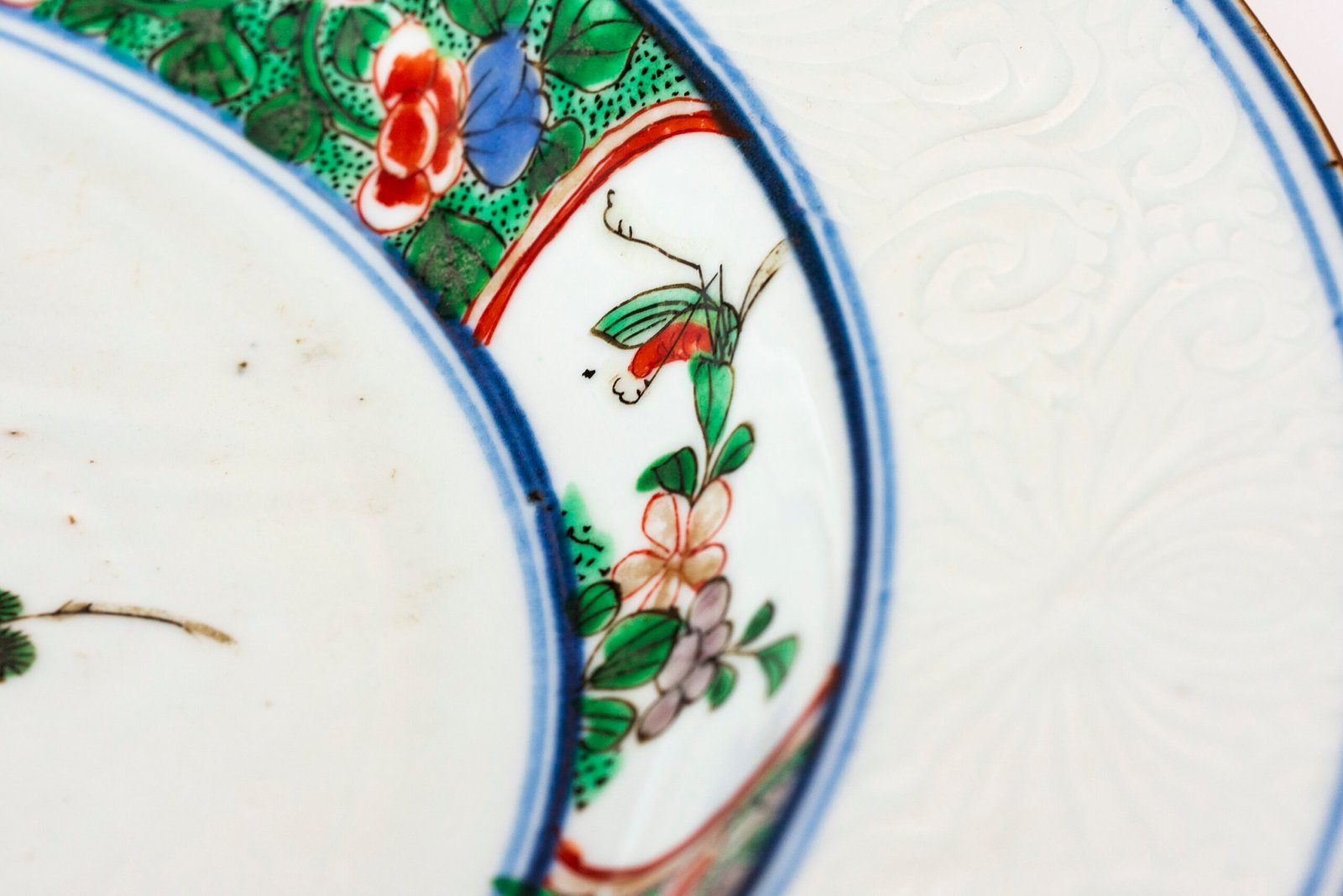
📸 Visual Language (Key Identification)
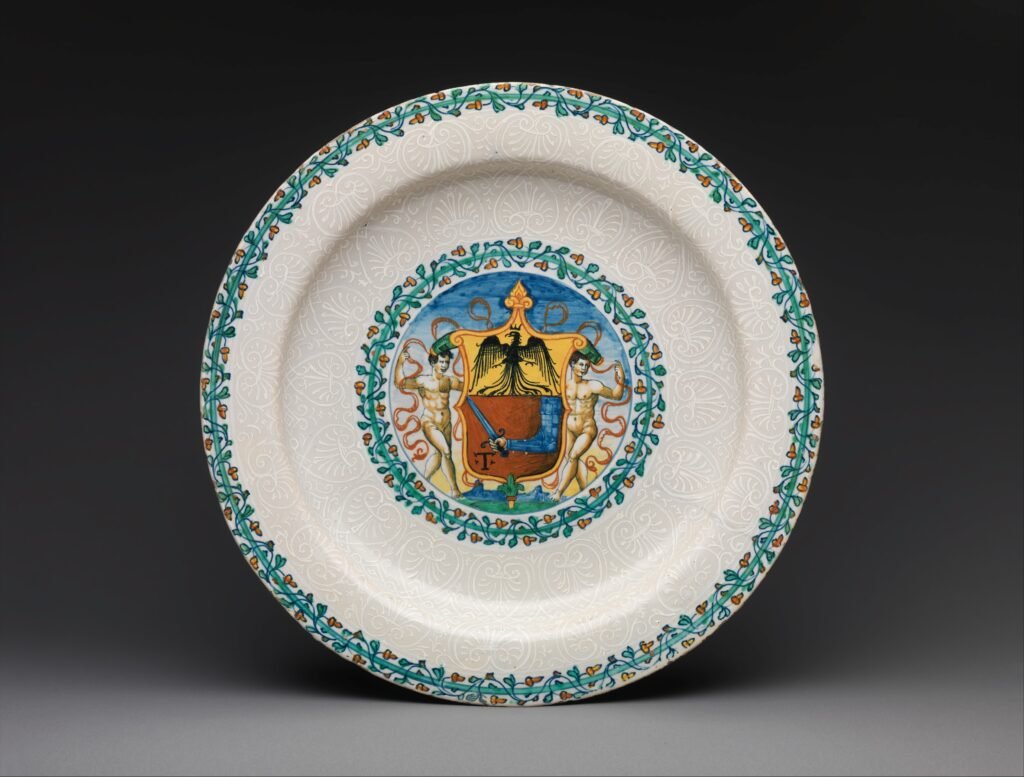
Italian (Castel Durante or Pesaro),
Maiolica (tin-enameled earthenware); Overall (confirmed): 2 1/4 x 17 in. (5.7 x 43.2 cm)
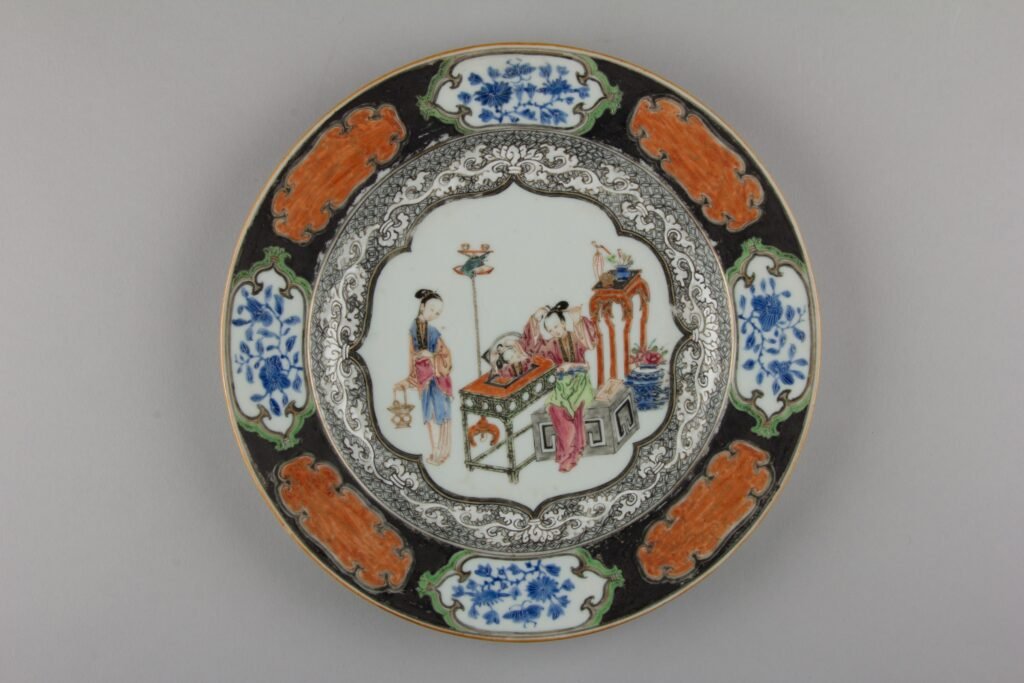
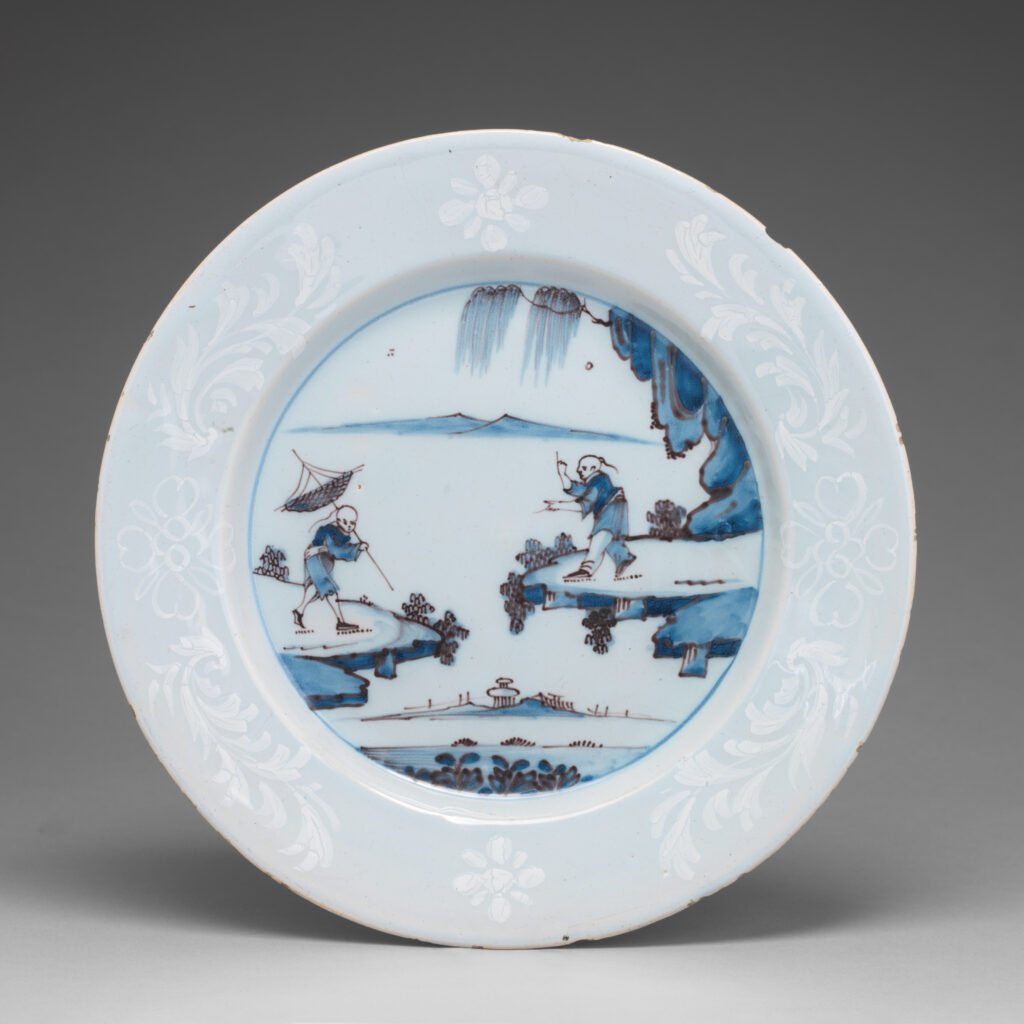
🧭 Definition
Bianco sopra bianco (Italian: “white on white”) refers to a decorative technique in which white enamel or slip is applied onto a white or pale ground, creating subtle relief patterns visible only under light.
Unlike painted decoration, it relies on:
- texture
- glaze thickness
- light reflection
👉 The result is quiet luxury rather than visual dominance.
🏛️ Origins & Historical Development
🇮🇹 Italy — Birth of the Technique (c. 1500–1550)
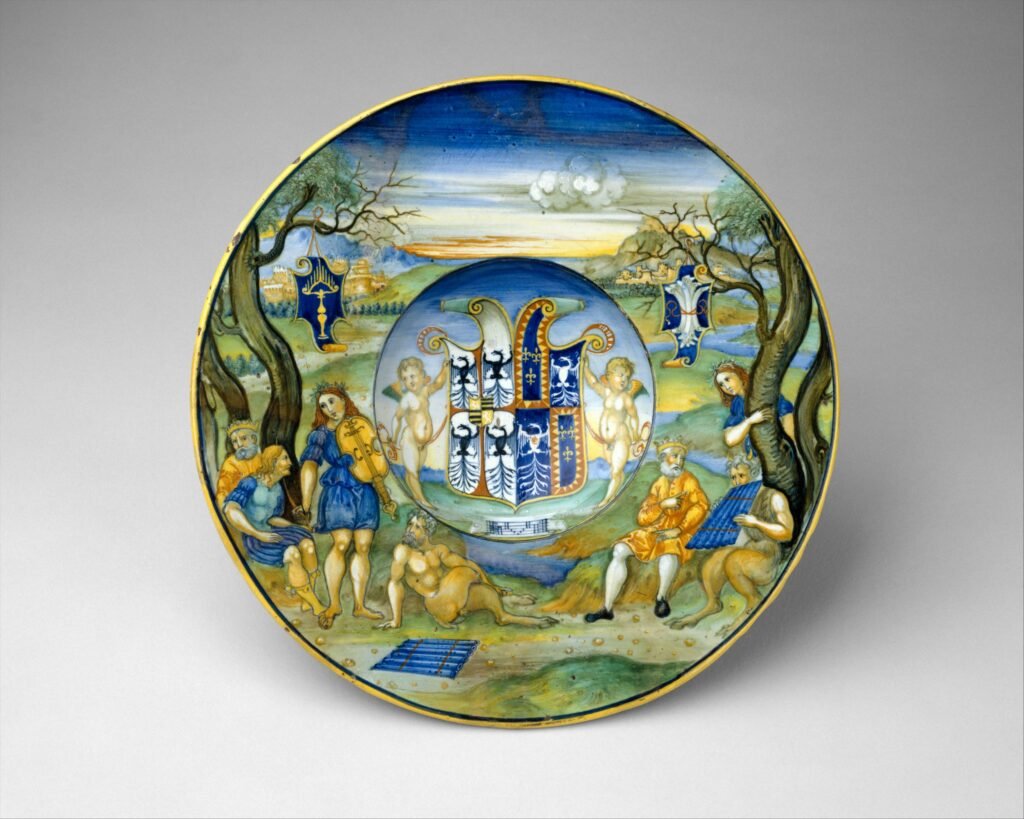
Key centres:
- Faenza
- Deruta
- Urbino
Technical context:
- Tin-glazed earthenware (maiolica)
- White opaque glaze ground
Function:
- Imitation of Chinese porcelain refinement
- Enhancement of:
- alla porcellana (porcelain-style decoration)
- armorial and Renaissance motifs
👉 Britannica confirms:
- designs executed in opaque white over a milky-white glaze
- widely revived in mid-18th century Europe
🇨🇳 China — Technical Perfection (17th–18th century)
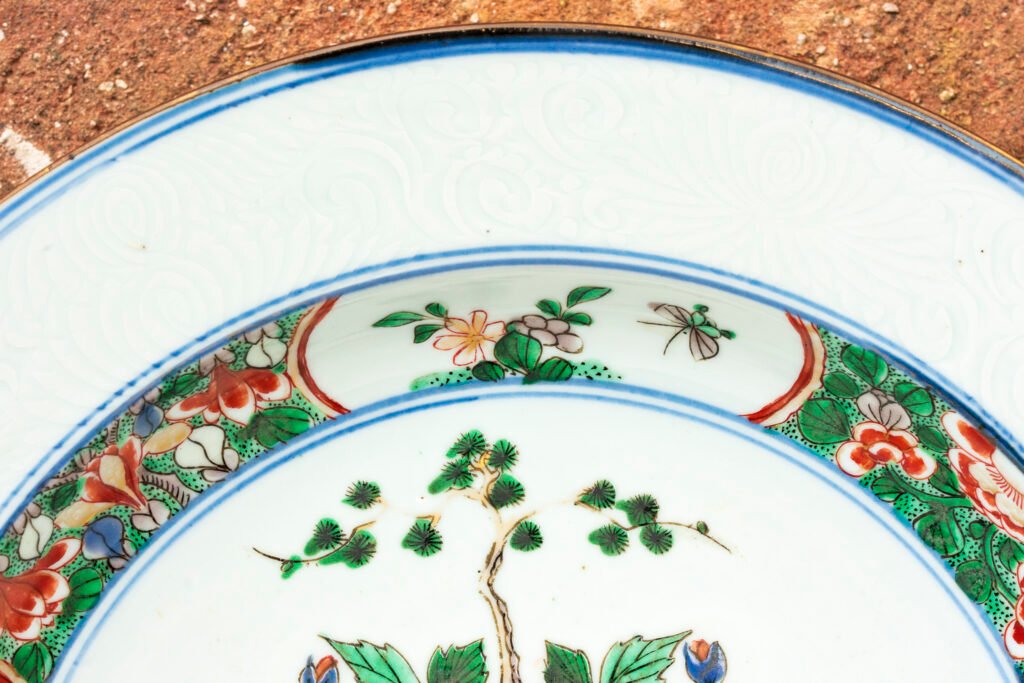
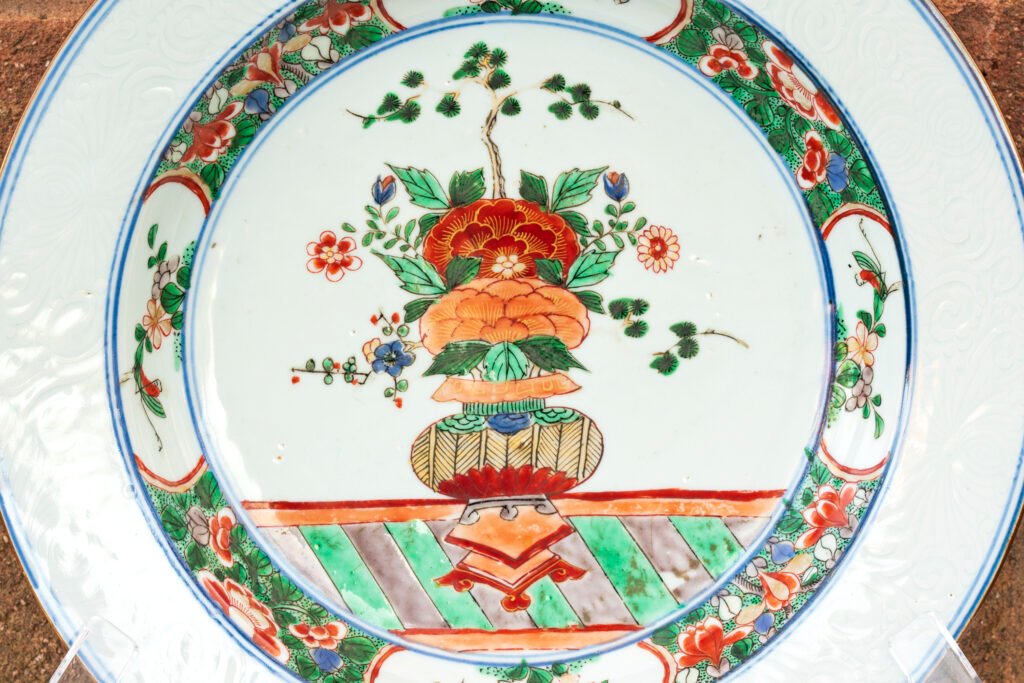
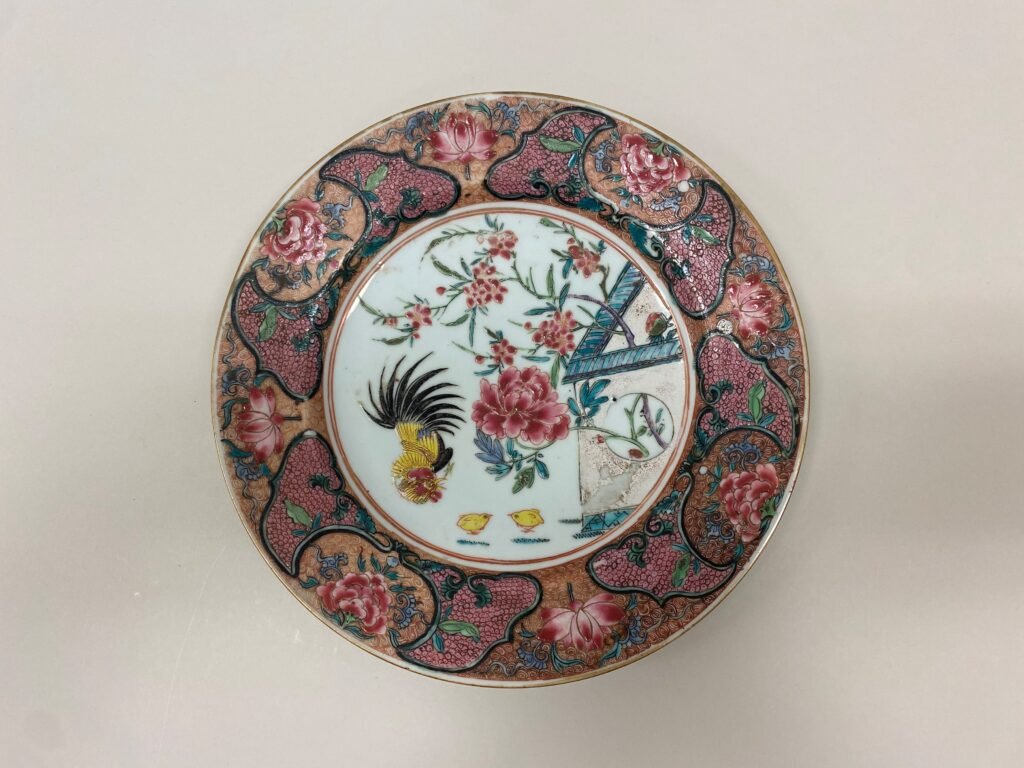
Chinese equivalent:
👉 Closely related to anhua (暗花 – “hidden decoration”)
Peak periods:
- Kangxi (1662–1722)
- Yongzheng (1723–1735) ← most refined
- Qianlong (1736–1795)
Use in Chinese porcelain:
1. Structural ground
- beneath famille rose or armorial decoration
- softens visual transitions
2. Rim decoration
- scrolls, peony, bamboo
- often paired with:
- gilt spearhead borders
- grisaille panels
3. Symbolic layer
- motifs carry meaning:
- bamboo → resilience
- peony → wealth
- prunus → renewal
Export porcelain:
- Used on:
- armorial plates (c. 1740–1755)
- famille rose wares
- Indian market export pieces
👉 Often described as:
- “bianco-sopra-bianco floral ground”
- “scrolling foliage border”
🇬🇧 England — Decorative Adoption (c. 1745–1800)
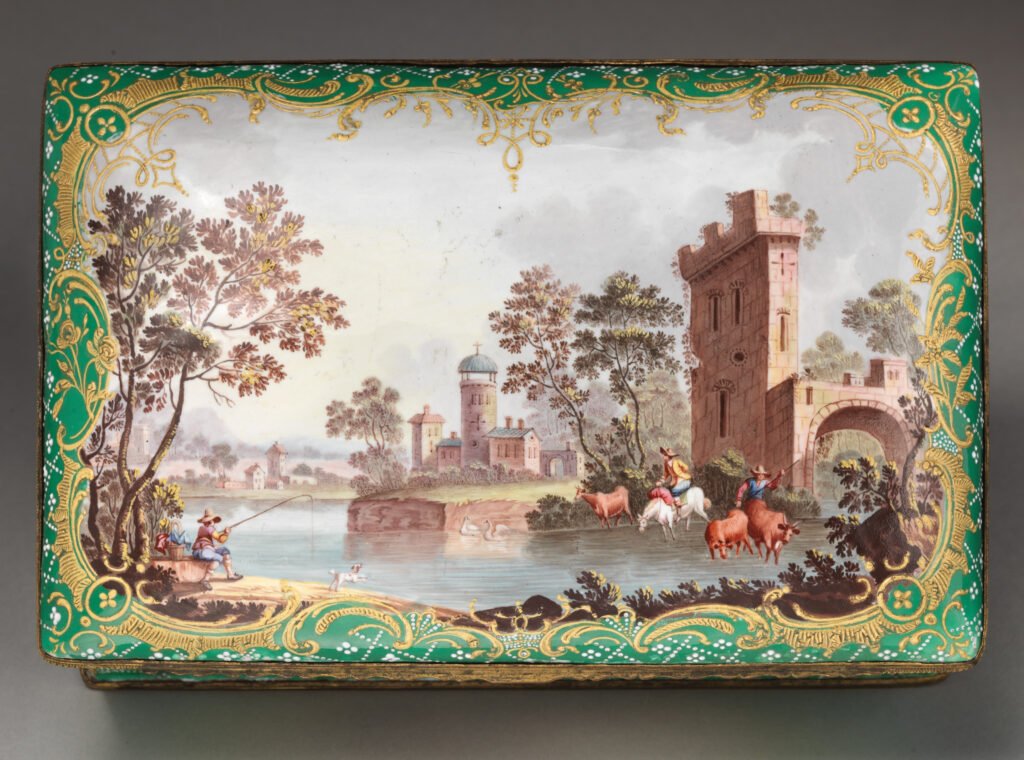
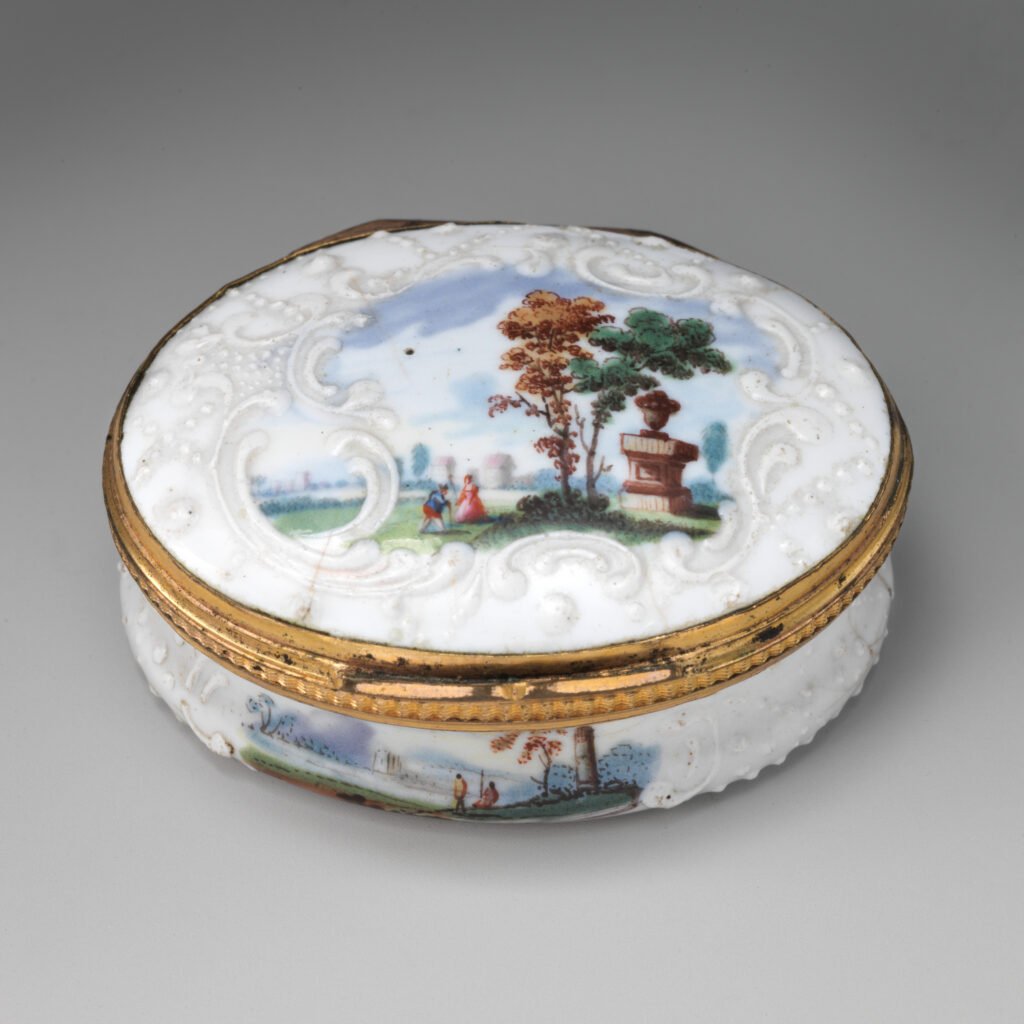
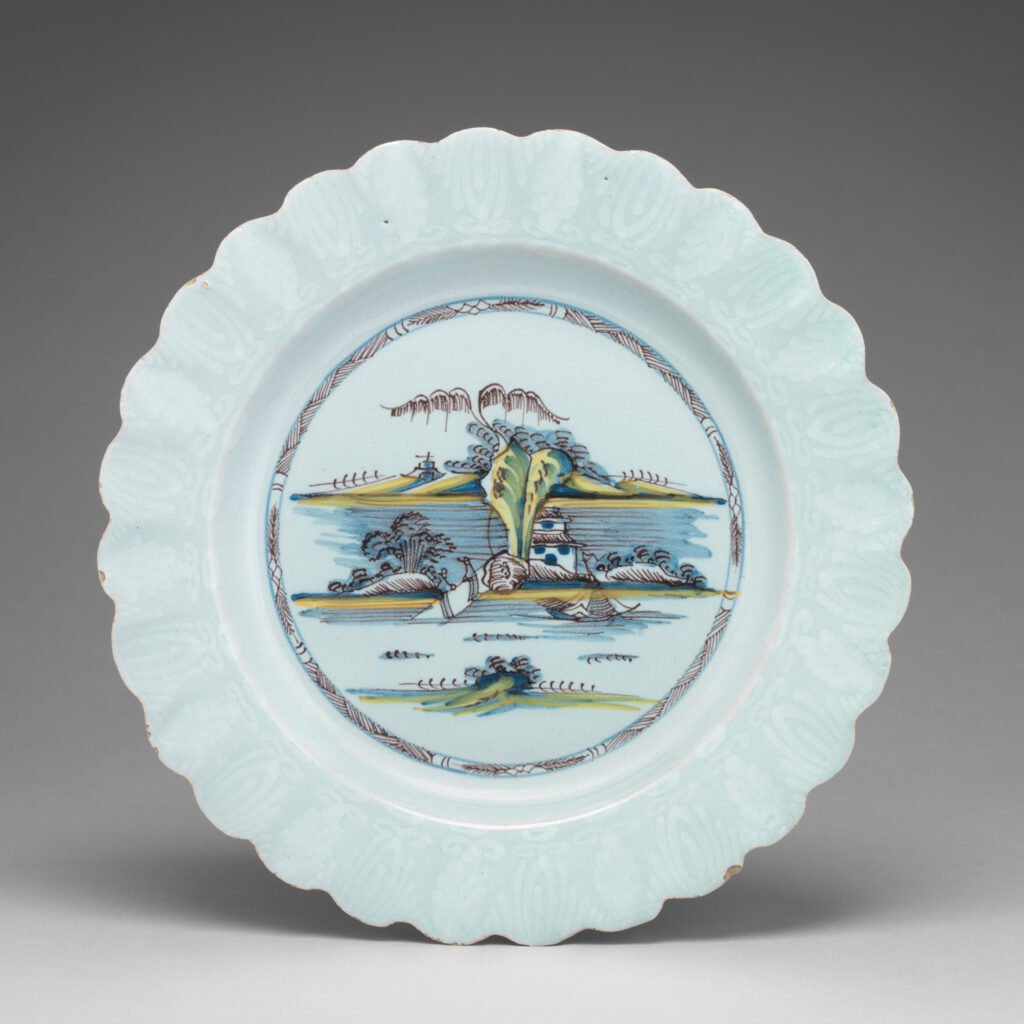
Key centres:
- Lambeth
- Bristol
- Staffordshire enamel workshops
Materials:
- Tin-glazed earthenware
- Enamel on metal
Function:
- purely decorative enhancement
- often combined with:
- gilding
- printed scenes
- rococo forms
👉 Less structural than Chinese use
⚙️ Technique
How it is made:
- Base white glaze applied
- Additional white enamel/slip added:
- brushed
- incised
- molded
- Re-fired to fuse layers
Visual effect:
- matte vs glossy contrast
- raised vs smooth surface
- visible only under angled light
🎨 Motifs & Decoration Types
Common patterns:
- Floral scrolls
- Peony and chrysanthemum
- Bamboo and prunus
- Rococo foliage
- Geometric diaper patterns
Placement:
| Area | Function |
|---|---|
| Rim | framing / luxury border |
| Cavetto | transition zone |
| Ground | depth / softness |
| Reverse | refinement (high quality pieces) |
🧬 Typology (Professional Classification)
🔹 Type 1 — Structural Ground (China)
Subtle floral layer beneath decoration
🔹 Type 2 — Framing Border (China & Europe)
Defines composition zones
🔹 Type 3 — Symbolic Texture (China)
Meaning embedded in design
🔹 Type 4 — Surface Decoration (England)
Pure ornament
🔍 How to Recognise (Collector’s Method)
Step 1 — Ignore colour
Look at plain white areas
Step 2 — Use light
Tilt object → pattern appears
Step 3 — Touch (if allowed)
Fine relief often detectable
Step 4 — Check quality
- soft & irregular → hand-made
- repetitive → later production
⚠️ Important Distinction
Bianco sopra bianco vs Anhua
| Term | Region | Meaning |
|---|---|---|
| Bianco sopra bianco | Europe | stylistic term |
| Anhua | China | original technique |
👉 Same visual idea — different cultural context
💰 Market Insight (From Your Data)
Appears in:
- Chinese export porcelain → $2,000–$6,000+
- Italian maiolica → £8,000–£80,000
- English enamels → strong decorative premium
Key insight:
👉 Often undervalued in lower markets (eBay)
because buyers:
- don’t recognise it
- can’t see it in photos
Your advantage:
You can:
- identify quickly
- describe professionally
- justify higher pricing
📜 Collector’s Note
Bianco sopra bianco represents one of the most refined decorative approaches in ceramics. Rather than relying on colour, it rewards careful observation—revealing itself gradually through light and texture.
Across cultures, it reflects a shared pursuit of refinement:
- in Italy, the imitation of porcelain purity
- in China, the mastery of subtlety
- in England, the language of luxury
Its presence often signals a higher level of craftsmanship and should always be considered when assessing quality and value.
🧾 Keywords / Related Terms
- Anhua (hidden decoration)
- Famille rose
- Grisaille
- Tin-glazed earthenware
- Delftware
- Alla porcellana