
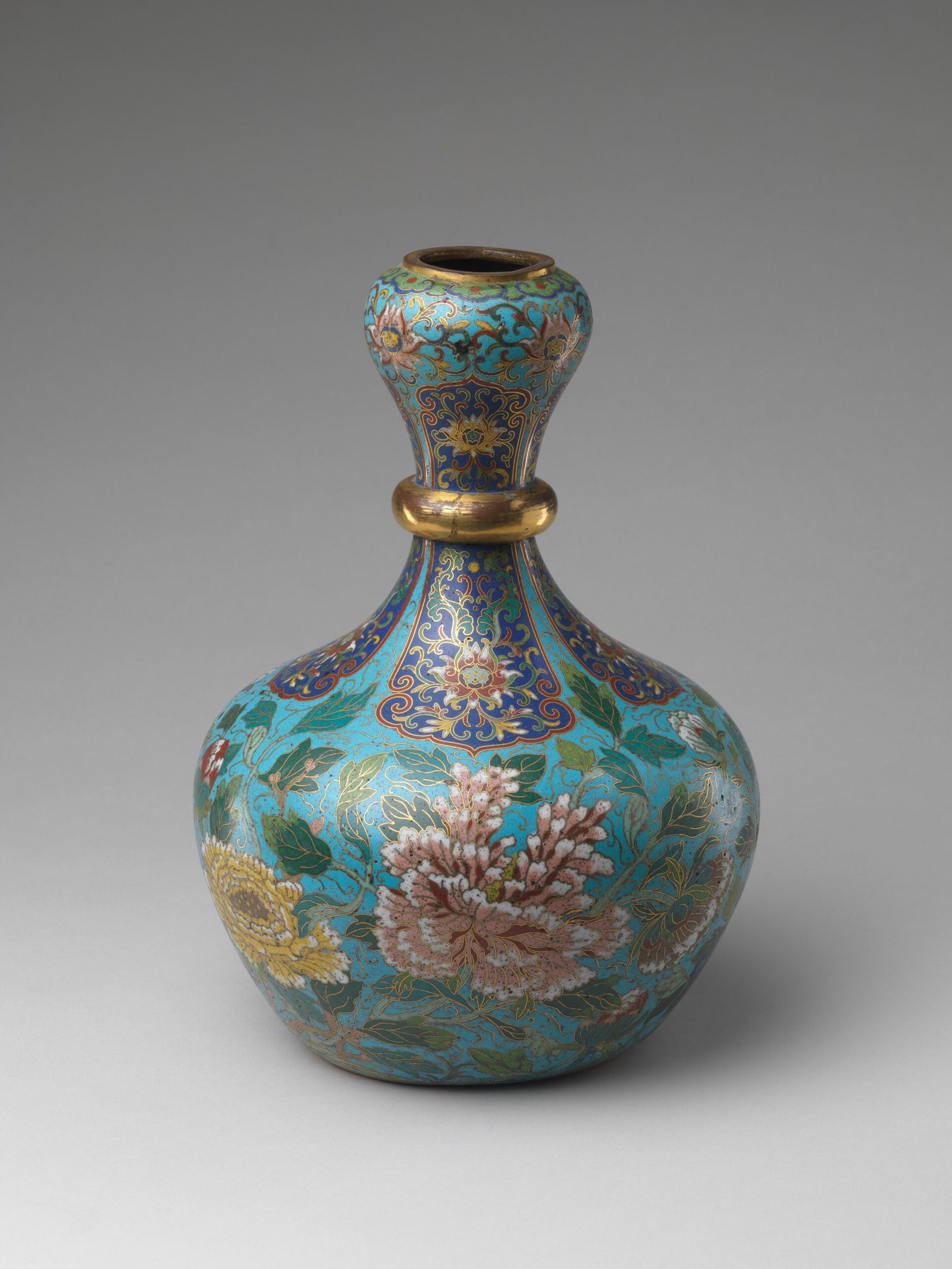
From Archaic Bronze to Imperial Elegance
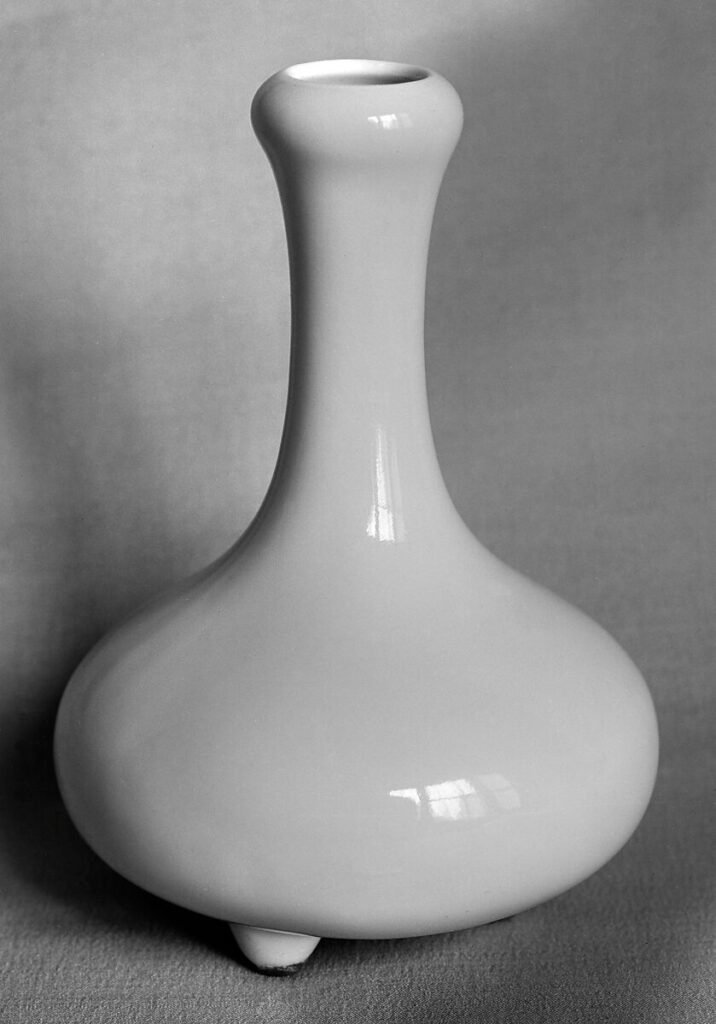
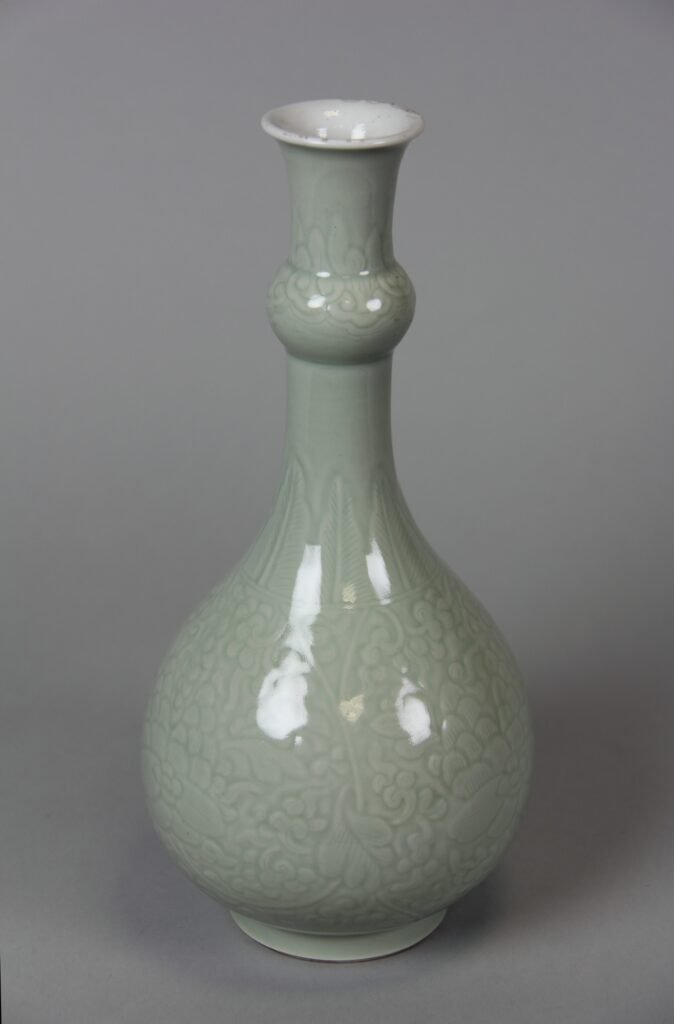
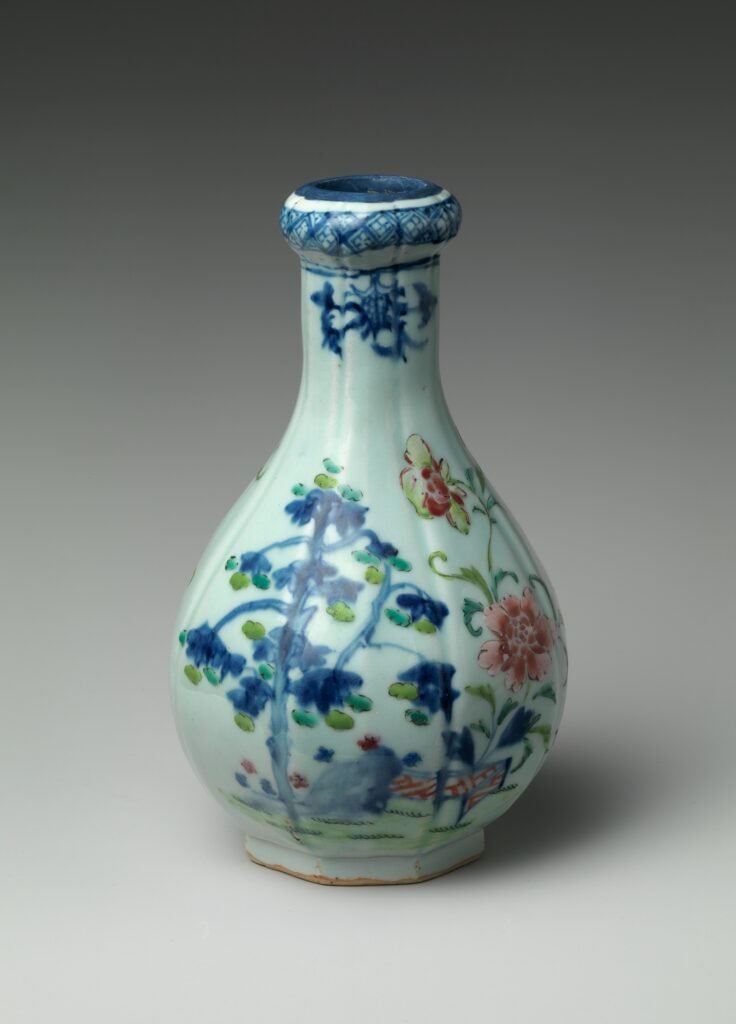
In the evolution of Chinese ceramics, few forms illustrate the dialogue between past and present as clearly as the garlic-neck vase, or suantouping.
At first glance, its name appears almost disarmingly simple — derived from the swelling, lobed mouth resembling a garlic bulb. Yet this modest description conceals a form deeply rooted in antiquity, shaped over centuries through reinterpretation, refinement, and imperial taste.
🏺 Archaic Origins: The Bronze Prototype
The ultimate source of the garlic-neck form lies in archaic bronze vessels, particularly those of the late Warring States and early Western Han periods (4th–2nd century BC).
These early vessels — often described as hu forms — typically display:
- A pear-shaped body
- A compressed, lobed mouth
- Occasionally a raised rib along the neck
Some were inscribed as vessels for warming wine, linking them not only to ritual but to daily elite life.
Importantly, these bronzes were not purely decorative. Their forms were practical, balanced, and grounded — qualities that would later inspire ceramic reinterpretation.
🔄 Early Ceramic Adaptations
By the Ming dynasty, potters began translating these bronze forms into porcelain.
However, these early ceramic versions remained relatively faithful to their origins:
- The garlic-shaped mouth remained pronounced
- The body retained its compact, somewhat compressed proportions
- The aesthetic still leaned toward archaic imitation rather than transformation
At this stage, the form was still a reference — not yet a fully reimagined design.
🌸 The Yongzheng Revolution
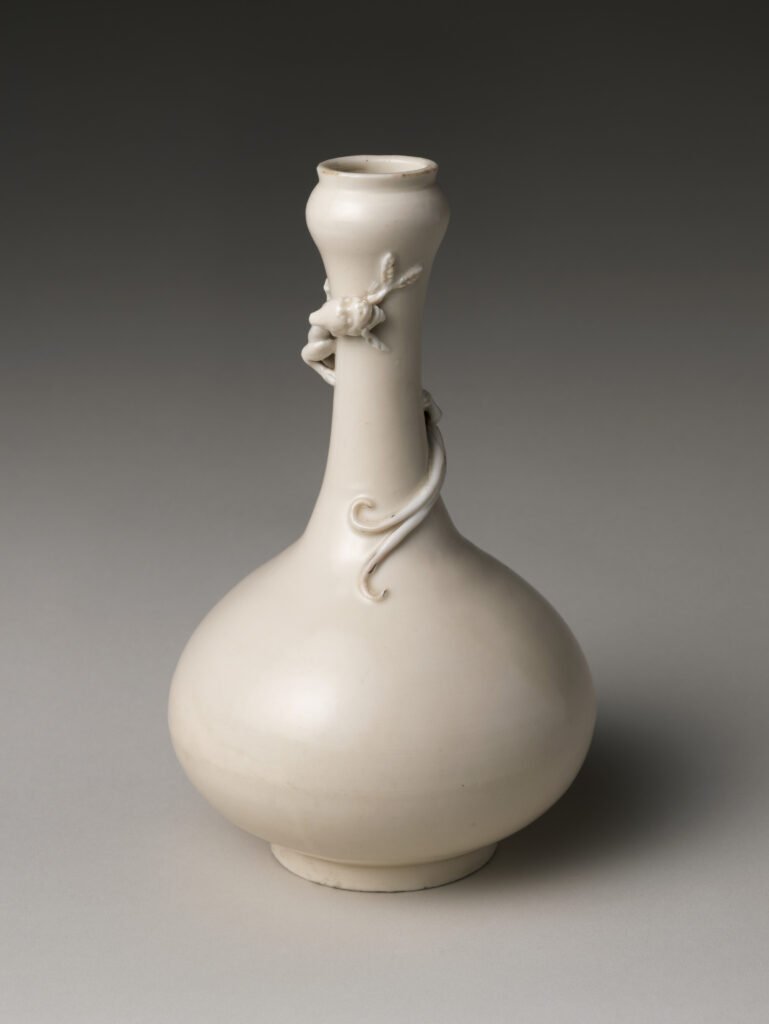
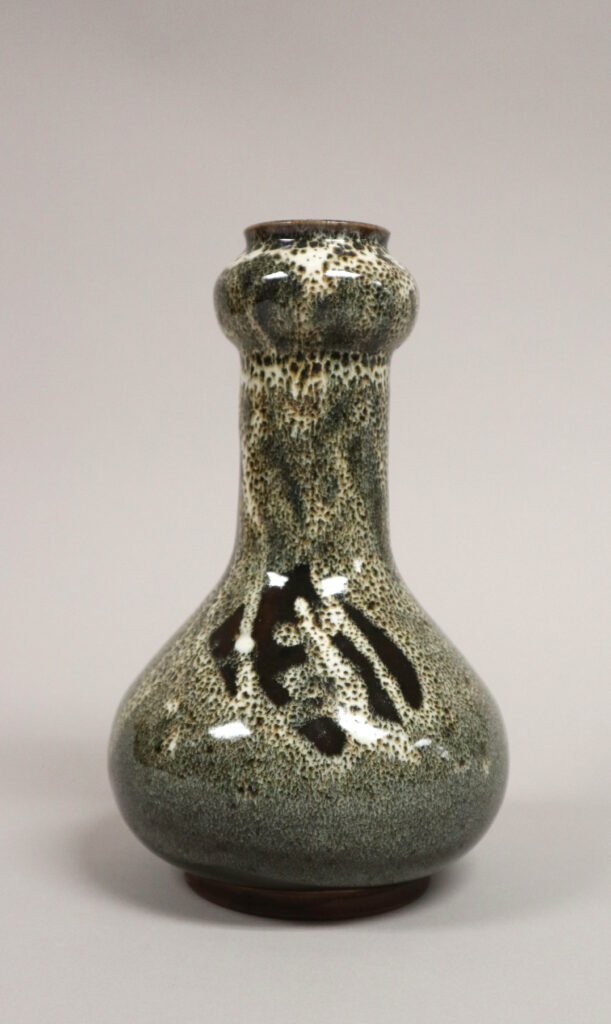
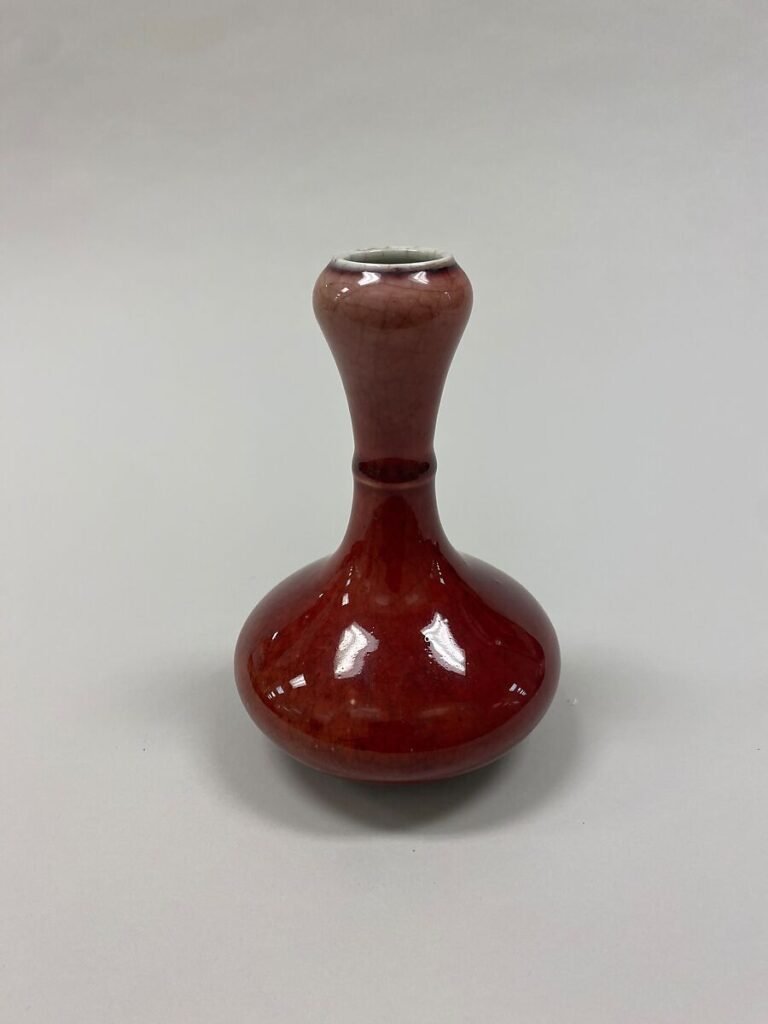
It was under the Yongzheng Emperor (1723–1735) that the garlic-neck vase underwent a profound transformation.
Imperial craftsmen at Jingdezhen did not merely replicate archaic models — they reinterpreted them with exceptional sensitivity.
Two fundamental changes defined this evolution:
1. Refinement of Proportion
The body was elongated and rebalanced, creating a more continuous and harmonious silhouette.
The transition from mouth to neck to body became fluid — almost organic.
2. Transformation of the “Garlic Head”
The once-literal garlic bulb was subtly reshaped.
Through the addition of delicate, pointed petal-like tips, the form evolved into something entirely new:
👉 A lotus bud poised to bloom
This transformation marks one of the most sophisticated aesthetic shifts in Qing porcelain — where a literal reference becomes symbolic, and where form itself carries meaning.
🪷 From Object to Symbol
The lotus holds deep significance in Chinese culture:
- Purity
- Renewal
- Spiritual elevation
By transforming the garlic head into a lotus bud, Yongzheng artisans elevated the vessel beyond its archaic origins.
What was once a practical bronze-inspired form became a poetic expression of balance and restraint.
🎨 Imperial Precision and Design
Such refinement was not accidental.
Evidence suggests that designs for these vessels were likely prepared at the imperial court in Beijing, then executed with extraordinary precision at the kilns of Jingdezhen.
This explains the remarkable consistency:
- Perfectly balanced proportions
- Subtle curvature of the profile
- Harmonious integration of glaze and form
These are not spontaneous creations — they are the result of controlled, intellectual design.
🌿 The Role of Glaze
Garlic-neck vases of the Yongzheng period are often covered in monochrome glazes, particularly celadon.
This choice is deliberate.
Without painted decoration, the viewer is invited to focus entirely on:
- The purity of line
- The subtle undulation of the surface
- The depth and variation of glaze tone
Under the guidance of kiln supervisor Tang Ying, the imperial kilns expanded the range of glaze colours and tones, achieving remarkable precision — especially in celadon greens.
In such works, form and glaze become inseparable.
🌏 Legacy and Appreciation
These refined vessels did not remain confined to China.
For decades, they were admired in Japan, where their understated elegance resonated deeply with local aesthetic sensibilities.
Their appeal lies in a paradox:
- They are technically perfect, yet visually restrained
- They embody imperial sophistication, yet appear effortless
✨ Collector’s Reflection
The term “garlic neck” may suggest something simple — even crude.
Yet in the hands of Yongzheng craftsmen, this form was transformed into one of the most refined expressions of Qing porcelain design.
It stands as a testament to a uniquely Chinese approach to art:
- Respect for antiquity
- Mastery of transformation
- And the pursuit of quiet perfection