
Famille Unite: Rethinking Mixed Palette Porcelain in the Yongzheng and Early Qianlong Period
Introduction
The established Qing enamel classifications — famille verte, rose, jaune, and noire — remain useful shorthand for describing decorative palette systems. Yet a significant group of porcelains produced in the late Kangxi, Yongzheng, and early Qianlong periods does not sit comfortably within these categories.
These wares are often described simply as “multicolour” or treated as hybrid examples. However, such labels risk overlooking their technical structure and historical context. Many are better understood not as mixtures of colour, but as deliberate integrations of distinct decorative systems.
For this group, the term “Famille Unite” may offer a clearer working description.
The Problem with Colour-Based Classification
Traditional famille terminology largely rests on dominant enamel colour systems. This works well in many cases, yet difficulties arise where multiple palette traditions are used in parallel rather than subordinated to one another.
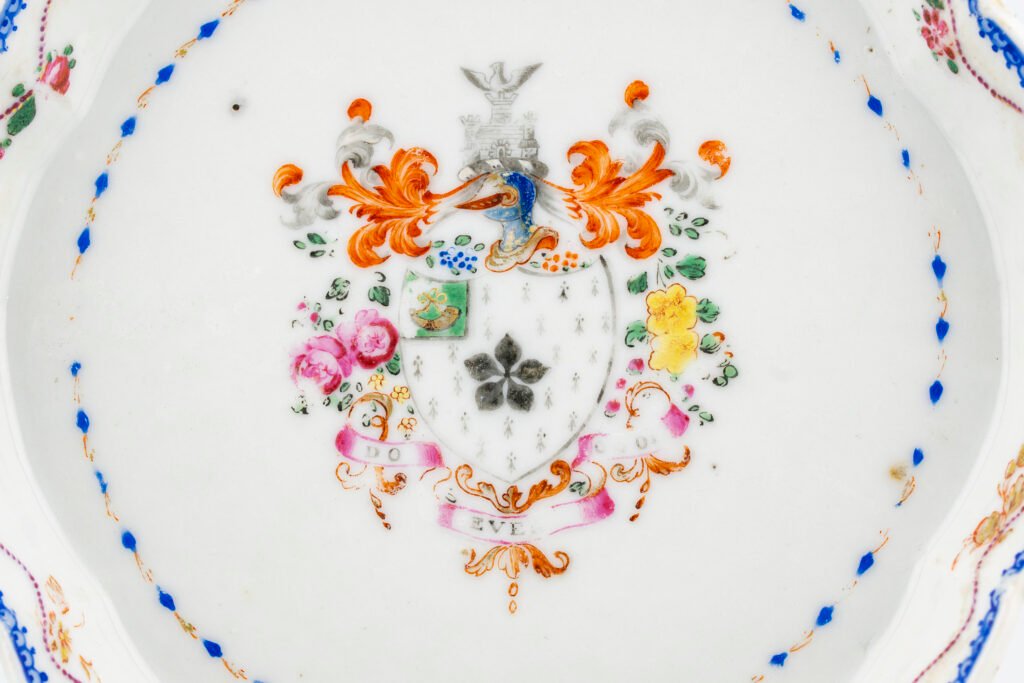
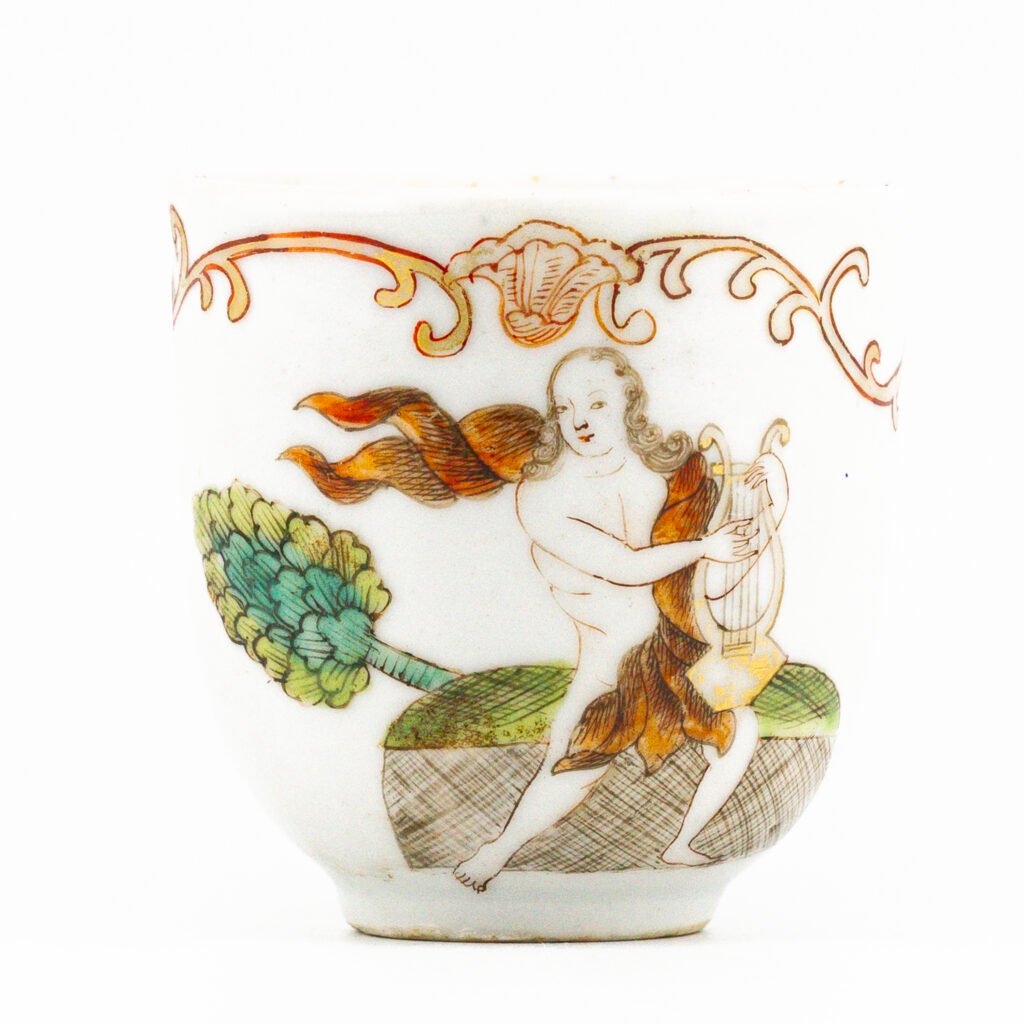
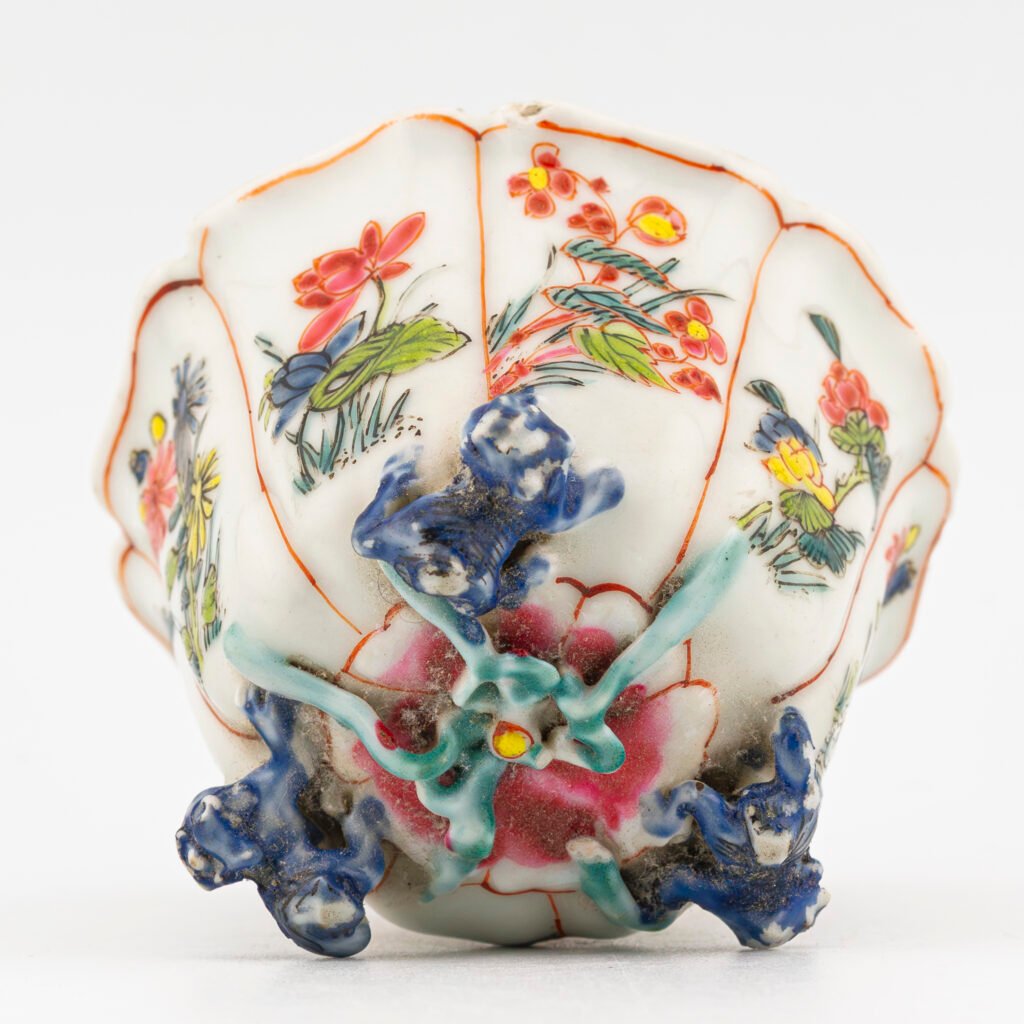
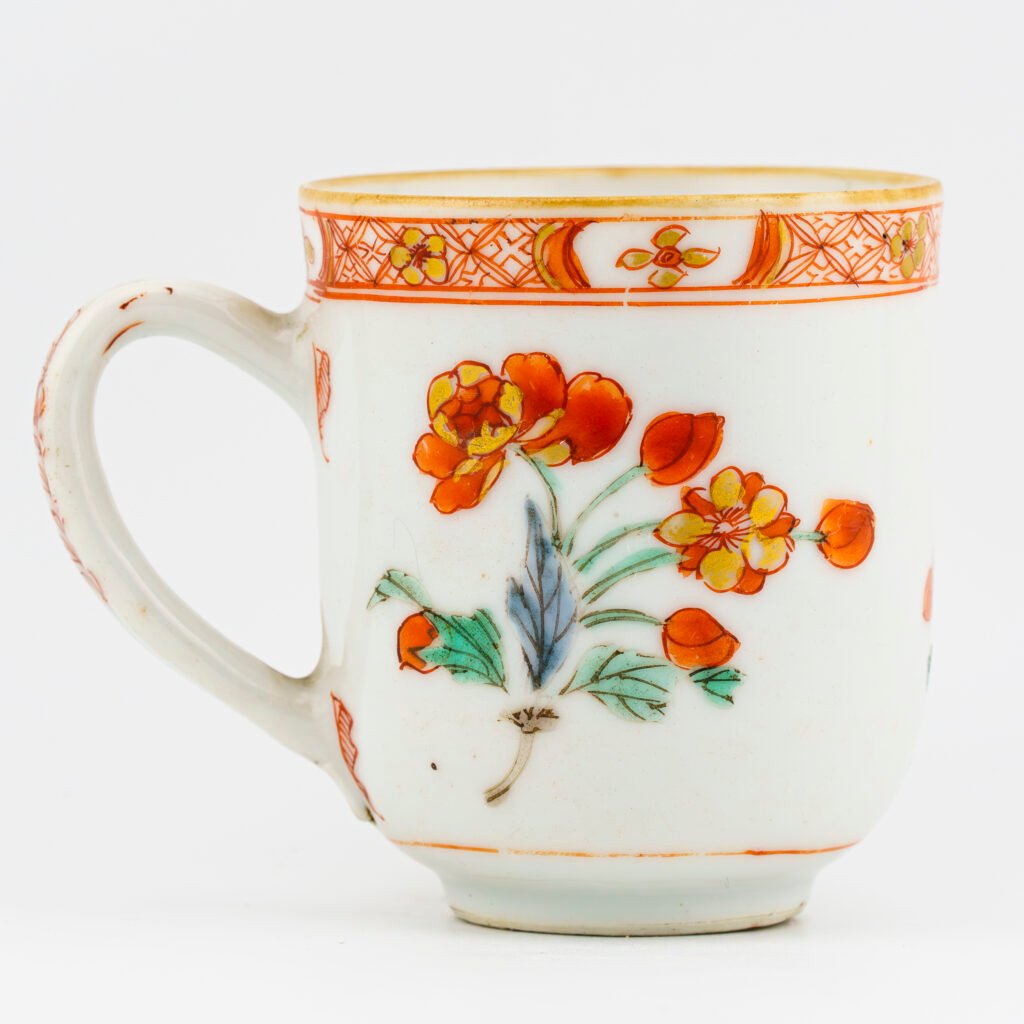
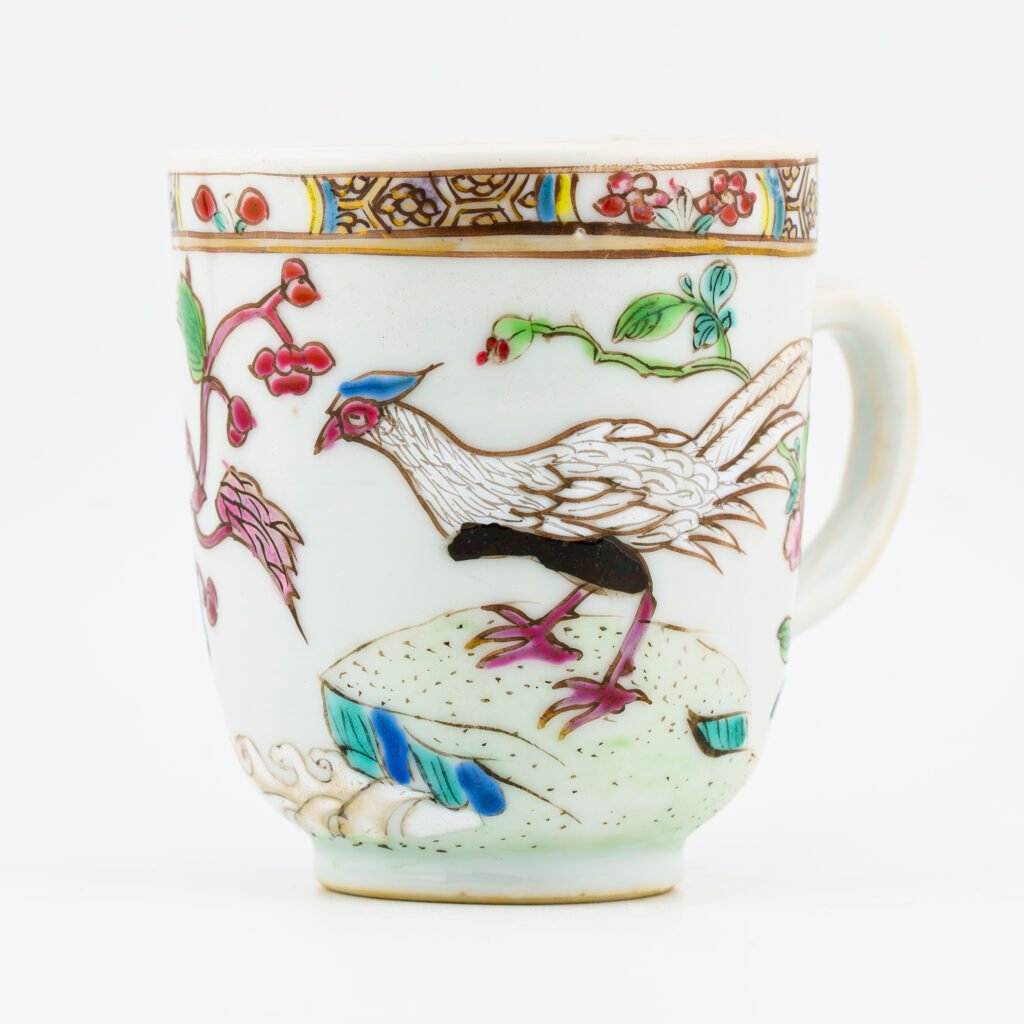
In a number of Yongzheng and early Qianlong porcelains, underglaze blue decoration coexists with copper red and overglaze enamel painting without any single palette clearly dominating. These works are not simply “multicoloured” surfaces; they are structured compositions built from separate technical traditions.
In such cases, classification based purely on colour emphasis becomes insufficient.
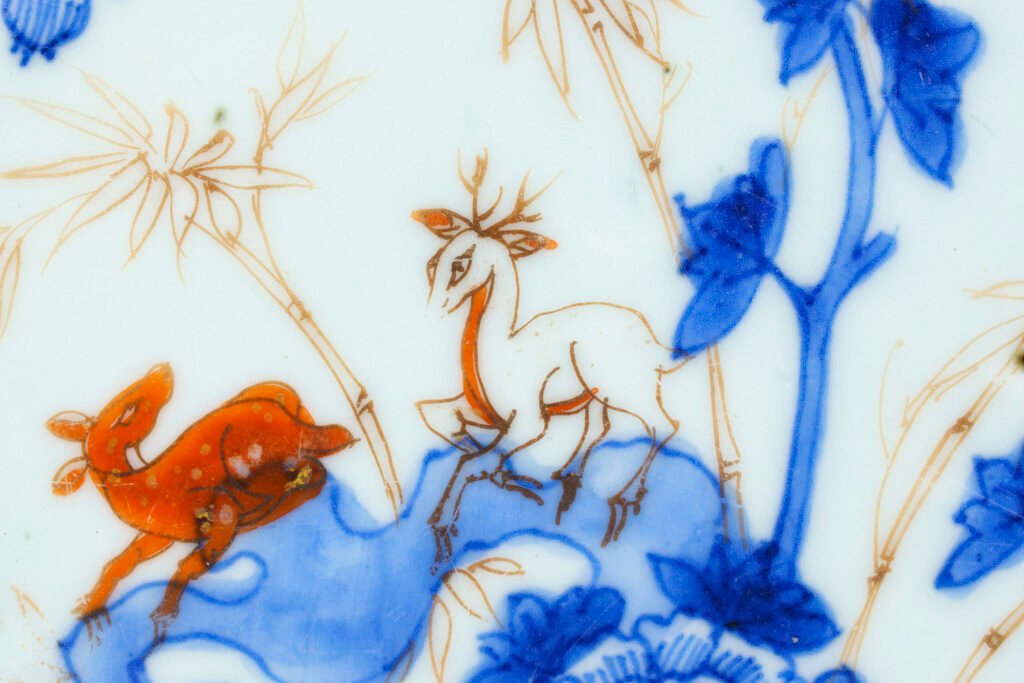
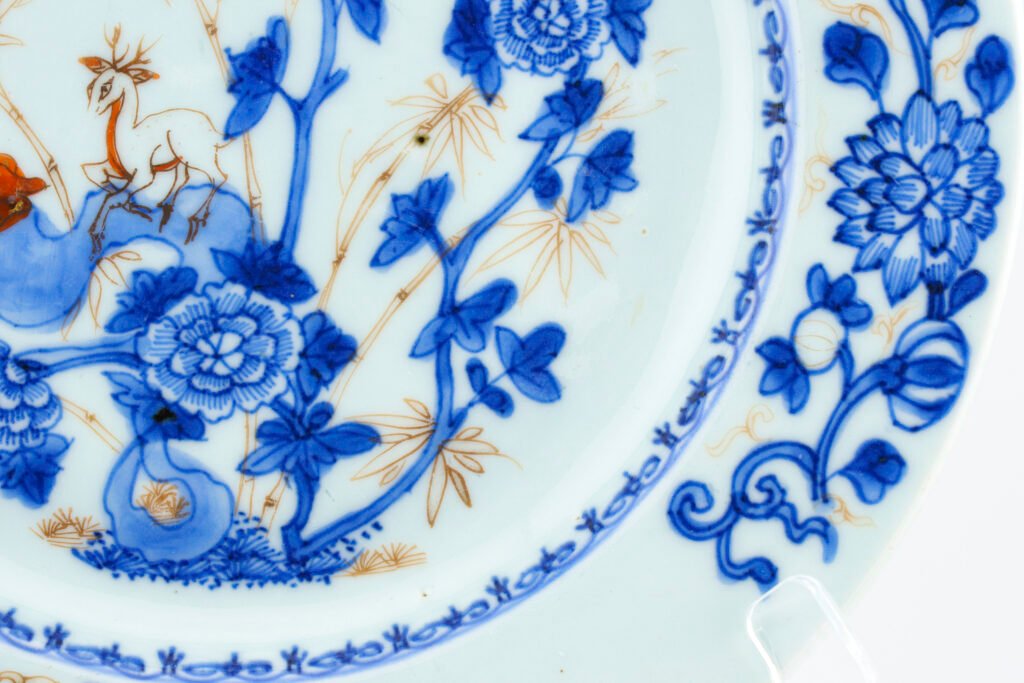
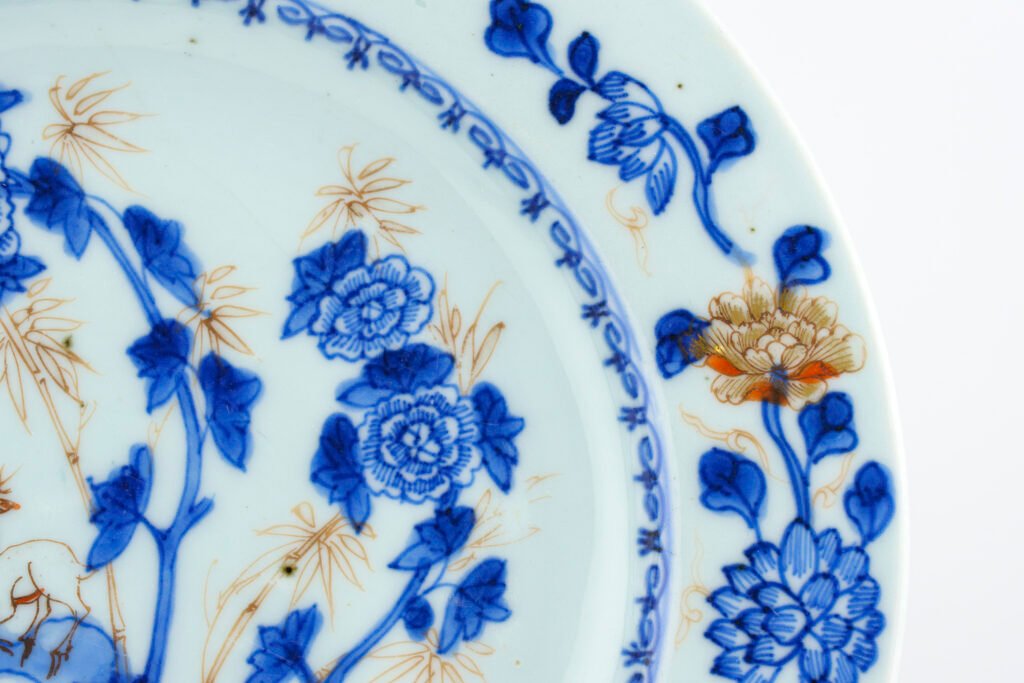
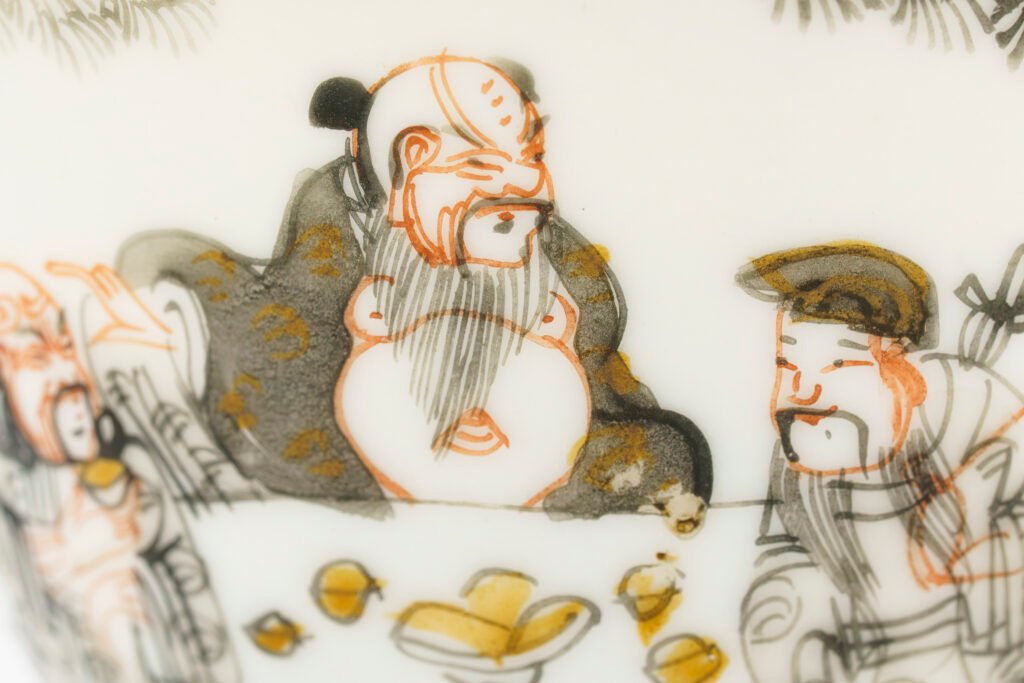
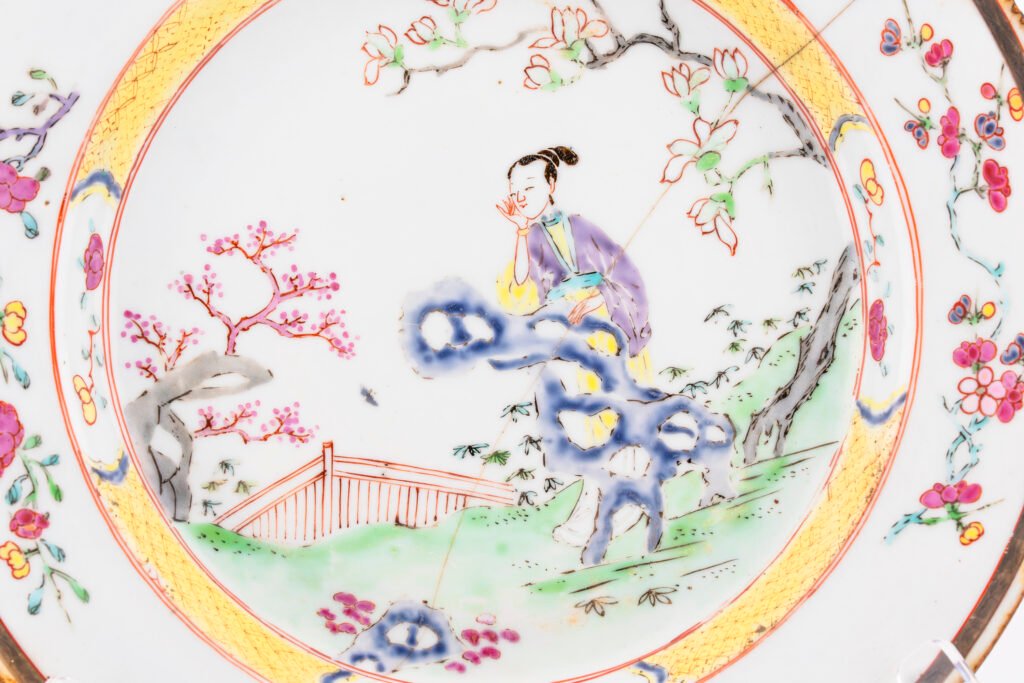
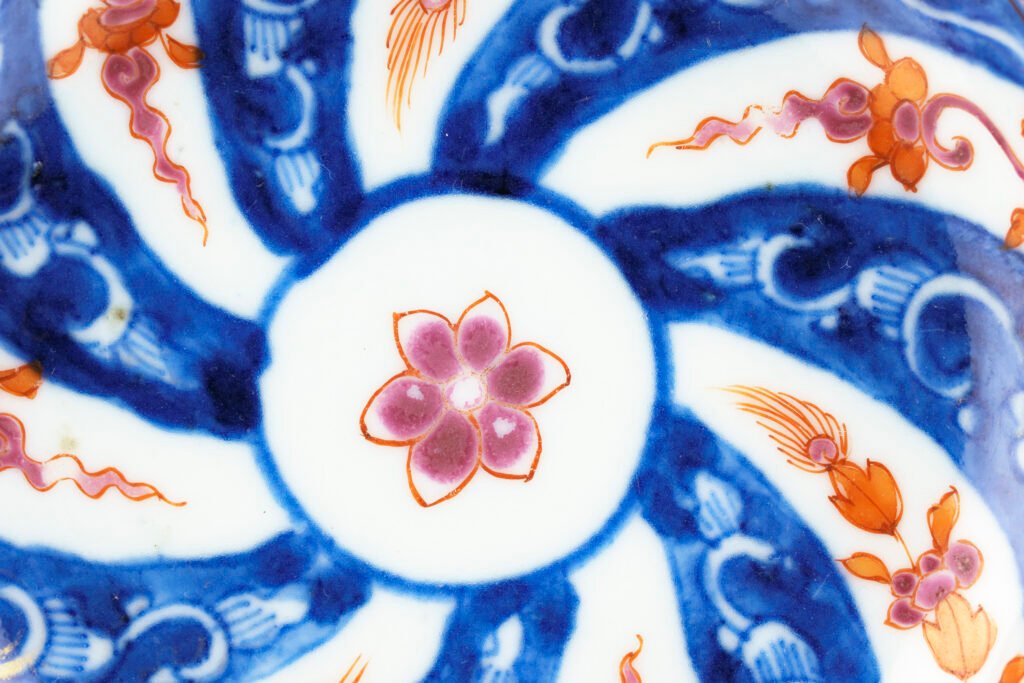
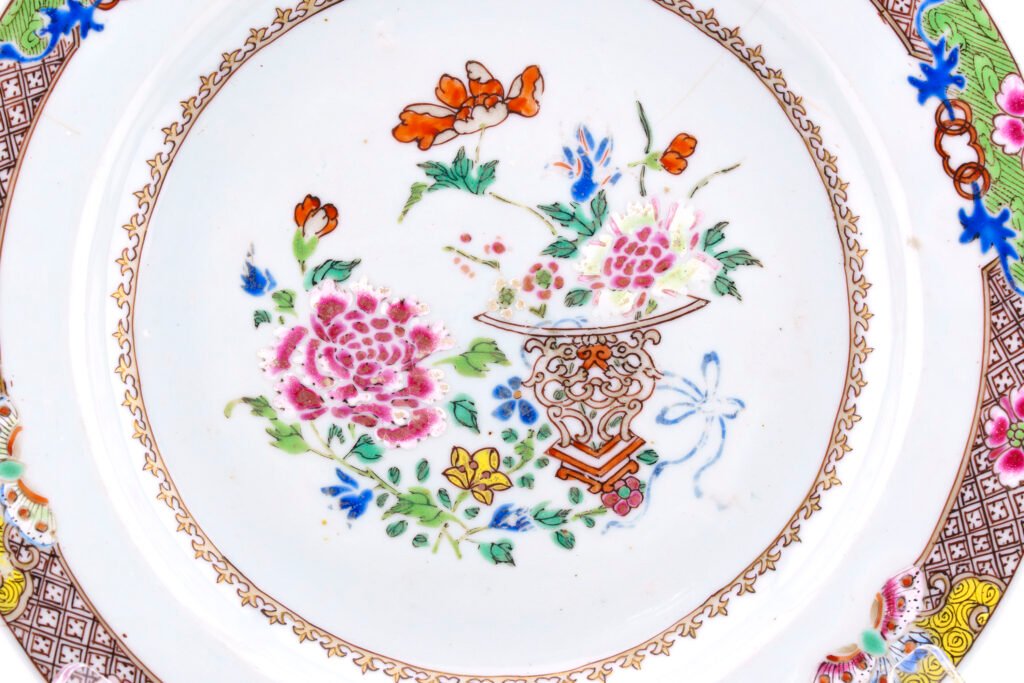
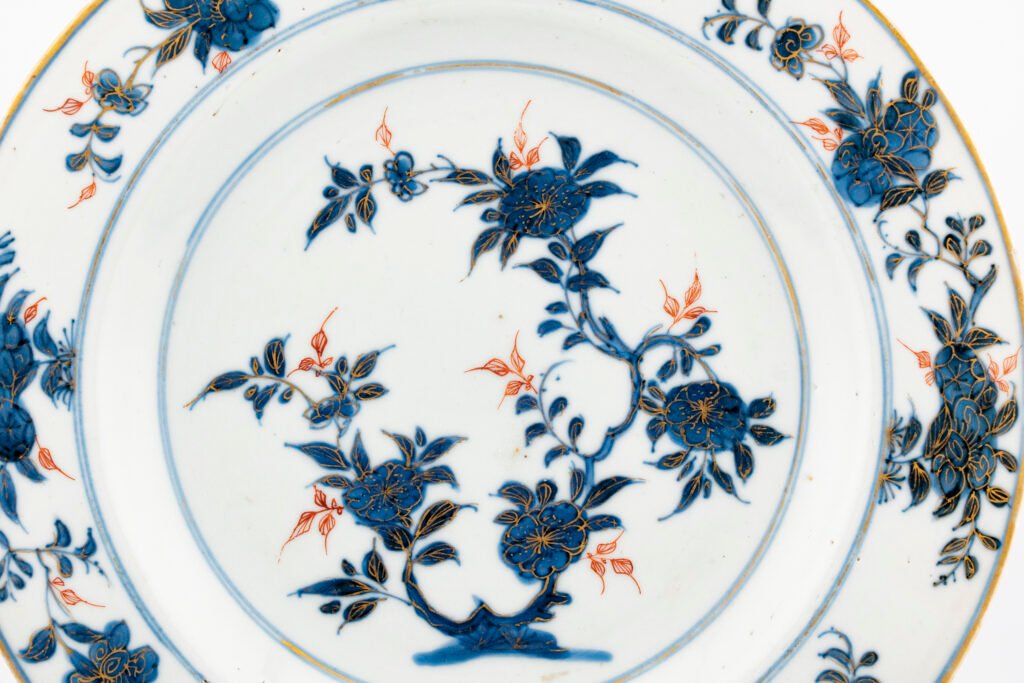
📌 “Yongzheng-period porcelain plate combining underglaze cobalt blue, copper red, and iron-red enamel decoration.”
Technical Structure: Integration Rather than Mixture
The key issue lies in process rather than palette count.
Many of these works combine:
- Underglaze cobalt blue, fired at high temperature
- Underglaze copper red, technically demanding and visually distinct
- Overglaze enamel decoration, applied and fired separately
Each system follows different firing cycles, materials, and visual conventions. Their coexistence within a single composition therefore reflects planning rather than spontaneity.
Seen in this light, these porcelains function less as decorative blends and more as coordinated integrations of separate technical languages.
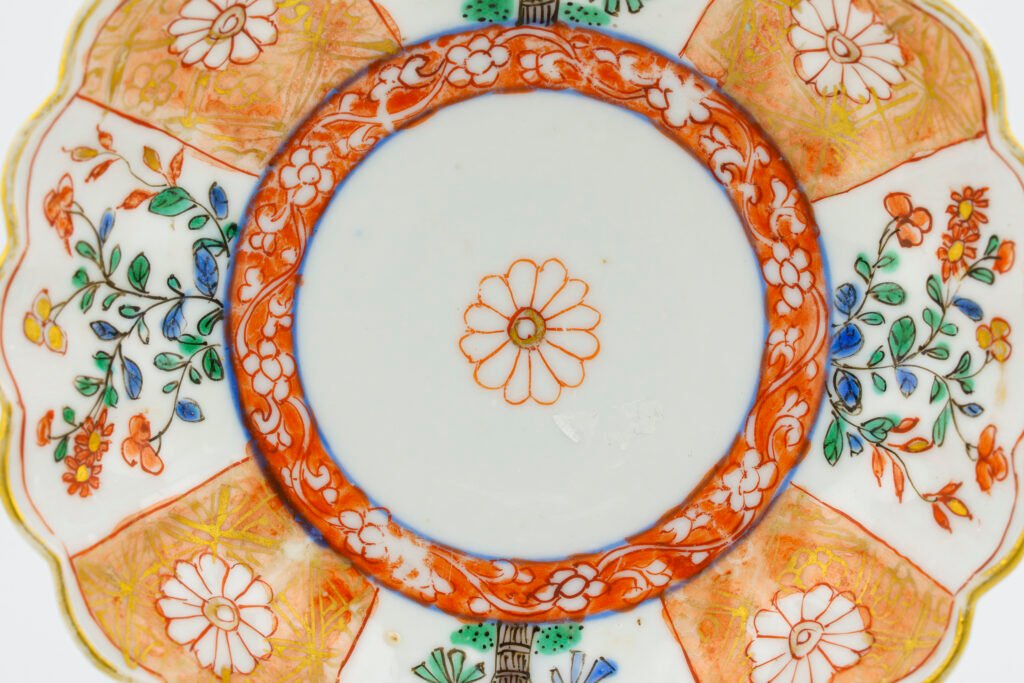
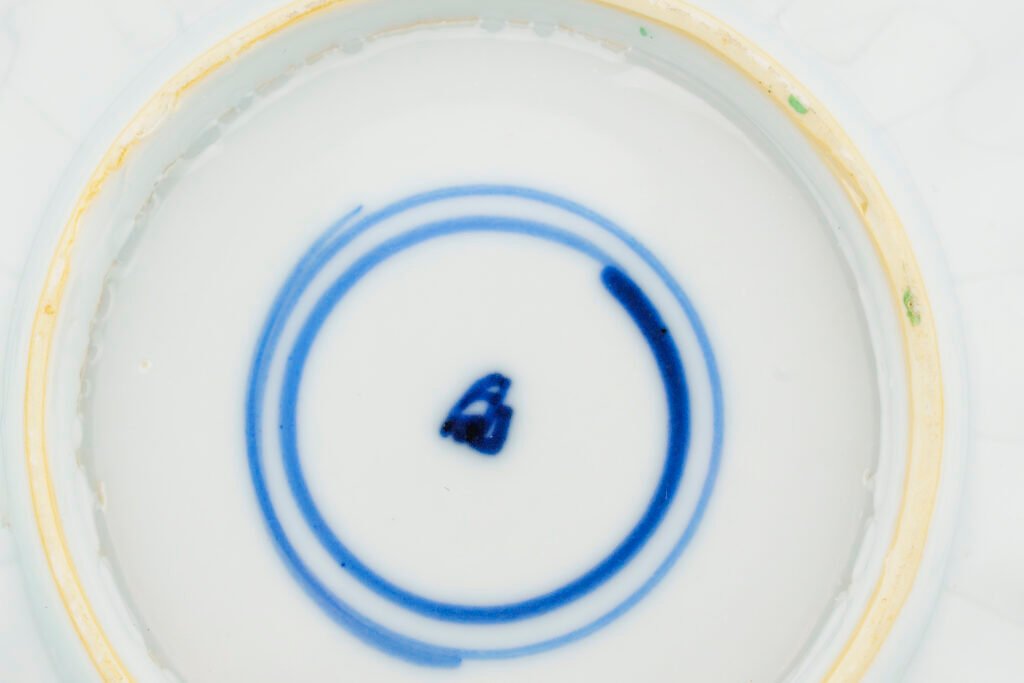
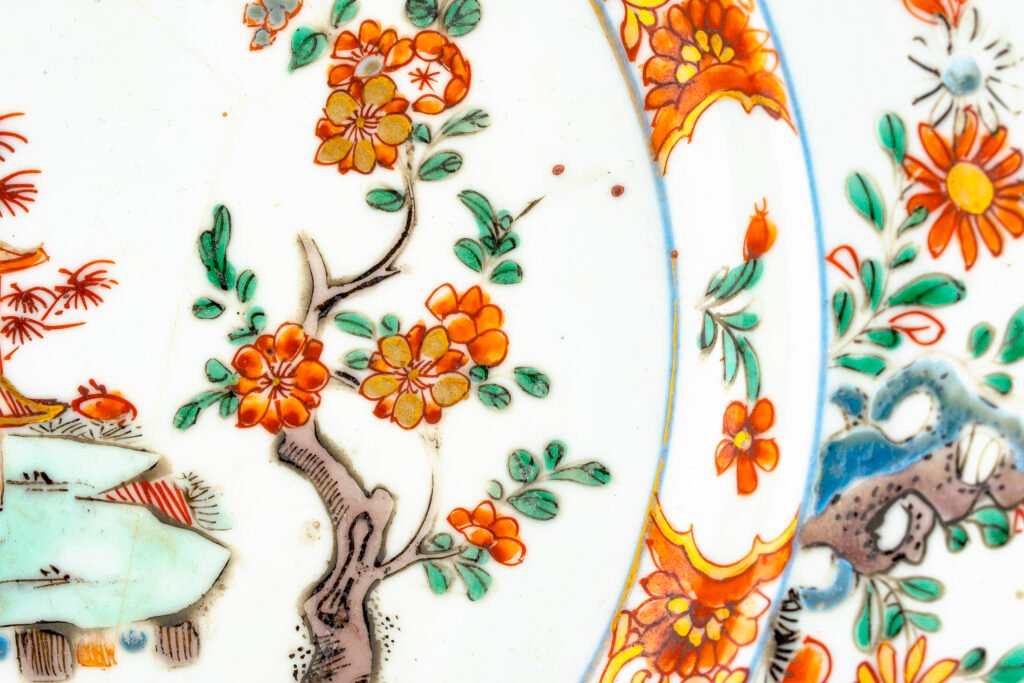
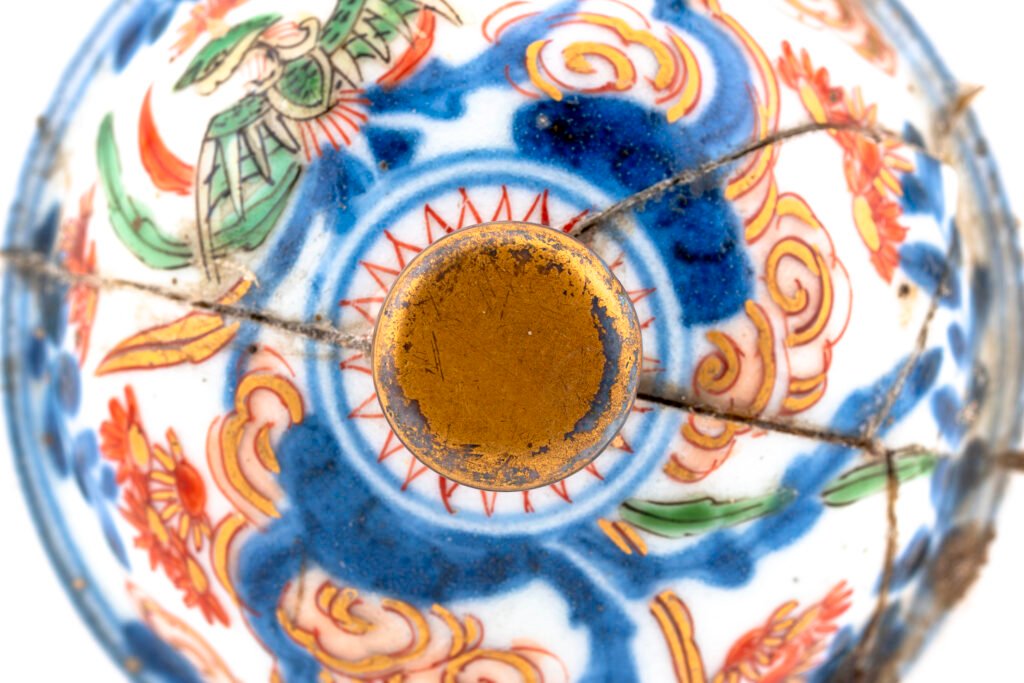
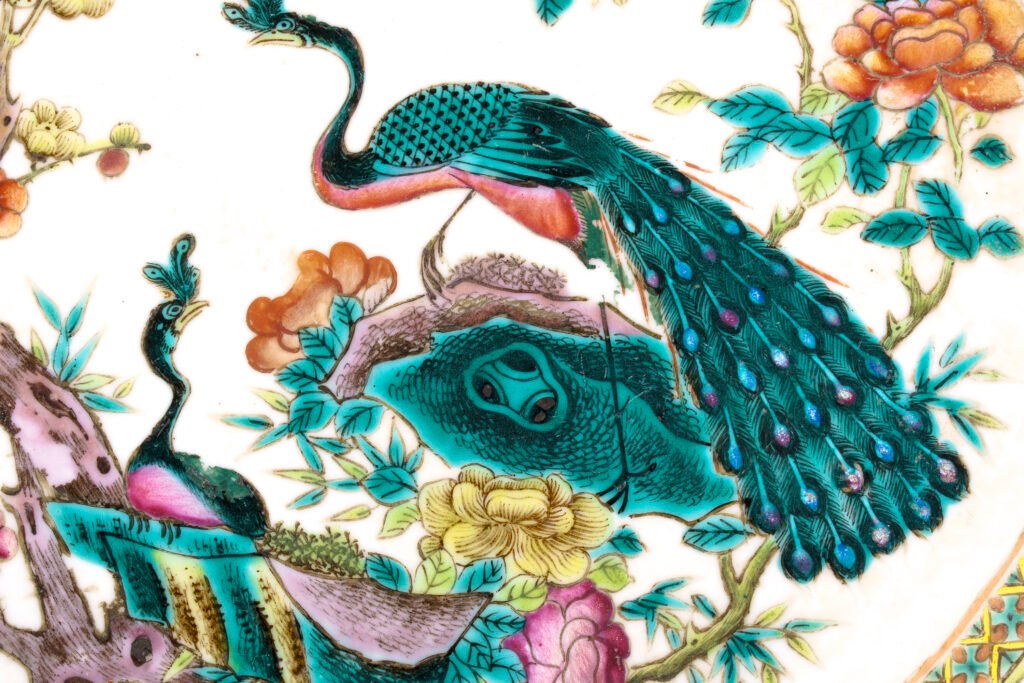
📌 “Kakiemon-style porcelain dish combining underglaze blue, iron-red enamel, gilt decoration, and famille verte elements; blue underglaze mark to base.”
Historical Context: Innovation from Late Kangxi to Early Qianlong
The emergence of such works corresponds closely with broader developments at Jingdezhen from the late Kangxi reign onward.
The final decades of Kangxi saw intensified experimentation in enamel technology, including the introduction of new overglaze colours partly informed by foreign enamel techniques reaching the Qing court. These developments continued into the Yongzheng reign, when technical refinement and aesthetic clarity became central concerns.
By the early Qianlong period, workshop practice shows increasing confidence in coordinating multiple decorative systems within a single object. This period reflects:
- evolving kiln organisation
- expanding court commissions
- strong export demand
- technical competition among workshops
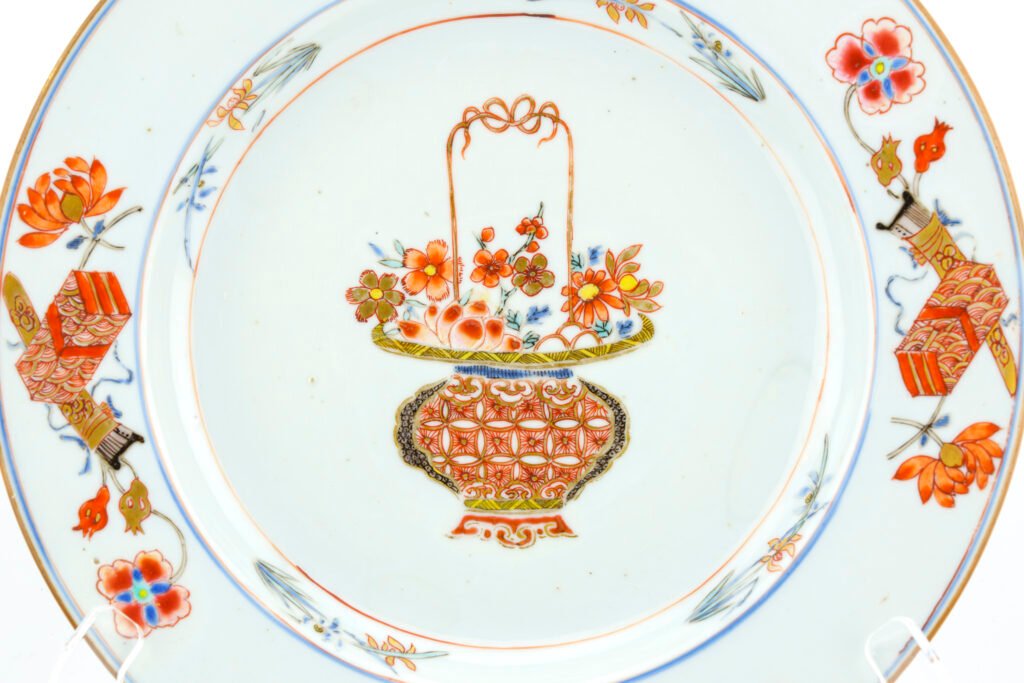
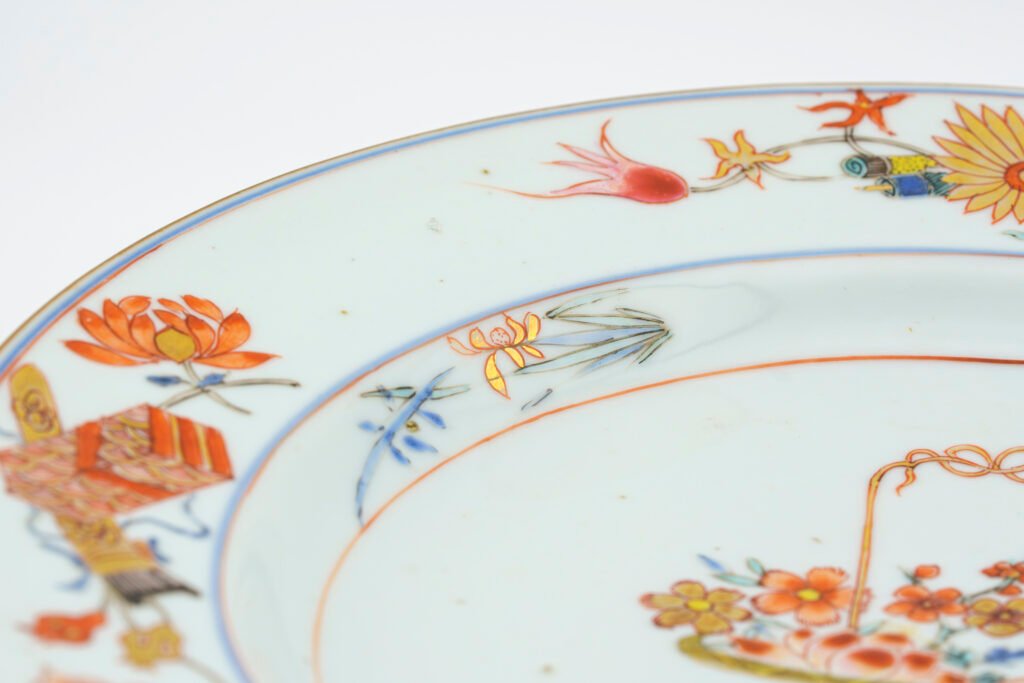
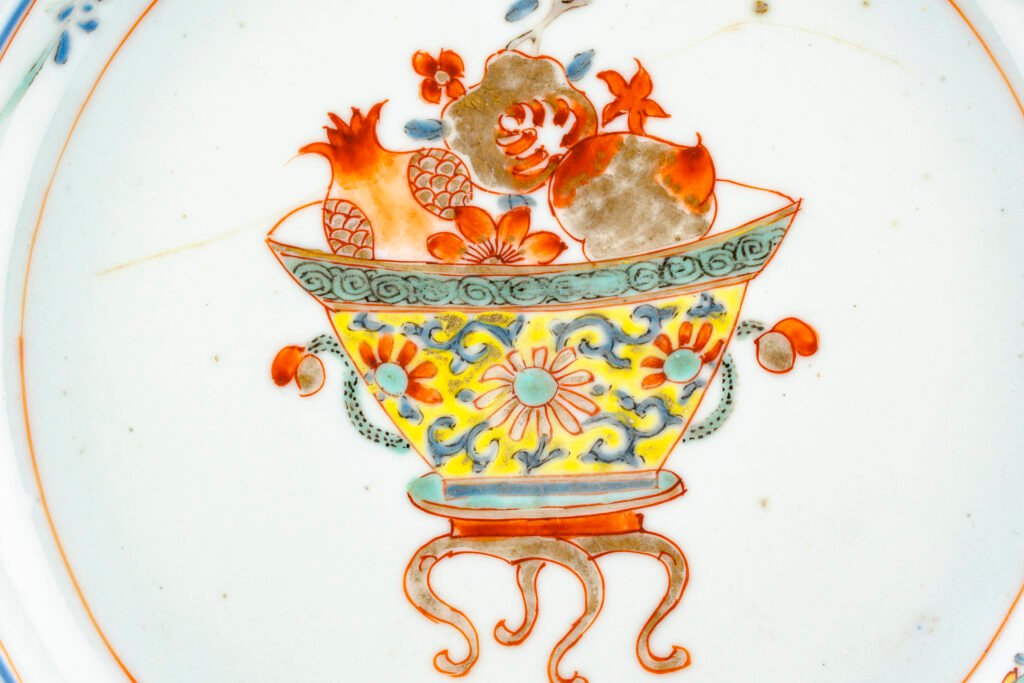
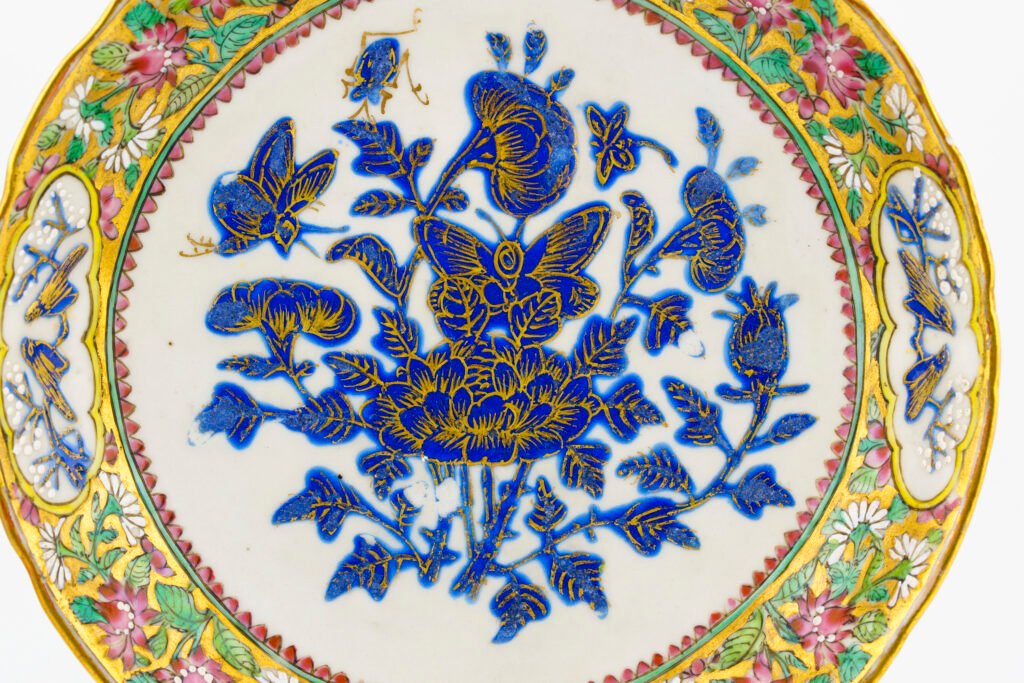
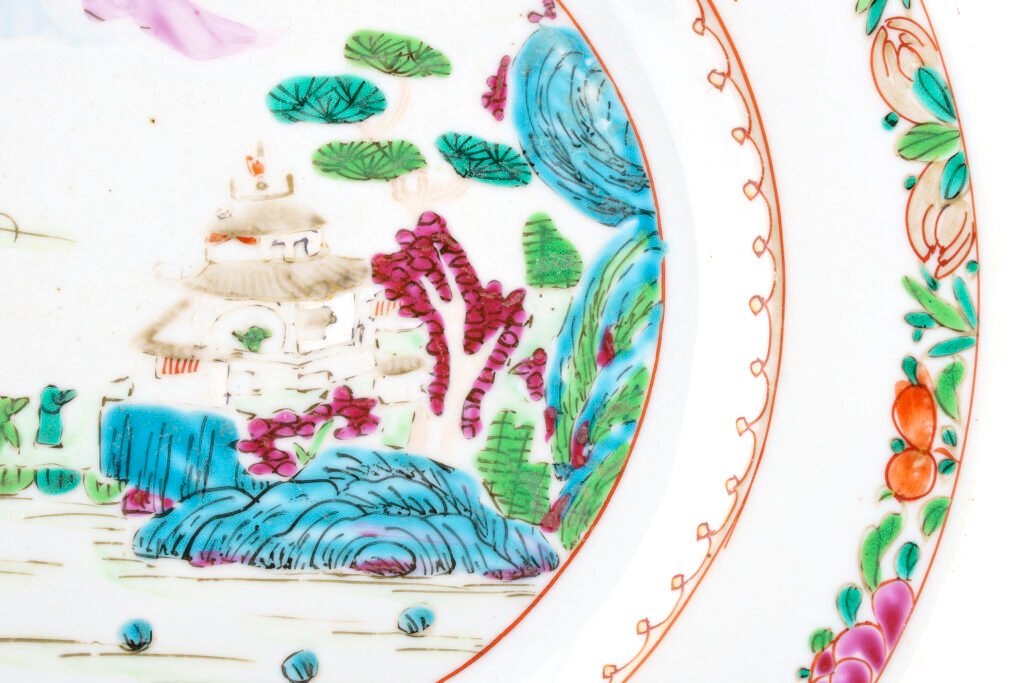
📌 “Kangxi-period porcelain dish with underglaze blue outlines and overglaze iron-red, doucai, gilt, and enamel decoration.”
Within this context, works combining underglaze blue, copper red, and enamels appear less experimental than resolved.
Court Taste and Market Experimentation
These porcelains also reflect the intersection of court taste and commercial production.
Court workshops demanded technical precision and aesthetic balance, while export markets encouraged innovation and visual richness. Jingdezhen responded by refining methods capable of satisfying both audiences simultaneously.
The resulting works frequently demonstrate a controlled synthesis of decorative traditions rather than an uncontrolled mixing of colours.
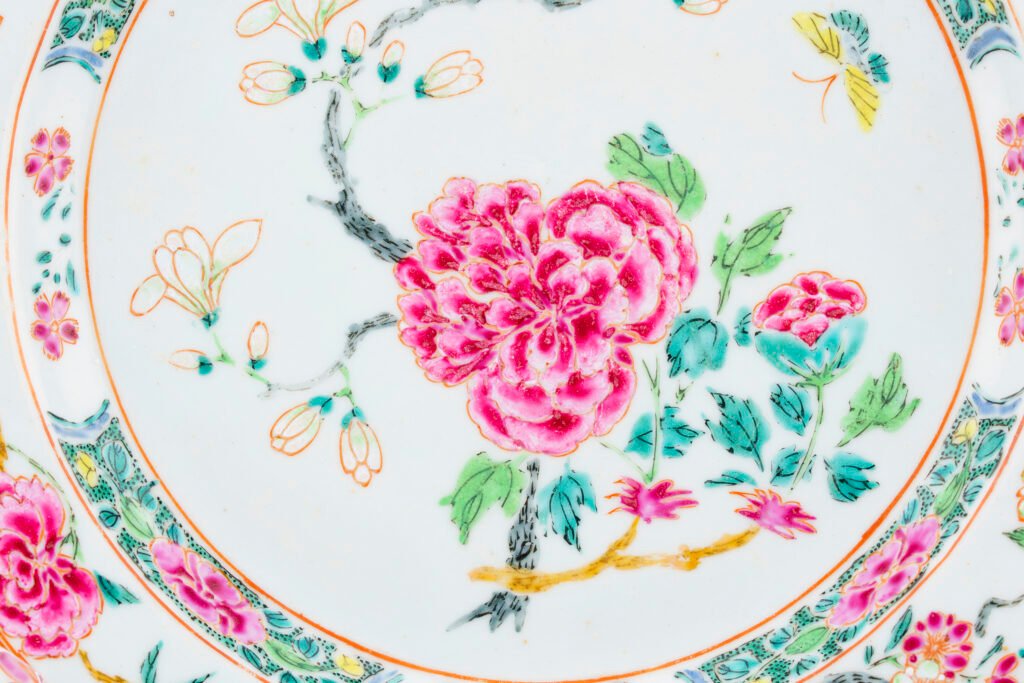
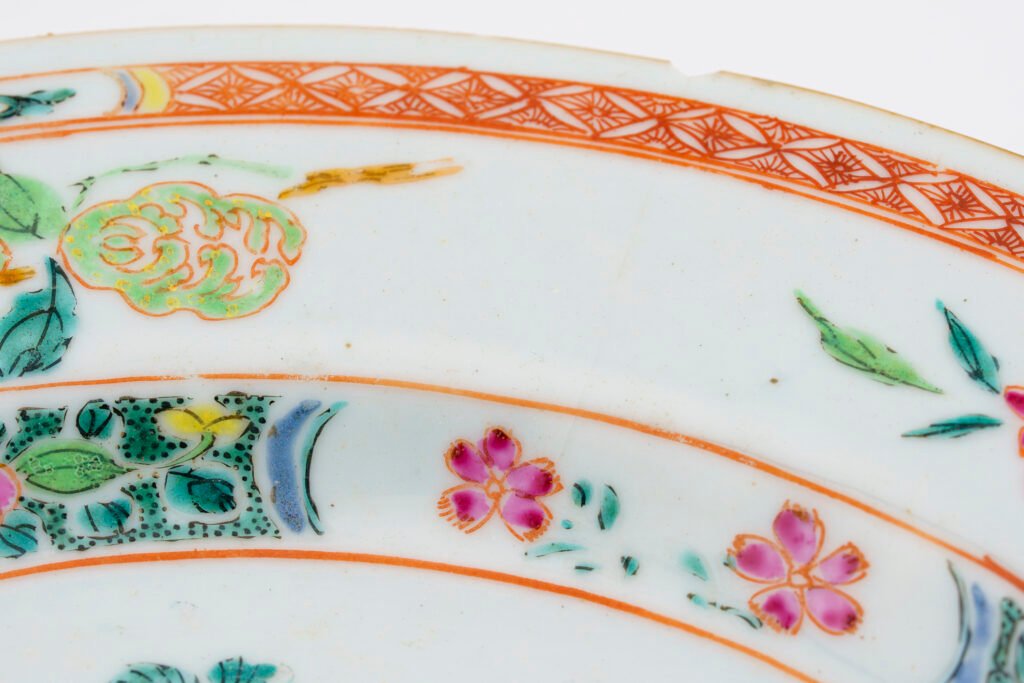
Why “Famille Unite”
Within the logic of established terminology, “Famille Unite” functions descriptively rather than stylistically.
It does not attempt to replace existing categories. Instead, it offers a practical working term for wares in which multiple palette systems operate together without hierarchy.
The emphasis shifts:
- from colour quantity
- to structural organisation
From this perspective, many Yongzheng and early Qianlong examples read less as mixtures and more as unified decorative solutions.
Conclusion
A significant body of Qing porcelain sits between traditional famille classifications. These works are best understood through their technical structure and historical context rather than through colour dominance alone.
The term “Famille Unite” offers a precise and practical way to describe porcelains in which underglaze and overglaze traditions are intentionally unified into a single decorative scheme.
Rather than redefining established categories, it helps clarify a group of works that has long resisted simple classification.