Copper Red Porcelain — How to Read It
Beginner view:
Copper red porcelains are famous for their deep red glazes, created using copper oxide in the kiln. These glazes are difficult to fire correctly, which is why the colour can vary from bright red to brown, purple, or even grey.
For beginners, focus on:
Copper red porcelains are famous for their deep red glazes, created using copper oxide in the kiln. These glazes are difficult to fire correctly, which is why the colour can vary from bright red to brown, purple, or even grey.
For beginners, focus on:
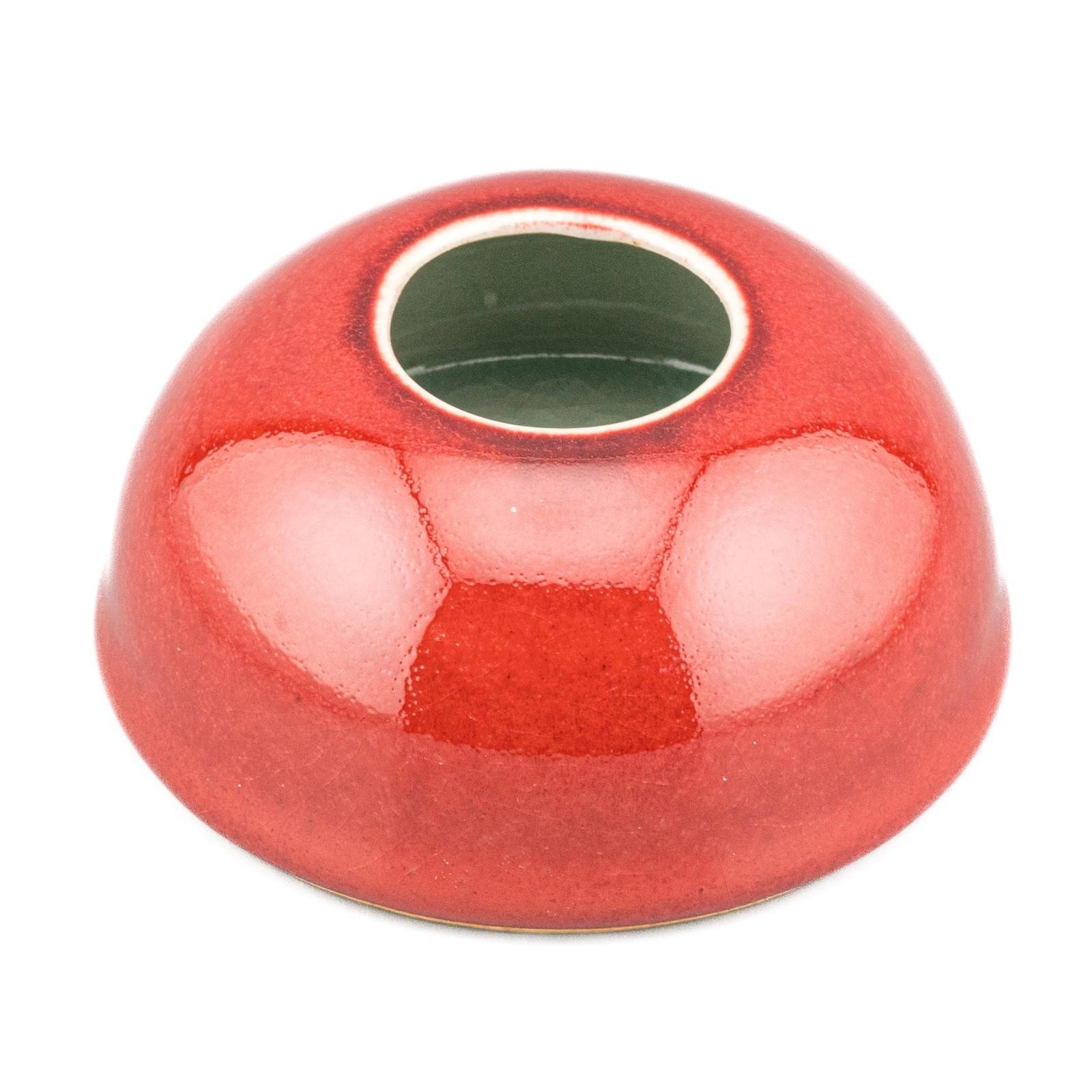
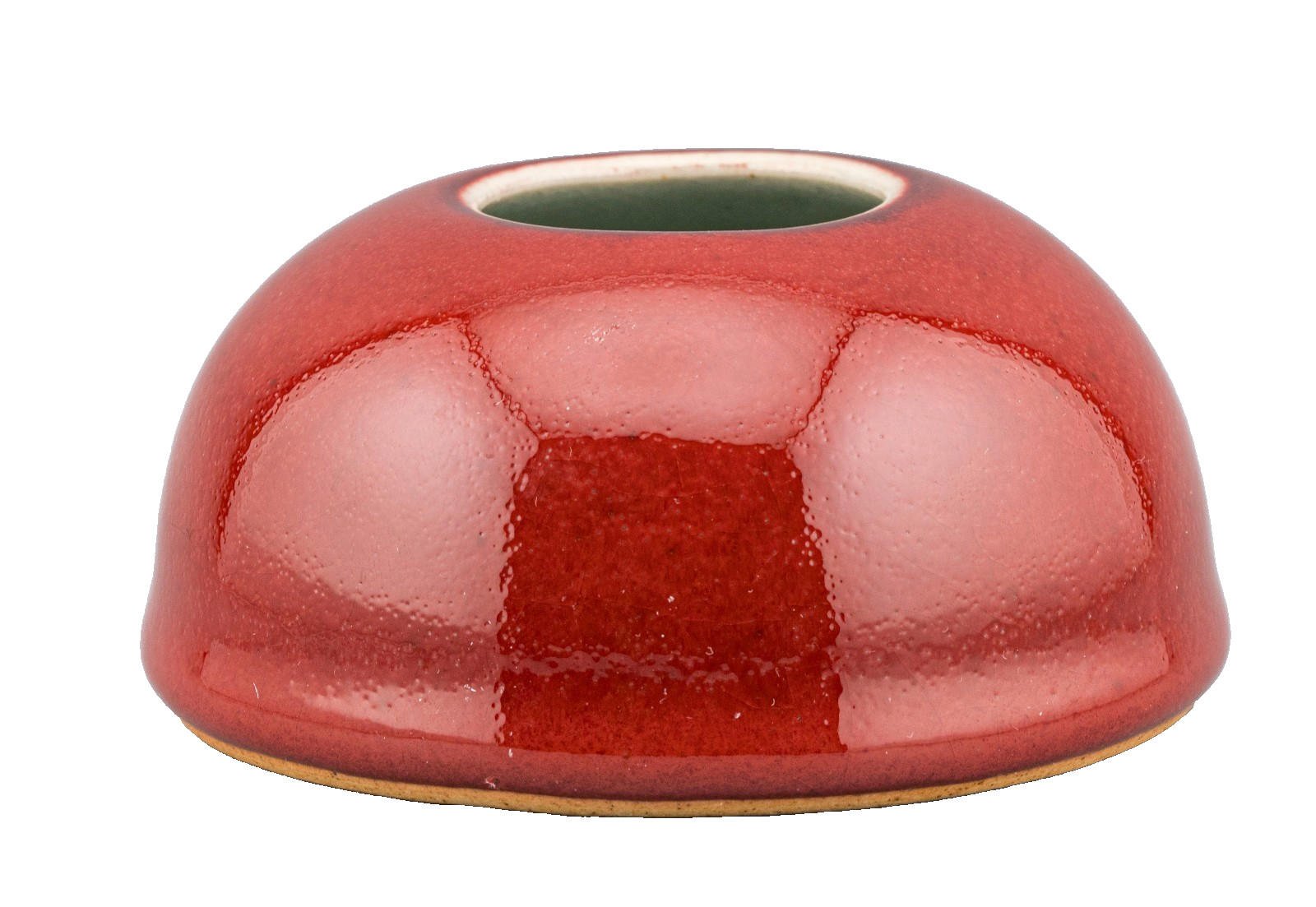
- Is the glaze deep and uneven rather than perfectly flat?
- Does the colour thin naturally at the rim?
- Is there darker pooling near the foot?
- Does the surface feel soft and glassy rather than shiny?
Attribution Confidence — Copper Red Porcelain
66%
Langyao · Ox-Blood · Sang-de-Boeuf · Flambé glazes
🔥 Slide to explore kiln risk, glaze depth & confidence 🔥
Baseline attribution. The glaze falls within the copper-red family, but period and firing context remain uncertain.
- Red copper glaze present
- No decisive kiln or reign indicators
Copper-red glazes are among the most technically volatile in Chinese ceramics. High visual impact does not equal early date.
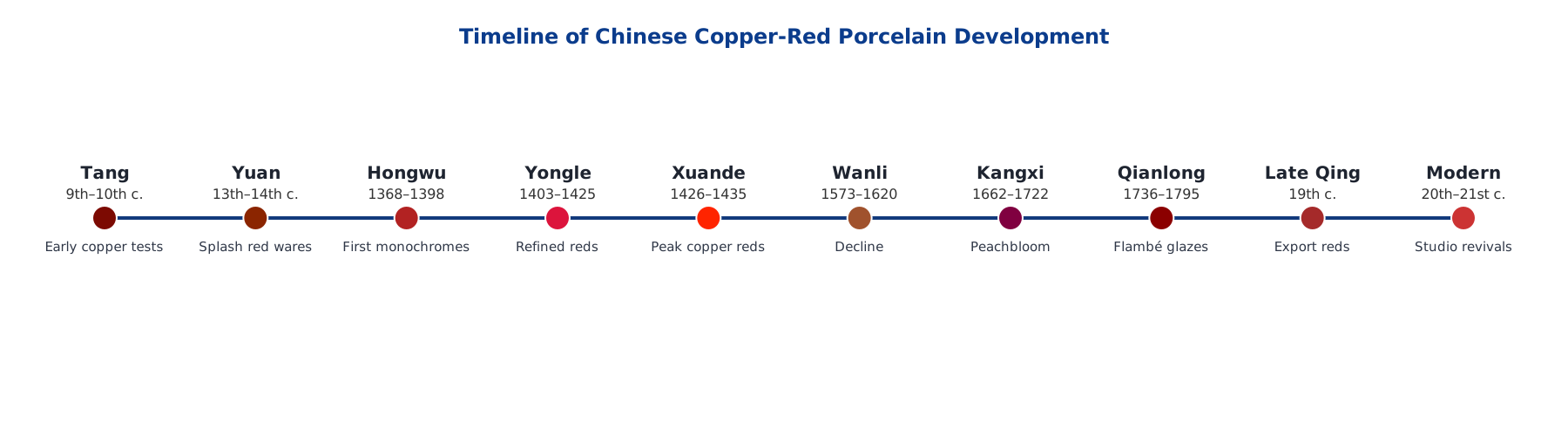
Copper as a colouring agent in Chinese ceramics has a history stretching back over a thousand years. Early experimentation with copper red glazes began in the Tang dynasty (9th–10th century), when reduction firing sometimes transformed copper oxide into flashes of red against typically green or brown grounds. By the Yuan dynasty, potters at Jingdezhen were producing splashed copper wares, though achieving a consistent crimson tone remained difficult.
True breakthroughs came in the Ming dynasty. During the Hongwu (1368–1398) and Yongle (1403–1425) reigns, Jingdezhen kilns developed the first successful monochrome copper red glazes, known as xianhong or “fresh red.” These were some of the most admired glazes in world ceramics: luminous, even-toned reds often compared to the finest fifteenth-century creations. Yet their production was technically precarious. The chemistry of copper in a high-temperature, oxygen-reduced kiln is unstable, leading to frequent blotching, greening, or failure.
During Xuande (1426–1435), Jingdezhen potters refined copper reds to new heights, producing ritual wares for the imperial court. Their pieces are celebrated for subtle orange peel textures, a narrow white rim at the foot, and rich, saturated surfaces — masterpieces that later dynasties struggled to equal.
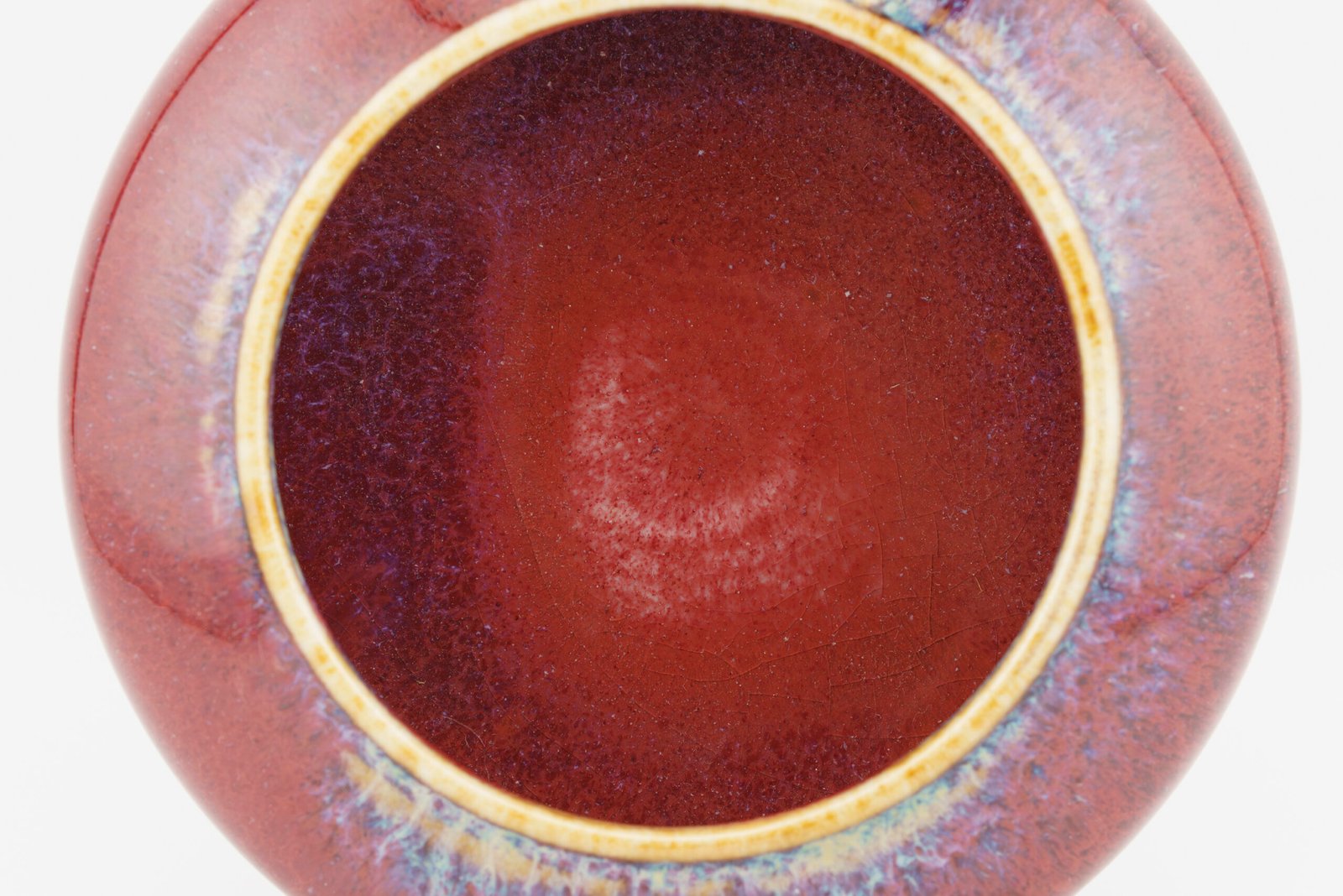
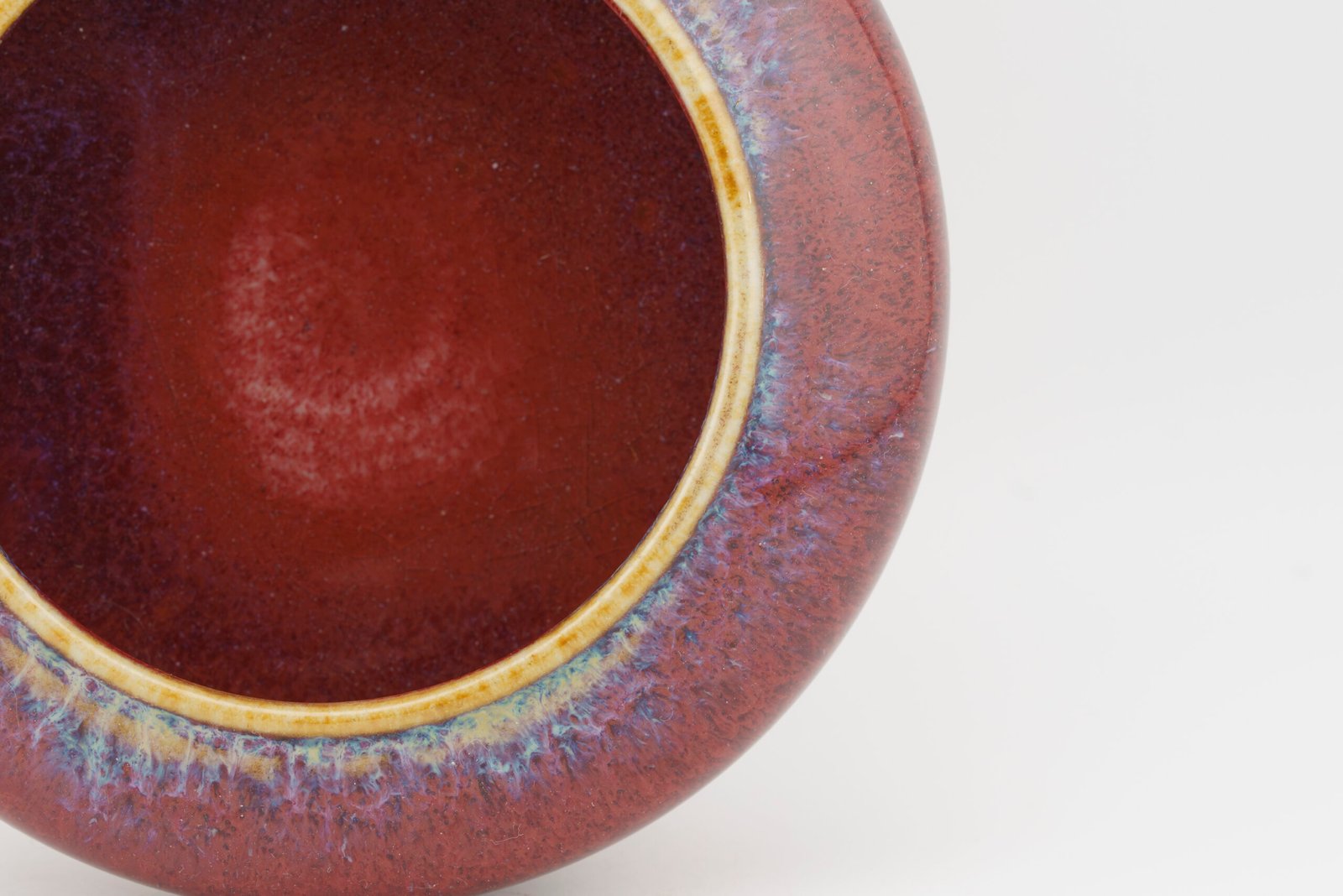
The technique then declined. From the mid-Ming through the Wanli reign (1573–1620), copper red became rare and inconsistent. Only with the Qing dynasty revival under Kangxi (1662–1722) did copper red regain prominence, notably through flambé and peachbloom experiments. By the Qianlong era (1736–1795), flambé and sang-de-boeuf wares epitomized imperial taste, combining deep oxblood glazes with streaks of purple, lavender, and turquoise “flame” effects achieved through ingenious kiln control.
Variants & Innovations
- Hongwu & Yongle Reds (late 14th – early 15th c.)
Semi-opaque, often small bowls and dishes, sometimes with moulded relief; colours from rose to crimson. - Xuande Reds (1426–1435)
The peak of copper red achievement: evenly fired wares with “orange peel” glaze texture, treasured as ritual porcelains. - Silhouette Reds (Zhengde reign, 1503–1521)
Two-colour wares with paper-resist technique, creating striking white-on-red designs. Rare and technically difficult. - Kangxi Peachbloom (1662–1722)
Small scholar’s wares (brush washers, vases, water pots) in mottled blush-pink tones with specks of green, described with poetic names like “baby’s face” or “drunken beauty.” - Kangxi Flambé
A related innovation, flambé glazes used complex copper-lime chemistry and reduction firing to produce flowing, streaked surfaces in crimson, purple, and turquoise. - Qianlong Flambé (1736–1795)
Massively admired for its flamboyant streaking and deep oxblood bases. Some Qianlong flambés show cobalt streaks due to added blue oxides. - Late Qing Reds (19th c.)
Technically ambitious but less controlled. Often brilliant in colour yet fluid, shiny, and unstable; large vases frequently show kiln flaws and grinding marks.
Technical Challenges
Producing stable copper red glazes was one of the greatest challenges in Jingdezhen’s history. Copper can fire green, red, or disappear entirely depending on kiln conditions. Success required:
- Careful reduction firing — depriving the kiln of oxygen at precise moments.
- Base glaze chemistry — balancing lime, silica, and alumina to suspend the copper evenly.
- Kiln placement — pots in slightly cooler or hotter zones often failed.
- Glaze thickness — too thick led to streaking, too thin to pale patches.
This instability meant copper red wares were costly and admired, embodying both technical mastery and the unpredictability of fire.
Symbolism & Cultural Meaning
Red in Chinese culture is the colour of joy, vitality, and auspicious fortune. Copper red wares were prized as objects of prestige, used in imperial rituals, and treasured as scholarly playthings. The glowing oxblood glaze was often likened to fresh animal blood (sang-de-boeuf in French) or ripe fruit skin, images of sacrifice, renewal, and abundance.
Collector’s Notes
- Hongwu/Yongle: Very rare, usually small bowls/dishes with subtle footrim details; glaze semi-opaque, with bubbles and little sign of white rims.
- Xuande: The most coveted; smooth rich glaze, faint orange peel texture, narrow white rim at foot.
- Kangxi Peachbloom: Small scholar’s objects; mottled blush pink with flecks of green. Beware modern imitations with sprayed enamels.
- Qianlong Flambé: Streaks of lavender, turquoise, and cobalt on oxblood grounds. Often thick glaze pooling at base.
- 19th Century: Brighter reds, sometimes too glossy, often with firing flaws; more common in export markets.
Collectors should examine:
- Rim and foot treatment (white rims, glaze pooling).
- Texture of glaze (bubbles, orange peel, streaking).
- Size and form (scholar’s objects vs ritual forms).
- Provenance and condition (restoration is common due to firing cracks).
Recognition Cues
✔ Rich red glaze from crimson to oxblood
✔ Semi-opaque surface with suspended bubbles
✔ White rim at foot (Xuande hallmark)
✔ Peachbloom: soft pink blushes with green flecks
✔ Flambé: streaking purples, blues, turquoise flame effects
✔ Thick glaze pooling at base, sometimes re-oxidized greenish
Modern Legacy
Copper red glazes continue to fascinate modern potters. The flambé effects of Qing porcelains inspired 19th-century European ceramicists such as Sèvres and Berlin workshops, who tried to replicate the elusive sang-de-boeuf glaze. Contemporary studio potters also experiment with copper reds, seeking both to imitate and reinvent the spectacular colours first achieved at Jingdezhen.
Sources & Credits
Rosemary E. Scott (ed.), Chinese Copper Red Wares, Percival David Foundation of Chinese Art Monograph Series No. 3, School of Oriental and African Studies, University of London, 1992.
Père d’Entrecolles, Jesuit Letters on Jingdezhen Porcelain (1712–1722).
Nigel Wood, The Evolution of the Chinese Copper Red, in Chinese Copper Red Wares, Oxford: Ashmolean Museum, 1990.
Ian Freestone (ed.), research on copper chemistry and kiln analysis.
Fance Franck, experimental reconstructions in collaboration with Sèvres.
🔴 Copper Red in Qing Dynasty Porcelain — Additional Insights
Technical Challenges
Copper red was among the most difficult glazes to control. Success relied on firing in a strong reduction atmosphere at very high temperatures, often above 1,250°C. Small fluctuations in oxygen could turn the glaze from deep crimson to grey or green, which meant high wastage rates and made successful examples more costly than standard porcelains.
Sacrificial Red
The most admired early examples were the so-called sacrificial red wares. Their smooth, lustrous surfaces range from soft pink to intense crimson, sometimes showing bluish tinges or mottling caused by subtle shifts in the firing process. These shimmering qualities gave the wares a distinctive fruit-like beauty and an aura suitable for ritual and imperial use.
Peachbloom Glazes
Kangxi period potters developed the celebrated peachbloom (jiangdouhong) glazes, richer in copper content and capable of producing a wide palette of rose-pink tones flecked with green. These flecks were caused by re-oxidation of the copper during cooling. Collectors likened the speckled surface to bruised fruit, while Chinese observers saw it as resembling the natural texture of peaches. Peachbloom was reserved for scholar’s desk objects such as brush washers and water pots, making them highly desirable among connoisseurs.
Flambé and Transmutation Effects
Later Qing kilns produced flambé wares, known as yao bian (“kiln transmutation”). These glazes produced striking streaks and flows of red, purple, lavender, and turquoise. Sometimes cobalt or other minerals were added to heighten the effect. Instead of being seen as flaws, these unpredictable variations were celebrated as hallmarks of the potter’s mastery over chance.
Collecting and Legacy
By the nineteenth century, stable copper red production had declined. Surviving examples often show heavy streaking or glaze pooling, yet these dramatic surfaces remained highly prized. In Europe, flambé and sang-de-boeuf wares captivated collectors, admired both as technical marvels and as expressions of fire’s creative unpredictability.
📖 Sources & Credits
- Rose Kerr, Chinese Ceramics: Porcelain of the Qing Dynasty 1644–1911, Victoria and Albert Museum Publications, 1986 (reprint 1998), pp. 74–79.
- Supplementary references from V&A and Jingdezhen kiln studies.